The best winter-flowering plants depend on your climate and whether you want fragrant shrubs, early bulbs, or easy color in pots. I name the live Wintersweet shrub my best overall pick for its winter-blooming focus, while the Ice N’ Roses Red Lenten Rose is a standout for a hardy-looking garden display and live pansies suit quick, flexible color. The main tradeoff is patience and permanence: shrubs can make a lasting feature but need suitable conditions, while seeds and bulbs take more planning and may not bloom right away. Gardenia and camellia picks add evergreen structure, though their cold tolerance and site needs deserve close attention. Read on for the full breakdown and help matching a plant to your winter garden.

Get garden gear delivered free with Prime
- Fast, free delivery on millions of items
- Prime Video, Amazon Music and more included
- Member-only deals all year
Complete the kit


Key Takeaways
- Wintersweet leads for a dedicated winter-blooming shrub: it is the clearest match for buyers seeking a lasting plant that flowers in the cold season, rather than seasonal bedding color.
- Live plants trade higher initial effort for quicker impact: the Lenten rose, azaleas, gardenias, camellias, and four-pack of pansies give buyers established plants, while seed and bulb options need a longer runway.
- Pansies offer the most flexible route to seasonal color: the two seed options suit gardeners willing to sow ahead, while the live four-pack fits those who want to plant out color sooner.
- Camellia and gardenia choices hinge on site fit: they bring evergreen structure and flowers, but they are less forgiving choices when a garden’s winter temperatures or growing conditions do not suit them.
- The ranking favors winter relevance and buyer clarity: plants with a clear cold-season flowering role rank ahead of options whose results depend more heavily on growing conditions, seed establishment, or bloom timing.
| Live Wintersweet Shrub (Chimonanthus praecox), Winter-Blooming Plant |  | Best for Fragrant Winter Structure | Plant type: Deciduous shrub | Scientific name: Chimonanthus praecox | Flower color: Yellow and purple | VIEW LATEST PRICE | See Our Full Breakdown |
| Ice N’ Roses Red Lenten Rose Live Plant, 1 Quart |  | Best for Shady Winter Color | Botanical name: Helleborus x glandorfensis ‘Coseh4800’ | Plant type: Evergreen perennial | Flower color: Deep red | VIEW LATEST PRICE | See Our Full Breakdown |
| Mixrug 20+ Mixed Camellia Seeds for Planting |  | Best for Patient Seed Growers | Brand: Mixrug | Seed quantity: 20+ | Plant type: Camellia seeds for ornamental shrubs | VIEW LATEST PRICE | See Our Full Breakdown |
| Perfect Plants Autumn Bonfire Encore Azalea, 1-Gallon Live Plant |  | Best Compact Reblooming Shrub | Plant type: Evergreen azalea shrub | Container size: 1 gallon | Flower color: Red | VIEW LATEST PRICE | See Our Full Breakdown |
| Winter Aconite Flower Bulbs, Eranthis cilicica, 10 Bulbs |  | Best for Low-Growing Early Color | Plant type: Hardy perennial flower bulb | Botanical name: Eranthis cilicica | Quantity: 10 bulbs | VIEW LATEST PRICE | See Our Full Breakdown |
| Perfect Plants Jubilation Gardenia Live Plant, 1 Gallon |  | Best for Fragrant Evergreen Foliage | Plant type: Evergreen shrub | Container size: 1 gallon | Bloom color and season: White; spring through fall | VIEW LATEST PRICE | See Our Full Breakdown |
| Yuletide Camellia Live Evergreen Shrub, 3-Gallon |  | Best for Fall-to-Winter Color | Plant type: Evergreen flowering shrub | Container size: 3 gallons | Bloom color and period: Orange-red with golden stamens; fall to winter | VIEW LATEST PRICE | See Our Full Breakdown |
| Perfect Plants Frostproof Gardenia Live Plant, 1-Gallon Pot |  | Best for a Low-Maintenance Gardenia | Plant type: Gardenia shrub | Container size: 1-gallon pot | Mature size: Up to 5 feet tall × 4 feet wide | VIEW LATEST PRICE | See Our Full Breakdown |
| Black Tie Camellia Live Evergreen Shrub, 3 Gallon |  | Best for a Winter-to-Early-Spring Screen | Plant type: Evergreen flowering shrub | Scientific name: Camellia japonica | Container size: 3 gallons | VIEW LATEST PRICE | See Our Full Breakdown |
| Kings Seeds Winter-Flowering Mixed Pansy Seeds, 100 Count |  | Best Value for Colorful Seasonal Beds | Plant type: Pansy | Seed count: 100 | Blooming season: Winter and spring | VIEW LATEST PRICE | See Our Full Breakdown |
| Hiemalis Winter Mix Pansy Seeds (Viola wittrockiana), 50+ Seeds |  | Best for Growing a Winter Border from Seed | Seed quantity: 50+ | Plant type: Cool-season annual | Plant height: 6–8 inches | VIEW LATEST PRICE | See Our Full Breakdown |
| Grower’s Choice Assorted Color Pansies, Live Plants, 4-Pack |  | Best for Ready-to-Plant Winter Color | Plant type: Live pansy flowers | Color: Assorted | Quantity: 4 plants | VIEW LATEST PRICE | See Our Full Breakdown |
| winter flowering plant | Plant type | USDA hardiness zones |
|---|---|---|
| Live Wintersweet Shrub | Deciduous shrub | 6–9 |
| Ice N’ Roses Red Lenten Rose L | Evergreen perennial | — |
| Mixrug 20+ Mixed Camellia Seed | Camellia seeds for ornamental shrubs | — |
| Perfect Plants Autumn Bonfire | Evergreen azalea shrub | 6–10 |
| Winter Aconite Flower Bulbs | Hardy perennial flower bulb | — |
| Perfect Plants Jubilation Gard | Evergreen shrub | 7–10 |
| Yuletide Camellia Live Evergre | Evergreen flowering shrub | 7–10 |
| Perfect Plants Frostproof Gard | Gardenia shrub | — |
| Black Tie Camellia Live Evergr | Evergreen flowering shrub | 7–9 |
| Kings Seeds Winter-Flowering M | Pansy | — |
| Hiemalis Winter Mix Pansy Seed | Cool-season annual | 4–9 |
| Grower’s Choice Assorted Color | Live pansy flowers | — |
More Details on Our Top Picks
Live Wintersweet Shrub (Chimonanthus praecox), Winter-Blooming Plant
I’d choose Wintersweet when winter fragrance and a substantial outdoor presence matter more than quick color at ground level. Its yellow-and-purple, bell-shaped flowers bloom from fall into winter, while the shrub can reach 10–15 feet—a very different scale from the compact Ice N’ Roses Lenten Rose, which tops out around 18 inches. That height can make Wintersweet a focal point or screening plant, but it also calls for room and a long-term planting plan. It suits zones 6–9 and tolerates drought after establishment, though regular watering in its first growing season is part of the setup. Dormant plants may arrive without leaves, so I wouldn’t pick it if a leafy arrival is a priority.
Pros:- Fragrant yellow-and-purple flowers bloom from fall into winter
- Mature size can provide a focal point or privacy screening
- Hardy across USDA zones 6–9
- Drought tolerant once established
Cons:- Needs regular watering during its first growing season
- May arrive without leaves while dormant
- Its 10–15-foot mature height requires more space than compact perennials
Best for: Gardeners in zones 6–9 with space for a large shrub who want fragrant winter flowers and a lasting landscape feature
Not ideal for: Small-yard gardeners or buyers seeking an immediately leafy plant, since it can grow 10–15 feet and may arrive dormant
- Plant type:Deciduous shrub
- Scientific name:Chimonanthus praecox
- Flower color:Yellow and purple
- Blooming period:Fall to winter
- Mature height:10–15 feet
- USDA hardiness zones:6–9
- Sunlight:Full sun to partial shade
- Soil:Well-draining
Our verdict“Choose Wintersweet for a roomy zone 6–9 garden where winter fragrance and shrub-scale presence matter more than compact size.”
Ice N’ Roses Red Lenten Rose Live Plant, 1 Quart
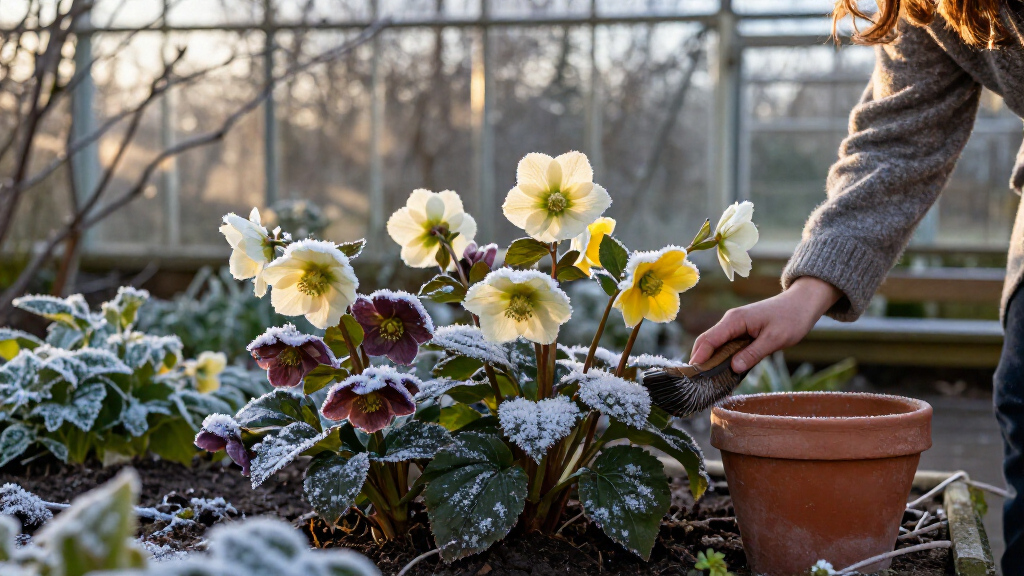
For a shaded bed that needs flowers without a tall shrub, I’d put Ice N’ Roses Red Lenten Rose ahead of Wintersweet. This evergreen perennial stays around 12–18 inches tall and wide, with deep red blooms that can carry from winter into spring. Its shade-to-partial-sun tolerance also gives it a useful spot beneath trees or along a sheltered border, where a sun-loving option may struggle. The plant is described as drought tolerant and deer resistant, but it arrives in a fabric grow bag, not its nursery pot, and flowers at delivery aren’t promised. Compared with the Winter Aconite bulbs, it offers a larger evergreen presence, but it costs you the simple, low-growing spread of a bulb planting.
Pros:- Deep red flowers are described as blooming from winter into spring
- Evergreen foliage provides structure outside the flowering period
- Shade to partial sun suits locations many flowering plants cannot use
- Deer resistant and drought tolerant
Cons:- Flowers at delivery are not guaranteed
- Ships in a fabric grow bag rather than a nursery pot
- Its 1-quart size may take time to fill a garden space
Best for: Gardeners with a shaded or partly shaded border who want an evergreen perennial with winter-to-spring flowers
Not ideal for: Buyers who need flowers immediately or want a plant delivered in a conventional nursery pot
- Botanical name:Helleborus x glandorfensis ‘Coseh4800’
- Plant type:Evergreen perennial
- Flower color:Deep red
- Blooming period:Winter to spring
- Mature size:12–18 inches tall and wide
- Hardiness zones:5–9
- Sun exposure:Shade to partial sun
- Container and shipping:1 quart; fabric grow bag
Our verdict“Pick this Lenten Rose for dependable evergreen form and seasonal color in shade, provided you can wait for blooms and accommodate the grow bag.”
Mixrug 20+ Mixed Camellia Seeds for Planting
Mixrug’s mixed camellia seeds are the long-game choice in this group: they offer a chance to raise evergreen flowering shrubs, rather than an established plant or ready-to-plant bulb. Mature camellias can reach 4–12 feet and bloom in winter to spring, giving them more year-round foliage and eventual scale than the Winter Aconite bulbs. The tradeoff is time and uncertainty: seed-grown plants need to develop before they can provide the display buyers get from a live plant such as Ice N’ Roses. Height varies by variety, and the supplied zone information is inconsistent, listing 7–10 in the description but zone 10 in product information. I’d treat this as a project for patient growers who can verify local suitability, not a quick route to winter flowers.
Pros:- Packet contains 20+ seeds for a larger growing project
- Camellias can provide evergreen foliage and winter-to-spring flowers
- Mature shrubs may suit gardens, borders, or containers
- Mixed varieties offer variation in eventual plant size
Cons:- Seeds require growing time before they can produce a mature floral display
- Mature height varies from 4 to 12 feet depending on variety
- Hardiness information conflicts between the description and product information
Best for: Patient gardeners who enjoy starting shrubs from seed, can wait for maturity, and are prepared to confirm the suitable hardiness range
Not ideal for: Buyers seeking established plants or near-term winter blooms, or gardeners who need a clearly specified hardiness range
- Brand:Mixrug
- Seed quantity:20+
- Plant type:Camellia seeds for ornamental shrubs
- Expected bloom period:Winter to spring
- Mature height:4–12 feet, depending on variety
- USDA hardiness information:7–10 in description; 10 in product information
- Sunlight exposure:Full sun
- Soil and moisture:Sandy soil; regular watering
Our verdict“Choose these seeds if you value the process of raising camellias and can accept uncertain timing, mature size, and zone details.”
Perfect Plants Autumn Bonfire Encore Azalea, 1-Gallon Live Plant
I’d rank Autumn Bonfire Encore Azalea as a compact, long-season color choice, not a true winter-blooming pick: its stated flowers run from spring through fall, so it does not meet the winter-flowering brief as directly as Wintersweet or Ice N’ Roses. Its case is space-efficient evergreen structure and bright red seasonal blooms in a shrub around 3 feet tall and wide. That makes it easier to fit into a small bed than the 10–15-foot Wintersweet, while its 4–6 hours of recommended sun and acidic, moist, well-drained soil make placement more particular than the shade-tolerant Lenten Rose. It may suit a broader seasonal planting plan, but I’d skip it if flowers specifically in winter are the main goal. Delivery is also restricted in California and Arizona.
Pros:- Compact 3-foot height and spread suit accent planting and smaller beds
- Red flowers are described as returning from spring through fall
- Evergreen foliage provides structure beyond bloom time
- Attracts pollinators and is described as deer resistant
Cons:- Listed bloom period does not include winter
- Needs regular watering and moist, well-drained, slightly acidic soil
- Cannot be ordered by residents of California or Arizona
Best for: Gardeners wanting a compact evergreen azalea for spring-to-fall color in a suitable, slightly acidic planting site
Not ideal for: Buyers prioritizing winter blooms or residents of California and Arizona, where delivery is restricted
- Plant type:Evergreen azalea shrub
- Container size:1 gallon
- Flower color:Red
- Bloom period:Spring to fall
- Mature size:About 3 feet tall and 3 feet wide
- USDA hardiness zones:6–10
- Sunlight:Full sun; 4–6 hours recommended
- Soil:Moist, well-drained, slightly acidic
- State restrictions:Unavailable for delivery to California and Arizona
Our verdict“Choose this azalea for compact evergreen form and spring-to-fall flowers, not as a source of winter blooms.”
Winter Aconite Flower Bulbs, Eranthis cilicica, 10 Bulbs
For bright color close to the ground, I’d choose Winter Aconite over a shrub or a larger perennial. These 10 bulbs produce flowers in winter and spring, with plants reaching just 4–6 inches; that makes them a fit for borders, woodland-style plantings, and small spaces where Wintersweet would be far too large. They can gradually form clusters, but this is a slower, spreading display rather than the immediate visual weight of a mature shrub. The product description favors partial shade and well-draining soil, while the listed sunlight specification says full sun, so buyers should note that mismatch when choosing a site. Compared with Ice N’ Roses, Aconite offers a shorter, more naturalizing ground-level effect, but not evergreen foliage or the same stature.
Pros:- Bright yellow-green flowers bring color in winter and spring
- Very low 4–6-inch growth suits borders and small spaces
- Hardy perennial bulbs can return year after year
- Gradually spreads into clusters
Cons:- Requires well-draining soil
- Sun guidance conflicts: description recommends partial shade, while specifications list full sun
- A 10-bulb quantity may take time to develop into a larger cluster
Best for: Gardeners seeking low-growing yellow winter-to-spring flowers for borders or woodland areas who are willing to let bulbs establish and spread
Not ideal for: Buyers who want a substantial evergreen plant, immediate large-scale coverage, or unambiguous sun-exposure guidance
- Plant type:Hardy perennial flower bulb
- Botanical name:Eranthis cilicica
- Quantity:10 bulbs
- Height:4–6 inches
- Blooming period:Winter and spring
- Color:Yellow-green
- Sunlight information:Full sun listed; description recommends partial shade
- Moisture needs:Moderate watering
Our verdict“Choose Winter Aconite for a modest, low-growing early-season display that can naturalize over time, after checking the planting site’s light and drainage.”
Perfect Plants Jubilation Gardenia Live Plant, 1 Gallon
Jubilation Gardenia is a fragrance-first choice for warm-climate gardens, but its main bloom season is spring through fall rather than winter. Its white flowers and glossy evergreen leaves keep the shrub attractive beyond bloom time, while its compact 3-to-4-foot size suits a border or a container where a larger camellia would take over. Compared with the Yuletide Camellia, it offers a longer warm-season flowering window but less direct winter color. It also needs regular watering and acidic, well-drained soil, so it is not a carefree fit for every garden. I’d choose it when scent and year-round foliage matter more than flowers during the coldest months; buyers seeking winter blooms should look to Yuletide or Black Tie Camellia instead.
Pros:- Fragrant white blooms appear from spring through fall
- Evergreen foliage maintains garden color outside the bloom season
- Compact 3-to-4-foot size fits borders, containers, and smaller gardens
- Listed as deer resistant and attractive to pollinators
Cons:- Does not provide its stated bloom season in winter
- Needs regular watering and acidic, well-drained soil
- Cannot ship to California or Arizona
Best for: Gardeners in USDA zones 7–10 who want a compact, fragrant evergreen shrub for a sunny-to-partly-shaded border or container.
Not ideal for: Buyers whose priority is flowers in winter, or gardeners in California and Arizona where this plant cannot ship.
- Plant type:Evergreen shrub
- Container size:1 gallon
- Bloom color and season:White; spring through fall
- Expected size:About 3–4 feet tall and wide
- USDA hardiness zones:7–10
- Sun exposure:Full to partial sun
- Soil and watering:Well-drained, acidic soil; regular watering
- Shipping restrictions:Cannot ship to California or Arizona
Our verdict“Choose Jubilation Gardenia for fragrance and compact evergreen structure in a warm-climate garden, not for dependable winter flowers.”
Yuletide Camellia Live Evergreen Shrub, 3-Gallon
Yuletide Camellia earns its place through timely seasonal color: orange-red flowers with golden stamens are described as blooming from fall into winter, while glossy evergreen leaves fill the gaps. That makes it a closer fit for a winter-flowering roundup than either gardenia, whose listed flowers come in warmer months. Compared with the Black Tie Camellia, Yuletide is the more explicitly fall-to-winter pick, while Black Tie is listed for winter to early spring and grows taller. This shrub reaches about 6 feet tall and 4 feet wide, so it can anchor a foundation planting or hedge, but it needs morning sun, afternoon shade, and moist, acidic, well-drained soil. Shipping exclusions across many states also narrow who can buy it.
Pros:- Orange-red flowers with golden stamens bring color from fall into winter
- Glossy evergreen foliage adds structure year-round
- Approximately 6-foot height suits foundation planting, hedges, or a specimen spot
- Ships in a 3-gallon container
Cons:- Shipping is unavailable to AK, AZ, CA, CO, HI, ID, MT, NM, NV, OR, UT, WA, and WY
- Requires acidic, moist, well-drained soil
- Needs afternoon shade and more room than a compact gardenia
Best for: Gardeners in eligible USDA zones 7–10 who have a partly shaded spot and want an evergreen shrub with fall-to-winter flowers.
Not ideal for: Gardeners in excluded states or those without acidic, moist, well-drained soil and afternoon shade.
- Plant type:Evergreen flowering shrub
- Container size:3 gallons
- Bloom color and period:Orange-red with golden stamens; fall to winter
- Mature size:Approximately 6 feet tall × 4 feet wide
- USDA hardiness zones:7–10
- Sunlight:Morning sun and afternoon shade
- Soil:Acidic, moist, well-drained
- Shipping restrictions:Unavailable to AK, AZ, CA, CO, HI, ID, MT, NM, NV, OR, UT, WA, and WY
Our verdict“Pick Yuletide Camellia for a medium-sized evergreen shrub with stated fall-to-winter flowers, provided your climate and shipping location fit.”
Perfect Plants Frostproof Gardenia Live Plant, 1-Gallon Pot
Frostproof Gardenia suits gardeners who value fragrant flowers and simple landscaping utility, rather than winter bloom. Its white flowers are listed for spring and summer, and its deep green foliage gives it presence outside that season. Compared with the Jubilation Gardenia, it can grow larger—up to 5 feet tall and 4 feet wide—so it works better as a low hedge or substantial accent than as a compact container shrub. Against the winter-flowering Yuletide Camellia, its advantage is a stated low-maintenance profile and deer resistance, not cold-season color. It still needs a sunny to partly shaded location, and the California and Arizona shipping restriction limits availability. The included plant food is a useful addition, but it does not change the warm-season bloom schedule.
Pros:- Fragrant white flowers are listed for spring and summer
- Can serve as a border plant, low hedge, or garden accent
- Listed as deer resistant and low maintenance
- Includes plant food
Cons:- Blooming period is spring and summer, not winter
- Needs a full-sun to partly shaded location
- Does not ship to California or Arizona
Best for: Gardeners seeking a fragrant, deer-resistant shrub for a spring-planted border, low hedge, or garden accent in an eligible state.
Not ideal for: Buyers specifically seeking winter flowers, or gardeners in California and Arizona where shipping is unavailable.
- Plant type:Gardenia shrub
- Container size:1-gallon pot
- Mature size:Up to 5 feet tall × 4 feet wide
- Flower color and season:White; spring and summer
- Sunlight exposure:Full sun to partial shade
- Special features:Fragrant, deer resistant; includes plant food
- Planting period:Spring
- Shipping restrictions:Does not ship to California or Arizona
Our verdict“Choose Frostproof Gardenia for fragrant warm-season flowers and hedge potential, but select a camellia if winter bloom is the priority.”
Black Tie Camellia Live Evergreen Shrub, 3 Gallon
Black Tie Camellia is the structural choice for winter color: its deep red flowers are listed for winter to early spring, and its dense, upright evergreen growth can eventually provide a substantial hedge or privacy planting. Compared with the more compact Yuletide Camellia, Black Tie is larger at a stated 7–10 feet tall and 4–6 feet wide, so it asks for more space but offers greater screening potential. Its 3-gallon container gives buyers an established starting size, though the listed mature dimensions are the bigger planning issue. This is not a universal shrub: it needs partial shade and acidic, moist, well-drained soil, and shipping is limited to eligible states. I’d favor it over the gardenias when winter bloom and landscape structure outweigh compactness.
Pros:- Deep red flowers are listed for winter to early spring
- Evergreen foliage and dense, upright growth can support screening
- Mature size suits hedging and privacy planting
- Supplied in a 3-gallon container
Cons:- Can reach 7–10 feet tall and 4–6 feet wide, requiring substantial space
- Needs acidic, moist, well-drained soil and partial shade
- Shipping is limited to eligible states, with several states excluded
Best for: Gardeners in USDA zones 7–9 with room for a large, upright evergreen shrub and a partly shaded site suited to acidic soil.
Not ideal for: Small-yard gardeners, buyers seeking a compact container plant, or anyone unable to meet its soil, shade, and shipping requirements.
- Plant type:Evergreen flowering shrub
- Scientific name:Camellia japonica
- Container size:3 gallons
- Flower color and season:Deep red; winter to early spring
- USDA hardiness zones:7–9
- Mature size:Approximately 7–10 feet tall × 4–6 feet wide
- Sunlight:Partial shade
- Soil:Acidic, moist, well-drained
Our verdict“Choose Black Tie Camellia for winter-to-early-spring red blooms and eventual screening, if you have the space and suitable growing conditions.”
Kings Seeds Winter-Flowering Mixed Pansy Seeds, 100 Count
These mixed pansy seeds offer the most flexible, small-scale route to winter color in this group: the packet contains 100 seeds, with mixed colors and a stated winter-and-spring flowering season. Unlike the shrubs, they stay low at about 15–20 cm, making them suitable for filling beds or edging rather than providing evergreen structure. Compared with the Grower’s Choice Assorted Color Pansies, this seed option asks the buyer to sow and raise plants instead of starting with live specimens; that means more control over planting, but also more time and uncertainty before flowers appear. The specified July sowing period and full-sun requirement call for planning ahead. Growing instructions are included, but buyers wanting immediate flowers—or a plant that flowers in every winter setting—should choose live plants or check local growing conditions.
Pros:- 100 seeds offer many plants for seasonal beds or edging
- Mixed colors add variety to winter-and-spring displays
- Low 15–20 cm growth suits borders and smaller spaces
- Growing instructions are included
Cons:- The specified July sowing period requires advance planning
- Seed growing takes more time and effort than buying live pansies
- Requires full sun and the listed sandy soil
Best for: Gardeners willing to sow in July and raise low-growing flowers from seed to fill sunny winter-and-spring beds with mixed colors.
Not ideal for: Buyers who want established flowers right away, cannot sow in July, or lack a full-sun growing spot.
- Plant type:Pansy
- Seed count:100
- Blooming season:Winter and spring
- Sowing period:July
- Expected plant height:15–20 cm (approximately 14 inches as listed)
- Sunlight exposure:Full sun
- Growing location and soil:Indoor or outdoor; sandy soil
- Watering:Moderate
Our verdict“Choose these pansy seeds for a planned, low-growing seasonal display if you are prepared to sow in July rather than buy flowers ready to plant.”
Hiemalis Winter Mix Pansy Seeds (Viola wittrockiana), 50+ Seeds
For gardeners who want to fill several small spaces with cool-season color, 50+ seeds offer more flexibility than the four ready-grown plants in Grower’s Choice Assorted Color Pansies. The compact 6–8-inch plants suit window boxes, containers, and border edges, while the multicolored mix can create a broader display. Its stated bloom periods include late winter to early spring and fall to early winter, making it a season-focused choice rather than a shrub like the Ice N’ Roses Red Lenten Rose.
The tradeoff is the extra work and uncertainty of starting from seed: germination requires darkness and steady moisture, and shallow roots need regular watering after planting. I’d choose these for a patient gardener who wants more plants and is comfortable tending seedlings, not someone seeking instant flowers.
Pros:- 50+ seeds can supply more planting spots than a small live-plant pack.
- Compact 6–8-inch growth fits containers, window boxes, and border edges.
- Cold-hardy annual suited to cool-season planting and flowering.
- Flowers can attract bees and butterflies.
Cons:- Seeds need darkness and consistent moisture to germinate.
- Shallow roots call for regular watering as plants grow.
- Growing from seed takes more time and care than buying live pansies.
Best for: Gardeners who want to raise multiple compact pansies for window boxes, borders, or containers and can keep seedlings consistently moist.
Not ideal for: Buyers who want immediate blooms or cannot provide the darkness and steady moisture needed for seed germination.
- Seed quantity:50+
- Plant type:Cool-season annual
- Plant height:6–8 inches
- Blooming period:Late winter to early spring; fall to early winter
- Planting period:Late summer to early fall or late winter to early spring
- Sun exposure:Full sun to partial shade
- USDA hardiness zones:4–9
- Moisture needs:Moderate; keep consistently moist
Our verdict“Choose this seed mix if you want numerous compact winter-color plants and are willing to manage germination and watering.”
Grower’s Choice Assorted Color Pansies, Live Plants, 4-Pack
If you want pansies in place without waiting for seeds to germinate, this four-pack of live plants is the simpler route. Compared with Hiemalis Winter Mix Pansy Seeds, it trades the potential to grow many plants for a quicker start with established pansies. Assorted colors bring variety to a patio container or small garden display, and plants grow to about 9 inches tall, a little taller than the Hiemalis mix.
The listing describes flowering across several seasons, including winter, but this is not a set-and-forget choice: pansies need moist, well-draining soil and regular watering, plus adequate light. Its stated hardiness is USDA Zone 6+, narrower than the Hiemalis seeds’ Zone 4–9 range. I’d favor this pack for buyers prioritizing convenience, but skip it if you need broad cold-zone coverage or a larger number of plants.
Pros:- Live plants avoid the germination stage required by the Hiemalis seed mix.
- Assorted colors add variety to a small container or garden display.
- Suitable for outdoor planting in gardens and containers.
- Pansy flowers are edible.
Cons:- Only four plants are included, limiting coverage for larger borders.
- Regular watering is needed to keep the soil moist.
- The stated USDA Zone 6+ range is narrower than the Hiemalis mix’s Zone 4–9 range.
Best for: Gardeners in USDA Zone 6 or warmer who want a small, ready-to-plant assortment for a patio pot or garden bed.
Not ideal for: Gardeners in colder zones or anyone needing many plants, since this is a four-plant pack with a stated Zone 6+ rating.
- Plant type:Live pansy flowers
- Color:Assorted
- Quantity:4 plants
- Expected plant height:About 9 inches
- Sunlight exposure:Full to partial sun
- Soil type:Well-draining
- Watering:Moderate; regular watering
- Hardiness zone:USDA Zone 6+
- Blooming seasons:Spring, summer, fall, and winter
Our verdict“Pick this four-pack for a convenient, small-scale pansy display if your garden is in Zone 6 or warmer and you can water regularly.”

How We Picked
I ranked these 12 options by how directly they answer the search for winter flowers, then weighed what a buyer gives up to get them. My criteria included stated winter bloom timing, whether the listing is for seed, bulbs, or a live plant, the likely wait before a display, and how clearly the plant’s role fits a home garden. I also considered maintenance demands and the importance of matching a plant to local winter conditions, since a flowering claim is only useful when the plant can grow in the buyer’s setting.
The order gives priority to a clear winter-flowering purpose and a useful balance of permanence, bloom appeal, and buyer practicality. That puts Wintersweet ahead as the most direct fit, while the Lenten rose and live pansies offer distinct alternatives for different garden styles. Seed packs rank lower for shoppers seeking immediate flowers because germination and establishment take time; gardenias and some camellias also call for more attention to site suitability. The products are compared by their listed form and intended role, not by unprovided claims about hardiness, performance, or bloom guarantees.
Factors to Consider When Choosing Best Winter Flowering Plants
Before choosing, I would match the plant to the job it needs to do: create a lasting shrub feature, fill a container with seasonal color, or add early blooms at ground level. These broader checks can prevent a plant that sounds ideal in a listing from becoming a poor fit for your garden.
Match Winter Conditions to the Plant
“Winter flowering” does not mean every plant will flower through every kind of winter. Check the plant’s stated growing zone and local guidance against your own winter lows, frost pattern, and exposure before buying. A sheltered courtyard, a windy open bed, and a container on an exposed patio can experience very different conditions. A shrub that suits a mild region may need protection or a different location in a colder one. If the listing leaves hardiness unclear, consult a local nursery or extension service rather than relying on the product name. This check matters more than flower color because a poor climate match can limit both survival and bloom.
Choose Between a Shrub, Bulb, Seed, and Live Plant
Plant format sets the timeline and the amount of work more than many buyers expect. A live plant can provide a more immediate garden presence, though it still needs careful planting and establishment. Bulbs and seeds usually call for advance planning, and their first display can depend on timing, conditions, and successful establishment. Seeds can stretch a planting across more spaces, but they ask for patience and consistent early care. Avoid buying seed or bulbs for an event date unless the growing schedule is clear. If you want color this season, lean toward live plants; if you enjoy planning ahead, seeds and bulbs offer a different kind of value.
Plan for Mature Size and Placement
Winter interest can come from flowers, but a shrub’s eventual scale and evergreen presence shape the garden all year. Read the plant’s mature-size guidance and allow room for airflow, access, and future pruning. Crowding a shrub beside a wall or another plant can make maintenance harder and may reduce light. Compact bedding flowers and pansies can fit pots or front borders more easily, yet they do not replace the height or permanence of a shrub. Decide whether you want a focal point, a low border, or container color before selecting a format. Buying for the available space prevents a strong winter-flowering choice from becoming a long-term layout problem.
Account for Fragrance, Evergreen Structure, and Garden Use
Flowering is only one part of winter garden value. Fragrant shrubs can make a planting more noticeable near a path or doorway, while evergreen foliage contributes structure even when blooms are absent. Those features may matter more to one buyer than a dense patch of seasonal color. Think about where people will encounter the plant and whether scent, height, or persistent foliage fits that spot. A fragrant shrub placed far from daily routes may not deliver the experience you want, while a low planting can be more useful near a walkway. Choose the feature you will enjoy most, rather than treating every winter-flowering plant as interchangeable.
Set a Realistic Maintenance and Bloom Timeline
Consider the work required before flowers appear as well as the care after planting. Seed starting can call for suitable timing and steady attention; shrubs need a suitable planting site and ongoing care as they establish. Bulbs require planning around planting time, while live bedding plants still need watering and protection appropriate to local conditions. A common mistake is buying for a photo of peak bloom without checking when the plant is likely to flower in your region. Ask whether you can provide the needed care during establishment and whether a delayed display is acceptable. Pay more attention to a clearly described plant form and growing guidance when timing matters, rather than choosing solely by the number of seeds or bulbs in a packet.
Frequently Asked Questions
Which of these options makes the most sense if I want flowers this winter?
I would start with the live plants rather than seeds, since they provide an established plant to put in the garden or a container. The Wintersweet is the strongest match for a winter-flowering shrub, while live pansies suit buyers after a smaller, flexible display. A live plant still needs suitable conditions and time to settle in, so check the listing’s planting and flowering guidance before expecting immediate blooms. Seeds and bulbs are better choices when you can plan ahead and accept a longer wait. Local climate can affect flowering time for every option.
Should I choose pansy seeds or the four-pack of live pansies?
Choose the live four-pack if your priority is to plant color without first raising seedlings. The Kings Seeds and Hiemalis seed packs make more sense if you are comfortable sowing ahead and want to manage the planting from its early stages. Seed quantity alone does not tell you how many mature flowering plants you will get, since results depend on germination and care. Check sowing instructions and timing before deciding whether the longer process fits your schedule. For a seasonal display with less propagation work, the live plants are the simpler route.
Are gardenias or camellias a safe choice for a cold winter garden?
Not automatically: cold tolerance and growing conditions vary, and a plant’s winter-flowering label is not a guarantee that it suits every location. Check the specific listing’s hardiness information and compare it with your local winter conditions before choosing either shrub. Also consider whether you can provide the site and care it needs, rather than relying on the plant name alone. If your winters are severe or the guidance is unclear, ask a local nursery or extension service for a regional recommendation. A better climate match matters more than choosing between the listed varieties.
Which plant should I choose for a small patio or container?
For a small space, the live pansies are the most straightforward option in this lineup to assess for a container planting. Before buying, check the plant’s care instructions and the container size it needs, then confirm that the site gets suitable light and protection. A shrub can also be grown in a container only when its size, roots, and care requirements fit the pot and your ability to maintain it. Avoid selecting a shrub solely because it flowers in winter if you do not have room for its mature growth. The right choice is the one that fits both your available space and your winter conditions.
Is it worth choosing seeds or bulbs instead of an established plant?
Seeds and bulbs can suit gardeners who enjoy planning, starting plants, and waiting for a display to develop. They are less suited to buyers who need a finished-looking winter garden immediately, since establishment and flowering depend on timing and growing conditions. Established plants typically reduce the early growing steps, but they still need proper planting and care. Compare the growing instructions and the time to expected flowering, not just the number of seeds or bulbs in the package. If a particular bloom window matters, buy only when the schedule is clear for your region.
Conclusion
For the most direct match to a winter-flowering shrub, I recommend the live Wintersweet as best overall. The best value for a patient gardener is a seed or bulb option when you can plan ahead and are comfortable with the uncertainty of establishment; among the seed picks, pansies offer flexible seasonal color, while winter aconite gives bulbs a distinct role. For a premium garden feature, compare the established three-gallon Yuletide and Black Tie camellias, choosing only after checking local climate and site needs. Beginners seeking a straightforward seasonal display may prefer the live pansy four-pack over raising seedlings. If you want a specific need met, choose the Lenten rose for a distinct live-plant alternative, or consider gardenia when fragrance and evergreen structure matter and its growing requirements fit your garden. My final rule is simple: choose the plant form and climate fit first, then decide which winter display you want.