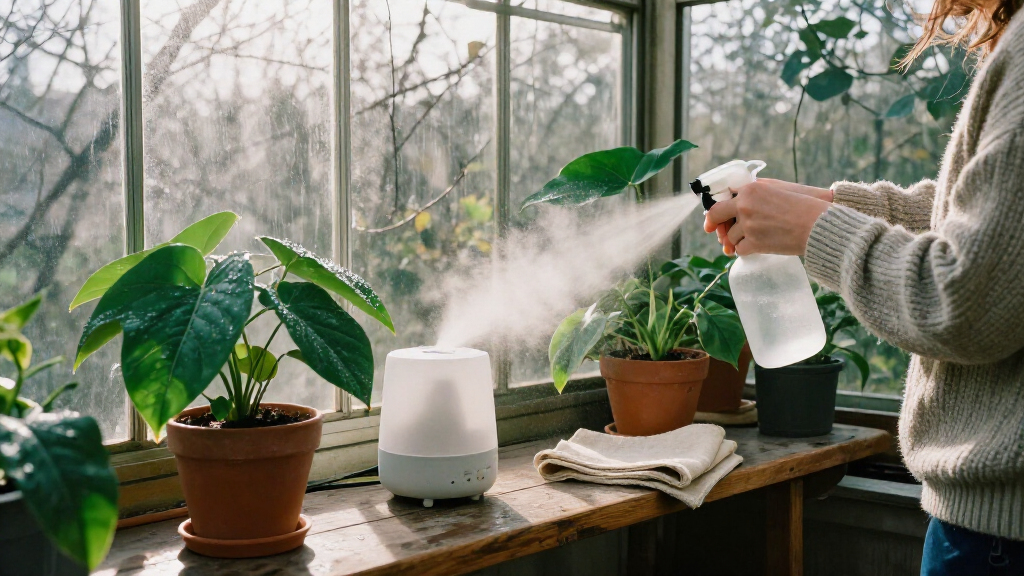

The best winter houseplant care products support indoor plants without encouraging heavy growth when light and water needs change. I’d choose Osmocote Smart-Release Plant Food Plus as the best overall for its slow-release format, while Miracle-Gro Indoor Plant Food Spikes suit low-mess feeding and Bonide Systemic Houseplant Insect Control Granules address pest problems rather than nutrition. The main tradeoffs are convenience versus control, and broad-purpose formulas versus products aimed at a specific issue. Fertilizer is not automatically helpful during winter dormancy, so a plant’s growth and care needs should guide use. Read on for the full breakdown and a guide to choosing products that fit your indoor conditions.

Get garden gear delivered free with Prime
- Fast, free delivery on millions of items
- Prime Video, Amazon Music and more included
- Member-only deals all year
Complete the kit



Key Takeaways
- Osmocote’s slow-release format makes it the most convenient general feeding option here, but it offers less control over when nutrients are released than a liquid feed.
- Fertilizer formats serve different routines: spikes reduce measuring, while liquids are easier to adjust or pause when growth slows.
- Not every winter care need is a feeding need: Bonide granules target insect control, while potting mix addresses the growing medium rather than adding routine nutrition.
- Several products overlap closely: the two Schultz liquids and multiple Miracle-Gro liquids call for choosing by container size, application preference, and desired flexibility rather than brand name alone.
- Specialty formulas have narrower roles: SUPERthrive, leaf shine, and organic sea-kelp options may suit particular preferences, but they are not substitutes for appropriate light, watering, or pest diagnosis.
| Osmocote Smart-Release Plant Food Plus, Indoor and Outdoor, 1 lb |  | Best for Low-Maintenance Feeding | Brand: Osmocote | Form: Granules | Weight: 16 ounces (1 lb) | VIEW LATEST PRICE | See Our Full Breakdown |
| Miracle-Gro Indoor Plant Food Spikes for All Plants, 48 Count |  | Best for Simple, Targeted Feeding | Brand: Miracle-Gro | Product form: Sticks | Unit count: 48 | VIEW LATEST PRICE | See Our Full Breakdown |
| Miracle-Gro Organic Indoor Potting Mix, 16 qt |  | Best for Winter Repotting | Brand: Miracle-Gro | Volume: 16 qt | Ingredients: Sphagnum peat moss, coir, and quick-start natural fertilizer | VIEW LATEST PRICE | See Our Full Breakdown |
| SUPERthrive Vitamin Solution with Kelp, Liquid Concentrate, 4 fl oz |  | Best for Root and Transplant Support | Brand: SUPERthrive | Formula: 0.5-0-0 with kelp extract | Form: Liquid concentrate | VIEW LATEST PRICE | See Our Full Breakdown |
| Schultz All-Purpose Liquid Plant Food, 10-15-10, 8 fl oz |  | Best for Liquid Feeding Flexibility | Brand: Schultz | Formula: 10-15-10 | Form: Liquid | VIEW LATEST PRICE | See Our Full Breakdown |
| Schultz Liquid Plant Food Plus, 10-15-10 Formula, 4 fl oz |  | Best for Small Collections | Formula: 10-15-10 | Form: Liquid | Volume: 4 fluid ounces | VIEW LATEST PRICE | See Our Full Breakdown |
| Miracle-Gro Indoor Liquid Plant Food, 8 oz Bottles, 2-Pack |  | Best for Direct-to-Soil Convenience | Form: Liquid | Bottle size: 8 ounces each | Pack size: 2 bottles | VIEW LATEST PRICE | See Our Full Breakdown |
| Indoor Plant Food Liquid Fertilizer for Houseplants, 8 oz |  | Best Kelp-Enriched Concentrate | Brand: TPS Nutrients | Model number: 43634283839737 | Form: Liquid concentrate | VIEW LATEST PRICE | See Our Full Breakdown |
| Miracle-Gro Indoor Plant Food for All Plants, 8 fl oz, 2-Pack |  | Best for Less-Frequent Liquid Feeding | Brand: Miracle-Gro | Form: Liquid | Pack size: 2 bottles | VIEW LATEST PRICE | See Our Full Breakdown |
| Bonide Systemic Houseplant Insect Control Granules, 8 oz |  | Best for Ongoing Pest Protection | Form: Granules | Unit count: 8 ounces | Target: Listed plant-feeding insects | VIEW LATEST PRICE | See Our Full Breakdown |
| Miracle-Gro Plant Care Leaf Protect & Shine, 8 fl oz, 2-Pack |  | Best for Hard-Leaved Plants with Pest Concerns | Brand: Miracle-Gro | Pack size: 2 bottles | Bottle volume: 8 fl oz each | VIEW LATEST PRICE | See Our Full Breakdown |
| Grow Queen Organic Liquid Plant Food, 5-5-5 with Sea Kelp, 8 oz |  | Best Concentrated Organic Feed for Active Growth | Brand: Grow Queen | NPK ratio: 5-5-5 | Volume: 8 oz | VIEW LATEST PRICE | See Our Full Breakdown |
| winter houseplant care product | Brand | Form |
|---|---|---|
| Osmocote Smart-Release Plant F | Osmocote | Granules |
| Miracle-Gro Indoor Plant Food | Miracle-Gro | — |
| Miracle-Gro Organic Indoor Pot | Miracle-Gro | — |
| SUPERthrive Vitamin Solution w | SUPERthrive | Liquid concentrate |
| Schultz All-Purpose Liquid Pla | Schultz | Liquid |
| Schultz Liquid Plant Food Plus | — | Liquid |
| Miracle-Gro Indoor Liquid Plan | — | Liquid |
| Indoor Plant Food Liquid Ferti | TPS Nutrients | Liquid concentrate |
| Miracle-Gro Indoor Plant Food | Miracle-Gro | Liquid |
| Bonide Systemic Houseplant Ins | — | Granules |
| Miracle-Gro Plant Care Leaf Pr | Miracle-Gro | Liquid spray |
| Grow Queen Organic Liquid Plan | Grow Queen | — |
More Details on Our Top Picks
Osmocote Smart-Release Plant Food Plus, Indoor and Outdoor, 1 lb
For winter care, this is the pick for plant owners who want feeding handled on a long schedule rather than added to every watering. Its resin-coated granules release nutrients over time, with one application feeding plants for up to six months, and the formula supplies 11 essential nutrients. Compared with Miracle-Gro Indoor Plant Food Spikes, Osmocote needs less frequent replenishing, though it must be sprinkled and worked into the soil instead of simply inserted as spikes. The main winter caveat is control: plants often grow more slowly in low light, so follow the label’s reduced indoor application rate rather than treating every plant as if it were in active summer growth. It suits mixed indoor and outdoor collections, but the granules are less convenient if you prefer to adjust feeding with each watering.
Pros:- Feeds plants for up to six months per application.
- Resin-coated granules provide controlled nutrient release.
- Contains 11 essential nutrients and suits indoor and outdoor plants.
- Indoor use is supported with a lower application rate than outdoor use.
Cons:- Granules need to be applied and worked into the soil.
- Indoor plants require careful dosing at half the outdoor rate.
- A six-month feeding schedule offers less flexibility than a diluted liquid fertilizer.
Best for: Houseplant owners with several pots who want a long interval between fertilizer applications and can follow indoor-specific directions.
Not ideal for: People who want to adjust feeding at each watering or whose winter-dormant plants need little or no fertilizer.
- Brand:Osmocote
- Form:Granules
- Weight:16 ounces (1 lb)
- Nutrients:11 essential nutrients
- Feeding duration:Up to 6 months
- Coverage:Up to 37 sq. ft.
- Application:Sprinkle around the base and work into the soil
- Indoor application rate:Half the outdoor rate
- Reapplication interval:Every 6 months
Our verdict“Choose Osmocote if you want infrequent, controlled feeding for a mixed plant collection and are comfortable reducing the dose for indoor pots.”
Miracle-Gro Indoor Plant Food Spikes for All Plants, 48 Count
These spikes make sense for someone who wants a straightforward way to feed indoor pots without measuring liquid concentrate. Insert them into holes in the soil, cover them, and they provide nutrition for up to two months when used as directed. That short interval is more adjustable than Osmocote Smart-Release Plant Food Plus, which feeds for up to six months, but it also means more frequent replacement. The 48-count package is listed as enough for eight 11–12-inch pots for two months; smaller or larger containers change how far it goes. Spikes also require making holes, which may be awkward in tightly rooted pots. For winter, use them only when a plant is actively growing and needs feeding; the easy format does not remove the need to account for slower seasonal growth.
Pros:- Application is simple: insert spikes into soil and cover them.
- Provides nutrition for up to two months when used as directed.
- The 48-count package covers multiple pots.
- Suitable for houseplants, flowers, vegetables, and herbs.
Cons:- Application requires making holes in the soil.
- Coverage varies with pot size, so the stated pot count may not fit every collection.
- Needs replacement more often than Osmocote’s six-month granules.
Best for: Houseplant owners with medium-sized pots who prefer a measured, soil-applied feeding product over mixing fertilizer into water.
Not ideal for: People with densely rooted pots that are difficult to make holes in, or anyone seeking a feeding option that lasts most of the season.
- Brand:Miracle-Gro
- Product form:Sticks
- Unit count:48
- Application method:Insert spikes into holes in the soil and cover
- Feeding duration:Up to 2 months
- Coverage:Enough for eight 11–12-inch potted plants for two months; varies by pot size
- Suitable plants:Houseplants, flowers, vegetables, and herbs
- Model number:3421848
Our verdict“Pick these spikes for easy, periodic feeding of medium-sized indoor pots when you want a shorter commitment than slow-release granules.”
Miracle-Gro Organic Indoor Potting Mix, 16 qt
When winter care calls for repotting rather than another feeding product, this mix addresses the growing medium itself. Its peat moss and coir blend is designed to retain moisture while increasing air space, and the quick-start natural fertilizer supplies initial nutrition for indoor containers, herbs, and seedlings. Compared with Osmocote Smart-Release Plant Food Plus, it is not a way to refresh nutrients in an established pot; it is a soil option for a plant that needs a new container or fresh mix. Drainage holes matter, and the 16-quart bag fills one 12-inch container depending on the root ball, so it may not go as far as buyers expect. The OMRI listing may appeal to organic growers, but winter repotting is still best reserved for plants that need it.
Pros:- Peat moss and coir support moisture retention and air space.
- Quick-start natural fertilizer provides initial nutrition.
- Suitable for houseplants, herbs, transplants, and seed starting.
- OMRI Listed for organic use.
Cons:- Best results require a container with drainage holes.
- The 16-quart bag fills about one 12-inch container, depending on the root ball.
- Unlike Osmocote granules, it is a growing-medium replacement rather than a simple top-up for established plants.
Best for: Indoor growers repotting a houseplant, herb, or seedling who want an OMRI Listed mix with moisture retention and added air space.
Not ideal for: Plant owners who only need to feed established pots, or those using containers without drainage holes.
- Brand:Miracle-Gro
- Volume:16 qt
- Ingredients:Sphagnum peat moss, coir, and quick-start natural fertilizer
- Peat sourcing:100% from certified producers
- Use:Indoor container plants, houseplants, herbs, and seed starting
- Coverage:Fills one 12-inch container; amount varies with root ball size
- Organic listing:OMRI Listed
Our verdict“Choose this mix when a plant genuinely needs repotting and you want an organic-listed medium, not as a substitute for routine feeding.”
SUPERthrive Vitamin Solution with Kelp, Liquid Concentrate, 4 fl oz
SUPERthrive stands apart from routine fertilizers by focusing on root development and transplant support, with a concentrated liquid formula that includes kelp extract. It can be diluted for indoor or outdoor plants, but its mixing directions vary with water volume: one drop per four ounces, a quarter teaspoon per gallon, and three ounces per 100 gallons. That makes it more useful for growers who already measure water carefully than for someone seeking a no-measure feeding method. Schultz All-Purpose Liquid Plant Food, by comparison, is presented as a 10-15-10 fertilizer mixed into watering water, while SUPERthrive’s listed formula is 0.5-0-0 and its role is more targeted. In winter, this is better suited to a specific root or transplant need than indiscriminate feeding of slow-growing plants.
Pros:- Concentrated liquid can be diluted for different water volumes.
- Kelp extract is included in the formula.
- Designed for root development and transplant support.
- Suitable for indoor and outdoor plants, including houseplants and trees.
Cons:- Must be diluted before use.
- Mixing instructions vary across cups, gallons, and larger volumes.
- Its 0.5-0-0 formula serves a different purpose from Schultz’s 10-15-10 fertilizer.
Best for: Plant owners repotting, establishing, or supporting roots who are comfortable measuring a concentrated additive for different water volumes.
Not ideal for: Beginners who want one simple, clearly standardized fertilizer dose or buyers looking for a conventional balanced plant food.
- Brand:SUPERthrive
- Formula:0.5-0-0 with kelp extract
- Form:Liquid concentrate
- Volume:4 fl oz
- Application:Dilute in water
- Mixing instructions:1 drop per 4 oz of water; 1/4 tsp per gallon; 3 oz per 100 gallons
- Specific use:Root development
- Target plants:Indoor and outdoor plants, houseplants, and trees
Our verdict“Choose SUPERthrive for measured root and transplant support, not as a straightforward replacement for a balanced winter houseplant fertilizer.”
Schultz All-Purpose Liquid Plant Food, 10-15-10, 8 fl oz
Schultz is the most conventional liquid fertilizer in this group: add a few drops to a watering can, then feed a range of indoor and outdoor plants. Its 10-15-10 formula gives it a clear identity as a general-purpose fertilizer, while SUPERthrive Vitamin Solution with Kelp is more specifically positioned around root development and transplant support. That distinction matters in winter, when a broad fertilizer is best reserved for plants still growing rather than applied automatically to dormant ones. The liquid format lets a grower choose which pots receive fertilizer during a watering round, unlike Osmocote’s granules, which remain in the soil for months. The drawback is that the supplied description gives no precise number of drops, so buyers must rely on the product directions rather than a specific ratio in this listing.
Pros:- Liquid format mixes directly into watering water.
- 10-15-10 formula is identified for general-purpose feeding.
- Suitable for indoor and outdoor plants, including houseplants.
- A few drops are used per watering can.
Cons:- The provided directions do not specify an exact number of drops.
- Requires mixing during watering rather than a single long-lasting application.
- For winter use, feeding still needs to match each plant’s growth activity.
Best for: Houseplant owners who water and feed individual pots and want one liquid fertilizer for a varied indoor and outdoor collection.
Not ideal for: Beginners who need a precise mixing ratio from the product information, or owners seeking a slow-release option with fewer feeding decisions.
- Brand:Schultz
- Formula:10-15-10
- Form:Liquid
- Liquid volume:8 fl oz
- Item weight:8 oz
- Application method:Mix a few drops into a watering can
- Suitable for:Indoor and outdoor plants
Our verdict“Choose Schultz if you want a general-purpose liquid fertilizer you can apply selectively, and skip it if you need a clearly stated mixing dose or long-lasting granules.”
Schultz Liquid Plant Food Plus, 10-15-10 Formula, 4 fl oz
Schultz Liquid Plant Food Plus suits plant owners who want a compact, multipurpose fertilizer for occasional winter feeding or repotting. Its 10-15-10 formula is mixed at seven drops per quart, so the small bottle can be portioned into watering without keeping a large supply on hand. It is also listed for transplanting, repotting, and rooting, making it more versatile for care tasks than Miracle-Gro Indoor Liquid Plant Food, which emphasizes routine feeding and offers direct-to-soil pumping. The tradeoff is that Schultz requires measuring and dilution; it lacks that simpler pump application and the larger total volume of the two-bottle options. Winter growth often slows, so follow plant-specific feeding needs rather than treating regular fertilizing as automatic.
Pros:- Suitable for both indoor and outdoor plants
- Seven drops per quart gives a clear dilution instruction
- Listed for transplanting, repotting, and rooting
- Compact 4-fluid-ounce bottle fits occasional-use needs
Cons:- Must be measured and diluted before application
- Smaller volume than the 16-fluid-ounce Miracle-Gro multipacks
- Does not offer a direct-to-soil pump option
Best for: Houseplant owners with a small collection who want one dilute concentrate for indoor and outdoor plants, including repotting tasks.
Not ideal for: People who prefer ready-to-use feeding or manage many plants and want the larger supply and pump application of a multipack.
- Formula:10-15-10
- Form:Liquid
- Volume:4 fluid ounces
- Item weight:6.4 ounces
- Mixing instruction:7 drops per quart of water
- Suitable for:Indoor and outdoor plants
- Additional uses:Transplanting, repotting, and rooting
Our verdict“Choose Schultz if you want a compact concentrate for a small mixed collection and do not mind measuring each feeding.”
Miracle-Gro Indoor Liquid Plant Food, 8 oz Bottles, 2-Pack
For winter plant owners who want to feed without mixing a watering can, Miracle-Gro Indoor Liquid Plant Food offers a straightforward routine: pump it onto soil or dilute four pumps in a quart of water. The two 8-ounce bottles provide more total volume than Schultz Liquid Plant Food Plus, while the direct application option avoids measuring a separate concentrate. It covers houseplants as well as indoor herbs and vegetables, so it can serve a mixed collection. The drawback is frequency: the supplied directions call for weekly application, which can be more upkeep than the every-two-week schedule listed for the other Miracle-Gro liquid option in this lineup. Pump amounts also vary by pot size, so this is convenient but not entirely hands-off. During winter, adjust feeding to plant growth and label directions.
Pros:- Can be applied directly to soil or mixed with water
- Two bottles provide 16 fluid ounces total
- Suitable for houseplants, flowers, vegetables, and herbs
- Pump application avoids measuring individual drops
Cons:- Directions call for weekly application
- Pump amount depends on pot size
- Larger multipack may be more supply than a small collection needs
Best for: Houseplant owners who want a pump-based feeding routine for several indoor plants, including herbs or vegetables.
Not ideal for: People seeking a less frequent feeding schedule or a small, measured concentrate for occasional use.
- Form:Liquid
- Bottle size:8 ounces each
- Pack size:2 bottles
- Total volume:16 fluid ounces
- Application:Apply directly to soil or mix with water
- Mixing ratio:4 pumps per quart of water
- Recommended frequency:Once a week
- Suitable for:Indoor plants, including houseplants, flowers, vegetables, and herbs
Our verdict“Pick this two-bottle set if direct soil application and broad indoor plant coverage matter more than a less frequent feeding schedule.”
Indoor Plant Food Liquid Fertilizer for Houseplants, 8 oz
TPS Nutrients Indoor Plant Food stands out among the liquid options for its kelp-enriched concentrate and watering-can application. The 8-ounce bottle is intended for weekly feeding after dilution, which may suit plant owners already mixing water for a collection. Compared with Schultz Liquid Plant Food Plus, TPS is specifically presented for indoor plants and offers a stated dilution ratio of one tablespoon per gallon; Schultz instead lists indoor and outdoor use and additional repotting and rooting applications. This is not the easiest choice for someone who wants to pump fertilizer straight onto soil: it must be diluted, and weekly feeding can be more routine than the every-two-week schedule on the other Miracle-Gro liquid product. For winter care, its role is a measured feeding concentrate, not a reason to fertilize plants that are resting.
Pros:- Kelp-enriched liquid concentrate
- Designed for a range of indoor plants
- Mixes into water for watering-can application
- Made in the USA
Cons:- Requires dilution before use
- Listed feeding frequency is weekly
- The provided product data does not specify an NPK formula
Best for: Indoor plant owners who already use a watering can and want a kelp-enriched concentrate for routine feeding.
Not ideal for: People who want direct-to-soil application, infrequent feeding, or a fertilizer with stated repotting and rooting uses.
- Brand:TPS Nutrients
- Model number:43634283839737
- Form:Liquid concentrate
- Unit count:8 fluid ounces
- Mixing ratio:1 tablespoon per gallon of water
- Application method:Watering can
- Target species:Plants
- Suitable for:Indoor plants
- Feeding frequency:Weekly
Our verdict“Choose TPS Nutrients if you want a kelp-enriched concentrate for indoor plants and are comfortable diluting it for weekly watering.”
Miracle-Gro Indoor Plant Food for All Plants, 8 fl oz, 2-Pack
This Miracle-Gro Indoor Plant Food makes the most sense for indoor growers who prefer a two-week schedule over the weekly routine listed for the other Miracle-Gro liquid food in this roundup. It can go straight onto soil followed by watering, or be mixed at four pumps per quart, giving buyers two ways to fit feeding into their routine. The 16-fluid-ounce two-pack also covers a broader indoor container mix, including houseplants, herbs, vegetables, and flowers. Compared with TPS Nutrients Indoor Plant Food, it does not require a watering-can-only approach, but it lacks TPS’s stated kelp enrichment. For pots over six inches in diameter, the product data specifies two pumps per feeding, so applying it across varied pot sizes still takes some attention. Follow the label and plant needs during slower winter growth.
Pros:- Listed for houseplants, flowers, vegetables, and herbs
- Can be applied to soil or mixed with water
- Two 8-fluid-ounce bottles provide 16 fluid ounces total
- Every-two-week application schedule is less frequent than the weekly Miracle-Gro option
Cons:- Requires reapplication every two weeks
- Larger pots over six inches in diameter use two pumps per feeding
- Does not list kelp enrichment in the provided product data
Best for: Indoor gardeners who want liquid food for a mix of container houseplants and edible plants on an every-two-week schedule.
Not ideal for: People who want a kelp-enriched concentrate or a feeding product without pump amounts that vary by pot size.
- Brand:Miracle-Gro
- Form:Liquid
- Pack size:2 bottles
- Bottle volume:8 fluid ounces each
- Total volume:16 fluid ounces
- Application method:Apply to soil and water, or mix with water
- Mixing ratio:4 pumps per quart of water
- Application frequency:Every 2 weeks
- Target plants:Indoor container plants, including houseplants, flowers, vegetables, and herbs
Our verdict“Choose this set if you want flexible application and a less frequent schedule for a varied indoor container garden.”
Bonide Systemic Houseplant Insect Control Granules, 8 oz
Bonide Systemic Houseplant Insect Control Granules address a different winter-care problem from the fertilizers in this roundup: listed plant-feeding insects. The ready-to-use granules are mixed into the top layer of soil and watered in; the treatment is absorbed through roots and can protect ornamental plants for up to eight weeks. That longer interval contrasts with the weekly or biweekly feeding routines of Miracle-Gro’s liquid foods, but this product is pest control, not nutrition, and it only affects insects that feed on treated plants. It is also not for edible plants, including herbs, vegetables, or fruit-bearing plants. Choose it for indoor ornamentals where the listed pests are a concern, not as a general winter maintenance step or a substitute for checking plant-specific pest guidance.
Pros:- Ready-to-use granules require no liquid dilution
- Root-absorbed protection lasts up to eight weeks
- Low odor, according to the product description
- Targets listed pests such as aphids, mealybugs, and scale
Cons:- Not intended for edible plants, including herbs and vegetables
- Only affects insects that feed on treated plants
- Does not provide plant nutrition like the liquid fertilizers in this roundup
Best for: Owners of indoor ornamental houseplants who need a ready-to-use soil treatment for listed plant-feeding pests.
Not ideal for: People growing herbs, vegetables, or fruit-bearing plants, or anyone looking for fertilizer rather than insect control.
- Form:Granules
- Unit count:8 ounces
- Target:Listed plant-feeding insects
- Protection duration:Up to 8 weeks
- Application:Mix into the top layer of soil and water in
- Reapplication:Every 8 weeks as needed
- Use limitation:Not for edible plants, including herbs, vegetables, or fruit-bearing plants
- Item weight:0.23 kg
Our verdict“Choose Bonide for listed pest concerns on ornamental houseplants, but skip it for edible plants or routine feeding.”
Miracle-Gro Plant Care Leaf Protect & Shine, 8 fl oz, 2-Pack
One spray combines pest and mildew control with leaf shine, which can simplify winter care when indoor plants are more vulnerable to pests in dry, heated rooms. Its listed targets include mites, thrips, aphids, and whiteflies, while the fungicide component targets powdery mildew. The spray is intended for hard-leaved houseplants and should reach both sides of the leaves. Compared with Bonide Systemic Houseplant Insect Control Granules, this is a surface-applied treatment that also adds shine, rather than a granular option applied to potting soil. That makes it a better fit for visible leaf care, but less suited to someone seeking a soil-based treatment. Plant compatibility is a real limitation: avoid soft-leaved or fuzzy plants, succulents, and cacti. Routine use is every 7–14 days; moderate infestations call for applications every four days.
Pros:- Combines mite and insect control, powdery mildew treatment, and leaf shine.
- Targets mites, thrips, aphids, and whiteflies.
- Spray application reaches both sides of leaves.
- Two 8 fl oz bottles provide a ready-to-use format for routine care.
Cons:- Not suitable for soft-leaved or fuzzy plants, succulents, or cacti.
- Moderate infestations require applications every four days.
- Requires repeated coverage of both sides of leaves.
Best for: Houseplant owners with hard-leaved foliage who want a single spray for listed pests, powdery mildew, and leaf shine.
Not ideal for: Growers with African violets, fuzzy or soft-leaved plants, succulents, or cacti, or anyone who prefers a soil-applied pest treatment.
- Brand:Miracle-Gro
- Pack size:2 bottles
- Bottle volume:8 fl oz each
- Form:Liquid spray
- Target pests:Mites, thrips, aphids, and whiteflies
- Fungicide target:Powdery mildew
- Recommended plants:Hard-leaved houseplants
- Application interval:Every 7–14 days for general care; every 4 days for moderate infestations
Our verdict“Choose this spray for hard-leaved houseplants when you want surface pest and mildew care alongside leaf shine, but skip it for delicate or fuzzy foliage.”
Grow Queen Organic Liquid Plant Food, 5-5-5 with Sea Kelp, 8 oz
This concentrated 5-5-5 fertilizer pairs balanced nutrients with sea kelp and micronutrients, making it a flexible feed for indoor plants, tropicals, and outdoor containers. Dilution is about 4 ml per gallon, and one 8 oz bottle treats up to 50 gallons. It can be applied as a soil drench or foliar mist, unlike Miracle-Gro Indoor Plant Food Spikes, which are placed in soil rather than mixed into water for either application method. That flexibility can help when plant types and routines vary, but it also means measuring and mixing are part of each feeding. Winter timing matters: the product is recommended every 1–3 weeks during active growth, not as an automatic cold-season dose for dormant plants. The tradeoffs are an earthy, sea-like scent and the need to change standing reservoir water frequently because organic nutrients can form a film.
Pros:- Balanced 5-5-5 formula includes Ecklonia maxima sea kelp and micronutrients.
- Concentrated bottle treats up to 50 gallons at the stated dilution.
- Can be applied to soil or as a foliar mist.
- Suitable for a range of indoor and outdoor plants.
Cons:- Feeding guidance applies during active growth, so it may not fit dormant winter plants.
- Has a natural earthy, sea-like scent.
- Organic nutrients can form a film in standing water, requiring frequent reservoir changes.
Best for: Plant owners with actively growing indoor and outdoor plants who want a concentrated organic feed that works as either a soil drench or foliar mist.
Not ideal for: People seeking a no-mix winter feeding routine, those who dislike earthy sea-like scents, or growers with dormant plants who do not plan to feed during active growth.
- Brand:Grow Queen
- NPK ratio:5-5-5
- Volume:8 oz
- Coverage:Up to 50 gallons
- Dilution rate:About 4 ml per gallon of water
- Key ingredient:Ecklonia maxima sea kelp
- Application:Soil drench or foliar mist
- Feeding frequency:Every 1–3 weeks during active growth
- Suitable for:Indoor and outdoor plants
Our verdict“Pick this concentrated organic fertilizer for actively growing plants and flexible application, but choose a simpler feed if you want a no-mixing winter routine.”
How We Picked
I compared the 12 products by the winter problems they are meant to address: routine feeding, feeding convenience, growing-medium needs, and insect control. I gave more weight to clear use cases, ease of application, and the ability to fit a seasonal routine than to broad claims that a product can help every plant. Since winter growth varies by species and indoor conditions, I also considered whether a product’s format makes it easier to reduce or pause use when plants are growing slowly.
The ranking favors options with a useful role across common houseplant routines, then separates products by who benefits from their format or specialty. That puts a flexible, slow-release food first, while targeted pest granules and soil mix rank according to their narrower jobs. Similar liquid fertilizers are not treated as interchangeable winners: their placement reflects the practical choice between formula, package size, and feeding style. No fertilizer can compensate for poor light, excess watering, or an unresolved pest problem.
| winter houseplant care product | Brand | Form |
|---|---|---|
| Osmocote Smart-Release Plant F | Osmocote | Granules |
| Miracle-Gro Indoor Plant Food | Miracle-Gro | — |
| Miracle-Gro Organic Indoor Pot | Miracle-Gro | — |
| SUPERthrive Vitamin Solution w | SUPERthrive | Liquid concentrate |
| Schultz All-Purpose Liquid Pla | Schultz | Liquid |
| Schultz Liquid Plant Food Plus | — | Liquid |
| Miracle-Gro Indoor Liquid Plan | — | Liquid |
| Indoor Plant Food Liquid Ferti | TPS Nutrients | Liquid concentrate |
| Miracle-Gro Indoor Plant Food | Miracle-Gro | Liquid |
| Bonide Systemic Houseplant Ins | — | Granules |
| Miracle-Gro Plant Care Leaf Pr | Miracle-Gro | Liquid spray |
| Grow Queen Organic Liquid Plan | Grow Queen | — |
Factors to Consider When Choosing Best Winter Houseplant Care Products
Winter care shopping is easier when I start with the problem, not the product label. These factors help distinguish a useful seasonal purchase from an extra input your plants may not need.
Match the Product to the Problem
Start by identifying whether a plant needs nutrients, a better growing medium, or pest control. Yellow leaves, for example, can have several causes, including low light, watering issues, or root stress, so fertilizer may not solve the problem. A potting mix is a medium change, not a quick fix for every struggling plant. Insect-control granules belong in a pest plan, not a routine feeding schedule. Buying by diagnosis can prevent overlapping products and unnecessary treatment. If the cause is uncertain, check light, soil moisture, roots, and the undersides of leaves before adding anything.
Adjust Feeding to Actual Growth
Houseplants do not all become dormant at the same time, and warm rooms with strong supplemental light can support continued growth. A plant producing new leaves may still use nutrients, while a slow-growing plant in dim conditions may need little or none. Avoid treating a calendar date as a universal signal to fertilize. Follow the product label and plant-specific guidance, and do not compensate for low winter light by increasing feed. Overfeeding can leave salts in the potting mix and add stress rather than relieve it. If you are unsure, wait for signs of active growth before starting or resuming a feeding routine.
Choose a Feeding Format You Can Control
Slow-release products reduce the number of feeding decisions, but their gradual release can be harder to pause if a plant’s growth slows. Liquid feeds allow more direct control over timing and amount, though they require measuring and repeat applications. Spikes simplify application but may distribute nutrients less evenly in a wide or densely rooted pot. Match the format to your collection size and how closely you monitor each plant. For a few plants with different needs, adjustable liquids can be easier to tailor. For a larger group with similar care requirements, a lower-effort format may be more practical.
Check Labels Before Treating Edible or Sensitive Plants
Products can differ in where they may be used, how they are applied, and what precautions they require. Read the full label before using pest-control granules or leaf treatments, especially around children, pets, edible plants, or sensitive foliage. Do not assume that a product described for houseplants is suitable for every species or every surface. Leaf shine products can change the appearance of foliage, but they do not correct poor humidity or pest damage. Test any leaf-applied product on a small area if the label allows it. When a plant reacts badly, stop and follow the label’s cleanup guidance.
Treat Potting Mix as a Long-Term Choice
Repotting in winter can add stress, so a new mix is most useful when the current medium has a clear problem, such as poor drainage or breakdown. A bag of indoor mix is not a reason to repot a healthy plant simply because the season changed. Consider pot size, drainage holes, and the plant’s moisture preferences before choosing a medium. A mix that holds too much water can be troublesome in a cool, dim room where soil dries slowly. If repotting is needed, avoid moving a plant into a much larger container, since excess soil can stay wet longer. Wait for a suitable opportunity when the plant is stable unless the existing mix presents an urgent issue.
Prioritize Routine Changes Before Specialty Add-Ons
Short days and indoor heating often change plant care more than a new supplement can. Check whether pots sit near cold drafts, heat vents, or windows that become chilly overnight. Water based on soil moisture rather than the usual summer schedule, since many pots dry more slowly in winter. Specialty products such as vitamin solutions or sea-kelp feeds may appeal to buyers seeking a particular formulation, but they should not replace sound care. If you need to choose where to spend attention, correct light, watering, and temperature issues first. Add a specialized product only when its role fits a specific plant or problem.
Frequently Asked Questions
Should I fertilize houseplants during winter?
Only if the plant is actively growing and its care guidance supports feeding under your indoor conditions. Many houseplants slow down when daylight drops, so continuing a warm-season schedule can supply more nutrients than they use. Warm rooms and grow lights can change that pattern, which is why growth is a better guide than the season alone. If growth has stalled, pausing fertilizer is usually more sensible than adding extra feed to solve a light or watering problem. Resume according to the product label and the plant’s response.
Is slow-release fertilizer or liquid food easier to manage in winter?
Slow-release fertilizer is convenient when you want fewer applications, but its release cannot be adjusted as readily once it is in the pot. Liquid food takes more routine effort yet gives you more control over when feeding starts, slows, or stops. That flexibility can help when some plants keep growing under lights and others are nearly dormant. Spikes also reduce measuring, though pot shape and root distribution can affect how evenly they serve a plant. Choose based on how closely you want to tailor feeding, not on format alone.
Can I use plant food to fix yellow leaves in winter?
Not until you have checked other likely causes. Yellow leaves may result from overwatering, low light, cold exposure, pests, or root problems, and extra fertilizer will not correct those conditions. Check soil moisture and inspect the plant for insects before feeding. If the plant is still producing healthy new growth and the label supports use, fertilizer may be appropriate as part of its routine. Avoid applying several products at once, since that makes it harder to tell what is helping or causing a reaction.
Do I need both insect-control granules and leaf shine?
No; they serve different purposes and neither is a general substitute for the other. Granules are intended for insect control, while leaf shine is an appearance-focused leaf treatment. First identify the pest and check that the granule product’s label covers the problem and plant. Use leaf products only as directed, since some foliage may react poorly to coatings or sprays. If the plant is dusty, gentle cleaning may be a simpler first step than adding a shine treatment.
Which product type should I buy if my plants are not growing much?
Start by checking light, temperature, watering, and signs of pests rather than choosing a fertilizer immediately. Slow growth in winter can be normal, especially for plants receiving less daylight. If conditions are suitable and the plant continues growing, a controllable liquid feed may be easier to adjust than a product that releases nutrients over time. If the potting mix is compacted or drains poorly, a medium change may be more relevant, though repotting can wait unless the problem is serious. The best purchase is the one that addresses the cause you can confirm.
Conclusion
For most buyers seeking one broad-use feeding option, Osmocote Smart-Release Plant Food Plus is my best overall pick because its slow-release format reduces routine applications. For best value in convenience, Miracle-Gro Indoor Plant Food Spikes suit buyers who want a simple, low-measuring routine; liquid options such as Schultz or Miracle-Gro make more sense when you want finer control. Best for beginners depends on the task: spikes simplify feeding, while a clearly identified pest issue points to Bonide granules used strictly by label directions. I’d reserve SUPERthrive, Grow Queen, and leaf shine for buyers with a specific formulation or foliage-care preference, rather than treating them as must-haves. For the best specialty fit, choose Miracle-Gro Organic Indoor Potting Mix when the medium needs attention, and Bonide when insect control is the actual problem. In every case, match the product to active growth and the plant’s conditions before adding it to a winter routine.