For most greenhouse growers, I’d choose the AC Infinity B1 as the best overall greenhouse hygrometer because it adds VPD tracking to temperature and humidity readings. The Govee H5179 is a strong alternative for growers who want Wi-Fi monitoring, while the MOCREO 2000ft monitor stands out for checking several areas with its three wireless sensors. The main tradeoff is between simple local readings and connected features such as remote access, alerts, and multi-sensor coverage. Probe placement, greenhouse moisture, and whether you need plant-focused VPD data also affect which option makes sense. Read on for my full comparison of all 15 picks and guidance on matching a hygrometer to your setup.

Get garden gear delivered free with Prime
- Fast, free delivery on millions of items
- Prime Video, Amazon Music and more included
- Member-only deals all year
Complete the kit


Key Takeaways
- Plant-focused data set the AC Infinity B1 apart: its temperature, humidity, and VPD readings serve growers who want more than a basic humidity check.
- Remote monitoring varies by connection type: Wi-Fi picks such as the Govee H5179 and H5051 suit checking conditions away from the greenhouse, while Bluetooth models are better for nearby access.
- More sensors can matter more than more app features: the MOCREO kit’s three wireless sensors help compare separate zones, though the larger setup may be unnecessary for one small growing area.
- Probe models solve a placement problem: the ALLOSUN long-probe design can put the sensor in a harder-to-reach spot, unlike compact units that need the whole device placed there.
- Many TempPro and Govee options overlap in basic monitoring: the practical differences are screen style, pack size, connectivity, and alerts—not a reason to pay for smart features you will not use.
| Bluetooth Thermometer and Hygrometer with Solar-Assisted Power |  | Best for Long-Term Bluetooth Tracking | Temperature range: -22°F to 140°F (-30°C to 60°C) | Temperature accuracy: ±0.9°F (±0.5°C) | Humidity range: 1–99% RH | VIEW LATEST PRICE | See Our Full Breakdown |
| Govee H5179 Wi-Fi Thermometer and Hygrometer |  | Best for Remote Greenhouse Checks | Model: H5179 | Connectivity: Wi-Fi and Bluetooth; does not support 5 GHz Wi-Fi | Temperature accuracy: ±0.54°F (±0.3°C) | VIEW LATEST PRICE | See Our Full Breakdown |
| TempPro TP50 Digital Hygrometer and Indoor Thermometer |  | Best for Simple At-a-Glance Checks | Temperature accuracy: ±1°F | Humidity accuracy: ±2–3% RH | Refresh rate: 10 seconds | VIEW LATEST PRICE | See Our Full Breakdown |
| JEDEW 2-Pack Digital Thermo-Hygrometer with Fahrenheit/Celsius Conversion |  | Best Value for Multiple Greenhouse Zones | Quantity: 2 hygrometers | Display: Digital LCD | Temperature range: 32°F to 158°F (0°C to 70°C) | VIEW LATEST PRICE | See Our Full Breakdown |
| Govee Smart WiFi Thermometer Hygrometer H5051 with LCD Display and App Alerts |  | Best for Screen-and-App Monitoring | Connectivity: 2.4 GHz Wi-Fi and Bluetooth | Temperature accuracy: ±0.54°F (±0.3°C) | Humidity accuracy: ±3% | VIEW LATEST PRICE | See Our Full Breakdown |
| Govee H5074 Smart Bluetooth Thermometer and Hygrometer | 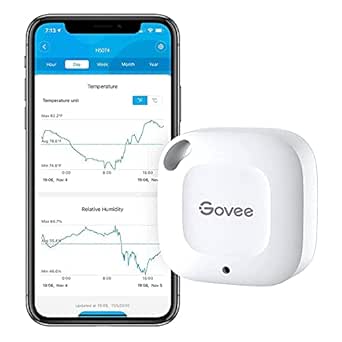 | Best for Bluetooth Data Tracking | Connectivity: Bluetooth; not Wi-Fi | Bluetooth range: Up to 262 ft without obstacles | Temperature accuracy: ±0.54°F | VIEW LATEST PRICE | See Our Full Breakdown |
| GoveeLife 2-in-1 Indoor/Outdoor Thermo-Hygrometer |  | Best for Rain-Exposed Greenhouses | Model: H5171 | Temperature accuracy: ±0.54°F | Humidity accuracy: ±3% RH | VIEW LATEST PRICE | See Our Full Breakdown |
| ALLOSUN Digital Thermometer Hygrometer with Long Probe and Alarm |  | Best for Measuring Hard-to-Reach Spots | Model: ETP110 | Display: Large LCD | Sensor probe length: 1.64 ft (50 cm) | VIEW LATEST PRICE | See Our Full Breakdown |
| TempPro TempAir Digital Indoor Hygrometer and Thermometer |  | Best for Simple On-Sensor Readings | Model: TempAir CORE TP150 | Temperature accuracy: ±1°F | Humidity accuracy: ±2% RH | VIEW LATEST PRICE | See Our Full Breakdown |
| AC Infinity B1 Smart Temperature, Humidity, and VPD Hygrometer with Bluetooth |  | Best for VPD-Focused Growing | Model: B1 | Measurements: Temperature, humidity, and VPD | Temperature accuracy: 0.1°C | VIEW LATEST PRICE | See Our Full Breakdown |
| TempPro TP49 3 Pack Digital Hygrometer Indoor Thermometer |  | Best for Multi-Zone Coverage | Pack size: 3 hygrometers | Humidity range: 10%–99% RH | Humidity accuracy: ±2% to 3% RH | VIEW LATEST PRICE | See Our Full Breakdown |
| TempPro TempAir Digital Indoor Hygrometer and Thermometer with Touchscreen |  | Best for Easy-to-Read Local Monitoring | Display: 4-inch backlit LCD with touchscreen | Temperature accuracy: ±1°F | Humidity accuracy: ±2% RH | VIEW LATEST PRICE | See Our Full Breakdown |
| MOCREO 2000ft Remote Temperature and Humidity Monitor with 3 Wireless Sensors |  | Best for Remote Multi-Zone Monitoring | Sensor count: 3 included; expandable up to 100 | Range: Up to 2,000 ft line of sight | Connectivity: RF sensors; Wi-Fi hub | VIEW LATEST PRICE | See Our Full Breakdown |
| TempPro TempAir Digital Hygrometer and Indoor Thermometer |  | Best Compact Greenhouse Gauge | Model: TempAir CORE TP-49-W | Temperature accuracy: ±1°F | Humidity accuracy: ±2% to 3% RH | VIEW LATEST PRICE | See Our Full Breakdown |
| eMylo Bluetooth Hygrometer Thermometer with Dew Point & VPD |  | Best for Bluetooth VPD Tracking | Model: TH11-KR | Connectivity: Bluetooth | Temperature accuracy: ±0.9°F / ±0.5°C | VIEW LATEST PRICE | See Our Full Breakdown |
| greenhouse hygrometer | Temperature accuracy | Humidity accuracy | Display |
|---|---|---|---|
| Bluetooth Thermometer and Hygr | ±0.9°F (±0.5°C) | ±3% in the 40–70% RH range | — |
| Govee H5179 Wi-Fi Thermometer | ±0.54°F (±0.3°C) | ±3% RH | — |
| TempPro TP50 Digital Hygromete | ±1°F | ±2–3% RH | — |
| JEDEW 2-Pack Digital Thermo-Hy | ±1°F | ±3% RH | Digital LCD |
| Govee Smart WiFi Thermometer H | ±0.54°F (±0.3°C) | ±3% | LCD |
| Govee H5074 Smart Bluetooth Th | ±0.54°F | ±3% RH | — |
| GoveeLife 2-in-1 Indoor/Outdoo | ±0.54°F | ±3% RH | — |
| ALLOSUN Digital Thermometer Hy | — | — | Large LCD |
| TempPro TempAir Digital Indoor | ±1°F | ±2% RH | Digital LCD |
| AC Infinity B1 Smart Temperatu | 0.1°C | — | Backlit LCD |
| TempPro TP49 3 Pack Digital Hy | ±1°F | ±2% to 3% RH | LCD with large digits and DRY/COMFORT/WET icons |
| TempPro TempAir Digital Indoor | ±1°F | ±2% RH | 4-inch backlit LCD with touchscreen |
| MOCREO 2000ft Remote Temperatu | ±0.3°C | — | — |
| TempPro TempAir Digital Hygrom | ±1°F | ±2% to 3% RH | LCD with large digits and condition icons |
| eMylo Bluetooth Hygrometer The | ±0.9°F / ±0.5°C | ±3% RH | — |
More Details on Our Top Picks
Bluetooth Thermometer and Hygrometer with Solar-Assisted Power
For a greenhouse where I want to track humidity trends without adding a hub or Wi-Fi setup, this model pairs Bluetooth readings with up to 24 months of history and data export. Its 10-second refresh suits routine checks, while customizable alerts can flag readings outside my chosen range. Solar-assisted power supplements three AAA batteries, which may reduce battery drain in a bright location, though it does not remove the need for batteries. Compared with the Govee H5179, this option offers a longer stated history but lacks Wi-Fi remote access, so readings depend on Bluetooth reach. The open-air range is up to 260 feet, but greenhouse walls and equipment can cut that down. I’d choose it for local trend tracking, not for dependable alerts when the app is closed.
Pros:- Guest Mode works without account registration, a hub, or Wi-Fi
- Stores up to 24 months of readings and supports data export
- Solar assistance supplements three AAA batteries
- Measures temperature and humidity with customizable app alerts
Cons:- Alerts require the app to be running
- Bluetooth range can be reduced by indoor walls and obstructions
Best for: Greenhouse growers who want long-term humidity records and app access nearby without creating an account or installing a hub
Not ideal for: Growers who need alerts while away from the greenhouse or dependable monitoring beyond Bluetooth range
- Temperature range:-22°F to 140°F (-30°C to 60°C)
- Temperature accuracy:±0.9°F (±0.5°C)
- Humidity range:1–99% RH
- Humidity accuracy:±3% in the 40–70% RH range
- Reading refresh interval:10 seconds
- Connectivity and range:Bluetooth; up to 260 ft in open air
- Power:Solar-assisted; 3 AAA batteries
- Data history:Up to 24 months
Our verdict“Choose this model if long-term records and hub-free Bluetooth monitoring matter more than remote Wi-Fi access.”
Govee H5179 Wi-Fi Thermometer and Hygrometer
When I need readings away from the greenhouse, the H5179’s Wi-Fi and Bluetooth give it an advantage over Bluetooth-only picks such as the Solar-Assisted Bluetooth Thermometer and Hygrometer. Its two-second response provides frequent updates, and app alerts can notify me when temperature or humidity moves beyond preset limits. Historical readings remain available online for 20 days, with export options covering up to two years—useful for reviewing seasonal patterns, though less convenient than having a full two-year record stored online. Setup has a network caveat: it does not support 5 GHz Wi-Fi, and alerts can only be configured over Bluetooth. I’d favor it for growers who want remote visibility, but not for a greenhouse without compatible 2.4 GHz Wi-Fi or for users seeking an on-device display.
Pros:- Wi-Fi and Bluetooth support app-based monitoring
- Readings refresh every two seconds
- App alerts can flag readings outside preset ranges
- Historical data can be exported for up to two years
Cons:- Does not support 5 GHz Wi-Fi
- Alerts can only be configured over Bluetooth
- Online history is limited to 20 days before relying on export
Best for: Growers with compatible 2.4 GHz Wi-Fi who want to check greenhouse conditions remotely through an app
Not ideal for: Buyers who need a standalone display, use only 5 GHz Wi-Fi, or want to configure alerts over Wi-Fi
- Model:H5179
- Connectivity:Wi-Fi and Bluetooth; does not support 5 GHz Wi-Fi
- Temperature accuracy:±0.54°F (±0.3°C)
- Humidity accuracy:±3% RH
- Response time:2 seconds
- Power and battery life:3 AA batteries, included; approximately 6 months
- Data storage:20 days online; export up to 2 years
- Dimensions:2.83 inches long
Our verdict“Pick the H5179 if remote app access matters more than a built-in screen or long online history.”
TempPro TP50 Digital Hygrometer and Indoor Thermometer
The TempPro TP50 keeps greenhouse monitoring straightforward: its screen shows humidity and temperature, while DRY, COMFORT, and WET indicators offer a quick cue without opening an app. High and low readings add context between visits, and the magnetic back or tabletop stand makes placement flexible. Compared with the connected Govee H5179, the TP50 gives up remote access and alerts, but it avoids Wi-Fi setup and app dependence. Its humidity accuracy is specified at ±2–3% RH, while temperature accuracy is ±1°F; those figures make it a basic reference rather than a precision logging tool. I’d pick it for a small greenhouse where a visible local reading is enough. Skip it if I need long-term records, remote checks, or warnings when conditions change.
Pros:- DRY, COMFORT, and WET indicators make the display quick to interpret
- Records high and low temperature and humidity readings
- Can sit on a surface or attach magnetically
- Includes a Fahrenheit/Celsius selector and one AAA battery
Cons:- No app, remote access, or alerts
- Temperature accuracy is specified as ±1°F
- Does not provide data export or long-term history
Best for: Growers who want a simple local display with high/low readings and no app or network setup
Not ideal for: Growers who need remote monitoring, alerts, or exported records to track greenhouse conditions over time
- Temperature accuracy:±1°F
- Humidity accuracy:±2–3% RH
- Refresh rate:10 seconds
- Operating humidity:10%–99%
- Upper temperature range:158°F
- Power:1 AAA battery, 1.5 V
- Mounting:Tabletop stand or magnetic back
- Dimensions:0.84 in W × 2.62 in H
Our verdict“Choose the TP50 for easy local checks, but pick a connected model such as the Govee H5179 if remote alerts matter.”
JEDEW 2-Pack Digital Thermo-Hygrometer with Fahrenheit/Celsius Conversion
For comparing a propagation shelf with the main growing area, the JEDEW set’s strongest feature is simply having two independent displays. That makes it easier to spot differences between zones than with the single-unit TempPro TP50, though neither model offers app logging or alerts. Each JEDEW updates every 10 seconds and can stand freely or attach with double-sided tape. The compact body may suit tight spaces, but its small LCD is harder to read from across a greenhouse. Its stated humidity range reaches 99% RH, while temperature measurement starts at 32°F, so it is not suited to monitoring below-freezing conditions. I’d choose this set for basic side-by-side checks, not for detailed records or a display that needs to be legible from a distance.
Pros:- Two units allow simultaneous checks in separate growing zones
- Updates readings every 10 seconds
- Can stand freely or mount with included double-sided tape
- Switches between Fahrenheit and Celsius
Cons:- Small display can be difficult to read from a distance
- Requires LR44 button-cell batteries
- Temperature range begins at 32°F
Best for: Growers who want to compare humidity in two greenhouse areas using simple, separate displays
Not ideal for: Buyers who need remote alerts, long-term data logging, easy-to-read displays from across a greenhouse, or readings below 32°F
- Quantity:2 hygrometers
- Display:Digital LCD
- Temperature range:32°F to 158°F (0°C to 70°C)
- Humidity range:10% to 99% RH
- Temperature accuracy:±1°F
- Humidity accuracy:±3% RH
- Update frequency:Every 10 seconds
- Battery and mounting:LR44 button cell; freestanding or double-sided tape
Our verdict“Choose the JEDEW two-pack for basic zone comparisons; choose the TempPro TP50 if a single, somewhat larger display is the priority.”
Govee Smart WiFi Thermometer Hygrometer H5051 with LCD Display and App Alerts
The H5051 bridges the gap between a local greenhouse readout and phone-based monitoring: its LCD display shows conditions on site, while Wi-Fi and Bluetooth add app access and alerts. That combination is more convenient for quick checks than the screen-free approach of the Govee H5179, though both require compatible 2.4 GHz Wi-Fi for Wi-Fi use. The Swiss-made sensor is specified at ±0.54°F for temperature and ±3% for humidity, and readings respond in three seconds. CSV export for up to two years helps me review trends, but the unit is designed for indoor use and its upper temperature limit is 122°F—lower than the H5179’s 140°F. I’d choose it when I want a readable display alongside records; skip it if the greenhouse may exceed that temperature limit or needs outdoor-rated hardware.
Pros:- LCD makes local readings available without opening the app
- Wi-Fi and Bluetooth support app monitoring
- Exports up to two years of historical data in CSV format
- Includes adhesive tape and a tabletop stand for placement options
Cons:- Wi-Fi is limited to 2.4 GHz networks
- Designed for indoor use only
- Upper temperature range is 122°F, below the Govee H5179’s 140°F limit
- Requires replacement of three AAA batteries
Best for: Growers who want an on-device LCD plus app alerts and exportable history in a greenhouse that stays within the unit’s temperature range
Not ideal for: Buyers needing outdoor-rated equipment, 5 GHz Wi-Fi, rechargeable power, or monitoring above 122°F
- Connectivity:2.4 GHz Wi-Fi and Bluetooth
- Temperature accuracy:±0.54°F (±0.3°C)
- Humidity accuracy:±3%
- Display:LCD
- Upper temperature range:122°F
- Response time:3 seconds
- Power:3 AAA batteries, included
- Data export:Up to 2 years in CSV format
Our verdict“Pick the H5051 if you want a local screen and app history together, provided its 122°F ceiling fits your greenhouse.”
Govee H5074 Smart Bluetooth Thermometer and Hygrometer
The Govee H5074 suits greenhouse growers who want a history of changing conditions, not just a live reading. Its app can alert you when temperature or humidity passes set limits, while 20 days of on-device storage and CSV export of up to two years of records help reveal recurring swings. That makes it more useful for reviewing ventilation or watering routines than the straightforward TempPro TempAir TP150, which tracks 24-hour highs and lows but does not list long-term export.
The tradeoff is its Bluetooth-only connection: the stated range reaches 262 feet only without obstacles, so a greenhouse separated from your phone by walls may not stay in range. Its 20%–80% operating humidity range also makes it a poor fit for very damp growing spaces. Choose it for app-based records in a moderate-humidity greenhouse; skip it if you need Wi-Fi access or coverage in persistently wet conditions.
Pros:- App notifications can flag readings outside user-set limits
- Stores 20 days of readings and supports CSV export of up to two years
- Compact, lightweight body can hang in different greenhouse locations
- Temperature and humidity accuracy are specified at ±0.54°F and ±3% RH
Cons:- Bluetooth connection does not provide Wi-Fi-based remote access
- The 262-foot range applies only without obstacles
- Operating humidity is limited to 20%–80% RH
Best for: Growers who want app alerts and downloadable long-term records while monitoring a moderate-humidity greenhouse within Bluetooth range
Not ideal for: Growers with persistently damp greenhouses or sites where walls and distance block Bluetooth access
- Connectivity:Bluetooth; not Wi-Fi
- Bluetooth range:Up to 262 ft without obstacles
- Temperature accuracy:±0.54°F
- Humidity accuracy:±3% RH
- Operating humidity:20%–80% RH
- Data storage:20 days on-device
- Data export:Up to 2 years via app as CSV
- Dimensions:1.57 in × 1.57 in
Our verdict“Pick the H5074 if app alerts and exportable records matter more than Wi-Fi access or monitoring in high humidity.”
GoveeLife 2-in-1 Indoor/Outdoor Thermo-Hygrometer
For growers who need a sensor that can sit where splashes, dust, or rain are possible, the GoveeLife H5171 has a stronger environmental fit than the indoor-focused TempPro TempAir TP150. Its IP65-rated casing is designed for rain and dust exposure, and its stated 0%–99% operating humidity range covers conditions that exceed the H5074’s 20%–80% range. The LCD also keeps readings visible at the sensor, while Bluetooth alerts and two years of data history add useful tracking.
That weather resistance is not permission to submerge it, and remote monitoring requires a compatible GoveeLife gateway. Bluetooth range is listed at 197 feet, shorter than the H5074’s unobstructed range. This is the better match for a damp or exposed greenhouse location, but less appealing if you want a simple sensor with no gateway dependency or do not need outdoor protection.
Pros:- IP65-rated casing is designed for dust and rain exposure
- Operating humidity range is stated as 0%–99% RH
- Clear LCD shows readings at the sensor
- App alerts and up to two years of data history support ongoing monitoring
Cons:- Must not be immersed in water
- Remote monitoring requires a compatible GoveeLife gateway
- Bluetooth range is listed at 197 ft
Best for: Greenhouse growers placing a sensor in a rain-exposed or dusty area who also want an LCD and app-based records
Not ideal for: Buyers who need an immersible sensor or remote access without adding a compatible GoveeLife gateway
- Model:H5171
- Temperature accuracy:±0.54°F
- Humidity accuracy:±3% RH
- Operating humidity:0%–99% RH
- Water resistance:IP65; do not immerse
- Bluetooth range:197 ft
- Data history:Up to 2 years
- Battery life:Up to 1 year in Bluetooth mode
- Dimensions:1.42 in W × 2.61 in H
Our verdict“Choose the H5171 for a damp or exposed greenhouse spot where rain resistance matters, provided you accept its gateway requirement for remote monitoring.”
ALLOSUN Digital Thermometer Hygrometer with Long Probe and Alarm
The ALLOSUN ETP110 earns its place for growers who need the display outside a tight canopy or enclosure while the sensor reaches inside. Its 1.64-foot detachable probe can sample a less accessible spot, and the large LCD shows temperature, relative humidity, and dew point together. Customizable humidity alarms and max/min memory make it more focused on local conditions than the Govee H5074, which adds app alerts and long-term record export instead of a remote probe.
The tradeoff is that ALLOSUN does not list app connectivity or extended data export, so it is a local-readout tool rather than a remote monitoring system. Its operating humidity range stops at 95% RH, and the temperature accuracy listing is ambiguous. Batteries are not included. I’d choose it for a bench or propagation area where probe placement matters; growers prioritizing verified accuracy specs and smartphone history should look elsewhere.
Pros:- 1.64-foot detachable probe reaches locations away from the display
- Large LCD shows temperature, humidity, and dew point together
- Customizable humidity alarms provide local alerts
- Wall and surface mounting options suit different greenhouse setups
Cons:- Two AAA batteries are required and are not included
- Temperature accuracy is listed ambiguously as 1 without a clear unit
- Operating humidity range ends at 95% RH
Best for: Growers who need to position a probe inside a dense canopy or hard-to-reach greenhouse area while keeping the display accessible
Not ideal for: Buyers seeking app-based remote access, long-term downloadable records, or monitoring near saturation above 95% RH
- Model:ETP110
- Display:Large LCD
- Sensor probe length:1.64 ft (50 cm)
- Readings:Temperature, relative humidity, and dew point
- Operating humidity:20%–95% RH
- Upper temperature range:60°C
- Mounting:Wall mount or surface mount
- Power:2 × 1.5V AAA batteries, not included
Our verdict“Choose the ETP110 when probe placement and dew-point visibility matter more than smartphone monitoring or long-term records.”
TempPro TempAir Digital Indoor Hygrometer and Thermometer
The TempPro TempAir TP150 is a practical pick for growers who want a quick visual check without pairing an app or setting up a probe. Its LCD, comfort icons, and 24-hour high/low records make daily changes easy to scan, while readings update every 10 seconds. Compared with the Govee H5074, it gives up app alerts and long-term data export but offers a simpler local display and a stated ±2% RH accuracy, tighter than the Govee’s ±3% RH figure.
Its IPX5 design suits humid indoor spaces, but the product is specified for indoor use, not exposed outdoor placement. The 24-hour memory is also limited if you want to study trends over weeks or seasons. A magnetic back and stand allow flexible positioning, and an AAA battery is included. I’d pick it for routine greenhouse checks near the work area, not for remote monitoring or long-term climate analysis.
Pros:- Displays 24-hour temperature and humidity highs and lows
- Humidity accuracy is specified at ±2% RH
- IPX5 waterproof design is suited to humid indoor spaces
- Magnetic back and stand offer flexible placement, and an AAA battery is included
Cons:- Designed for indoor use rather than exposed outdoor monitoring
- Records only 24-hour highs and lows, limiting longer-term trend review
- Does not list app connectivity or remote alerts
Best for: Growers who want a straightforward LCD hygrometer with daily high/low tracking for an indoor greenhouse or growing room
Not ideal for: Buyers who need app alerts, multiweek data history, or a sensor intended for exposed outdoor conditions
- Model:TempAir CORE TP150
- Temperature accuracy:±1°F
- Humidity accuracy:±2% RH
- Response time:10 seconds
- Records:24-hour temperature and humidity maximums and minimums
- Display:Digital LCD
- Water resistance:IPX5
- Power:1 AAA battery, included
Our verdict“Pick the TP150 for clear local readings and daily extremes; choose the Govee H5074 instead if you need app alerts and longer records.”
AC Infinity B1 Smart Temperature, Humidity, and VPD Hygrometer with Bluetooth
When greenhouse decisions depend on vapor pressure deficit as well as temperature and humidity, the AC Infinity B1 is the specialist pick in this group. Its corded probe and VPD monitoring give it a different purpose from the ALLOSUN ETP110, which shows dew point and humidity alarms but does not list VPD. Bluetooth app features add alarms and graphs, while daily high/low tracking helps growers connect changing readings with plant conditions. A backlit LCD and wall, desktop, or magnetic mounting make the display adaptable around a growing area.
The main limitation is its stated 35%–85% RH operating range, which may not cover very dry or very humid greenhouse conditions. Bluetooth is the listed connection method, and the upper temperature range is 125°F. I’d choose the B1 for growers who actively use VPD to guide climate adjustments; those who only need basic humidity readings can get a simpler setup with the TP150.
Pros:- Measures VPD alongside temperature and humidity
- Corded probe supports placement away from the display
- Bluetooth app offers remote monitoring, alarms, and data graphs
- Backlit LCD supports wall, desktop, or magnetic mounting
Cons:- Operating humidity range is limited to 35%–85% RH
- Bluetooth is the listed connection method
- Upper temperature range is 125°F
Best for: Growers who use VPD to guide greenhouse climate adjustments and want probe readings, app graphs, and alarms
Not ideal for: Growers whose conditions may fall below 35% or rise above 85% RH, or who need connectivity beyond Bluetooth
- Model:B1
- Measurements:Temperature, humidity, and VPD
- Temperature accuracy:0.1°C
- Operating humidity:35%–85% RH
- Upper temperature range:125°F
- Connectivity:Bluetooth
- Display:Backlit LCD
- Mounting:Wall mount, desktop, or magnetic
- Included components:Thermal-alloy probe and batteries
Our verdict“Choose the B1 if VPD is part of your growing routine; for basic local temperature and humidity checks, the TempPro TP150 is simpler.”
TempPro TP49 3 Pack Digital Hygrometer Indoor Thermometer
For checking humidity across several benches or propagation areas, the three-pack TP49 offers a simple advantage over single-display options such as the TempPro TP-55: you can place a separate monitor near each group of plants without relying on a hub or app. Its 10-second refresh and stated ±2% to 3% RH accuracy suit routine greenhouse checks, while the DRY/COMFORT/WET icons make quick readings easier to interpret. The compact units can stand, hang, or attach magnetically, so placement is flexible. The tradeoff is that these are independent local displays, not a connected monitoring system; unlike the MOCREO 2000ft, they do not provide remote alerts, history, or multi-sensor readings on one hub. I’d choose this set for distributed spot checks, not unattended climate management.
Pros:- Three units let you monitor separate greenhouse areas at once.
- DRY/COMFORT/WET icons help make readings quick to interpret.
- Refreshes temperature and humidity readings every 10 seconds.
- Tabletop, magnetic, and hanging placement options suit different surfaces.
Cons:- No wireless connection, data history, or remote alerts.
- Small displays may be harder to read from across a greenhouse.
- Humidity accuracy is specified as a ±2% to 3% RH range rather than a single figure.
Best for: Growers who want to compare humidity in several greenhouse zones using simple, separate displays.
Not ideal for: Growers who need app access, stored trends, remote alerts, or one central view of multiple sensors.
- Pack size:3 hygrometers
- Humidity range:10%–99% RH
- Humidity accuracy:±2% to 3% RH
- Temperature accuracy:±1°F
- Refresh rate:10 seconds
- Display:LCD with large digits and DRY/COMFORT/WET icons
- Mounting:Tabletop, magnetic back, or hanging mount
- Dimensions:2.2 in W × 2.6 in H
Our verdict“Choose the TP49 three-pack if you want straightforward local readings in multiple greenhouse zones without adding a connected system.”
TempPro TempAir Digital Indoor Hygrometer and Thermometer with Touchscreen
The 4-inch backlit LCD makes the TP-55 a better pick than the smaller TP49 when a greenhouse monitor needs to be read at a glance from nearby work areas. Its touchscreen, comfort indicator, and 10-second updates keep routine checks straightforward, while 24-hour and all-time min/max records reveal whether conditions have swung between visits. Temperature and humidity accuracy are specified at ±1°F and ±2% RH. The main limitation is its indoor-only positioning: it is suited to protected greenhouse placement, not exposed weather or wet conditions. It also offers no app, remote alerts, or multi-sensor system like the MOCREO. I’d favor this model over a basic compact gauge when a larger, clearer local screen matters more than remote tracking.
Pros:- Large 4-inch backlit screen is easier to read than compact gauges.
- Records 24-hour and all-time maximum and minimum readings.
- Specified accuracy of ±1°F and ±2% RH.
- Can sit on a surface, mount on a wall, or attach magnetically.
Cons:- Designed for indoor use, limiting placement in exposed greenhouse conditions.
- Requires two batteries and does not provide remote alerts or app tracking.
Best for: Greenhouse growers who want a larger, backlit screen and min/max records for local checks in a sheltered area.
Not ideal for: Anyone needing remote monitoring, multiple wireless sensor readings, or a monitor rated for exposed outdoor conditions.
- Display:4-inch backlit LCD with touchscreen
- Temperature accuracy:±1°F
- Humidity accuracy:±2% RH
- Refresh rate:10 seconds
- Records:24-hour and all-time maximum and minimum
- Temperature units:°F or °C
- Placement:Tabletop, wall-mounted, or magnetic
- Power:2 included batteries
- Maximum temperature range:158°F
Our verdict“Pick the TP-55 if a readable local display and min/max records matter more than wireless access or greenhouse-wide coverage.”
MOCREO 2000ft Remote Temperature and Humidity Monitor with 3 Wireless Sensors
The MOCREO system is the standout here for growers who need readings from separated greenhouse areas rather than a single local display. Three wireless sensors report to a hub, with a stated line-of-sight range of up to 2,000 feet; the sensors use RF, so their placement does not depend on Wi-Fi coverage. That gives it a different job from the TempPro TP49 three-pack, which offers several independent displays but no shared hub, history, or alarms. MOCREO adds dew point and VPD, two useful climate indicators, plus a 90 dB local alarm and app notifications. Its tradeoff is environmental suitability: the sensors are not waterproof and are not designed for below-freezing conditions. I’d choose it for sheltered, separated zones and skip it where sensors may get soaked or chilled.
Pros:- Three wireless sensors can monitor distinct zones from one hub.
- RF sensor connection supports placement where Wi-Fi or power is unavailable.
- Calculates dew point and VPD in addition to temperature and humidity.
- Provides a 90 dB local alarm, app notifications, and up to two years of data history.
Cons:- Sensors are not waterproof and are unsuitable for soaking-wet locations.
- Operating temperature range starts at 32°F, ruling out sub-freezing areas.
- More equipment and setup than simple stand-alone options such as the TempPro TP-55.
Best for: Growers managing several sheltered greenhouse zones who want centralized readings, VPD data, and alerts.
Not ideal for: Growers whose sensors will face rain, soaking humidity, or sub-freezing temperatures, or who only need a basic local gauge.
- Sensor count:3 included; expandable up to 100
- Range:Up to 2,000 ft line of sight
- Connectivity:RF sensors; Wi-Fi hub
- Temperature range:32°F to 140°F
- Temperature accuracy:±0.3°C
- Alarm volume:90 dB
- Data history:Up to 2 years
- Power:Alkaline batteries
Our verdict“Choose MOCREO for connected, multi-zone greenhouse tracking when sensors can stay sheltered and above freezing.”
TempPro TempAir Digital Hygrometer and Indoor Thermometer
When space is limited, the TempPro TempAir CORE TP-49-W is a practical small-format choice: it combines temperature and humidity readings with easy-to-scan DRY/COMFORT/WET icons in a compact body. Its stated ±1°F temperature accuracy and ±2% to 3% RH humidity accuracy are comparable to the TP49 three-pack, but this listing is a single unit, so it makes more sense for one bench or a small growing area than for checking several zones. The 10-second refresh and tabletop, magnetic, or hanging placement make it easy to position near plants. The compromise is visibility: its compact dimensions are less suited to reading from a distance than the TP-55’s 4-inch display. It also lacks records, app access, and alerts, so it’s a simple spot-check gauge rather than a monitoring system.
Pros:- Compact form fits crowded shelves and tight greenhouse spaces.
- DRY/COMFORT/WET icons make humidity status quick to scan.
- Updates readings every 10 seconds.
- Tabletop, magnetic, and hanging placement options.
Cons:- Small display is harder to read from a distance than the TP-55’s larger screen.
- No min/max history, app connection, or alert system.
- Humidity accuracy is stated as a ±2% to 3% RH range.
Best for: Small-space growers who need one compact, easy-to-place humidity and temperature gauge near a single plant group.
Not ideal for: Growers who need a large display, historical readings, remote alerts, or simultaneous checks across multiple greenhouse zones.
- Model:TempAir CORE TP-49-W
- Temperature accuracy:±1°F
- Humidity accuracy:±2% to 3% RH
- Refresh rate:10 seconds
- Display:LCD with large digits and condition icons
- Mounting:Tabletop stand, magnetic back, or hanging mount
- Upper temperature range:158°F
- Dimensions:0.7 in W × 2.6 in H
Our verdict“Choose this TempAir if you need a compact local gauge for one greenhouse spot and do not need history or remote monitoring.”
eMylo Bluetooth Hygrometer Thermometer with Dew Point & VPD
The eMylo TH11-KR suits growers who want more than relative humidity on a local screen: it also tracks dew point and VPD, updates every six seconds, and stores up to 20 days of readings for later syncing. That makes it more useful for reviewing climate patterns than the basic TempPro TempAir, which offers quick status icons but no data history. Compared with MOCREO’s multi-sensor hub, eMylo is a smaller, single-device Bluetooth option rather than a long-range system for several zones. Its accuracy is specified at ±0.9°F and ±3% RH, and the Bluetooth range is only about 32.8 feet. Detailed trends and exports require the HumiTemp app, so I’d skip it if you need alerts while away from the greenhouse or coverage beyond nearby phone range.
Pros:- Tracks VPD and dew point alongside temperature and relative humidity.
- Stores up to 20 days of readings for later synchronization.
- Six-second update frequency keeps local readings current.
- LCD display and tabletop or wall mounting support flexible placement.
Cons:- Bluetooth range is limited to about 32.8 feet.
- No Wi-Fi means no real-time alerts when away from the device.
- Detailed trends and data export require a smartphone and the HumiTemp app.
Best for: Plant growers who want local VPD and dew-point readings with short-term stored trends accessible by Bluetooth.
Not ideal for: Growers who need Wi-Fi alerts away from the greenhouse, long-range sensor coverage, or app-free data access.
- Model:TH11-KR
- Connectivity:Bluetooth
- Temperature accuracy:±0.9°F / ±0.5°C
- Humidity accuracy:±3% RH
- Update frequency:Every 6 seconds
- Onboard memory:20 days
- Bluetooth range:Up to 32.8 ft
- Operating humidity:10%–99% RH
- Dimensions:3.07 in W × 3.07 in H
Our verdict“Choose eMylo if VPD tracking and short-term Bluetooth history matter more than remote access or multi-zone coverage.”
How We Picked
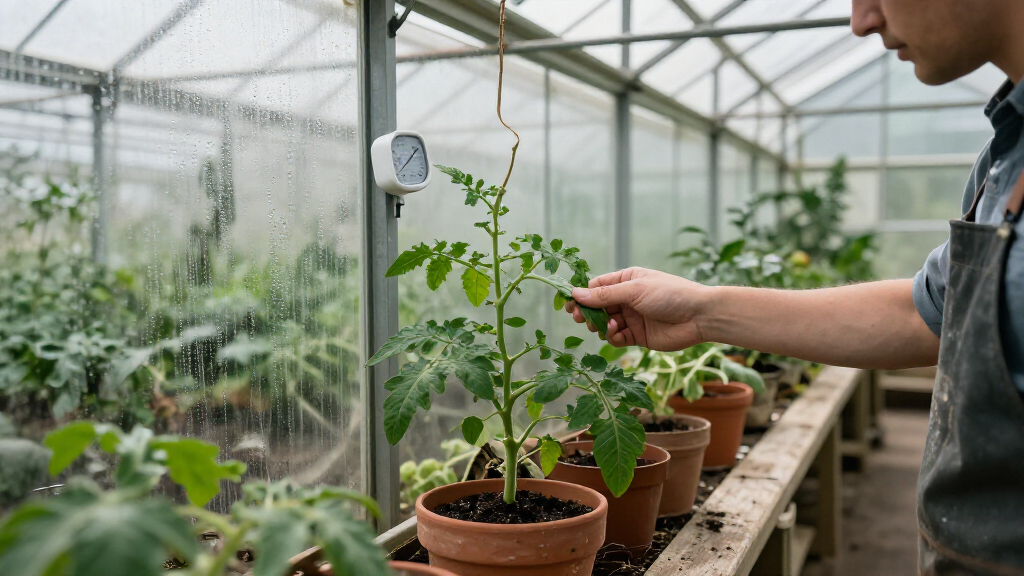
I compared these hygrometers by the jobs a greenhouse grower needs them to do: report temperature and relative humidity clearly, remain useful in a humid growing space, and make readings accessible where they are needed. I also weighed connection type, alert and logging features, sensor count, display readability, probe placement, and added measurements such as dew point or VPD. Those details matter because a sensor that is accurate on paper is less helpful if it sits in the wrong location or cannot be checked when the grower is away.
The ranking favors greenhouse usefulness over feature count. The AC Infinity B1 leads for its plant-oriented VPD information; connected Govee models follow when remote access or alerts are the priority; and MOCREO earns a distinct place for multi-zone monitoring. Simpler TempPro and JEDEW units make more sense when a local reading or several low-complexity checkpoints are enough. I treat indoor-use labeling, power needs, app dependence, and the absence of stated greenhouse weatherproofing as real limitations rather than assuming every unit is suited to damp or exposed placement.
| greenhouse hygrometer | Humidity accuracy |
|---|---|
| Bluetooth Thermometer and Hygr | ±3% in the 40–70% RH range |
| Govee H5179 Wi-Fi Thermometer | ±3% RH |
| TempPro TP50 Digital Hygromete | ±2–3% RH |
| JEDEW 2-Pack Digital Thermo-Hy | ±3% RH |
| Govee Smart WiFi Thermometer H | ±3% |
| Govee H5074 Smart Bluetooth Th | ±3% RH |
| GoveeLife 2-in-1 Indoor/Outdoo | ±3% RH |
| ALLOSUN Digital Thermometer Hy | — |
| TempPro TempAir Digital Indoor | ±2% RH |
| AC Infinity B1 Smart Temperatu | — |
| TempPro TP49 3 Pack Digital Hy | ±2% to 3% RH |
| TempPro TempAir Digital Indoor | ±2% RH |
| MOCREO 2000ft Remote Temperatu | — |
| TempPro TempAir Digital Hygrom | ±2% to 3% RH |
| eMylo Bluetooth Hygrometer The | ±3% RH |
Factors to Consider When Choosing Best Greenhouse Hygrometers
Choosing a greenhouse hygrometer is less about collecting the most readings and more about getting useful measurements from the right places. I’d settle the following questions before choosing a display, app, or sensor bundle.
Decide Whether You Need Remote Access
A local screen is often enough if you visit the greenhouse every day and only need a quick reading. Wi-Fi can help when the structure is separate from your home or you want alerts without walking over, but it depends on a reliable network reaching the sensor. Bluetooth usually works best for checking readings nearby rather than monitoring from far away. App features also add setup and notification decisions, so they are not automatically an upgrade. Before paying for connectivity, ask whether you will act on a remote alert or simply check conditions during routine visits. If greenhouse Wi-Fi is weak, a basic display or a remote system with its own receiver may be more dependable for your routine.
Think in Zones, Not Just Sensor Count
Greenhouses can have different conditions near the roof, a vent, a heater, a watering station, or dense foliage. One sensor gives a useful snapshot, but it may not represent the conditions where every plant grows. Multiple sensors help reveal patterns and can guide changes to ventilation or irrigation. Avoid placing sensors together just because a kit includes several; put them in locations tied to actual decisions. A sensor near direct sun or a water spray may report a local effect rather than the general growing environment. For a small, uniform greenhouse, one well-positioned unit can be more informative than several poorly placed ones.
Check Environmental Suitability Before Mounting
A greenhouse’s humidity and condensation can be tougher on electronics than a typical indoor room. Do not assume that a product described as an indoor hygrometer is waterproof or rated for continuous exposure to wet conditions. Keep the device away from direct spray, dripping surfaces, and intense sun unless its documentation permits that placement. A probe can let the sensing point sit where you need a reading while the display stays in a more protected spot. A protective cover may help with splashes, but it can also affect airflow around the sensor. When outdoor exposure is unavoidable, verify the maker’s stated environmental limits rather than relying on the product name.
Choose Readings That Match Your Growing Decisions
Relative humidity and temperature are the baseline measurements, but they do not answer every plant-care question. VPD combines temperature and humidity into a measure many growers use to think about plant transpiration, so it can be useful for more controlled growing routines. Dew point can help identify when air may reach conditions that encourage condensation on cooler surfaces. These added metrics are only useful if you know how you plan to respond to them. A basic display may be easier to read at a glance, while app-based readings can keep more context and history. Choose the simplest set of measurements that supports decisions you will actually make.
Match Alerts and History to Your Routine
Alerts are most useful when a temperature or humidity change needs a timely response, such as checking ventilation during a hot spell. They are less helpful if thresholds are poorly chosen and notifications become frequent noise. Data history can show recurring daily swings that a single display reading cannot reveal, but only if you review it and adjust your setup. Confirm whether the device stores readings locally, in an app, or only while a phone is connected. Consider who will receive alerts and whether the system still provides a usable reading when a network connection drops. If you prefer a glanceable check and do not need records, a simpler unit avoids extra setup.
Spend on Coverage Before Extra Features
For a small greenhouse, reliable placement and a readable screen may matter more than a long feature list. If the structure has separated growing areas, another sensor may improve decisions more than a premium app or a specialized metric. Remote alerts are a better use of added complexity when nobody checks the greenhouse regularly. A probe can be worthwhile when the display and measurement point need to be separated. Do not treat a bundle’s sensor count as proof of better monitoring; compare how each sensor communicates and whether readings are easy to identify. Spend more when a feature changes what you can observe or do, not simply because it is available.
Frequently Asked Questions
Can I use an indoor hygrometer in a greenhouse?
Some indoor models can provide useful readings in a protected greenhouse location, but an indoor label does not mean the device is built for condensation, splashes, or direct exposure. Check the manufacturer’s environmental limits and place the unit away from irrigation spray and drips. If the greenhouse stays very damp, a model with a probe or an appropriate protective rating may be a safer fit. Also allow air to circulate around the sensing area so the reading reflects the growing space rather than a trapped pocket of moisture. When in doubt, use an indoor unit in a sheltered spot and monitor whether its readings remain consistent.
Is Wi-Fi worth choosing over Bluetooth for greenhouse monitoring?
Wi-Fi is useful when you want to check readings or receive alerts while away from the greenhouse, provided the network reaches the sensor reliably. Bluetooth is usually a better match for nearby checks and can avoid dependence on a distant network connection. Neither connection type fixes poor sensor placement or makes an indoor-rated device weatherproof. Think about how often you are away and what action an alert would prompt. If you only check conditions while tending plants, the added app and network setup may not improve your routine.
How many hygrometer sensors should a greenhouse have?
The right number depends on how different the greenhouse zones are, not just its floor area. A compact, uniform space may need one carefully placed sensor, while separate benches, levels, or climate zones can benefit from additional readings. Start with locations that answer a real question, such as whether a far corner stays cooler or a vent dries one section faster. Compare readings before buying more sensors if you are unsure whether conditions vary. Extra sensors help only when you can tell which location each reading represents and use the information.
Do I need a hygrometer that measures VPD or dew point?
Not every grower needs either metric. VPD may be useful if you manage plant transpiration with temperature and humidity targets, while dew point can help you understand condensation risk on cooler surfaces. Both add context beyond relative humidity, but they also require you to interpret the information and decide what to change. If your main goal is checking whether the greenhouse is too humid or too hot, temperature and humidity readings may be enough. Choose an added metric when it supports a specific growing or ventilation decision.
Where should I place a greenhouse hygrometer for a useful reading?
Place the sensing area near the plants whose conditions you want to manage, rather than directly beside a vent, heater, watering spray, or sunlit panel. A reading taken at the roof may differ from the conditions around a lower plant canopy, so match sensor height to the growing area. Keep the device clear of wet surfaces and allow air to move around it. If you are tracking several zones, label or record each sensor’s position so comparisons remain meaningful. Avoid moving a sensor repeatedly during a reading period, since changing locations makes trends harder to interpret.
Conclusion
For a single greenhouse where plant-focused readings matter, I’d choose the AC Infinity B1 as the best overall. The Govee H5179 is my pick for remote Wi-Fi monitoring, while the MOCREO three-sensor system fits growers who need to compare separate zones. For a simpler, more accessible starting point, I’d look to the TempPro TP50 or a multi-unit TempPro or JEDEW option, depending on whether one display or several checkpoints matter more. The ALLOSUN long-probe model is the specific-needs choice when the sensor must reach a spot that is awkward to access. My best-value recommendation is a basic multi-unit setup when several local readings are the priority; choose a connected or VPD-capable model only if its added information will change how you manage the greenhouse.