
The best overall greenhouse temperature controller in this roundup is the Inkbird ITC-308 with heating and cooling outlets, a versatile choice for managing both temperature extremes with one unit. For remote monitoring, the Inkbird ITC-308 WiFi and DEWENWILS Smart Wi-Fi controller stand out, while the WILLHI WH2408 suits growers who want a straightforward digital controller. The main tradeoffs are simple plug-in control versus app access, single-purpose versus heating-and-cooling outlets, and standard probes versus waterproof designs. A controller can only regulate equipment within its electrical capacity, so matching its rating to your heater or fan matters as much as its features. Read on for the full breakdown and advice on choosing a setup that fits your greenhouse.

Get garden gear delivered free with Prime
- Fast, free delivery on millions of items
- Prime Video, Amazon Music and more included
- Member-only deals all year
Complete the kit


Key Takeaways
- Dual heating-and-cooling control is the clearest all-around advantage: the Inkbird ITC-308 models can manage both temperature directions, while simpler thermostat outlets may suit a single appliance better.
- Wi-Fi adds remote visibility, not a substitute for local control. The Inkbird WiFi and DEWENWILS options merit attention if checking conditions away from the greenhouse matters to you.
- Probe placement and protection affect usefulness. Waterproof probe options such as the DIGITEN DTC310 and SENSTREE are better suited to damp conditions than treating every standard probe as greenhouse-ready.
- Electrical capacity varies across this lineup. The 15A DEWENWILS, 10A WILLHI and DIGITEN, and 1000W BN-LINK reptile controller serve different equipment loads; check the appliance label before choosing.
- Specialized controllers are not automatic upgrades. The Inkbird ITC-306T is aquarium-focused, the BN-LINK reptile model targets a narrower temperature range, and the Inkbird humidity bundle adds a separate control task.
| WILLHI WH2408 Digital Temperature Controller, 10A, 1200W |  | Best for Simple Manual Control | Model: WH2408 | Probe temperature range: -58°F to 230°F (-50°C to 110°C) | Controller ambient temperature range: -4°F to 140°F (-20°C to 60°C) | VIEW LATEST PRICE | See Our Full Breakdown |
| Inkbird ITC-308 WiFi Temperature Controller |  | Best for Remote Monitoring | Model: ITC-308-WIFI-LW | Connectivity: 2.4 GHz WiFi | Temperature modes: Heating and cooling | VIEW LATEST PRICE | See Our Full Breakdown |
| Diymore Plug-In Digital Thermostat Controller, 1800W |  | Best for Flexible Timer Modes | Model number: GXAB0002-006 | Temperature range: -40°F to 248°F | Temperature precision: ±1°F | VIEW LATEST PRICE | See Our Full Breakdown |
| Inkbird WiFi ITC-308 Digital Temperature Controller |  | Best for Equipment and Sensor Alerts | Model: WiFi ITC-308-US | Connectivity: 2.4 GHz WiFi | Voltage: 110 V | VIEW LATEST PRICE | See Our Full Breakdown |
| LUXBIRD LB-2SC Dual-Outlet Digital Temperature Controller, Green |  | Best for Two Low-Wattage Zones | Model: LB-2SC | Outlets: 2 independently controlled | Temperature range: 32°F to 113°F (0°C to 45°C) | VIEW LATEST PRICE | See Our Full Breakdown |
| DEWENWILS Smart Wi-Fi Temperature Controller, 15A |  | Best for Remote Greenhouse Control | Model: HTCS02D2 | Connectivity: Wi-Fi | Control method: App | VIEW LATEST PRICE | See Our Full Breakdown |
| KETOTEK KT3100 Digital Thermostat Outlet Plug with 3 m Temperature Probe |  | Best for Long-Reach Probe Placement | Model: KT3100 | Power supply: 100–250 V AC | Maximum output: 15 A at 120 V | VIEW LATEST PRICE | See Our Full Breakdown |
| BN-LINK Digital Cooling Thermostat Controller Outlet |  | Best for Cooling-Only Setups | Model: BNQ-T7B(C) | Control type: Cooling | Temperature range: 40–108°F | VIEW LATEST PRICE | See Our Full Breakdown |
| Inkbird ITC-308 Digital Temperature Controller with Heating and Cooling Outlets |  | Best Dual-Outlet Greenhouse Pick | Model: ITC-308 | Voltage: 110 V, 240 V | Maximum power: 1200 W | VIEW LATEST PRICE | See Our Full Breakdown |
| Inkbird ITC-308 Temperature Controller and IHC-200 Humidity Controller |  | Best for Combined Temperature and Humidity Management | Included controllers: ITC-308 temperature controller and IHC-200 humidity controller | Number of items: 2 | Voltage: 120 volts | VIEW LATEST PRICE | See Our Full Breakdown |
| DIGITEN DTC310 Waterproof Temperature Controller, 10A Digital Thermostat |  | Best for Wide Temperature Coverage | Model: DTC-310 | Control range: -40°F to 248°F (-40°C to 120°C) | Maximum current: 10A | VIEW LATEST PRICE | See Our Full Breakdown |
| Inkbird ITC-306T Digital Aquarium Temperature Controller |  | Best for Day-and-Night Heating Schedules | Model: ITC-306T-LW | Outlets: 2 heating outlets | Temperature range: Up to 210°F | VIEW LATEST PRICE | See Our Full Breakdown |
| VIVOSUN 1500W Digital Temperature Controller with Heating and Cooling Modes |  | Best for Heating and Cooling Control | Model: TC-0001 | Controller type: Push button | Control range: -58°F to 248°F | VIEW LATEST PRICE | See Our Full Breakdown |
| BN-LINK Digital Reptile Thermostat Temperature Controller, 40–108°F, 1000W |  | Best for Simple Seedling-Mat Heating | Model: BNQ-T7H | Temperature range: 40–108°F | Maximum load: 1000W, 8.3A | VIEW LATEST PRICE | See Our Full Breakdown |
| SENSTREE Waterproof Digital Temperature Controller, 110V, 10A, 1100W |  | Best for Weather-Exposed Placement | Model: DTC310ZJ-JP | Voltage: Listed as 110V and 220V | Maximum current: 10A | VIEW LATEST PRICE | See Our Full Breakdown |
| greenhouse temperature controller | Model | Voltage | Display |
|---|---|---|---|
| WILLHI WH2408 Digital Temperat | WH2408 | — | — |
| Inkbird ITC-308 WiFi Temperatu | ITC-308-WIFI-LW | 110 V | LCD |
| Diymore Plug-In Digital Thermo | — | 220 V | — |
| Inkbird WiFi ITC-308 Digital T | WiFi ITC-308-US | 110 V | Digital |
| LUXBIRD LB-2SC Dual-Outlet Dig | LB-2SC | 120 V | LCD |
| DEWENWILS Smart Wi-Fi Temperat | HTCS02D2 | 120 V | — |
| KETOTEK KT3100 Digital Thermos | KT3100 | — | — |
| BN-LINK Digital Cooling Thermo | BNQ-T7B(C) | 120 VAC, 60 Hz | LED; Fahrenheit and Celsius |
| Inkbird ITC-308 Digital Temper | ITC-308 | 110 V, 240 V | LCD |
| Inkbird ITC-308 Temperature Co | — | 120 volts | LCD or LED |
| DIGITEN DTC310 Waterproof Temp | DTC-310 | — | Illuminated LED |
| Inkbird ITC-306T Digital Aquar | ITC-306T-LW | — | Dual LCD |
| VIVOSUN 1500W Digital Temperat | TC-0001 | 110–240V | Dual LED |
| BN-LINK Digital Reptile Thermo | BNQ-T7H | 120VAC, 60Hz | LED |
| SENSTREE Waterproof Digital Te | DTC310ZJ-JP | Listed as 110V and 220V | LCD |
More Details on Our Top Picks
WILLHI WH2408 Digital Temperature Controller, 10A, 1200W
The WILLHI WH2408 makes sense for greenhouse growers who want straightforward heating and cooling control without app setup. Its knob-based adjustments are simpler to operate than the push-button menus on the Inkbird ITC-308 WiFi, while the waterproof probe can be placed where temperature matters most. The probe’s broad range also suits spaces that may run much colder or hotter than the controller’s target range in ordinary greenhouse use. Settings memory helps restore your chosen setup after a power interruption, but this is not a safety cutoff: connected heaters or fans still need their own thermal and overload protection. Unlike the Inkbird WiFi options, it offers no remote monitoring or temperature alarms, and the controller housing must stay dry. I’d choose it for uncomplicated local control, not a greenhouse that needs remote alerts.
Pros:- Heating and cooling modes support control of different climate equipment
- Knob-based adjustments keep setup simple
- Settings memory restores configuration after a power outage
- Waterproof food-grade probe covers a broad temperature range
Cons:- Controller shell is not waterproof and must be kept dry
- No WiFi monitoring or temperature alarms
- Connected equipment needs separate thermal and overload protection
Best for: Greenhouse growers who want easy, local heating-and-cooling control and can check conditions in person.
Not ideal for: Remote growers who need phone alerts, or installations where the controller itself may be exposed to moisture.
- Model:WH2408
- Probe temperature range:-58°F to 230°F (-50°C to 110°C)
- Controller ambient temperature range:-4°F to 140°F (-20°C to 60°C)
- Control resolution:0.1°F
- Modes:Heating and cooling
- Probe:Waterproof, food-grade
- Included components:Temperature controller, temperature probe, user manual
Our verdict“Choose the WH2408 for simple, hands-on greenhouse control if remote alerts and built-in safety protection are not priorities.”
Inkbird ITC-308 WiFi Temperature Controller
For growers who cannot check the greenhouse throughout the day, the Inkbird ITC-308 WiFi adds a useful layer of remote visibility: the app can monitor temperature, while high and low alarms flag conditions that leave the set range. Its dual relay output handles heating and cooling devices, so it can manage both sides of climate control rather than only switching one type of equipment. Compared with the manual WILLHI WH2408, the Inkbird is better suited to a greenhouse that is out of sight, but it depends on a 2.4 GHz WiFi network and a 110 V setup. Its 1100 W maximum load also calls for checking equipment draw before connecting a heater. The app and alarms add convenience, but they do not replace an independent safety cutoff or a reliable network.
Pros:- App access supports remote temperature monitoring
- Heating and cooling relays can control both types of equipment
- High and low temperature alarms flag out-of-range conditions
- Celsius/Fahrenheit readings and calibration support tailored monitoring
Cons:- Requires a 2.4 GHz WiFi network for app access
- Maximum output is 1100 W at 110 V
- Listed for 110 V use
Best for: Greenhouse owners with reliable 2.4 GHz WiFi who want phone-based temperature checks and alerts while away.
Not ideal for: Growers without 2.4 GHz WiFi, users of equipment above its 1100 W limit, or anyone needing a controller for a different voltage.
- Model:ITC-308-WIFI-LW
- Connectivity:2.4 GHz WiFi
- Temperature modes:Heating and cooling
- Maximum output load:1100 W at 110 V
- Voltage:110 V
- Display:LCD
- Dimensions:1.2 × 2.6 × 6.7 in
- Weight:16 oz
Our verdict“Pick the Inkbird ITC-308 WiFi when remote monitoring and alerts matter more than the WILLHI WH2408’s simpler, offline operation.”
Diymore Plug-In Digital Thermostat Controller, 1800W
The Diymore stands out for growers who want more scheduling choices than the basic setpoint control of the WILLHI WH2408. It combines five control modes with timer settings up to 99 hours, giving a greenhouse operator more ways to tailor equipment behavior to a specific routine. The 6-foot sensor cord also makes it easier to position the probe away from the controller and closer to the plant area being monitored. Heating and cooling support, outage memory, and plug-in installation keep the setup approachable, though its push-button interface is less immediate than the WILLHI’s knobs and it has no app-based access like the Inkbird ITC-308 WiFi. The listed 220 V supply and 1800 W maximum load need to match the greenhouse’s equipment and electrical setup. It suits hands-on users who value modes and timers over remote alerts.
Pros:- Five control modes and timer settings up to 99 hours add scheduling flexibility
- Six-foot sensor cord allows flexible probe placement
- Controls heating and cooling equipment
- Settings memory retains configuration after power outages
Cons:- Push-button controls lack the immediate adjustment of the WILLHI WH2408 knobs
- No app or remote monitoring is specified
- Maximum load is 1800 W and listed voltage is 220 V
Best for: Greenhouse growers who want timer-based control options, a longer sensor lead, and a compatible 220 V setup.
Not ideal for: Users seeking app monitoring, a knob-simple interface, or equipment and outlets that do not match its listed voltage and load.
- Model number:GXAB0002-006
- Temperature range:-40°F to 248°F
- Temperature precision:±1°F
- Maximum wattage:1800 W
- Voltage:220 V
- Sensor cord length:6 ft
- Control modes:5
- Maximum timer setting:99 hours
Our verdict“Choose Diymore if its 220 V requirements fit your setup and you value timer modes more than WiFi access.”
Inkbird WiFi ITC-308 Digital Temperature Controller
This Inkbird version is a strong fit for greenhouse growers who want remote control plus alerts for more than temperature drift. Alongside high and low temperature alarms, it reports a sensor malfunction, which can warn that the controller is no longer receiving a dependable reading. Like the Inkbird ITC-308 WiFi in this lineup, it uses 2.4 GHz WiFi, supports heating and cooling, and is limited to 1100 W at 110 V. The practical distinction from the Diymore is remote app access and fault alerts rather than timer modes; against the WILLHI WH2408, it offers more monitoring but depends on a network and phone app. Its 110 V specification and load limit narrow equipment compatibility, so I’d verify the greenhouse’s electrical setup before choosing it.
Pros:- App control supports remote monitoring over 2.4 GHz WiFi
- Heating and cooling control covers both heating and refrigeration equipment
- Includes high/low temperature alarms and a sensor malfunction alert
- Supports Celsius/Fahrenheit readings and temperature calibration
Cons:- Requires 2.4 GHz WiFi for app connectivity
- Maximum output is 1100 W at 110 V
- 110 V specification may not suit every greenhouse electrical setup
Best for: Growers who want app-based temperature checks and a sensor fault alert for a greenhouse they cannot monitor constantly.
Not ideal for: Greenhouses without dependable 2.4 GHz WiFi or those running equipment that exceeds 1100 W at 110 V.
- Model:WiFi ITC-308-US
- Connectivity:2.4 GHz WiFi
- Voltage:110 V
- Maximum output load:1100 W at 110 V
- Temperature control:Heating and cooling
- Display:Digital
- Dimensions:1.2 × 2.6 × 6.7 in
- Included components:Control panel, socket, probe, and power cord
Our verdict“Choose this Inkbird when remote access and sensor-fault alerts outweigh its WiFi dependence and 1100 W ceiling.”
LUXBIRD LB-2SC Dual-Outlet Digital Temperature Controller, Green
The LUXBIRD LB-2SC takes a different approach from the single-control WILLHI WH2408: it has two independently controlled outlets, each paired with its own probe and temperature setting. That makes it useful for a greenhouse with two small zones or separate low-wattage devices that need different targets. The tradeoff is a strict 250 W per outlet limit and a 32°F–113°F control range, both narrower than the WILLHI’s probe range and the Diymore’s broader temperature range. Its LCD shows current and target temperatures, while high and low alarms add a prompt when readings leave the set bounds. Those features help with local oversight, but this model does not list WiFi access. I’d pick it for modest dual-zone control, not for a high-draw greenhouse heater or remote monitoring.
Pros:- Two outlets operate independently with separate temperature settings
- Two probes support monitoring at different locations
- LCD displays current and target temperatures
- High and low alarms alert when readings leave the desired range
Cons:- Each outlet is limited to 250 W
- Temperature control range is limited to 32°F–113°F
- No WiFi or remote app control is specified
Best for: Growers managing two small greenhouse zones or low-wattage devices that need separate temperature targets.
Not ideal for: Users with heaters above 250 W per outlet, temperature targets outside 32°F–113°F, or a need for app-based monitoring.
- Model:LB-2SC
- Outlets:2 independently controlled
- Temperature range:32°F to 113°F (0°C to 45°C)
- Maximum output:250 W per outlet
- Temperature probes:2
- Display:LCD
- Voltage:120 V
- Warranty:2 years
Our verdict“Choose the LB-2SC for two separately controlled, low-wattage greenhouse zones, but use another controller for larger heaters or remote access.”
DEWENWILS Smart Wi-Fi Temperature Controller, 15A
For greenhouse owners who want to adjust climate settings away from the growing space, the DEWENWILS HTCS02D2 pairs app access and scheduling with heating, cooling, and timer modes. Its 15 A, 1800 W capacity gives it more stated load headroom than the BN-LINK cooling-only outlet, while the backlit LCD offers local readouts when you are nearby. A memory function restores settings after a power interruption, reducing the chance that a brief outage leaves your setup in the wrong mode.
The tradeoff is that remote app control depends on Wi-Fi; this is not the simplest pick for a greenhouse with unreliable connectivity. Its broad temperature range may suit varied setups, but buyers should still match the connected heater or cooler to the controller’s electrical limits. I’d choose it over the KETOTEK KT3100 when remote scheduling matters more than a probe-and-timer-focused setup.
Pros:- App control and scheduling support remote adjustments
- Heating, cooling, timer, and combined operating modes
- Memory restores settings after a power outage
- 15 A, 1800 W stated capacity and backlit LCD
Cons:- App-based remote control requires Wi-Fi
- Plastic construction may be less suited to rough greenhouse handling
- Connected equipment still needs to stay within the controller’s electrical limits
Best for: Greenhouse growers with reliable Wi-Fi who want to change schedules or operating modes remotely and control heating or cooling from one unit.
Not ideal for: Growers with weak or unavailable Wi-Fi, or anyone who wants app-free remote operation.
- Model:HTCS02D2
- Connectivity:Wi-Fi
- Control method:App
- Voltage:120 V
- Current and wattage:15 A; 1800 W
- Temperature range:-40°F to 240°F
- Temperature accuracy:0.1°F
- Modes:Cooling, heating, timer, combined cooling or heating with timer, and OFF
- Display and warranty:Backlit LCD; 1 year
Our verdict“Choose the DEWENWILS if app scheduling and remote mode changes are more useful to you than a simpler standalone thermostat.”
KETOTEK KT3100 Digital Thermostat Outlet Plug with 3 m Temperature Probe
The KETOTEK KT3100 is a practical choice when the outlet and the greenhouse spot that needs monitoring are not close together: its 3 m probe gives more placement freedom than the shorter probe listed for the BN-LINK cooling controller. It can switch heating or cooling equipment, and its cycle and countdown timer options make it more flexible for timed operation than a basic thermostat outlet. Power-outage memory also helps preserve saved settings.
Its main limitation is a functional one: temperature control and timing cannot run simultaneously. That makes it a weaker fit than the DEWENWILS for growers who want scheduled climate control alongside thermostat operation. The stated ±1°C/±2°F accuracy is also less precise than the DEWENWILS specification, so I’d favor this model for probe reach and straightforward plug-in control rather than fine-grained control demands.
Pros:- 3 m NTC 10K probe allows flexible sensor placement
- Controls heating or cooling devices
- Cycle and countdown timer modes are available
- Retains settings after a power outage
Cons:- Temperature control and timer functions cannot operate simultaneously
- Stated accuracy is ±1°C / ±2°F
- The included components list specifies the outlet and manual, not additional greenhouse mounting hardware
Best for: Greenhouse growers who need to place a temperature probe several metres from the outlet and want both heating and cooling control with standalone timer options.
Not ideal for: Growers who need thermostat control and a timer running at the same time, or who require tighter stated temperature accuracy.
- Model:KT3100
- Power supply:100–250 V AC
- Maximum output:15 A at 120 V
- Temperature range:-40°C to 120°C (-40°F to 248°F)
- Control accuracy:±1°C / ±2°F
- Probe:3 m NTC 10K temperature sensor
- Timer range:0–99 hours 59 minutes
- Timer modes:Cycle, countdown ON, countdown OFF, and countdown ON/OFF
- Display units:Celsius and Fahrenheit
Our verdict“Pick the KT3100 when a long probe and timer choices matter more than running timed and temperature-based control together.”
BN-LINK Digital Cooling Thermostat Controller Outlet
If a greenhouse problem is excess heat rather than cold, the BN-LINK cooling thermostat keeps the job focused: it switches cooling equipment within a 40–108°F range and offers a simple push-button interface with status lights. Compared with the Inkbird ITC-308, which has separate heating and cooling outlets, this BN-LINK is less versatile but better matched to a fan-only or other cooling-only setup. Its compact body and hanging tab can also make placement easier where space near the outlet is limited.
The tradeoff is clear: it does not control heaters, so it cannot manage both sides of greenhouse temperature swings with one controller. Its 8.3 A, 1000 W maximum load is also below the DEWENWILS and KETOTEK ratings. I’d choose it for a modest cooling load, not for a mixed climate system or high-demand equipment.
Pros:- Straightforward cooling-only control for fans and similar equipment
- Displays temperature in Fahrenheit or Celsius
- Includes a temperature probe and indicator lights
- ETL listed and fitted with a hanging tab
Cons:- Cooling control only; it cannot switch a heater
- Maximum load is 8.3 A, 1000 W, below several dual-purpose options
- Listed power cord and probe lengths are relatively short
Best for: Growers who only need to switch a fan or other compatible cooling device when greenhouse temperatures rise.
Not ideal for: Greenhouse owners who need heater control, dual heating-and-cooling management, or a connected load above 8.3 A or 1000 W.
- Model:BNQ-T7B(C)
- Control type:Cooling
- Temperature range:40–108°F
- Voltage:120 VAC, 60 Hz
- Maximum load:8.3 A, 1000 W
- Display:LED; Fahrenheit and Celsius
- Power cord length:3.94 ft
- Probe length:4.92 ft
- Certification and warranty:ETL listed; 1 year
Our verdict“Choose this BN-LINK when you need a compact controller for a compatible cooling device and do not need heating control.”
Inkbird ITC-308 Digital Temperature Controller with Heating and Cooling Outlets
The Inkbird ITC-308 suits growers who want one controller to coordinate a heater and a cooling device: its separate, marked outlets make it easier to connect both sides of a greenhouse setup than the BN-LINK cooling-only model. Temperature calibration and a Celsius/Fahrenheit display add useful adjustment options, while the probe supplies the reading that drives the outlets. That makes it a more direct fit for managing temperature swings than a controller dedicated to only one type of equipment.
It is not a complete climate system by itself; you still need compatible heating and cooling equipment, and the listed 110 V and 240 V specifications may need checking against your local supply and exact model. The DEWENWILS adds Wi-Fi and scheduling, which this ITC-308 listing does not specify. I’d favor the Inkbird for straightforward dual-outlet control, but not for remote app management or buyers seeking detailed published operating limits.
Pros:- Separate marked outlets support heating and cooling equipment
- Temperature calibration helps align readings with a reference thermometer
- Temperature can be displayed in Celsius or Fahrenheit
- Useful across greenhouse, fermentation, and reptile applications
Cons:- Requires separate heating and cooling equipment
- Listed voltage specifications include 110 V and 240 V and may need clarification
- Product data provided here does not specify a temperature control range or accuracy
Best for: Greenhouse growers who already own compatible heating and cooling equipment and want separate outlets managed from one temperature controller.
Not ideal for: Buyers who need built-in heating or cooling, Wi-Fi scheduling, or clear confirmation of voltage compatibility before purchase.
- Model:ITC-308
- Voltage:110 V, 240 V
- Maximum power:1200 W
- Display:LCD
- Temperature units:Celsius and Fahrenheit
- Temperature calibration:Supported
- Material:Plastic
- Dimensions:1.65 × 0.94 × 3.35 in
- Weight:14.4 oz
Our verdict“Choose the ITC-308 for uncomplicated separate heating and cooling outlets, provided its voltage details match your setup.”
Inkbird ITC-308 Temperature Controller and IHC-200 Humidity Controller
This two-controller set stands apart from the single-temperature options because it addresses humidity as well as temperature. The ITC-308 handles temperature, while the IHC-200 adds a separate humidity controller; dual relays on each unit allow connection of heating and cooling equipment on one side and humidifying or dehumidifying equipment on the other. Adjustable high- and low-level alarms can give growers a warning when conditions move beyond chosen limits. Compared with the standalone Inkbird ITC-308, this package offers broader greenhouse climate management, not a different way to control temperature alone.
The added scope comes with more equipment and setup: you need compatible devices for the available outlets, and two controllers take more space and configuration than the DEWENWILS. The product data provided does not state control ranges or accuracy, making it harder to judge whether the set fits a particular crop’s requirements. I’d pick it for growers managing humidity-sensitive plants, but skip it for temperature-only needs.
Pros:- Includes separate temperature and humidity controllers
- Dual relays on both units support multiple connected climate devices
- Adjustable high- and low-level alarms
- Calibration is supported
Cons:- Requires compatible heating, cooling, humidifying, or dehumidifying equipment
- Two controllers require more setup and space than a single temperature unit
- Product data does not specify control ranges or accuracy
Best for: Growers managing humidity-sensitive plants who have separate heating, cooling, humidifying, or dehumidifying equipment to connect.
Not ideal for: Greenhouse owners who only need temperature control, have limited room for two controllers, or need specified control ranges and accuracy before choosing.
- Included controllers:ITC-308 temperature controller and IHC-200 humidity controller
- Number of items:2
- Voltage:120 volts
- Temperature controller outlets:2
- Humidity controller outlets:2
- Relays:Dual relays on both controllers
- Alarms:Adjustable high- and low-level alarms
- Display:LCD or LED
- Item weight:1.01 kg
Our verdict“Choose this set when greenhouse humidity needs active control alongside temperature, rather than buying a temperature-only controller.”
DIGITEN DTC310 Waterproof Temperature Controller, 10A Digital Thermostat
The DIGITEN DTC310 stands out for its unusually broad stated control range, from -40°F to 248°F, which gives greenhouse growers flexibility to use it for more than routine air-temperature management. Its waterproof probe and high- and low-temperature alarms can help flag conditions that threaten seedlings or sensitive crops. Compared with the BN-LINK Digital Reptile Thermostat, it covers far more of the temperature scale and is not confined to a narrow heat-mat range. The tradeoff is that the supplied information does not specify separate heating and cooling outlets, so buyers should verify how it switches their equipment before planning a two-way climate setup. DIGITEN also recommends hanging the controller for better waterproof protection; the broad range does not remove that placement requirement.
Pros:- Broad stated control range from -40°F to 248°F
- Waterproof temperature probe
- Illuminated LED display for low-light reading
- High- and low-temperature alarms
Cons:- Recommended to hang for better waterproof protection
- Product details do not specify separate heating and cooling outlets
- 10A maximum current may limit higher-load equipment
Best for: Greenhouse growers who need a broad temperature range and a probe-based controller for varied indoor or outdoor setups.
Not ideal for: Growers seeking clearly specified independent heating and cooling control or a controller intended to sit directly in wet conditions.
- Model:DTC-310
- Control range:-40°F to 248°F (-40°C to 120°C)
- Maximum current:10A
- Display:Illuminated LED
- Sensor:Waterproof probe
- Alarms:High- and low-temperature
- Material:Plastic
- Warranty:12 months
Our verdict“Choose the DIGITEN if broad temperature coverage and a waterproof probe matter more than clearly documented dual-mode control.”
Inkbird ITC-306T Digital Aquarium Temperature Controller
The Inkbird ITC-306T is the most schedule-focused choice here: separate day and night temperature settings let a grower tailor heating to a planned daily cycle without repeatedly changing the setpoint. Its two heating outlets and dual LCDs make it easy to see both the measured and target temperatures, while calibration and sensor-fault alarms add useful oversight. Unlike the VIVOSUN 1500W Digital Temperature Controller, this is a heating-only controller, so it cannot also switch cooling equipment. That narrower job may suit a greenhouse that only needs frost protection or controlled warmth, but it makes the ITC-306T a poor fit for balancing hot daytime conditions. Its stated range is also less fully specified than the broad control range listed for the VIVOSUN.
Pros:- Separate day and night temperature settings
- Two heating outlets
- Dual LCDs show measured and set temperatures together
- Temperature calibration and overheating and sensor-fault alarms
Cons:- Heating only; does not control cooling equipment
- Temperature range is listed only as up to 210°F
- Hand-wash-only care instructions limit cleaning options
Best for: Growers using heating equipment who want different programmed temperature targets for daytime and nighttime.
Not ideal for: Greenhouse owners who need cooling control, broad documented temperature coverage, or one controller to manage both heating and cooling.
- Model:ITC-306T-LW
- Outlets:2 heating outlets
- Temperature range:Up to 210°F
- Display:Dual LCD
- Temperature resolution:0.1°F
- Probe immersion depth:6.56 ft
- Temperature units:Celsius or Fahrenheit
- Response time:500 milliseconds
Our verdict“Pick the ITC-306T for scheduled greenhouse heating, but choose the VIVOSUN if you also need cooling control.”
VIVOSUN 1500W Digital Temperature Controller with Heating and Cooling Modes
For a greenhouse that needs active temperature correction in both directions, the VIVOSUN TC-0001 is the clearest fit in this group. Separate heating and cooling settings let it control both types of equipment, while the dual LED display shows current and target readings at once. Its waterproof six-foot probe gives growers room to place the sensor where conditions matter, and compressor-delay protection is useful when the cooling side uses compressor-based equipment. Compared with the Inkbird ITC-306T, VIVOSUN offers cooling control rather than heating-only operation, but it lacks the Inkbird’s stated day-and-night schedule settings. Its 1500W rating and wired probe also impose practical limits: buyers should match their equipment load and plan around the cable’s placement.
Pros:- Separate heating and cooling settings
- Dual LED display shows measured and target temperatures
- Waterproof six-foot sensor probe
- Temperature and sensor-fault alerts plus compressor-delay protection
Cons:- Temperature control depends on the included wired probe
- 1500W rating may not suit higher-load equipment
- Does not list separate day-and-night temperature programming
Best for: Greenhouse growers who want one wired controller to switch both heating and cooling equipment using separate settings.
Not ideal for: Buyers who need wireless probe placement, scheduled day-and-night setpoints, or equipment above the listed 1500W capacity.
- Model:TC-0001
- Controller type:Push button
- Control range:-58°F to 248°F
- Operating temperature:-22°F to 167°F
- Display:Dual LED
- Sensor probe:Waterproof, 6 ft
- Voltage:110–240V
- Wattage:1500W
- Mounting type:Wall mount
Our verdict“Choose the VIVOSUN when your greenhouse needs both heating and cooling control from a single wired unit.”
BN-LINK Digital Reptile Thermostat Temperature Controller, 40–108°F, 1000W
The BN-LINK Digital Reptile Thermostat makes most sense for a small greenhouse task such as maintaining warmth under seedling trays, rather than managing the full greenhouse climate. Its three-button interface, LED readout, and status indicators keep setup straightforward, and the hanging tab offers a simple way to place the controller off the floor. At 1000W, it is suited to compatible heating devices such as heat mats or lamps. Compared with the DIGITEN DTC310, its 40–108°F range is much narrower, so it cannot serve the same broad temperature-monitoring role. It is also heating-only, unlike the VIVOSUN TC-0001. That simplicity is an advantage for a single warm zone, but a limitation for growers who need cooling or whole-house temperature control.
Pros:- Simple three-button interface
- LED display and status indicators
- Controls heating devices up to 1000W
- ETL listed
Cons:- Heating only; no cooling control
- Limited 40–108°F temperature range
- Short 3.94 ft power cord can restrict placement
Best for: Seed starters and small greenhouse growers controlling a compatible heat mat or lamp in a warm, narrow temperature range.
Not ideal for: Growers who need cooling control, sub-freezing monitoring, or broad temperature regulation across the greenhouse.
- Model:BNQ-T7H
- Temperature range:40–108°F
- Maximum load:1000W, 8.3A
- Voltage:120VAC, 60Hz
- Display:LED
- Power cord length:3.94 ft
- Temperature probe length:4.92 ft
- Mounting type:Surface mount
Our verdict“Choose the BN-LINK for straightforward seedling-mat heating, not for managing changing greenhouse temperatures in both directions.”
SENSTREE Waterproof Digital Temperature Controller, 110V, 10A, 1100W
The SENSTREE DTC310ZJ-JP is a practical candidate when a greenhouse controller and probe may encounter damp conditions: its IP65 waterproof rating applies to both the body and sensor. Plug-and-play operation and a Celsius/Fahrenheit LCD also keep daily checks uncomplicated. Compared with the DIGITEN DTC310, SENSTREE gives a specific IP rating, while DIGITEN lists a much broader control range and illuminated LED display. SENSTREE’s product details, however, state both 110V and 220V despite the title naming 110V, so I would verify electrical compatibility before connecting greenhouse equipment. The supplied information also omits a temperature control range and does not explain separate heating and cooling outputs. That makes this more suitable for buyers prioritizing water protection than for those choosing by detailed control behavior.
Pros:- IP65 waterproof body and sensor
- Plug-and-play design
- LCD supports Celsius and Fahrenheit
- Listed for heating, cooling, and growing applications
Cons:- Voltage details conflict, listing both 110V and 220V
- Product data does not provide a temperature control range
- Heating and cooling outlet behavior is not specified
Best for: Greenhouse growers who prioritize a waterproof controller body and sensor for damp indoor or outdoor placements.
Not ideal for: Buyers who need a clearly stated control range, confirmed voltage compatibility, or documented separate heating and cooling control.
- Model:DTC310ZJ-JP
- Voltage:Listed as 110V and 220V
- Maximum current:10A
- Power:1100W
- Display:LCD
- Temperature units:Celsius or Fahrenheit
- Material:ABS
- Dimensions:5.39 × 2.56 × 1.1 in
Our verdict“Choose SENSTREE if waterproof construction is your main requirement, but confirm its voltage and control functions before purchase.”
How We Picked
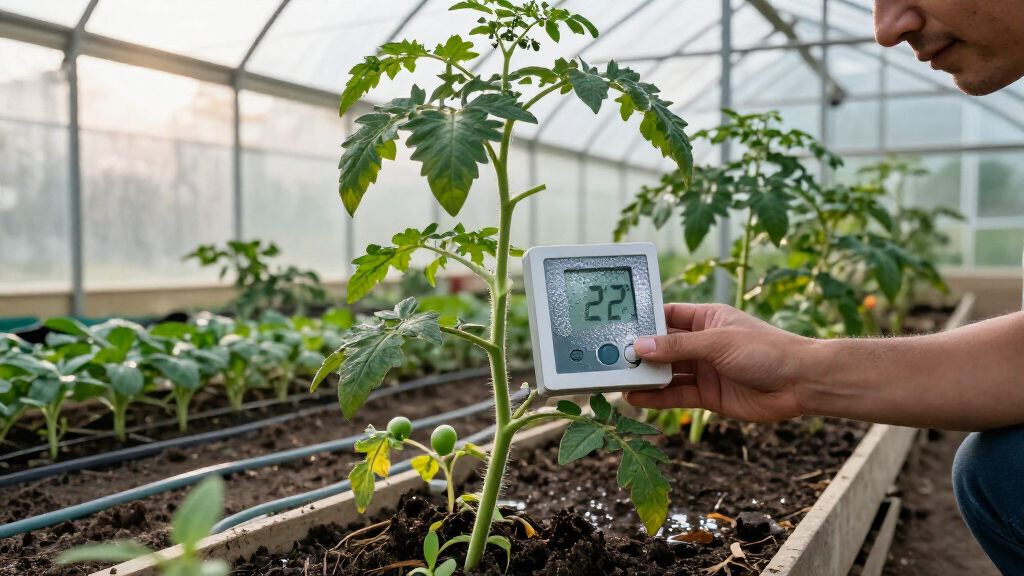
I ranked these controllers by how well their features map to greenhouse jobs: regulating a heater, managing both heating and cooling, monitoring conditions remotely, and operating with a suitable probe and electrical load. I gave more weight to practical versatility and clear fit than to feature count alone; a Wi-Fi connection is useful only if remote monitoring matters, and a high wattage rating is helpful only when it matches the equipment being controlled.
The Inkbird ITC-308 heating-and-cooling models lead because they cover a broad range of common greenhouse control needs. Wi-Fi models follow for growers who value remote checks, while straightforward plug-in thermostats rank well for simpler setups and fewer configuration demands. Waterproof-probe choices and specialized units fill narrower roles, and the aquarium- and reptile-oriented models rank lower for general greenhouse use because their intended applications may not match a grower’s temperature range or control needs. I also considered outlet arrangement, probe type, stated load limits, and whether the product’s specialization adds value or imposes a compromise.
Factors to Consider When Choosing Best Greenhouse Temperature Controllers
Choosing a greenhouse controller is less about collecting features and more about matching control behavior to your plants, equipment, and site conditions. These broader checks can prevent a controller from being mismatched to a heater, an outdoor environment, or the way you monitor temperature.
Match the controller to the equipment load
Start with the heater or fan label, then compare its current draw or wattage with the controller’s stated limit. A controller rated for 10A or 1100W is not interchangeable with a 15A model when the appliance draws more than the lower limit allows. Also check whether a motorized fan or other inductive load has requirements beyond a simple resistive heater. Avoid running multiple appliances through a controller unless its outlet design and load rating support that use. A generous rating is not a reason to ignore the appliance’s own electrical instructions. When the load is close to the controller’s limit, choose a properly rated control solution rather than relying on a narrow margin.
Decide whether one or two control directions matter
A greenhouse that only needs supplemental heat may not benefit from a controller with separate heating and cooling outlets. If summer heat is also a problem, a dual-mode unit can coordinate a heater and ventilation device around temperature thresholds. That does not mean it can manage every climate variable: cooling a greenhouse with a fan depends on airflow, shade, and outside conditions. Avoid assuming that two outlets will operate together in any configuration; confirm how the model assigns each outlet and mode. If you already use separate controls for ventilation, a simpler thermostat may be easier to set up. Think about the seasonal jobs you actually need before paying for broader control.
Plan probe placement before choosing a sensor
Temperature at the probe is the temperature the controller responds to, so placement can matter as much as the setpoint. Mount the sensor near the plants you want to protect, away from direct sun, heater discharge, cold glazing, and drafts. A long probe lead can make good placement easier, while a waterproof probe may help in wet or humid areas. Do not assume that a waterproof sensor makes the entire controller weatherproof. Keep control units and plug connections protected from condensation and splashes unless the manufacturer specifies otherwise. If your greenhouse has strong temperature variation from one end to the other, a single probe may not represent every growing zone.
Treat Wi-Fi as a monitoring choice, not a safety plan
Remote access can be useful when the greenhouse is away from home or when you want to check readings without walking outside. Before choosing a connected model, check whether its app features, network requirements, and alerts fit your setup. Wi-Fi cannot correct a failed heater, a power outage, or a poorly placed probe. Keep local temperature control and independent safeguards in mind, especially for plants that cannot tolerate abrupt cold. If you only adjust settings occasionally and can see the display in person, a non-connected controller may be simpler. Choose connectivity for the convenience it provides, not as a replacement for checking equipment and conditions.
Separate temperature control from humidity management
Temperature controllers respond to heat readings; they do not automatically solve humidity, condensation, or disease pressure. A dedicated humidity controller can add a separate layer of management, but it introduces another sensor, setpoint, and appliance to configure. Before buying a bundle, decide whether you need humidity-triggered equipment such as a humidifier or dehumidifier, and confirm the controller supports that appliance. Temperature and humidity goals can interact, so separate controls may need thoughtful placement and settings to avoid conflicting behavior. For a small greenhouse with basic heating needs, adding humidity hardware may create complexity without a clear benefit. Prioritize the problem you are trying to solve first.
Check greenhouse conditions and seasonal range
Greenhouses expose equipment to damp air, temperature swings, and occasional splashes, so indoor-use assumptions can lead to trouble. Verify the controller’s specified operating conditions and protect plugs, displays, and outlets from moisture. Also compare the controller’s temperature range with the thresholds your plants require; a unit designed for aquariums or reptiles may not be the best fit for broader greenhouse control. Consider whether you need alarms or a visible display if the greenhouse is not checked often. A controller can switch equipment at a setpoint, but it cannot compensate for undersized heating, poor insulation, or inadequate ventilation. Budget for the surrounding setup as well as the control unit.
Frequently Asked Questions
Should I choose a controller with both heating and cooling outlets?
Choose dual outlets if you expect one controller to manage both a heater and a cooling device such as a fan. This can simplify seasonal temperature control, but it does not make ventilation effective when outside air is hotter than the greenhouse. If your immediate need is only frost protection, a single-purpose thermostat may be easier to configure. Check whether the controller’s modes and outlet behavior match the appliances you plan to connect. I would prioritize dual control when both heating and cooling are real needs, rather than treating extra outlets as an automatic advantage.
Can I leave a greenhouse temperature controller outside in a damp greenhouse?
Do not assume that a waterproof probe means the controller housing, plug, or outlet is waterproof. Check the product’s environmental specifications and keep electrical connections away from condensation, splashes, and standing water. A protected enclosure or sheltered mounting location can reduce exposure, but it must not interfere with safe heat dissipation or access to controls. Route the probe so it measures growing conditions without resting on wet surfaces or touching a heater. If the manufacturer does not state that the full unit is suitable for damp locations, treat it as equipment that needs a dry, protected position.
How do I know whether a controller can handle my greenhouse heater?
Read the heater’s electrical label and compare its wattage or current draw with the controller’s stated maximum load. The lineup includes different limits, including 10A models, a 15A Wi-Fi option, and a 1000W reptile controller, so the ratings are not interchangeable. Check the heater’s plug and operating instructions too, particularly if it has a motor or other load type that may need special handling. Do not exceed the controller’s limit by attaching additional appliances through an adapter or power strip. If the heater is near the rated maximum, seek a controller and electrical setup designed for that load rather than relying on a close match.
Is a Wi-Fi controller worth choosing if my greenhouse is near my house?
Wi-Fi may still help if you want to check readings or settings without visiting the greenhouse, but it matters less when the display is easy to reach and you rarely adjust it. A connected controller adds app and network considerations that a basic plug-in model avoids. It also cannot guarantee plant protection during a power or network failure, so local controls and suitable backup plans still matter. Compare the Wi-Fi Inkbird and DEWENWILS options against simpler controllers based on how often you would use remote access. If alerts and remote checks would change how you manage the greenhouse, connectivity has a clear purpose; otherwise, simplicity may suit you better.
When should I choose a waterproof-probe model or a humidity controller?
A waterproof probe is useful when the sensor may face damp conditions or needs to sit in a location where moisture is likely, but it does not make the full controller water-resistant. A humidity controller addresses a different job by switching compatible equipment based on moisture levels rather than temperature. The Inkbird temperature-and-humidity combination can make sense when both control tasks are part of your plan, while a temperature-only unit is simpler if heat is the sole concern. Before buying a bundle, identify the appliance you want humidity control to operate and confirm compatibility. Avoid paying for humidity control just because greenhouse air can be humid; buy it when you have a specific humidity-management need.
Conclusion
For most growers who want one controller to handle temperature increases and decreases, I recommend the Inkbird ITC-308 with heating and cooling outlets as the best overall pick. The Diymore plug-in digital thermostat is my best value-style choice for a simpler setup, while the Inkbird ITC-308 WiFi is the best premium fit for growers who will use remote checks. Beginners who need straightforward temperature control can start with the WILLHI WH2408, provided its 10A limit matches their equipment. For damp sensor locations, I would look at the DIGITEN DTC310 or SENSTREE waterproof controller; for separate humidity management, the Inkbird temperature-and-humidity pairing is the more specialized choice. Match the controller’s load rating, probe protection, and control modes to your greenhouse before deciding.