For gardeners who want one versatile starting point, Bonide Captain Jack’s Deadbug Brew Concentrate is my best overall pick because a concentrate can cover more plants than a ready-to-use bottle while targeting a broad range of chewing pests. Bonide Captain Jack’s BT Worm and Caterpillar Control is a more focused choice for caterpillars, while Garden Safe Insecticidal Soap suits gardeners looking for a direct-contact option for soft-bodied insects. The main tradeoff is between targeted control and broader coverage, alongside the convenience of ready-to-use sprays versus the flexibility of concentrates. Organic-labelled products still differ in which pests they affect, how they are applied, and what precautions their labels require. Read on for the full breakdown and guidance on matching a control method to your garden.

Get garden gear delivered free with Prime
- Fast, free delivery on millions of items
- Prime Video, Amazon Music and more included
- Member-only deals all year
Complete the kit


Key Takeaways
- Matching the treatment to the pest matters more than choosing the broadest label: the BT products are caterpillar-focused, while insecticidal soap is aimed at pests it can contact directly.
- Concentrates offer more control over dilution and coverage, but require mixing and accurate measuring; ready-to-use sprays reduce setup for small gardens.
- Spinosad appears in several forms in this lineup, so the practical difference is often package size and application convenience rather than a different control approach.
- Neem and essential-oil products add different application choices, but gardeners should check crop, pest, and pollinator directions on each label rather than treating them as interchangeable.
- Diatomaceous earth and systemic treatment work differently from foliar sprays, so they make more sense for specific pest situations than as a universal garden solution.
| Bonide Captain Jack’s BT Worm and Caterpillar Control Ready-to-Use Spray, 32 oz |  | Best for Caterpillars | Brand: Bonide | Volume: 32 fluid ounces | Weight: 2.3 pounds | VIEW LATEST PRICE | See Our Full Breakdown |
| Bonide Captain Jack’s Deadbug Brew Concentrate, 16 oz |  | Best for Larger Gardens | Brand: Bonide | Product type: Concentrated insecticide and mite killer | Volume: 16 fluid ounces | VIEW LATEST PRICE | See Our Full Breakdown |
| Ferti-lome Spinosad Insecticide, 16 fl oz | 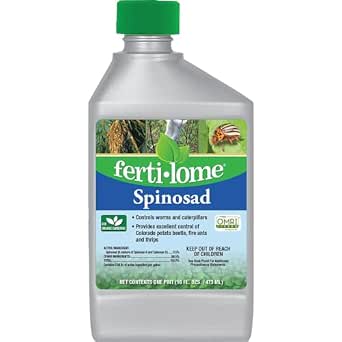 | Best OMRI-Listed Concentrate | Brand: Ferti-lome | Model: 16062 | Active ingredient: Spinosad | VIEW LATEST PRICE | See Our Full Breakdown |
| Fertilome Spinosad Soap Insecticide, Ready to Use, 32 oz |  | Best Ready-to-Use Broad-Coverage Pick | Brand: Fertilome | Volume: 32 fluid ounces | Weight: 2 pounds | VIEW LATEST PRICE | See Our Full Breakdown |
| Bonide Captain Jack’s Deadbug Brew Ready-to-Use Insecticide Spray, 32 oz |  | Best for Mixed Pest Problems | Brand: Bonide | Item form: Spray | Liquid volume: 32 fluid ounces | VIEW LATEST PRICE | See Our Full Breakdown |
| Garden Safe Crawling Insect Killer with Diatomaceous Earth, 4 lb |  | Best for Crawling Pests | Brand: Garden Safe | Item form: Powder | Item weight: 4.1 pounds | VIEW LATEST PRICE | See Our Full Breakdown |
| Bonide Captain Jack’s Neem Oil Spray for Plants, 32 oz Ready-to-Use |  | Best for Multi-Problem Plant Care | Brand: Bonide | Volume: 32 fluid ounces | Weight: 2.3 pounds | VIEW LATEST PRICE | See Our Full Breakdown |
| Sierra Natural Science SNS-209 Systemic Pest Control Concentrate, 1 Pint |  | Best Botanical Systemic Option | Brand: Sierra Natural Science | Volume: 16 fluid ounces (1 pint) | Item form: Spray | VIEW LATEST PRICE | See Our Full Breakdown |
| Monterey Spinosad Insecticide, 32 oz with Measuring Spoon |  | Best for Broad Insect Coverage | Brand: Monterey | Unit count: 32 fluid ounces | Model number: LG 6135 | VIEW LATEST PRICE | See Our Full Breakdown |
| Wondercide Outdoor Pest Control Spray with Natural Essential Oils – 32 oz |  | Best for Large Yard Coverage | Volume: 32 ounces | Active ingredient: Steam-distilled cedarwood essential oil | Application method: Hose attachment | VIEW LATEST PRICE | See Our Full Breakdown |
| Monterey B.t. Bacillus Thuringiensis Insect Killer – 32 oz with Spoon |  | Best for Caterpillar Control | Volume: 32 oz | Active ingredient: Bacillus thuringiensis (Bt) | Organic gardening: OMRI listed | VIEW LATEST PRICE | See Our Full Breakdown |
| Garden Safe Insecticidal Soap Insect Killer Spray, 32 oz |  | Best Ready-to-Use Contact Spray | Brand: Garden Safe | Volume: 32 fluid ounces | Form: Ready-to-use spray | VIEW LATEST PRICE | See Our Full Breakdown |
| Monterey Spinosad Garden Insecticide Spray, 8 oz |  | Best Compact Spinosad Option | Brand: Monterey | Volume: 8 fluid ounces | Active ingredient: Spinosad | VIEW LATEST PRICE | See Our Full Breakdown |
| Monterey Spinosad Insecticide Concentrate, 1 Gallon with Spoon |  | Best for Large Gardens | Brand: Monterey | Volume: 128 fluid ounces (1 gallon) | Active ingredient: Spinosad | VIEW LATEST PRICE | See Our Full Breakdown |
| BioAdvanced Organics Neem Oil Spray, 24 fl oz |  | Best Multi-Purpose Plant Spray | Volume: 24 fl oz | Form: Ready-to-use oil spray | Active ingredient: Clarified hydrophobic extract of neem oil, 0.9% | VIEW LATEST PRICE | See Our Full Breakdown |
| organic garden pest control | Brand | Active ingredient | Volume | Target pests |
|---|---|---|---|---|
| Bonide Captain Jack’s BT Worm | Bonide | Bacillus thuringiensis | 32 fluid ounces | Worms and caterpillars |
| Bonide Captain Jack’s Deadbug | Bonide | Spinosad | 16 fluid ounces | Listed insects and mites, including caterpillars, beetles, moths, leaf miners, thrips, and spider mites |
| Ferti-lome Spinosad Insecticid | Ferti-lome | Spinosad | — | Foliage-feeding worms, thrips, and other listed pests |
| Fertilome Spinosad Soap Insect | Fertilome | — | 32 fluid ounces | — |
| Bonide Captain Jack’s Deadbug | Bonide | Spinosad (spinosyn A and spinosad D), 0.5% | — | Insects, including caterpillars, beetles, and spider mites |
| Garden Safe Crawling Insect Ki | Garden Safe | Silicon dioxide | — | Listed crawling insects, including German cockroaches, some ants and beetles, fleas, and mealybugs |
| Bonide Captain Jack’s Neem Oil | Bonide | Clarified Hydrophobic Extract of Neem Oil | 32 fluid ounces | Spider mites, aphids, whiteflies, and other insects |
| Sierra Natural Science SNS-209 | Sierra Natural Science | — | 16 fluid ounces (1 pint) | — |
| Monterey Spinosad Insecticide | Monterey | — | — | — |
| Wondercide Outdoor Pest Contro | — | Steam-distilled cedarwood essential oil | 32 ounces | — |
| Monterey B.t. Bacillus Thuring | — | Bacillus thuringiensis (Bt) | 32 oz | Caterpillars and worm-type pests, including cabbage looper and bagworm |
| Garden Safe Insecticidal Soap | Garden Safe | Potassium salts of fatty acids | 32 fluid ounces | — |
| Monterey Spinosad Garden Insec | Monterey | Spinosad | 8 fluid ounces | — |
| Monterey Spinosad Insecticide | Monterey | Spinosad | 128 fluid ounces (1 gallon) | — |
| BioAdvanced Organics Neem Oil | — | Clarified hydrophobic extract of neem oil, 0.9% | 24 fl oz | Listed insects and mites, including aphids, whiteflies, spider mites, mealybugs, and Japanese beetles |
More Details on Our Top Picks
Bonide Captain Jack’s BT Worm and Caterpillar Control Ready-to-Use Spray, 32 oz
For an organic gardener dealing specifically with caterpillars, this ready-to-use Bacillus thuringiensis (Bt) spray keeps the job focused: there is no concentrate to measure, and the trigger bottle can be applied as soon as pests appear. Bt works when caterpillars ingest treated foliage, so thorough coverage and early application matter; it is not a quick-contact knockdown, and the listed information says pests may take two to three days to die. Compared with Bonide Captain Jack’s Deadbug Brew Ready-to-Use Insecticide Spray, this is the narrower pick: it targets worms and caterpillars rather than a broader set of listed insects. That focus suits gardeners who want a targeted option described as harmless to birds, earthworms, and beneficial insects, but it will not address unrelated pests.
Pros:- Ready-to-use trigger sprayer avoids mixing and measuring.
- Bacillus thuringiensis targets worms and caterpillars by ingestion.
- Listed for fruits, vegetables, trees, and ornamental plants.
- Described as harmless to birds, earthworms, honeybees, and ladybugs.
Cons:- Needs thorough coverage when caterpillars or worms are first noticed.
- Works by ingestion rather than immediate contact; pests may take two to three days to die.
- Narrow target range makes it unsuitable for unrelated insect pests.
Best for: Vegetable and fruit gardeners who have spotted caterpillars and want a ready-to-spray, targeted organic gardening option.
Not ideal for: Gardeners facing beetles, spider mites, or mixed pest problems, since this product targets worms and caterpillars rather than a broad range of insects.
- Brand:Bonide
- Volume:32 fluid ounces
- Weight:2.3 pounds
- Form:Spray
- Active ingredient:Bacillus thuringiensis
- Application:Ready-to-use trigger sprayer
- Target pests:Worms and caterpillars
Our verdict“Choose this for a straightforward organic gardening spray when caterpillars are the clear problem, but pick a broader product such as Deadbug Brew for mixed pests.”
Bonide Captain Jack’s Deadbug Brew Concentrate, 16 oz
This spinosad concentrate is the lineup’s flexible choice for gardeners treating several listed crops or covering a larger outdoor area. Diluting it takes more preparation than using Bonide Captain Jack’s Deadbug Brew Ready-to-Use Insecticide Spray, but the concentrate can be applied with a trigger, handheld, backpack, or hose-end sprayer—useful when a small bottle would mean repeated refills. Its listed targets include caterpillars, beetles, moths, leaf miners, thrips, and spider mites, giving it a wider scope than the Bt spray, which is aimed at worms and caterpillars. The tradeoff is that buyers must follow dilution directions and check that both their plant and pest appear on the label. It is described as having limited impact on predatory beneficial insects, mites, and spiders, not as harmless to every non-target organism.
Pros:- Concentrated formula can be applied with several compatible sprayer types.
- Targets a range of listed insects and mites, including thrips and spider mites.
- Approved for organic gardening.
- Listed for vegetables, fruits, flowers, and ornamentals.
Cons:- Requires dilution and careful adherence to label directions.
- Use is restricted to listed pests and plants.
- Requires a separate compatible sprayer.
Best for: Gardeners with multiple listed vegetables, fruits, flowers, or ornamentals who already own a compatible sprayer or need to cover a larger area.
Not ideal for: Beginners seeking a no-mix bottle or anyone whose pest or plant is not listed on the product label.
- Brand:Bonide
- Product type:Concentrated insecticide and mite killer
- Volume:16 fluid ounces
- Item weight:1.2 pounds
- Active ingredient:Spinosad
- Application:Mix with water; apply using a trigger, handheld, backpack, or hose-end sprayer
- Target pests:Listed insects and mites, including caterpillars, beetles, moths, leaf miners, thrips, and spider mites
- Use:Outdoor use on listed vegetables, fruits, flowers, and ornamentals
Our verdict“Pick this concentrate for broader garden coverage and sprayer flexibility; choose the ready-to-use Deadbug Brew instead if mixing is a drawback.”
Ferti-lome Spinosad Insecticide, 16 fl oz
Ferti-lome stands out for buyers who want an OMRI-listed spinosad concentrate with a stated mixing rate: four tablespoons per gallon of water. That guidance gives gardeners a useful starting point, while the label remains the source for full application details. It is listed for outdoor use across vegetables, trees, shrubs, flowers, fruits, and citrus, so it can suit a garden that mixes edible beds with landscape plants. Compared with Bonide Captain Jack’s Deadbug Brew Concentrate, the product information here names foliage-feeding worms, thrips, and other listed pests, rather than spelling out a similarly broad pest list. Its wide plant-use range is the main draw; dilution and the need to check the label make it less convenient than Fertilome Spinosad Soap Insecticide, Ready to Use.
Pros:- OMRI listed for organic gardening.
- Suitable for listed vegetables, trees, shrubs, flowers, fruits, and citrus.
- Targets foliage-feeding worms, thrips, and other listed pests.
- Provides a stated dilution rate of four tablespoons per gallon of water.
Cons:- Must be diluted before application.
- Full directions and pest limitations require consulting the product label.
- Requires a separate sprayer.
Best for: Organic gardeners who want an OMRI-listed concentrate for a mix of vegetables, fruit trees, citrus, shrubs, and flowers and are comfortable measuring dilution.
Not ideal for: Gardeners who need a ready-to-spray option or want a clearly specified pest list before selecting a treatment.
- Brand:Ferti-lome
- Model:16062
- Active ingredient:Spinosad
- Item form:Oil
- Liquid volume:16 fluid ounces
- Target pests:Foliage-feeding worms, thrips, and other listed pests
- Application:Outdoor use on vegetables, trees, shrubs, flowers, fruits, and citrus
- Dilution:4 tablespoons per gallon of water
- Organic gardening:OMRI listed
Our verdict“Choose Ferti-lome for an OMRI-listed concentrate and broad plant coverage, but favor the ready-to-use Fertilome Spinosad Soap if you do not want to mix.”
Fertilome Spinosad Soap Insecticide, Ready to Use, 32 oz
This Fertilome option pairs spinosad with potassium salts of fatty acids in a ready-to-use bottle, making it the most convenient choice here for gardeners who do not want to dilute a concentrate. It is OMRI listed and is described for listed insects on vegetables, trees, shrubs, flowers, fruits, and citrus. Unlike Bonide Captain Jack’s BT Worm and Caterpillar Control, which focuses on caterpillars and worms, this product is presented as a broader listed-insect treatment. Convenience does not remove the need for careful application: the label calls for coverage of plant parts, including leaf undersides, and sets restrictions and repeat-treatment directions. That makes it easier to start spraying than Ferti-lome Spinosad Insecticide concentrate, but it may be less appealing when careful coverage of dense foliage is difficult.
Pros:- Ready-to-use spray avoids measuring and dilution.
- Combines spinosad with potassium salts of fatty acids.
- OMRI listed for organic gardening.
- Listed for use on vegetables, trees, shrubs, flowers, fruits, and citrus.
Cons:- Thorough coverage, including leaf undersides, is required.
- Use is limited to pests and plants listed on the label.
- Label restrictions and repeat-treatment directions need to be followed.
Best for: Gardeners who want an OMRI-listed, ready-to-use treatment for listed pests across edible and ornamental plants without mixing concentrate.
Not ideal for: People treating pests or plants outside the label, or gardeners unable to coat leaf undersides and other plant surfaces thoroughly.
- Brand:Fertilome
- Volume:32 fluid ounces
- Weight:2 pounds
- Form:Oil
- Active ingredients:Spinosad 0.005%; potassium salts of fatty acids 0.940%
- Application:Ready-to-use spray
- Target:Listed insects and pests
- Organic listing:OMRI listed
Our verdict“Choose this for convenient, ready-to-spray treatment across listed plants; pick the Bt spray instead when your only target is caterpillars and you prefer a narrower treatment.”
Bonide Captain Jack’s Deadbug Brew Ready-to-Use Insecticide Spray, 32 oz
For gardeners who have more than one kind of insect to address, this ready-to-use spinosad spray offers a simpler route than the Bonide Captain Jack’s Deadbug Brew Concentrate: it comes in a spray bottle, so there is no water-to-concentrate measuring. The listed targets include caterpillars, beetles, and spider mites, while the product is intended for vegetables, citrus, fruits, flowers, and ornamentals. That broader target mix gives it an advantage over Bonide Captain Jack’s BT Worm and Caterpillar Control when the pest is not a caterpillar. The tradeoff is a defined label scope: it is not a general treatment for every garden pest, and the formula contains 0.5% spinosad. It is described as having limited impact on predatory beneficial insects, mites, and spiders, which is not the same as having no impact.
Pros:- Ready-to-use bottle with spray nozzle requires no dilution.
- Targets listed insects including caterpillars, beetles, and spider mites.
- Suitable for listed vegetables, citrus, fruits, flowers, and ornamentals.
- Described as having limited impact on predatory beneficial insects, mites, and spiders.
Cons:- Only targets insect pests listed on the product label.
- Contains 0.5% spinosad, which may not suit buyers seeking a different active ingredient.
- Ready-to-use format does not offer the application flexibility of the Bonide concentrate.
Best for: Home gardeners who want a no-mix spray for listed pests such as caterpillars, beetles, or spider mites across edible and ornamental plants.
Not ideal for: Gardeners seeking a treatment for unlisted pests, or those who prefer a concentrate for application with a larger or backpack sprayer.
- Brand:Bonide
- Item form:Spray
- Liquid volume:32 fluid ounces
- Item weight:2.4 pounds
- Active ingredient:Spinosad (spinosyn A and spinosad D), 0.5%
- Use:Ready-to-use
- Target pests:Insects, including caterpillars, beetles, and spider mites
- Suitable plants:Vegetables, citrus, fruits, flowers, and ornamentals
Our verdict“Pick this for convenient treatment of several listed pest types; choose the Bt spray for a more narrowly targeted caterpillar treatment or the concentrate for sprayer flexibility.”
Garden Safe Crawling Insect Killer with Diatomaceous Earth, 4 lb
I’d choose this diatomaceous earth powder when crawling insects are the main problem and an outdoor, contact-based treatment suits the garden. The powder coats insects and absorbs oils and fats, so it works differently from Bonide Captain Jack’s Neem Oil Spray, which is applied as a liquid to affected plants and also targets mites and fungal diseases. Garden Safe can go on plants or surrounding soil, giving gardeners flexibility around crawling pests such as fleas and mealybugs. The tradeoff is a narrower target list: it does not cover carpenter, harvester, or pharaoh ants, or wood-destroying beetles. It is also outdoor use only, so I’d skip it for houseplants or anyone seeking one spray for several pest types.
Pros:- Diatomaceous-earth-based formula intended for organic gardening.
- Kills listed crawling insects by contact.
- Can be applied to outdoor plants and surrounding soil.
- Powder coats insects and absorbs oils and fats.
Cons:- Restricted to outdoor use.
- Does not cover several ant types, including carpenter, harvester, and pharaoh ants.
- Does not cover wood-destroying beetles.
Best for: Outdoor gardeners dealing with listed crawling insects on plants or nearby soil who prefer a powder treatment.
Not ideal for: Houseplant owners and gardeners targeting carpenter, harvester, or pharaoh ants, or wood-destroying beetles.
- Brand:Garden Safe
- Item form:Powder
- Item weight:4.1 pounds
- Active ingredient:Silicon dioxide
- Use:Outdoors, on plants and surrounding soil
- Target pests:Listed crawling insects, including German cockroaches, some ants and beetles, fleas, and mealybugs
- EPA specification:Met
Our verdict“Choose Garden Safe for listed crawling pests outdoors, but pick a broader plant treatment if your targets include mites, fungal diseases, or excluded insects.”
Bonide Captain Jack’s Neem Oil Spray for Plants, 32 oz Ready-to-Use
For gardeners facing a mix of insects, mites, and fungal disease, this ready-to-use neem spray has a broader job description than Garden Safe Crawling Insect Killer, which focuses on listed crawling insects outdoors. Bonide’s formula targets insects at egg, larval, and adult stages and can be used on vegetables, roses, shrubs, and houseplants, making it a flexible choice for mixed plantings. I also value that it arrives ready to spray rather than requiring dilution. That convenience has limits: affected foliage needs complete coverage, and the label calls for repeat applications every 7–14 days as needed. Compared with the rosemary-based Sierra Natural Science SNS-209 concentrate, Bonide spells out a wider set of uses, but requires hands-on coverage of the plant.
Pros:- Three-in-one fungicide, insecticide, and miticide.
- Targets insects at egg, larval, and adult stages.
- Ready-to-use trigger spray needs no mixing.
- Suitable for vegetables, roses, shrubs, and houseplants.
Cons:- Affected plants need complete spray coverage.
- Requires reapplication every 7–14 days as needed.
Best for: Gardeners managing several kinds of plants who want one ready-to-use organic option for insects, mites, and fungal issues.
Not ideal for: People who need a low-effort treatment for large plantings or cannot regularly coat affected foliage and repeat applications.
- Brand:Bonide
- Volume:32 fluid ounces
- Weight:2.3 pounds
- Form:Ready-to-use liquid spray
- Active ingredient:Clarified Hydrophobic Extract of Neem Oil
- Use:Fungicide, insecticide, and miticide
- Target pests:Spider mites, aphids, whiteflies, and other insects
- Application:Reapply every 7–14 days as needed
- Organic gardening:Approved
Our verdict“Pick this neem spray for convenient, multi-purpose treatment across varied plants if you can keep up with thorough coverage and repeat applications.”
Sierra Natural Science SNS-209 Systemic Pest Control Concentrate, 1 Pint
SNS-209 is the distinct pick here for gardeners seeking a rosemary-derived systemic approach rather than a contact spray. Its botanical ingredients are described as helping protect plants from insects that feed by sucking or chewing; that makes it a different proposition from Bonide Captain Jack’s Neem Oil Spray, which is applied directly to affected plant surfaces and also targets mites and fungal diseases. This concentrate is water-soluble, biodegradable, and intended for a range of plants, fruits, and vegetables. The key limitation is built into its method: insects must feed on treated plants for the approach to apply, so it is not a general-purpose answer for every pest situation. The product data also gives less detail on application intervals and specific target insects than Bonide’s ready-to-use spray.
Pros:- Uses rosemary-derived botanical extract.
- Water-soluble ingredients simplify use in a diluted treatment.
- Described as biodegradable.
- Suitable for a variety of plants, fruits, and vegetables.
Cons:- The stated approach depends on insects feeding on treated plants.
- Product data does not specify individual target pests or an application schedule.
Best for: Gardeners seeking a rosemary-based botanical concentrate for varied edible and ornamental plants, especially where feeding insects are the concern.
Not ideal for: Buyers who need a ready-to-use contact spray, a clearly specified target-pest list, or treatment independent of insects feeding on plants.
- Brand:Sierra Natural Science
- Volume:16 fluid ounces (1 pint)
- Item form:Spray
- Target species:Insects
- Active botanical:Rosemary extract
- Included components:1 bottle
- Model number:746048
- Other product details:Water-soluble and biodegradable; described for a variety of plants, fruits, and vegetables
Our verdict“Choose SNS-209 for a botanical systemic-style approach across edible and ornamental plants, but favor Bonide neem spray when you want a ready-to-use treatment with named target pests.”
Monterey Spinosad Insecticide, 32 oz with Measuring Spoon
For a garden with several kinds of insect pests, Monterey Spinosad stands out for its broad stated pest coverage and compatibility with multiple sprayer types. The listing names caterpillars, leafminers, and fire ants among its targets, while Garden Safe Crawling Insect Killer is more narrowly focused on listed crawling insects and excludes some ant types. Monterey is described as fast-acting, odorless, and OMRI-listed for organic gardening, which may suit gardeners who want a spray rather than a powder. The tradeoff is that application depends on following the label carefully; this is less of a grab-and-spray choice than Bonide Captain Jack’s ready-to-use neem product. The supplied measuring spoon is useful when preparing an application, but the available product data does not specify the active ingredient or dilution rate.
Pros:- OMRI-listed for organic gardening compliance.
- Targets a range of pests, including caterpillars, leafminers, and fire ants.
- Described as fast-acting and odorless.
- Compatible with trigger, hand-held, backpack, and hose-end sprayers.
Cons:- Requires careful attention to label directions.
- Product data does not specify the active ingredient or dilution rate.
Best for: Organic gardeners managing multiple insect types who already use, or plan to use, trigger, hand-held, backpack, or hose-end sprayers.
Not ideal for: Buyers who want a ready-to-use spray or need product details such as active ingredient and dilution rate stated upfront.
- Brand:Monterey
- Unit count:32 fluid ounces
- Model number:LG 6135
- Product type:Spinosad insecticide
- Organic gardening status:OMRI-listed
- Named target pests:Caterpillars, leafminers, and fire ants, among others
- Application equipment:Trigger, hand-held, backpack, or hose-end sprayers
- Included accessory:Measuring spoon
Our verdict“Choose Monterey for broad listed insect coverage and sprayer flexibility if you are comfortable following label directions rather than relying on a ready-to-use format.”
Wondercide Outdoor Pest Control Spray with Natural Essential Oils – 32 oz
Wondercide takes a yard-scale approach: its hose attachment is designed to cover up to 5,000 square feet for several listed pests, with a lower stated coverage area for ticks. That makes it a better fit for perimeter and lawn treatment than Bonide Captain Jack’s Neem Oil Spray, which is aimed at coating affected plants and needs repeat applications. Wondercide uses steam-distilled cedarwood essential oil and is described as killing and repelling common yard pests, with no drying time. Its convenience depends on the setup, though: actual coverage can vary with water pressure and walking speed, and larger areas require refilling the sprayer. I’d choose it for broad outdoor application, not as a direct substitute for a plant-focused product such as Monterey Spinosad.
Pros:- Hose attachment makes broad outdoor application straightforward.
- Stated coverage reaches up to 5,000 square feet for several listed pests.
- Uses steam-distilled cedarwood essential oil.
- Described as needing no drying time and suitable for pets and families.
Cons:- Coverage varies with water pressure and walking speed.
- Ticks have a lower stated coverage area of up to 2,500 square feet.
- Larger areas require refilling the sprayer.
Best for: Households with larger outdoor areas that want hose-applied treatment for common yard pests, including mosquitoes, ants, and fleas.
Not ideal for: Gardeners seeking a targeted treatment for pests feeding on specific plants or those who cannot manage coverage changes and refills across larger areas.
- Volume:32 ounces
- Active ingredient:Steam-distilled cedarwood essential oil
- Application method:Hose attachment
- Coverage for listed yard pests:Up to 5,000 square feet
- Coverage for ticks:Up to 2,500 square feet
- Named target pests:Mosquitoes, ants, gnats, fleas, Japanese beetles, no-see-ums, crickets, and ticks
- Product type:Outdoor pest control spray
- Drying time:Described as requiring no drying time
Our verdict“Pick Wondercide for convenient essential-oil treatment across a yard, but choose a plant-directed spray when the problem is concentrated on garden crops.”
Monterey B.t. Bacillus Thuringiensis Insect Killer – 32 oz with Spoon
I’d choose this OMRI-listed Bt treatment when caterpillars and worm-type pests are the main problem, rather than reaching for a broader insecticide. Its targeted approach covers pests such as cabbage loopers and bagworms while being described as safe for bees, earthworms, birds, and other beneficial insects when used as directed. Compared with Garden Safe Insecticidal Soap, which works on listed soft-bodied pests only when sprayed directly, Bt is the more relevant fit for caterpillar damage. The tradeoff is that this product must be mixed with water before spraying, so it takes more preparation than a ready-to-use option. It also isn’t a general answer for every garden pest: I’d match it to the pests named on its label.
Pros:- Targets a range of caterpillar and worm-type pests, including cabbage loopers and bagworms.
- OMRI listed for organic gardening.
- Described as safe for beneficial insects, birds, and earthworms when used as directed.
- Mixes with water for use in standard sprayers.
Cons:- Requires measuring and mixing before application.
- Its targeted pest profile makes it a poor fit for unrelated insect problems.
Best for: Organic vegetable gardeners dealing with caterpillars or worm-type pests who can mix a spray and want to limit impact on beneficial garden life.
Not ideal for: Gardeners seeking a ready-to-spray product or trying to control aphids, mites, or other pests outside the listed caterpillar targets.
- Volume:32 oz
- Active ingredient:Bacillus thuringiensis (Bt)
- Organic gardening:OMRI listed
- Target pests:Caterpillars and worm-type pests, including cabbage looper and bagworm
- Application:Mix with water and apply as a spray
- Beneficial organism information:Described as safe for earthworms, bees, birds, and other beneficial insects when used as directed
Our verdict“Choose this Bt product when caterpillars are the clear target and a mixing step is acceptable.”
Garden Safe Insecticidal Soap Insect Killer Spray, 32 oz
For aphids, mealybugs, mites, and whiteflies, I’d favor this ready-to-use insecticidal soap over Monterey B.t., which is aimed at caterpillars and worm-type pests. The bottle needs no dilution, and its listed uses span indoor spaces, outdoor gardens, and greenhouses, giving growers with mixed plant areas more flexibility. It can also be used on edible crops through the day of harvest, a practical distinction from products whose suitability depends on a narrower pest or application scenario. The main limitation is how contact sprays work: pests must be hit directly, so hidden insects or dense foliage can make coverage harder. I’d pick it for visible infestations that can be reached, not as a spray that keeps working without direct contact.
Pros:- Ready to use without measuring or mixing.
- Labeled for indoor, outdoor, and greenhouse use.
- Can be applied to edible crops through harvest day.
- Targets listed pests including aphids, mealybugs, mites, and whiteflies.
Cons:- Pests must be sprayed directly for control.
- Coverage can be difficult on hidden pests or crowded foliage.
Best for: Home gardeners and greenhouse growers who want a no-mix spray for visible aphids, mites, mealybugs, or whiteflies on edible and ornamental plants.
Not ideal for: Gardeners dealing with caterpillars or pests hidden deep in dense foliage, where direct spray contact is difficult or another targeted control is more appropriate.
- Brand:Garden Safe
- Volume:32 fluid ounces
- Form:Ready-to-use spray
- Active ingredient:Potassium salts of fatty acids
- Application:Spray pests directly
- Use locations:Indoors, outdoors, and greenhouses
- Suitable plants:Vegetables, fruit trees, ornamentals, shrubs, and flowers
- Harvest timing:May be applied to edible crops through the day of harvest
Our verdict“Pick this for accessible, listed soft-bodied pests when convenience and harvest-day use matter more than residual action.”
Monterey Spinosad Garden Insecticide Spray, 8 oz
This 8 oz OMRI-listed spinosad option suits gardeners who want a small-format product for listed pests across outdoor ornamentals, lawns, vegetables, and fruit trees. It can be applied with trigger, handheld, backpack, or hose-end sprayers, so the application setup can match the size of the job. Compared with Monterey’s 1-gallon spinosad concentrate, this bottle is easier to store and makes more sense for limited treatment needs, but it offers far less volume for repeated or large-area work. Its odorless description may also appeal to people who prefer not to work with a strongly scented spray. I’d keep the label directions central to the decision: organic listing does not make every use suitable, and the supplied details do not specify exact target pests.
Pros:- OMRI listed for organic gardening.
- Labeled for outdoor ornamentals, lawns, vegetables, and citrus and fruit trees.
- Can be used with several sprayer types.
- Described as odorless.
Cons:- The 8 oz volume is a limiting format for large or repeated treatment jobs.
- Requires careful adherence to label directions.
- The supplied product details do not identify specific target pest species.
Best for: Gardeners with a modest outdoor treatment area who want an OMRI-listed spinosad product and already have, or plan to use, a compatible sprayer.
Not ideal for: People treating large lawns or many plants repeatedly; the 8 oz format is less suited to extensive use than the 1-gallon Monterey concentrate.
- Brand:Monterey
- Volume:8 fluid ounces
- Active ingredient:Spinosad
- Form:Oil
- Organic gardening:OMRI listed
- Application methods:Trigger, handheld, backpack, or hose-end sprayers
- Suitable settings:Outdoor ornamentals, lawns, vegetables, and citrus and fruit trees
- Odor:Odorless
Our verdict“Choose this compact spinosad option for smaller outdoor jobs, but consider Monterey’s gallon concentrate for broader treatment needs.”
Monterey Spinosad Insecticide Concentrate, 1 Gallon with Spoon
Among these five picks, I’d place this 1-gallon OMRI-listed spinosad concentrate with gardeners managing many plants or a larger outdoor area. It covers listed insects on ornamentals, lawns, vegetables, and citrus and fruit trees, and works with trigger, handheld, backpack, or hose-end sprayers. Compared with the 8 oz Monterey spinosad, the gallon format better fits repeated or wider-area treatments; the smaller bottle is easier to store and makes more sense for limited needs. This option is described as fast acting and odorless, but the volume brings a practical tradeoff: mixing and application require close attention to label directions. I’d skip the large format if the garden is small or the target pest is not on the product label.
Pros:- Large 1-gallon volume suits broad or repeated garden applications.
- OMRI listed for organic gardening.
- Labeled for ornamentals, lawns, vegetables, and citrus and fruit trees.
- Described as fast acting and odorless, with several sprayer options.
Cons:- The large format may be unnecessary for a small garden.
- Concentrate requires preparation and careful attention to label directions.
- The supplied details do not name individual target insect species.
Best for: Gardeners with extensive outdoor plantings or lawns who need a larger volume of spinosad concentrate for listed insect pests.
Not ideal for: Small-space growers seeking a compact, ready-to-use spray or anyone without time to measure, mix, and follow label directions carefully.
- Brand:Monterey
- Volume:128 fluid ounces (1 gallon)
- Active ingredient:Spinosad
- Form:Oil concentrate
- Organic gardening:OMRI listed
- Target:Listed insects
- Suitable plants and settings:Outdoor ornamentals, lawns, vegetables, and citrus and fruit trees
- Application methods:Trigger, handheld, backpack, or hose-end sprayers
- Product characteristics:Described as fast acting and odorless
Our verdict“Choose the gallon concentrate for a larger outdoor garden; for occasional or limited spraying, the 8 oz Monterey option is a more manageable fit.”
BioAdvanced Organics Neem Oil Spray, 24 fl oz
I’d choose this ready-to-use neem oil spray when a garden has both listed insect or mite pests and fungal disease concerns. Unlike Monterey B.t., which targets caterpillar and worm-type pests, this product combines insecticide, miticide, and fungicide action for listed targets such as aphids, spider mites, and powdery mildew. Its label covers a broad mix of ornamentals and edible plants, and it may be applied to edibles up to the day of harvest. That range comes with a limit: claims apply only to the pests and diseases named on the label. For fungal disease control, repeat applications are called for every 7–14 days, so it is not a one-and-done approach. The 24 fl oz ready-to-use format avoids mixing but offers less volume than Monterey’s gallon concentrate.
Pros:- Combines listed insect, mite, and fungal disease control in one spray.
- Ready-to-use trigger format requires no dilution.
- Labeled for a wide range of edible and ornamental plants.
- May be applied to edible crops up to the day of harvest.
Cons:- Fungal disease control calls for repeat applications every 7–14 days.
- Control claims are limited to pests and diseases listed on the label.
- The 24 fl oz format provides less volume than Monterey’s 1-gallon concentrate.
Best for: Gardeners who want a no-mix spray for listed insects, mites, and fungal diseases across edible and ornamental plants.
Not ideal for: Gardeners focused only on caterpillars, those treating pests or diseases not listed on the label, or people unwilling to repeat fungal-disease applications every 7–14 days.
- Volume:24 fl oz
- Form:Ready-to-use oil spray
- Active ingredient:Clarified hydrophobic extract of neem oil, 0.9%
- Other ingredients:99.1%
- Target pests:Listed insects and mites, including aphids, whiteflies, spider mites, mealybugs, and Japanese beetles
- Listed diseases:Black spot, powdery mildew, rust, and downy mildew
- Plant types:Roses, flowers, houseplants, ornamental trees and shrubs, fruits, nuts, and vegetables
- Fungal disease application interval:Every 7–14 days
- Organic gardening and harvest use:OMRI specification met; may be applied to edible crops up to the day of harvest
Our verdict“Pick this neem spray when one ready-to-use product for listed pests and fungal diseases is more useful than a caterpillar-specific treatment.”

How We Picked
I compared the 15 products by how clearly their active approach matches common garden pest problems, whether the format suits small or larger planting areas, and how much preparation each requires. I also looked at practical differences in application—ready-to-use spray, concentrate, dust, or systemic treatment—because convenience and coverage can matter as much as the control method.
The ranking favors products with a clear use case and a practical balance of target fit, application effort, and versatility. That puts a broadly useful concentrate at the top, while specialized options rank higher for their intended pests and lower for general-purpose use. Similar products are separated by their format and scale, not treated as meaningfully different just because their labels or bottle sizes vary. Organic positioning alone did not determine placement: buyers still need to follow the product label for crops, pests, timing, protective measures, and pollinator precautions.
| organic garden pest control | Brand |
|---|---|
| Bonide Captain Jack’s BT Worm | Bonide |
| Bonide Captain Jack’s Deadbug | Bonide |
| Ferti-lome Spinosad Insecticid | Ferti-lome |
| Fertilome Spinosad Soap Insect | Fertilome |
| Bonide Captain Jack’s Deadbug | Bonide |
| Garden Safe Crawling Insect Ki | Garden Safe |
| Bonide Captain Jack’s Neem Oil | Bonide |
| Sierra Natural Science SNS-209 | Sierra Natural Science |
| Monterey Spinosad Insecticide | Monterey |
| Wondercide Outdoor Pest Contro | — |
| Monterey B.t. Bacillus Thuring | — |
| Garden Safe Insecticidal Soap | Garden Safe |
| Monterey Spinosad Garden Insec | Monterey |
| Monterey Spinosad Insecticide | Monterey |
| BioAdvanced Organics Neem Oil | — |
Factors to Consider When Choosing Best Organic Garden Pest Control
Before choosing a treatment, I would start with the pest and the affected plant rather than the word “organic” on the package. The factors below help narrow the options by use case, application burden, and garden scale.
Identify the pest before choosing a spray
Different controls target different kinds of insects, so a treatment that suits caterpillars may not address aphids or mites. Check leaves closely for feeding damage, insects, eggs, and where the damage appears; look at the underside of leaves as well as the top. If identification is uncertain, avoid applying a broad treatment simply because damage is visible. A targeted product can reduce unnecessary exposure to other insects and may be easier to use correctly. Take the plant and pest details to a local extension service or garden center when the signs are ambiguous. Always confirm the pest and crop are listed on the label.
Choose between contact, ingestion, and other application approaches
Application method affects what a product can reach and how it is used. Contact sprays generally need to reach the pest, so thorough coverage—including leaf undersides—can matter more than spraying from a distance. Products that act after an insect feeds have a different use pattern and are not interchangeable with soap sprays. Dusts need suitable conditions and careful placement, while systemic products follow their own label directions and require attention to where treated plants are grown. Do not assume that one mode of action will solve every stage of an infestation. Match the approach to where the pest lives and how it feeds.
Estimate garden size before selecting a format
Ready-to-use bottles cut out mixing, making them straightforward for a few containers or a small bed. Concentrates can be more practical when treating a larger area or repeating applications, but they add measuring, dilution, and storage steps. A large container is not automatically a better fit if the product is only approved for a narrow pest or crop list. Think about how much solution you can prepare and use according to the label, not just the package volume. Avoid mixing more than you need, and keep any remaining product stored as directed. The best format is the one you can apply accurately and safely.
Read organic and crop-use claims with care
“Organic” does not mean harmless to every insect, plant, or person. Product ingredients and permitted uses differ, and a label may limit which crops, pests, or application sites are covered. Check whether a product is suitable for edible plants and follow any stated interval between treatment and harvest. Also look for directions on protective equipment, ventilation, storage, and disposal. If organic certification is a requirement for your garden or farm, verify the product’s current certification status rather than relying on general marketing language. The label is the authority for the specific product in your hands.
Plan around pollinators and beneficial insects
Garden pest controls can affect beneficial insects as well as the target pest, depending on the product and how it is applied. Check label warnings for bees and other pollinators, and avoid spraying flowering plants when pollinators are active if the directions call for that precaution. A targeted application to affected foliage can be preferable to treating every plant in a bed. Remove or shield nearby plants only when the label permits and the approach is safe for the crop. Treating at the recommended time and rate is more useful than increasing the dose. Protecting helpful insects can also support longer-term garden balance.
Compare repeat effort, not just the first application
Some pest problems call for monitoring and repeat treatment, while others may respond to a single carefully timed application. Before buying, read the label for application intervals, maximum use limits, and any restrictions on repeated use. Consider whether you can inspect plants regularly and reapply only when allowed. A product that is easy to use once may become inconvenient across a large garden if it needs frequent coverage. Rotate practical control methods only when the labels and pest-management guidance support doing so; switching products without identifying the pest can waste effort. Build a routine around observation, sanitation, and targeted treatment rather than spraying by calendar alone.
Frequently Asked Questions
Which option makes the most sense if I am not sure what insect is damaging my plants?
I would pause before choosing a product and identify the insect or at least the type of damage first. Caterpillar feeding, sucking pests, and crawling insects call for different approaches, and the lineup includes focused options rather than one treatment that fits every problem. Photograph the damage, inspect both sides of leaves, and check whether insects are present. If you still cannot identify the cause, ask a local extension service or garden center before applying anything. Once you have a likely pest, confirm it and the crop appear on the product label.
Should I buy a ready-to-use spray or a concentrate?
A ready-to-use spray is the simpler choice for a small garden or an occasional, localized problem because it avoids dilution and measuring. A concentrate gives more flexibility for treating a larger area, but you need suitable measuring tools and must follow the label’s mixing directions precisely. Consider where you will store the product and whether you can use the prepared solution as directed. Package size alone does not tell you how much garden area a product will cover, since rates vary. Choose the format you can apply accurately rather than buying extra volume you may not need.
Are organic pest-control products safe to spray on vegetables close to harvest?
That depends on the specific product and crop, so I would not assume that an organic label makes an application suitable right before harvest. Read the label for approved edible crops, application limits, and any preharvest interval. If the crop is not listed, do not use the product on it unless the label or manufacturer provides clear authorization. Follow washing and handling guidance, and keep treated plants separated from produce when directed. When harvest timing is tight, choose only a product whose label explicitly supports the intended use and schedule.
Can I spray these products while bees are visiting my garden?
Do not assume that a botanical or organic-labelled product is harmless to bees. Check the exact product label for pollinator warnings, application timing, and restrictions around flowering plants. If the directions advise avoiding active pollinator periods, wait until bees are no longer foraging and follow any additional timing instructions. Targeting only affected plants can limit exposure compared with treating an entire bed. If you cannot meet the label’s precautions, postpone treatment and consider non-spray steps such as removing visibly affected leaves when appropriate.
Is a broad-use product always a better choice than a pest-specific one?
No. A broad-use label may offer flexibility, but it does not mean the product is the best match for the insect currently causing damage. A targeted option can make application more purposeful, while a more versatile product may be useful when several listed pests are present. Verify the target pest and crop on the label before choosing, and avoid treating plants that do not need it. If several pests are involved, check that each is covered rather than assuming one product handles them all. The right choice is the one that fits the actual problem and can be applied as directed.
Conclusion
For the best overall fit, I recommend Bonide Captain Jack’s Deadbug Brew Concentrate for gardeners who want a flexible format and are comfortable mixing according to the label. For value across a larger treatment area, compare concentrate formats such as Monterey Spinosad Insecticide Concentrate, while checking that its listed pests and crops match your needs. For beginners, Garden Safe Insecticidal Soap offers a ready-to-use format for a focused, direct-contact approach; Bonide’s ready-to-use BT spray is the more targeted choice when caterpillars are the problem. For specific needs, choose by pest: BT products for listed caterpillars, diatomaceous earth for suitable crawling-insect situations, or a neem or systemic option only when its label fits the plant and pest. My final rule is simple: identify the pest first, then choose the smallest practical format that covers the intended job.