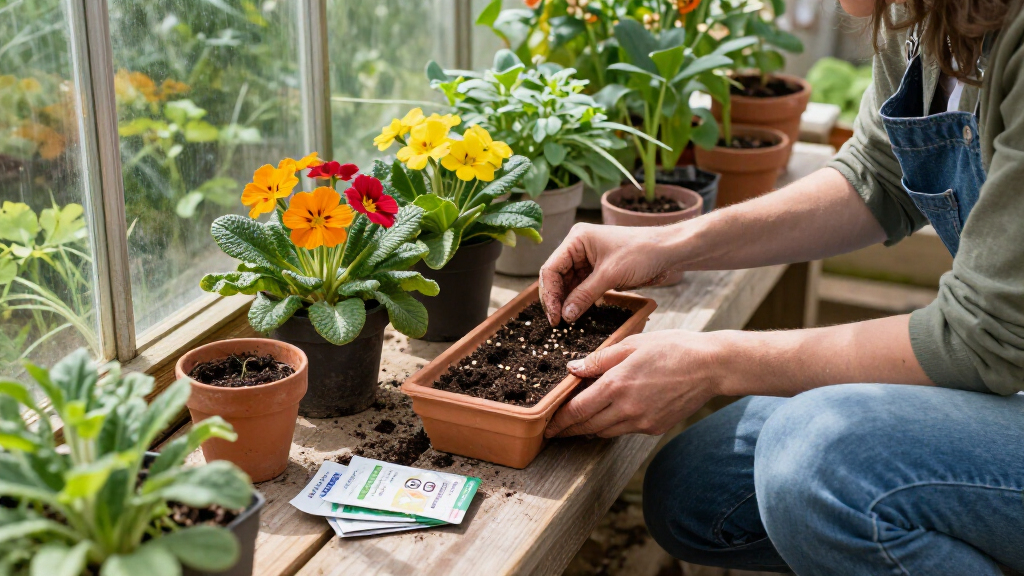

For most gardeners seeking the best primrose flower seeds, I’d start with Mixrug 315+ Mixed Primrose Flower Seeds for its garden-and-container focus and range of colors. Outsidepride Showy Evening Primrose Seeds are a standout for larger wildflower plantings, while 1000+ Perennial Primrose Mix Seeds suit gardeners who want a perennial mix rather than a single evening primrose species. The main tradeoff is that “primrose” covers different plants, from ornamental Primula to evening primrose wildflowers, so seed quantity alone does not tell you which pack fits your garden. Compare plant identity, intended use, and sowing area before choosing. Read on for the full breakdown and help matching a seed pack to your space.

Get garden gear delivered free — and shop member deals
- Fast, free delivery on millions of items
- Access to Prime Big Deal Days deals on October 6–7
- Prime Video, Amazon Music and more included
Complete the kit


Key Takeaways
- Primula and evening primrose are not interchangeable: the list includes ornamental garden primroses as well as Oenothera wildflowers, so confirm the botanical name and intended use before buying.
- Mixrug 315+ Mixed Primrose is the broadest garden-oriented starting point: its listing names both gardens and containers, while many other options focus on evening primrose or wildflower planting.
- Pack size should match planting area: Yellow Evening Primrose Seeds lists coverage for 1,500 square feet, while smaller-count packs make more sense for trials or limited beds.
- Species choice matters more than a color label: Mexican primrose, common evening primrose, and showy evening primrose represent different planting intentions and should not be treated as the same flower.
- Large counts do not automatically mean better value: germination, species fit, planting density, and how much ground you can maintain all affect whether a bulk pack is useful.
| Mixrug 315+ Mixed Primrose Flower Seeds for Gardens and Containers |  | Best for Mixed Planting Spaces | Brand: Mixrug | Seed quantity: 315+ | Plant types: Primula malacoides and Primula auricula | VIEW LATEST PRICE | See Our Full Breakdown |
| 1000+ Mixed Color Double Primrose Primula Flower Seeds |  | Best for Large-Scale Color | Seed count: 1,000+ | Plant type: Perennial, biennial, or annual | Flower type: Mixed-color double blooms | VIEW LATEST PRICE | See Our Full Breakdown |
| Common Evening Primrose Seeds (Oenothera biennis) – Non-GMO Heirloom Native Wildflower |  | Best for Native Pollinator Gardens | Brand: Survival Garden Seeds | Scientific name: Oenothera biennis | Plant type: Biennial forb | VIEW LATEST PRICE | See Our Full Breakdown |
| Outsidepride Showy Evening Primrose Seeds, 5,000 Seeds |  | Best for Ground Coverage | Brand: Outsidepride | Seed count: 5,000 | Flower color: Pink with yellow centers | VIEW LATEST PRICE | See Our Full Breakdown |
| Outsidepride Blue Common Primrose Seeds, 100 Count |  | Best for Compact Blue Accents | Brand: Outsidepride | Seed count: 100 | Plant type: Perennial flower | VIEW LATEST PRICE | See Our Full Breakdown |
| Showy Evening Primrose Seeds, 1/2 Ounce |  | Best for Dusk Pollinator Planting | Brand: Sweet Yards | Scientific name: Oenothera speciosa | Seed quantity: Over 100,000 | VIEW LATEST PRICE | See Our Full Breakdown |
| 1000+ Perennial Primrose Mix Seeds, Heirloom and Non-GMO |  | Best for Spring Borders and Woodland Gardens | Seed count: 1,000+ | Lifecycle: Perennial | Color: Mixed | VIEW LATEST PRICE | See Our Full Breakdown |
| HOME GROWN Evening Primrose Seeds, 575 Seeds (Oenothera lamarckiana) |  | Best for Detailed Growing Guidance | Scientific name: Oenothera lamarckiana | Seed quantity: 575 seeds (0.3 g) | Plant type: Biennial | VIEW LATEST PRICE | See Our Full Breakdown |
| Yellow Evening Primrose Seeds, 44,000 Seeds for 1,500 Sq. Ft. |  | Best for Large Naturalized Areas | Brand: Created By Nature | Botanical name: Oenothera lamarckiana | Seed quantity: 44,000 | VIEW LATEST PRICE | See Our Full Breakdown |
| Mixrug Dwarf Double Primrose Seeds, 1,000 Count |  | Best for Compact Mixed-Color Displays | Brand: Mixrug | Seed count: 1,000 | Plant type: Perennial dwarf double primrose | VIEW LATEST PRICE | See Our Full Breakdown |
| Sow Right Seeds Showy Evening Primrose Seeds |  | Best for Night Pollinators | Plant type: Oenothera speciosa perennial | Seed quantity: About 2,500 seeds; minimum 300 mg | Bloom color: Pink with yellow centers | VIEW LATEST PRICE | See Our Full Breakdown |
| Evening Primrose Garden Mix Seeds |  | Best for Fragrant Color Variety | Botanical name: Oenothera spp. | Plant height: 12–36 in | Days to maturity: 90–120 days | VIEW LATEST PRICE | See Our Full Breakdown |
| Mexican Primrose Seeds (Oenothera Speciosa) – Showy Evening Primrose, Pink Wildflower Groundcover |  | Best for Drought-Tolerant Groundcover | Scientific name: Oenothera speciosa | Plant type: Perennial wildflower | Bloom color and season: Pink; spring to early summer | VIEW LATEST PRICE | See Our Full Breakdown |
| Outsidepride Evening Primrose Seeds – 5000 Count Annual Flower Seeds |  | Best for Large Annual Plantings | Plant type: Annual | Seed count: 5,000 | Bloom color: Soft yellow | VIEW LATEST PRICE | See Our Full Breakdown |
| Seed Needs Showy Evening Primrose Seeds, Pink Flowers, 2 Packs |  | Best for High-Quantity Pink Perennials | Plant type: Perennial flower | Seed quantity: 12,000 seeds; 2 packs | Flower color: Pink with dark pink veins | VIEW LATEST PRICE | See Our Full Breakdown |
| primrose flower seed | Plant type |
|---|---|
| Mixrug 315+ Mixed Primrose Flo | — |
| 1000+ Mixed Color Double Primr | Perennial, biennial, or annual |
| Common Evening Primrose Seeds | Biennial forb |
| Outsidepride Showy Evening Pri | — |
| Outsidepride Blue Common Primr | Perennial flower |
| Showy Evening Primrose Seeds | — |
| 1000+ Perennial Primrose Mix S | — |
| HOME GROWN Evening Primrose Se | Biennial |
| Yellow Evening Primrose Seeds | — |
| Mixrug Dwarf Double Primrose S | Perennial dwarf double primrose |
| Sow Right Seeds Showy Evening | Oenothera speciosa perennial |
| Evening Primrose Garden Mix Se | — |
| Mexican Primrose Seeds | Perennial wildflower |
| Outsidepride Evening Primrose | Annual |
| Seed Needs Showy Evening Primr | Perennial flower |
More Details on Our Top Picks
Mixrug 315+ Mixed Primrose Flower Seeds for Gardens and Containers
Mixed colors and flexible placement give this packet a useful role for gardeners who want spring primrose color in both beds and outdoor containers. Its listed species are Primula malacoides and Primula auricula, while the 315+ seed count offers more room to try different planting spots than the 100-count Outsidepride Blue Common Primrose Seeds. The tradeoff is that a mixed packet gives less control over a uniform color scheme, and the product data conflicts on hardiness: the description says zones 4–8, while the details list zone 10. I would verify local suitability before planting rather than rely on either figure alone. Regular watering is also specified, so this is a less hands-off choice than drought-tolerant evening primrose options.
Pros:- Mixed flowers offer more color variety than the single-color Outsidepride Blue Common Primrose Seeds.
- Listed for both garden beds and outdoor containers.
- 315+ seeds allow multiple sowing attempts or planting areas.
- Described as deer resistant and low maintenance once established.
Cons:- Hardiness guidance conflicts between zones 4–8 in the description and zone 10 in the product details.
- Regular watering is specified, unlike the low-water evening primrose options.
- A mixed-color packet offers less control over a coordinated planting.
Best for: Gardeners who want a mix of spring colors to try in outdoor beds and containers, and can check local hardiness guidance before sowing.
Not ideal for: Buyers who need dependable hardiness-zone information, a single flower color, or a drought-tolerant planting that needs little watering.
- Brand:Mixrug
- Seed quantity:315+
- Plant types:Primula malacoides and Primula auricula
- Flower color:Mixed
- Bloom season:Spring
- Hardiness zone:4–8 in description; zone 10 in product details
- Sun exposure:Full sun
- Watering:Regular
- Growing locations:Outdoor gardens and containers
Our verdict“Choose this packet for varied spring color across beds and containers if you are willing to resolve the conflicting hardiness information first.”
1000+ Mixed Color Double Primrose Primula Flower Seeds
More than 1,000 seeds make this the lineup’s clearest choice for filling a broad planting area or sowing in several stages. The mixed-color double blooms also give it a different look from the single-color Outsidepride Showy Evening Primrose Seeds, which are described as pink with yellow centers. This packet is listed for partial shade and cool weather, a useful fit for woodland-style spaces, but those conditions matter: it is not the strongest match for a hot, exposed, dry site. The generic brand listing also provides less variety-specific reassurance than the named Mixrug packet. Its broad zones 3–11 listing and annual, biennial, or perennial description leave the plant’s behavior less precise than a clearly identified species.
Pros:- More than 1,000 seeds suit broad sowing or several planting areas.
- Mixed-color double blooms offer a fuller look than the single-color evening primrose options.
- Partial-shade guidance suits woodland-style gardens.
- Listed as non-GMO and heirloom.
Cons:- Generic branding gives limited variety-specific information.
- The annual, biennial, or perennial listing leaves lifecycle expectations unclear.
- Cool-weather and partial-shade needs make it a weaker fit for hot, exposed sites.
Best for: Gardeners planting a large partial-shade area who want abundant mixed-color double blooms and are comfortable growing from a generic seed listing.
Not ideal for: Buyers seeking a named, clearly defined variety, a sunny dry-site flower, or a predictable lifecycle and growth habit.
- Seed count:1,000+
- Plant type:Perennial, biennial, or annual
- Flower type:Mixed-color double blooms
- USDA hardiness zones:3–11
- Sunlight exposure:Partial shade
- Expected plant height:15 inches
- Soil type:Sandy soil
- Moisture needs:Regular watering
- Item weight:4.54 g
Our verdict“Pick this for a large, cool-season, partly shaded planting when seed quantity matters more than precise variety and lifecycle details.”
Common Evening Primrose Seeds (Oenothera biennis) – Non-GMO Heirloom Native Wildflower
Species clarity and pollinator value set this apart from the mixed Primula packets: this is Oenothera biennis, a biennial wildflower with fragrant yellow blooms that open at dusk. That flowering pattern gives a pollinator garden a different purpose from the spring display offered by the Mixrug 315+ Mixed Primrose Flower Seeds. It is also listed for full sun, zones 3–9, and several soil types, with low moisture needs once established. The main compromise is timing: plants form a rosette in the first year and bloom in the second, so it will not provide quick color. Surface sowing without covering may also take more care than a casual scatter-and-cover approach.
Pros:- Named species and biennial growth habit make the plant identity clearer than the generic mixed Primrose packet.
- Dusk-opening yellow flowers can support night-active pollinators.
- Drought tolerant and adaptable to sandy, loam, or clay soil.
- Untreated, non-GMO heirloom seed.
Cons:- Typically flowers in its second year rather than producing immediate blooms.
- Seeds should be surface sown without covering, which can be less straightforward for beginners.
- Tall growth is less suited to small containers than compact primrose choices.
Best for: Gardeners building a sunny, low-water pollinator habitat who can wait through the first-year rosette before flowering.
Not ideal for: Buyers who want immediate spring color, a compact container flower, or an easy sowing method that allows seeds to be covered.
- Brand:Survival Garden Seeds
- Scientific name:Oenothera biennis
- Plant type:Biennial forb
- Bloom color:Yellow
- Bloom season:Summer to fall
- USDA hardiness zones:3–9
- Plant height:48 inches
- Soil type:Sandy, loam, or clay
- Germination time:14–28 days
Our verdict“Choose this named evening primrose for a sunny, adaptable pollinator planting if you can wait a year for its dusk-opening flowers.”
Outsidepride Showy Evening Primrose Seeds, 5,000 Seeds
Five thousand seeds and spreading growth make this a practical pick for a broad border or a patch where soil coverage matters more than keeping plants contained. Its pink flowers with yellow centers contrast with the yellow, dusk-opening blooms of Common Evening Primrose Seeds, while its listed height of about 14 inches keeps it shorter than that 48-inch biennial. The product describes drought tolerance and low watering needs, which may reduce upkeep after establishment. However, the same spreading habit that helps cover ground can form large colonies, so it is a poor match for tightly managed beds. Partial-sun placement also narrows its options compared with the full-sun Common Evening Primrose.
Pros:- 5,000 seeds support broad sowing over borders or larger patches.
- Pink flowers with yellow centers provide a different palette from yellow evening primrose.
- Low water needs and drought tolerance can limit upkeep after establishment.
- Spreading growth may help stabilize soil.
Cons:- May spread quickly and form large colonies that need containment.
- Partial-sun guidance limits placement compared with the full-sun Common Evening Primrose Seeds.
- Listed hardiness is narrower than the zones 3–9 range given for Common Evening Primrose.
Best for: Gardeners with a sunny-to-partly shaded outdoor border or open patch who want broad coverage and can give a spreading plant room.
Not ideal for: Small-garden owners who need contained growth, or gardeners whose planting space receives full sun only and has no partial-sun area.
- Brand:Outsidepride
- Seed count:5,000
- Flower color:Pink with yellow centers
- Expected plant height:14 inches
- Bloom period:Spring to summer
- Sunlight exposure:Partial sun
- USDA hardiness zones:6–10 in description; product specs list zone 6
- Soil type:Loam
- Water needs:Little to no watering
Our verdict“Choose this for a spacious border where low-water ground coverage is welcome, but skip it if spreading growth would be difficult to control.”
Outsidepride Blue Common Primrose Seeds, 100 Count
Compact stature and blue flowers give this 100-seed packet a more focused role than the larger mixed-color options. At about six inches tall, it is suited to a border edge or container where the 14-inch Outsidepride Showy Evening Primrose could take up more space. Its listed partial-sun exposure and moderate watering also point to a different planting plan from drought-tolerant evening primrose seeds. The major caution is inconsistent product information: the copy gives zones 6–10 and summer flowering, while the specifications list zone 4 and fall-to-winter blooms. That uncertainty makes local fit and expected bloom timing hard to judge. The small count is another limitation for anyone hoping to cover a wide area.
Pros:- Six-inch listed height suits compact borders and containers.
- Blue flowers with yellow centers offer a distinct color choice within this lineup.
- Perennial plant type may suit gardeners planning a recurring planting.
- Listed for outdoor use and partial sun.
Cons:- Hardiness guidance conflicts between zones 6–10 in the description and zone 4 in the specifications.
- Bloom timing conflicts between summer in the copy and fall to winter in the specifications.
- A 100-seed count is less suited to broad coverage than the 5,000-seed Outsidepride Showy Evening Primrose packet.
Best for: Container gardeners and border planners who want a compact blue-flowered accent and can confirm its hardiness and bloom timing before sowing.
Not ideal for: Buyers needing a large quantity for ground coverage, reliable season or zone information, or a low-water plant for dry conditions.
- Brand:Outsidepride
- Seed count:100
- Plant type:Perennial flower
- Flower color:Blue with yellow centers
- Expected plant height:6 inches
- USDA hardiness zone:Zone 4 in specifications; zones 6–10 in description
- Sunlight exposure:Partial sun
- Blooming period:Fall to winter in specifications; summer in description
- Soil moisture:Moderate watering
Our verdict“Choose this for a compact blue accent in a small planting only if you can verify the conflicting zone and bloom-season details.”
Showy Evening Primrose Seeds, 1/2 Ounce
For a gardener who wants a broad patch of pale pink flowers with evening activity, this half-ounce packet stands out: it contains over 100,000 seeds and lists coverage of about 35 square feet. The dusk-opening blooms give it a different purpose from HOME GROWN Evening Primrose Seeds, whose bright yellow flowers are described as opening from dusk through morning. This Sweet Yards option fits a naturalized planting where nighttime pollinators are part of the goal, rather than a small, precisely spaced display. Planting instructions and a reusable zipper add practical help, and the 30-day germination guarantee offers a stated safeguard. The tradeoff is that the supplied details don’t specify soil conditions or planting depth, so it gives less growing guidance than HOME GROWN. I’d skip it if exact sowing directions are a priority.
Pros:- Over 100,000 seeds with stated coverage of approximately 35 square feet
- Pale pink flowers open at dusk and attract nighttime pollinators
- Includes planting instructions and reusable zipper packaging
- Includes a 30-day germination guarantee
Cons:- Provided product details do not specify soil requirements or sowing depth
- The listed coverage suits a sizeable planting better than a small container project
Best for: Gardeners creating a sizeable pale-pink evening planting who want seed coverage information and a germination guarantee.
Not ideal for: First-time growers who need detailed soil, depth, and site instructions before sowing.
- Brand:Sweet Yards
- Scientific name:Oenothera speciosa
- Seed quantity:Over 100,000
- Packet weight:1/2 ounce
- Coverage:Approximately 35 square feet
- Flower color:Pale pink
- Bloom behavior:Flowers open at dusk
- Germination guarantee:30 days
Our verdict“Choose this packet for a broad, pale-pink dusk-blooming display, but pick HOME GROWN Evening Primrose Seeds if more growing specifics matter to you.”
1000+ Perennial Primrose Mix Seeds, Heirloom and Non-GMO
This mix is the more flexible pick for gardeners planning early spring perennial color across borders, containers, or woodland-style beds. Its 1,000-plus seeds offer a larger sowing batch than HOME GROWN Evening Primrose Seeds, which lists 575 seeds and focuses on a single yellow-flowered species. Here, the mixed colors and perennial habit suit a varied planting that can return rather than a one-season display. The instructions also give a useful timetable: sow indoors 8–10 weeks before the last frost or outdoors in early spring, then keep the soil moist during germination. One detail needs care: the description favors partial shade and cooler climates, while the specs list full sun. I’d follow the site guidance cautiously and avoid choosing this for a hot, exposed bed where consistent moisture is hard to provide.
Pros:- More than 1,000 seeds for planting across multiple garden areas
- Perennial mix described for early spring blooms
- Suitable for borders, containers, and woodland gardens
- Provides indoor and outdoor sowing windows
Cons:- Sun guidance conflicts: the specs list full sun while the description favors partial shade
- Soil needs to stay moist during germination
- No specific flower colors or mature plant dimensions are provided
Best for: Gardeners in cooler regions who want a mixed-color perennial planting for partially shaded borders, containers, or woodland beds.
Not ideal for: Growers seeking a clearly sun-loving, drought-tolerant flower or those unable to keep seed-starting soil moist.
- Seed count:1,000+
- Lifecycle:Perennial
- Color:Mixed
- Sun guidance:Partial shade preferred in description; full sun listed in specs
- Planting time:Indoors 8–10 weeks before last frost or outdoors in early spring
- Germination care:Keep soil moist
- Growing settings:Borders, containers, and woodland gardens
- Material feature:Heirloom
Our verdict“Pick this mix for a large, varied spring planting in a cooler garden, but choose HOME GROWN Evening Primrose Seeds for clearer sun and soil requirements.”
HOME GROWN Evening Primrose Seeds, 575 Seeds (Oenothera lamarckiana)
Among these picks, HOME GROWN gives the clearest growing parameters for a gardener who wants to know what conditions to provide. The listing specifies full sun, well-drained soil, 14–21-day germination, and a 65–70°F germination temperature, making it more instructive than Showy Evening Primrose Seeds, 1/2 Ounce, whose provided details omit soil and depth guidance. Its bright yellow, 2–3-inch flowers open from dusk through morning, and established plants tolerate dry or sandy conditions and may reseed. That resilience comes with a patience requirement: this is a biennial that typically blooms in its second year, unlike a purchase aimed at quick seasonal color. With 575 seeds, it also suits a more contained sowing plan than Yellow Evening Primrose Seeds, which lists 44,000 seeds for broad coverage.
Pros:- Specific germination timing and temperature are provided
- Bright yellow flowers measure 2–3 inches and open from dusk through morning
- Established plants tolerate poor, dry, and sandy soils
- Heirloom, open-pollinated, and non-GMO seed
Cons:- Typically blooms in the second year
- Needs full sun and well-drained soil for best growth
- 575 seeds cover less ground than Yellow Evening Primrose Seeds’ stated 44,000-seed supply
Best for: Growers who want a clearly specified, full-sun biennial for dry or sandy soil and can wait for blooms in the second year.
Not ideal for: Gardeners seeking first-year flowers, shade planting, or enough seed for a large meadow.
- Scientific name:Oenothera lamarckiana
- Seed quantity:575 seeds (0.3 g)
- Plant type:Biennial
- Flower color and size:Bright yellow; 2–3 inches
- Germination:14–21 days at 65–70°F
- USDA hardiness zones:4–9
- Expected plant height:24 inches
- Sun and soil:Full sun; well-drained soil
- Planting:Direct sow outdoors after last frost or in fall; thin to 12–24 inches
Our verdict“Choose HOME GROWN for detailed sowing guidance and a modest yellow-flowered planting, provided you can wait until the second year for blooms.”
Yellow Evening Primrose Seeds, 44,000 Seeds for 1,500 Sq. Ft.
If the goal is to seed a meadow edge or other broad, open area, this is the clear scale pick: 44,000 seeds and coverage up to 1,500 square feet far exceed HOME GROWN Evening Primrose Seeds’ 575-seed packet. The yellow, fragrant flowers open near dusk and are described as attracting bees and butterflies, so it suits naturalized planting better than Mixrug Dwarf Double Primrose Seeds, which is framed for beds, borders, containers, and hanging baskets. Spring or fall sowing gives some timing flexibility, but the site still needs full sun and well-drained soil. The listing also notes that flowering comes after foliage develops, so this is not the strongest choice for an immediate, tidy floral effect. Its 48-inch expected height is another reason to reserve it for open spaces rather than short borders.
Pros:- 44,000 seeds with stated coverage of up to 1,500 square feet
- Fragrant yellow flowers open near dusk
- Described as attracting bees and butterflies
- GMO-free seed with no fillers or coatings
Cons:- Requires full sun and well-drained soil
- Flowering follows foliage development rather than providing an immediate display
- Expected height of 48 inches may overwhelm compact beds
Best for: Landowners and gardeners sowing a sunny meadow, naturalized area, or large border who want a high-volume yellow evening primrose planting.
Not ideal for: Container gardeners, shaded-site growers, and anyone wanting a compact plant or immediate flowers after sowing.
- Brand:Created By Nature
- Botanical name:Oenothera lamarckiana
- Seed quantity:44,000
- Coverage:Up to 1,500 square feet
- Flower color and behavior:Yellow; fragrant flowers open near dusk
- Expected plant height:48 inches
- Sun and soil:Full sun; well-drained soil
- Planting season:Spring or fall
- USDA hardiness zones:3–10
Our verdict“Choose this for large, sunny naturalized plantings; HOME GROWN Evening Primrose Seeds is a better fit when you want a smaller batch and more detailed germination guidance.”
Mixrug Dwarf Double Primrose Seeds, 1,000 Count
Mixrug takes a different route from the evening-blooming Oenothera options: it is a dwarf double primrose intended for spring-to-summer planting and flowers, with mixed colors suited to beds, borders, groundcover, containers, and hanging baskets. That makes it the most adaptable choice here for a gardener planning a close-up display rather than the large naturalized area served by Yellow Evening Primrose Seeds. Its 1,000-seed count supports more than a token sowing, and the heirloom, GMO-free designation may appeal to buyers who prioritize those seed traits. The listing advertises fragrance, pollinator appeal, low maintenance, and a high germination rate, but doesn’t provide germination timing or plant dimensions. Its full-sun listing also limits its fit for shaded spaces, while the “dwarf” description alone doesn’t establish a precise mature size.
Pros:- Mixed-color dwarf double flowers are presented for beds, borders, groundcover, containers, and hanging baskets
- 1,000 seeds provide a substantial sowing batch
- Listed as heirloom and GMO-free
- Advertised as fragrant, low-maintenance, and attractive to pollinators
Cons:- Full-sun listing may not suit shaded gardens
- No germination timing, temperature, or sowing depth is provided
- No mature height or spread is specified despite the dwarf label
Best for: Gardeners seeking mixed-color primrose for containers, hanging baskets, or compact beds in a full-sun garden.
Not ideal for: Buyers who need exact mature dimensions, germination instructions, or a primrose for a shaded planting site.
- Brand:Mixrug
- Seed count:1,000
- Plant type:Perennial dwarf double primrose
- Flower color:Mixed
- USDA hardiness zones:6–10
- Expected blooming period:Spring to summer
- Expected planting period:Spring to summer
- Sunlight exposure:Full sun
- Material features:Heirloom and GMO-free
Our verdict“Choose Mixrug for a mixed-color, close-up display in sunny containers or borders, but pick 1000+ Perennial Primrose Mix Seeds for clearer sowing timing and woodland-garden guidance.”
Sow Right Seeds Showy Evening Primrose Seeds
I’d choose this showy pink perennial for a sunny bed where evening wildlife matters as much as summer color. Its pink flowers with yellow centers and stated appeal to nighttime pollinators give it a different purpose from Outsidepride Evening Primrose Seeds, which are described as yellow annuals attracting daytime pollinators. The packet contains at least 2,500 seeds and includes planting instructions, so it can support a generous planting rather than just a small trial patch. It also self-seeds, which can fill space over time with less repeat sowing. That same habit is the main tradeoff: Oenothera speciosa can spread quickly, so it’s a poor fit for a tightly controlled border. Plan for full sun and regular watering, especially while plants establish.
Pros:- Pink flowers with yellow centers bring a distinct look compared with yellow evening primrose varieties.
- Attracts moths and other nighttime pollinators.
- Self-seeding perennial can return and spread without annual resowing.
- Includes planting instructions and at least 2,500 seeds.
Cons:- Spreading growth may need containment or regular thinning.
- Requires regular watering, particularly during establishment.
- Germination depends on maintaining the specified warm soil temperature.
Best for: Gardeners with sunny, roomy beds who want pink perennial blooms and a planting that can attract nighttime pollinators.
Not ideal for: Small-space gardeners who need plants to stay within strict boundaries or anyone seeking a low-water option from sowing onward.
- Plant type:Oenothera speciosa perennial
- Seed quantity:About 2,500 seeds; minimum 300 mg
- Bloom color:Pink with yellow centers
- Plant height and spread:2–3 ft tall and wide
- Sunlight:Full sun
- Germination:14–21 days at 70–75°F soil temperature
- Hardiness zones:USDA zones 4–9
- Seed type:Non-GMO heirloom
- Planting depth and spacing:1/16 in deep; 12–18 in apart
Our verdict“Pick this for a sunny, spacious garden where pink perennial color and nighttime pollinator activity outweigh the need to manage spreading growth.”
Evening Primrose Garden Mix Seeds
This mix is the choice I’d make when a single bloom color feels too uniform. Its pink, yellow, and white flowers open late in the day and are described as sweetly fragrant through the night, giving it a more sensory, cottage-garden role than the pink-only Sow Right Seeds Showy Evening Primrose. The broad stated range of USDA zones 3–9 also makes it a flexible option for gardeners in colder regions. Unlike the compact groundcover habit described for Mexican Primrose Seeds, this mix may reach 12–36 inches, so its eventual scale is less predictable in a neat border. It needs full sun, and its 90–120-day maturation window calls for patience; I’d skip it if you want quick color or a precisely uniform planting.
Pros:- Mixes pink, yellow, and white blooms for more color variety than single-color options.
- Flowers open in the evening and are described as fragrant through the night.
- Attracts moths and butterflies.
- Perennial, non-GMO, heirloom, open-pollinated seed with a stated range of zones 3–9.
Cons:- The 90–120-day maturation window means it may take longer to flower.
- Needs full sun for the described growth.
- A 12–36-inch height range can make placement and uniformity harder to predict.
Best for: Cottage-garden growers who want varied evening colors, night fragrance, and a perennial mix suited to a broad range of climates.
Not ideal for: Gardeners seeking fast blooms, a single consistent color, or a tightly controlled plant height and appearance.
- Botanical name:Oenothera spp.
- Plant height:12–36 in
- Days to maturity:90–120 days
- Growing zones:USDA zones 3–9
- Sunlight:Full sun
- Life cycle:Perennial
- Colors:Pink, yellow, and white
- Seed type:Non-GMO, heirloom, open-pollinated
Our verdict“Choose this mix for a sunny cottage border where varied evening color and fragrance matter more than quick or uniform results.”
Mexican Primrose Seeds (Oenothera Speciosa) – Showy Evening Primrose, Pink Wildflower Groundcover
I’d favor this option for a sunny slope or open patch where a spreading carpet of pink is more useful than a plant that stays put. The listed drought tolerance and low water needs set it apart from Sow Right Seeds Showy Evening Primrose, whose listing calls for regular watering. At about 18 inches tall, this native perennial is also shorter than Outsidepride Evening Primrose Seeds, which can reach 24–48 inches. Its Oenothera speciosa identity and zones 4–10 range make it a broad-climate groundcover candidate, while the listed soil types include sandy, loam, and clay. The tradeoff is its vigorous reseeding: that can help cover ground, but it may overrun small borders. Full sun is needed for reliable growth, and the supplied data gives no seed count, so planting scale is harder to plan.
Pros:- Low water needs and drought tolerance suit established plantings in dry conditions.
- Native perennial habit and prolific reseeding can help cover open ground.
- About 18 inches tall, shorter than the listed Outsidepride annual option.
- Listed for USDA zones 4–10 and several soil types.
Cons:- Spreading and reseeding can make it difficult to contain in small spaces.
- Full sun is required for reliable germination and growth.
- Pack size is listed as one pack, with no seed count provided.
Best for: Gardeners with sunny slopes or larger open areas who want a low-water, pink perennial groundcover that can spread.
Not ideal for: Small-garden owners who need restrained growth, or buyers who need a stated seed count to plan a precise planting.
- Scientific name:Oenothera speciosa
- Plant type:Perennial wildflower
- Bloom color and season:Pink; spring to early summer
- Expected height:About 18 in
- Sunlight:Full sun
- Hardiness zones:USDA zones 4–10
- Water needs:Low; drought tolerant
- Soil types:Sandy, loam, and clay
- Seed treatment:Untreated, non-GMO, heirloom
Our verdict“Choose this for a sunny, spacious slope where drought tolerance and spreading pink cover are assets rather than problems.”
Outsidepride Evening Primrose Seeds – 5000 Count Annual Flower Seeds
For a broad sweep of yellow flowers, this listing’s 5,000-seed count and annual habit make it a practical contrast to perennial choices such as Seed Needs Showy Evening Primrose Seeds. The annual format is better suited to gardeners who want a seasonal planting they can rework, while the drought-tolerant description and erosion-control use point toward borders, containers, or open ground where soil coverage matters. Plants are listed at 24–48 inches, making them taller than Mexican Primrose Seeds and more suited to a back border or larger patch. The compromise is climate fit: its stated zones are 6–10, narrower than the zone range for the Evening Primrose Garden Mix. It also spreads quickly, so a high seed count is only an advantage if there’s room to manage the resulting planting.
Pros:- 5,000 seeds support a broad planting or multiple sowing areas.
- Annual growth suits gardeners who prefer to refresh a bed each season.
- Drought-tolerant listing and erosion-control use suit open or challenging ground.
- Yellow blooms and pollinator appeal offer a different role from pink perennial picks.
Cons:- Stated growing range is limited to USDA zones 6–10.
- Plants can reach 48 inches, which may overwhelm small or low-profile beds.
- Quick spreading may call for ongoing management.
Best for: Gardeners in USDA zones 6–10 who want a large annual yellow planting for sunny borders, containers, or erosion-prone ground.
Not ideal for: Gardeners in colder zones seeking dependable perennial returns, or owners of small beds where fast spreading and taller growth are hard to manage.
- Plant type:Annual
- Seed count:5,000
- Bloom color:Soft yellow
- Plant height:24–48 in
- Sunlight:Full sun
- Hardiness zones:USDA zones 6–10
- Water needs:Low; drought tolerant
- Soil:Loam, well-drained
- Listed features:GMO free; attracts pollinators; erosion control
Our verdict“Pick this for a spacious, sunny annual display or erosion-control planting in zones 6–10, not for a compact perennial border.”
Seed Needs Showy Evening Primrose Seeds, Pink Flowers, 2 Packs
This two-pack stands out for sheer quantity: the listed 12,000 seeds make it a better fit for extensive sowing than Sow Right Seeds Showy Evening Primrose, which lists at least 2,500. Both focus on pink showy evening primrose, but Seed Needs describes dark pink veining and plants up to 24 inches tall, offering a more defined look and a shorter stated height than Sow Right’s 2–3-foot plants. The perennial habit and stated zones 5–9 suit gardeners planning repeat-season growth. I’d be cautious about treating the pack as a small-bed choice: a large seed supply paired with a plant that can attract pollinators may invite more coverage than intended. It also calls for full sun and regular watering, and the product data gives differing bloom-season descriptions, so timing is less clear.
Pros:- 12,000 seeds across two packs suit extensive sowing.
- Pink flowers with dark veins offer a distinct appearance among the pink primrose options.
- Perennial plants can return in following seasons.
- Heirloom seed packets are described as moisture resistant.
Cons:- The large quantity may exceed the needs of a small garden.
- Requires full sun and regular watering.
- Bloom-season details differ within the supplied product information.
Best for: Gardeners who want to sow a large area with pink, dark-veined perennial flowers and can accommodate a substantial seed supply.
Not ideal for: Small-space growers who need a modest quantity, or gardeners prioritizing drought tolerance and a clearly stated bloom window.
- Plant type:Perennial flower
- Seed quantity:12,000 seeds; 2 packs
- Flower color:Pink with dark pink veins
- Expected height:Up to 24 in
- Bloom period:Summer to fall; supplied description also varies
- Sunlight:Full sun
- Hardiness zones:USDA zones 5–9
- Soil and moisture:Sandy or poor soil; regular watering
- Seed and packet features:Heirloom; moisture-resistant packets
Our verdict“Choose this two-pack for large sunny plantings of pink perennial primrose, but skip it if you need a small quantity or clear bloom timing.”
How We Picked
I ranked these seed packs by how clearly their listings identify the plant, how well the stated purpose matches a likely buyer, and whether the quantity appears suited to a particular planting scale. I gave preference to options that make their use case understandable—such as garden and container mixes, perennial blends, named species, or packs that state coverage—rather than treating the largest seed count as an automatic advantage.
The order also reflects the category’s main source of confusion: “primrose” can refer to different plants, including Primula and several Oenothera species. A pack can be a strong choice for a wildflower area and still be a poor fit for someone looking for compact ornamental Primula. Since the product information supplied here does not establish details such as germination rates, exact color stability, or local growing performance, I avoid treating those as verified advantages and rank by stated identity, purpose, scale, and clarity.
Factors to Consider When Choosing Best Primrose Flower Seeds
Before choosing a pack, I’d settle the plant identity and planting plan first. The names in this roundup span ornamental primroses and evening primrose wildflowers, and that difference affects where the seeds fit, how much space to reserve, and what expectations to set.
Check the Botanical Name Before the Common Name
Common names can blur the line between Primula and Oenothera, even though those labels point to different kinds of plants. Look for the botanical name on the listing and compare it with the garden result you want, rather than relying on “primrose” alone. A Primula mix is a more direct match for ornamental primrose beds or containers; an Oenothera pack is positioned as evening primrose or wildflower planting. This distinction matters when you are matching plants to existing garden plans or seed packets. A familiar color name cannot resolve a species mismatch. If the listing leaves the identity unclear, I would choose a better-labeled option instead of guessing.
Match the Pack to Your Planting Area
Seed counts range from modest packs to listings with thousands of seeds or stated square-foot coverage. That spread is useful only when it matches the ground you intend to sow and the density recommended for the specific species. A bulk pack can be practical for a broad naturalized area, but it can leave a small bed with more seed than you can sensibly use. Conversely, a small pack may suit a container or first trial but fall short for a large planting. Treat coverage claims as a planning aid, not a guarantee: sowing method, germination, and site conditions affect the final result. Measure the area before paying extra attention to the headline count.
Choose a Garden Display or a Wildflower Planting
Think about the role the flowers should play in your landscape. Mixed and double-flower Primula listings point toward ornamental variety, while named evening primrose options are more clearly associated with wildflower-style planting. A neat container display and a broad naturalized area call for different seed choices, even when both listings use the word primrose. Avoid choosing solely by a flower photo or a color phrase if the product’s stated species suggests a different use. For a formal bed, prioritize a clearly identified ornamental type and a manageable pack. For a larger wildflower space, prioritize species identity, coverage, and whether the planting can be allowed to spread as intended.
Treat Perennial, Annual, and Species Claims Carefully
Seed listings may describe a product as perennial, annual, heirloom, or non-GMO, but those terms answer different questions. Perennial describes the expected life cycle; annual describes a plant completing its life cycle within a season; heirloom and non-GMO are labeling claims rather than a promise about garden performance. Check that the wording and botanical name align with your plan, especially when comparing a perennial Primrose mix with an annual Evening Primrose listing. Local climate and growing conditions can affect how a plant behaves, so avoid assuming a label guarantees the same result in every region. If repeat flowering across years is your priority, give the stated life cycle more weight than pack size or color. If you are unsure, start with a smaller quantity and learn how the named species performs in your site.
Buy for the Site You Can Maintain
Seed is only one part of the decision: the planting site should fit the species and the amount of care you can provide. Before ordering, check the supplier’s sowing directions for light, soil preparation, spacing, and watering rather than applying one primrose-growing method to every listing. A seed mix may offer visual variety, but it can be harder to plan around than a single named species. A large wildflower sowing also takes more site preparation and follow-up than scattering a small test patch. If your conditions are uncertain, trial a limited area before committing a full bed. This approach costs less effort if the chosen species or growth habit proves unsuitable.
Decide When a Bigger Pack Is Worth It
A high seed count is useful when you have a large prepared site, want to sow more than once, or need enough seed for a broad display. It is less helpful when the listing does not clearly identify the species or when you have no plan for storing unused seed. Compare quantity alongside stated coverage, pack format, and planting purpose, rather than treating count as a direct measure of value. Two packs with very different counts may serve entirely different jobs: a compact ornamental planting versus a large wildflower area. Pay more for a clearer fit or a more suitable format, not just for a bigger number on the label. For a first attempt, a manageable pack can be a better choice than a surplus you cannot use well.
Frequently Asked Questions
Are Primula seeds and evening primrose seeds the same kind of flower?
No. Primula and evening primrose names refer to different plant groups, and this roundup includes products for both. Check the botanical name: listings such as Oenothera biennis, Oenothera lamarckiana, and Oenothera speciosa identify evening primrose types, while a Primula mix is the more direct choice for ornamental primrose planting. Do not rely on the word “primrose” by itself when choosing a bed or container plant. If a listing does not make the plant identity clear, I would select one that does.
Which pack should I choose for a small container or garden bed?
I would begin with a listing explicitly aimed at gardens or containers, such as Mixrug 315+ Mixed Primrose Flower Seeds, rather than a bulk pack intended for wide coverage. Before ordering, check the botanical identity and the seller’s sowing directions so the selected plant suits your location and container conditions. Large counts can be awkward for a small space if the seed has to be sown densely or cannot be stored well. A smaller planting trial also lets you see whether the growth habit and flower style fit your design. Choose by intended use first, then compare pack size.
Is the 44,000-seed pack a better choice than smaller packs?
It is a better fit only if you have enough prepared ground for its stated coverage of 1,500 square feet and want a large sowing. For a small garden or a first attempt, a smaller pack may be easier to manage and leave less unused seed. Confirm the named plant, recommended sowing density, and how the seller defines coverage before comparing counts. Seed quantity does not establish germination or garden success on its own. I would choose the large pack for scale, not simply because its number is higher.
Can I mix different primrose seed packs in one planting?
You can combine packs, but first check whether they contain compatible plant types and whether their growing instructions suit the same site. Mixing ornamental Primula with different Oenothera species may produce a less predictable display than a single, clearly planned planting. Combining named evening primrose types may also change the look and spread of the finished area. Keep a record of where each seed type is sown so you can identify what grows and assess the result. For a first season, separate patches make it easier to compare growth and maintain the planting.
Should I choose a mixed-color pack or a named species?
A mixed-color pack makes sense when visual variety is the main goal and you are comfortable with a less specific final display. A named species is the clearer choice when your planting plan depends on a particular kind of evening primrose or a defined wildflower role. The listings in this roundup range from double Primula mixes to species-specific Oenothera packs, so the label should guide the choice more than the seed count. Mixed seeds may be harder to coordinate with a precise color scheme, while single-species packs offer less variety. Check the full listing for botanical identity and color claims before deciding.
Conclusion
For the best overall garden-oriented pick, I’d choose Mixrug 315+ Mixed Primrose Flower Seeds because its listing speaks directly to gardens and containers. For value at larger scale, Yellow Evening Primrose Seeds stands out for its stated 1,500-square-foot coverage, provided you actually have the space; I would not treat its high count as an advantage for a small bed. For beginners, a clearly labeled, manageable pack is a safer starting point than a bulk wildflower quantity, and the Mixrug garden-and-container listing is the easiest fit to understand. For a premium-style choice based on variety rather than an asserted quality upgrade, the 1000+ Mixed Color Double Primrose pack suits gardeners who want a fuller mixed ornamental display. For specific needs, choose Mexican primrose for the named pink groundcover role, or a showy evening primrose pack for a wildflower planting; check the botanical name and sowing guidance before ordering. My main recommendation is to match species and planting area first, then choose the pack size.
Fall yard work Picks
leaf blowers
As an affiliate, we earn on qualifying purchases.