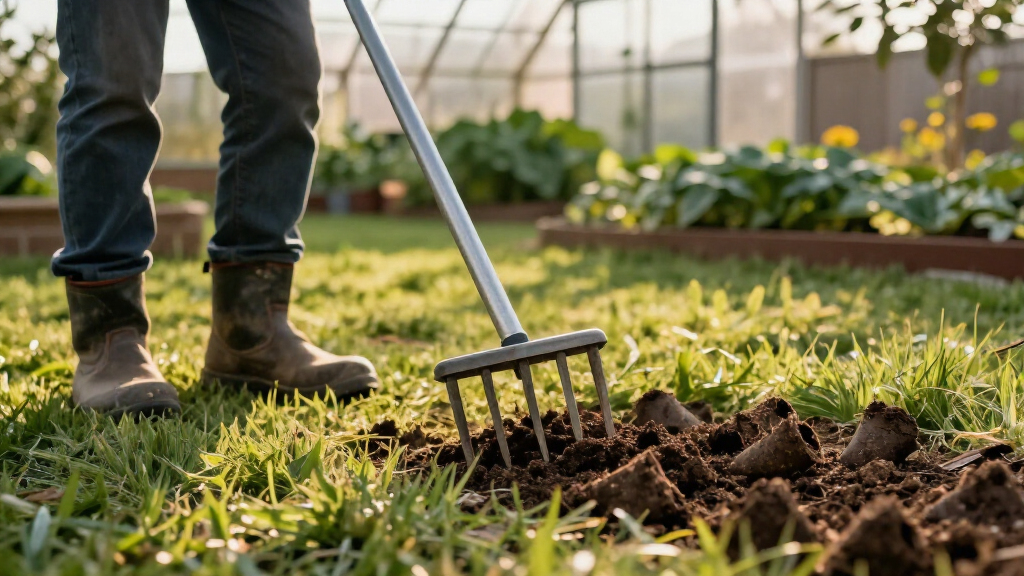
The best soil aerators loosen compacted ground in a way that fits your lawn size, soil, and effort level. My best overall pick is the VEVOR Rolling Lawn Core Aerator, whose hollow-tine design removes plugs rather than simply pressing into the soil. For a walk-behind spike option, the Brinly 20-Inch Push Spike Aerator stands out for its weight tray and galvanized tines, while the Garvee 52-Inch Tow-Behind Plug Aerator suits larger lawns and compatible riding equipment. The main tradeoff is between core aerators, which remove soil plugs, spike tools, which are simpler but can compact soil around their holes, and liquid conditioners, which avoid manual puncturing. Read on for the full comparison, selection criteria, and advice on matching an aerator to your yard.

Get garden gear delivered free with Prime
- Fast, free delivery on millions of items
- Prime Video, Amazon Music and more included
- Member-only deals all year
Complete the kit


Key Takeaways
- Core aerators lead for compacted soil: The VEVOR rolling model and hollow-tine manual tools remove plugs, giving them a different purpose from the spike-only picks.
- Spike tools trade soil removal for simplicity: Brinly, Jardineer, Saker, COCTN, Walensee, Videnlum, and the 11-spike option suit buyers who want a straightforward manual tool, but they do not extract cores.
- Yard size changes the right tool: A four-tine manual core aerator calls for repeated passes, while the 52-inch Garvee tow-behind model is aimed at broad areas and tractor-compatible setups.
- Handle and foot-pressure design matter: Adjustable or longer handles can make manual work more manageable, while a weight tray can help a push spike aerator penetrate firm ground.
- Liquid treatment is a different approach: LawnStar offers a no-puncture soil-conditioning option, but it does not physically remove plugs like the core aerators in this roundup.
| VEVOR Rolling Lawn Core Aerator – 16.6″ Anti-Clog Tines, Rust-Resistant | 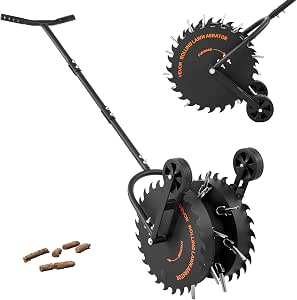 | Best for Large Lawn Coverage | Aerator type: Manual rolling core aerator | Tine length: 16.6 inches | Reported soil plug depth: 2 inches | VIEW LATEST PRICE | See Our Full Breakdown |
| Heavy-Duty Steel Hollow-Tine Lawn Aerator, Blue |  | Best for Targeted Core Aeration | Aerator type: Manual hollow-tine lawn aerator | Number of tines: 3 | Tine design: Tempered, beveled, hollow, replaceable | VIEW LATEST PRICE | See Our Full Breakdown |
| Jardineer 36-Inch Manual Lawn Spike Aerator |  | Best for Broad Step-Aeration Passes | Aerator type: Manual spike aerator | Spike count: 12 | Spike length: 2.75 inches | VIEW LATEST PRICE | See Our Full Breakdown |
| Saker Manual Lawn Aerator with 15 Iron Spikes |  | Best for Adjustable, Low-Clog Spike Aeration | Aerator type: Manual spike aerator | Spike count: 15 | Spike length: 2.3 inches | VIEW LATEST PRICE | See Our Full Breakdown |
| Brinly 20-Inch Premium Push Spike Aerator with Galvanized Steel Tines and Weight Tray |  | Best Push Aerator for Small Yards | Aerator type: Manual push spike aerator | Working width: 20 inches | Spike tips: 60 | VIEW LATEST PRICE | See Our Full Breakdown |
| COCTN Manual Lawn Aerator with 15 Iron Spikes and Adjustable Handle |  | Best for Adjustable Fit | Brand: COCTN | Model: Lawn-001 | Spike count: 15 | VIEW LATEST PRICE | See Our Full Breakdown |
| Walensee 15-Spike Manual Lawn Aerator |  | Best for Small-Lawn Spot Aeration | Model: GTL-111 | Spike count: 15 | Spike length: About 2.8 inches | VIEW LATEST PRICE | See Our Full Breakdown |
| Manual Lawn Aerator with 11 Steel Spikes |  | Best for Mixed Soil Types | Brand: Qsxou | Model: SPLA-01 | Material: Powder-coated steel | VIEW LATEST PRICE | See Our Full Breakdown |
| LawnStar Liquid Lawn Aerator and Soil Conditioner, 32 fl oz |  | Best No-Spike Application | Brand: LawnStar | Product form: Liquid | Liquid volume: 32 fl oz | VIEW LATEST PRICE | See Our Full Breakdown |
| Manual Lawn Core Aerator with Non-Clogging Hollow Tines |  | Best for Removing Soil Plugs | Type: Manual lawn core aerator | Tines: 3 hollow, replaceable tines | Frame: Sturdy metal | VIEW LATEST PRICE | See Our Full Breakdown |
| Bigwish Manual Lawn Core Aerator with 4 Hollow Tines |  | Best Manual Core Aerator | Brand: Bigwish | Model: BW-dakong-T4 | Power source: Manual | VIEW LATEST PRICE | See Our Full Breakdown |
| Garvee 52-Inch Tow-Behind Plug Aerator |  | Best for Large Lawns | Working width: 52 inches | Tine count: 32 | Tine material: Galvanized steel | VIEW LATEST PRICE | See Our Full Breakdown |
| Lawn Aerator Tool with Non-Clogging Hollow Tines, Yellow |  | Best for Replaceable Core Tines | Tine count: 3 | Tine type: Hollow, clog-ejecting, replaceable | Maximum aeration depth: 4 inches | VIEW LATEST PRICE | See Our Full Breakdown |
| Jardineer Manual Lawn Spike Aerator |  | Best for Upright Spike Aeration | Spike count: 12 | Spike length: 2.8 inches | Spike material: Heat-treated, zinc-coated steel | VIEW LATEST PRICE | See Our Full Breakdown |
| Videnlum Manual Lawn Aerator with 15 Iron Spikes |  | Best for Multi-Surface Yard Use | Brand: Videnlum | Model: US-DKJ | Type: Manual lawn aerator | VIEW LATEST PRICE | See Our Full Breakdown |
More Details on Our Top Picks
VEVOR Rolling Lawn Core Aerator – 16.6″ Anti-Clog Tines, Rust-Resistant
The VEVOR rolling core aerator suits buyers who want to cover more ground with a rolling tool rather than work one step at a time. Its angled tines pull 2-inch soil plugs, while the drum can take up to 46 pounds of added weight to help the tines bite into firm ground. Compared with the Heavy-Duty Steel Hollow-Tine Lawn Aerator, which removes plugs in a small area with each step, this wheeled design is better suited to repeated passes across a broader lawn.
The tradeoff is its 36.6-pound base weight: rubber wheels help with transport, but slopes and tight turns can still be hard work. The 58-inch handle reduces bending, yet this remains a manual tool, not a powered shortcut. I’d choose it for relatively open lawns and skip it for steep or highly segmented yards.
Pros:- Pulls soil plugs up to 2 inches deep for core aeration.
- Drum accepts up to 46 pounds of added weight to increase tine penetration.
- Rubber wheels make it easier to roll between work areas.
- 58-inch handle reduces the need to bend while working.
Cons:- At 36.6 pounds before added drum weight, it can be difficult to handle on slopes.
- Manual pushing takes sustained effort, especially over compacted soil.
- Its rolling format is less convenient than a step aerator around tight corners and obstacles.
Best for: Owners of open lawns who want to pull soil plugs across a larger area with a rolling manual tool.
Not ideal for: People with steep slopes, tight garden paths, or limited strength; the heavy unit can be awkward to maneuver and still needs to be pushed by hand.
- Aerator type:Manual rolling core aerator
- Tine length:16.6 inches
- Reported soil plug depth:2 inches
- Maximum added drum weight:46 lb
- Item weight:36.6 lb
- Handle length:58 inches
- Construction:Heavy-gauge steel with powder-coated finish
- Wheels:Adjustable rubber wheels
Our verdict“Choose the VEVOR if you want a weighted rolling core aerator for open lawns and can manage its bulk.”
Heavy-Duty Steel Hollow-Tine Lawn Aerator, Blue
For compacted patches where removing soil matters more than covering ground quickly, this three-tine hollow-core tool offers a direct, step-by-step approach. Its beveled, replaceable tines are designed to resist clogging, and the wide foot plate gives you a surface to press against as the tines enter the lawn. Compared with the Jardineer 36-Inch Manual Lawn Spike Aerator, which makes holes by pushing spikes into the soil, this model removes cores and is the better match when you want the soil plugs taken out.
That focused approach has limits: three tines per press mean slow coverage, and you supply all the downward force. The 3.52-pound body is easier to carry than the VEVOR Rolling Lawn Core Aerator, but it lacks wheels and added-weight capacity for working across an open lawn. Avoid twisting or prying while the tines are underground, as the instructions advise against it.
Pros:- Hollow tines remove soil cores rather than only making holes.
- Three beveled tines are designed to resist clogging and can be replaced.
- Wide foot plate helps apply pressure during each insertion.
- Light 3.52-pound weight is easy to carry and store.
Cons:- Three tines per press make it labor-intensive for large lawns.
- Requires repeated manual stepping and lifting to aerate.
- Instructions advise against twisting or prying while the tines are in the ground.
Best for: Gardeners treating compacted, high-traffic spots who want a lightweight manual tool that removes soil cores.
Not ideal for: Owners aerating a large lawn in one session; its three-tine working area makes broad coverage slow.
- Aerator type:Manual hollow-tine lawn aerator
- Number of tines:3
- Tine design:Tempered, beveled, hollow, replaceable
- Material:Industrial-strength steel
- Handle:Long handle with comfort grip
- Weight:3.52 lb
- Dimensions:15.7 x 10 x 2.7 inches
Our verdict“Pick this lightweight core aerator for localized compacted patches, not fast whole-lawn coverage.”
Jardineer 36-Inch Manual Lawn Spike Aerator
The Jardineer 36-Inch Manual Lawn Spike Aerator puts 12 spikes into the soil with each step, giving it a broader working pattern than the Heavy-Duty Steel Hollow-Tine Lawn Aerator, which has three tines and removes plugs. That makes Jardineer a practical choice for loosening soil over repeated passes when making holes is the priority. Its 36-inch handle and rubber grip help limit bending and hand strain, while the reinforced foot plate gives you a stable place to apply pressure.
Because it uses spikes rather than hollow tines, it does not remove soil cores; buyers seeking plug extraction should look to the VEVOR or the three-tine hollow-core option instead. It also needs manual stepping, and the maker recommends moistening the ground first for easier penetration. The pre-assembled, detachable design keeps setup simple and storage manageable, but this remains a physical tool best suited to smaller areas or targeted work.
Pros:- Twelve spikes create multiple aeration holes with each press.
- 36-inch handle and rubber grip are designed to reduce bending and hand fatigue.
- Reinforced steel foot plate helps transfer body weight to the spikes.
- Pre-assembled and detachable for easier setup and storage.
Cons:- Spikes loosen soil but do not extract cores.
- Requires repeated stepping and can be difficult to use in dry, hard soil.
- The maker recommends moistening the soil before use.
Best for: Homeowners loosening compacted patches who prefer a pre-assembled step tool with multiple spikes working at once.
Not ideal for: Buyers who need soil plugs removed or who want a push-style tool for covering a large lawn without repeated stepping.
- Aerator type:Manual spike aerator
- Spike count:12
- Spike length:2.75 inches
- Tool height:36 inches
- Weight:4.69 lb
- Materials:Heat-treated steel spikes and powder-coated steel body
- Grip:Rubber
- Assembly:Pre-assembled; detachable construction
Our verdict“Choose Jardineer for multi-spike hole-making on manageable areas, but select a hollow-tine model if you need core removal.”
Saker Manual Lawn Aerator with 15 Iron Spikes
The Saker stands out among the step-style options for combining 15 spikes with a double-layer spring that ejects soil and debris. That spring addresses a common frustration with spike tools: buildup can interrupt repeated passes. Its adjustable 32.2–35.4-inch height also gives it a fit advantage over the fixed-height Jardineer 36-Inch Manual Lawn Spike Aerator, while its 15 spikes cover more points per press than Jardineer’s 12.
Those extra contact points do not turn it into a core aerator: the 2.3-inch spikes make holes rather than remove plugs. It still relies on stepping, and the manufacturer says soft, moist ground makes operation easier. At 6.53 pounds, it is heavier than Jardineer, though the height adjustment and spring may appeal to users who value fit and fewer clogging interruptions over the lightest possible tool. Protective gloves are included.
Pros:- Fifteen spikes create multiple holes with each step.
- Double-layer spring ejects soil and debris to help limit clogging.
- Adjustable height accommodates different user heights.
- Rust-resistant coating and included protective gloves add practical durability and handling support.
Cons:- Spike aeration does not remove soil plugs.
- Manual stepping takes effort, particularly when soil is firm.
- The 6.53-pound weight is heavier than the Jardineer 12-spike model.
Best for: Homeowners who want a step-style spike aerator with adjustable height and a spring to clear soil and debris between presses.
Not ideal for: Buyers seeking soil-core removal, or those who need to aerate hard, dry ground without substantial manual pressure.
- Aerator type:Manual spike aerator
- Spike count:15
- Spike length:2.3 inches
- Adjustable height:32.2–35.4 inches
- Material:Thickened iron with rust-resistant coating
- Spring system:Double-layer soil-ejecting spring
- Item weight:6.53 lb
- Included accessories:Protective gloves
Our verdict“Choose Saker if adjustable fit and spring-assisted clearing matter more than core removal or a lighter tool.”
Brinly 20-Inch Premium Push Spike Aerator with Galvanized Steel Tines and Weight Tray
The Brinly is the strongest fit here for buyers who want to push rather than step through a small lawn. Its 20-inch working width and 60 spike tips cover a wider strip per pass than the Jardineer 36-Inch Manual Lawn Spike Aerator, while the weight tray accepts up to 35 pounds to help the tines penetrate. Galvanized steel tine stars and a reinforced frame are intended to stand up to repeated contact with compacted soil; transport wheels help keep the tines off hard surfaces between work areas.
Unlike the VEVOR Rolling Lawn Core Aerator, Brinly uses spikes, not hollow tines, so it makes holes without extracting plugs. Its 22.2-pound body and hand-pushed operation also demand room and effort, and the recommended lawn size is up to 0.5 acres. I’d favor it for a modest, open yard, not a lawn with many tight turns or a need for core aeration.
Pros:- 20-inch working width and 60 tips cover a broad strip per pass.
- Weight tray holds up to 35 pounds to help increase penetration.
- Galvanized steel tine stars and reinforced frame are designed for durability.
- Transport wheels help protect tines while crossing hard surfaces.
Cons:- Spike tips make holes but do not extract soil cores.
- Manual pushing and the 22.2-pound frame require physical effort.
- Recommended for lawns up to 0.5 acres, limiting its fit for larger properties.
Best for: Owners of open lawns up to 0.5 acres who want a push-style spike aerator with a broad working width and optional added weight.
Not ideal for: Buyers who need soil plugs removed, have many tight obstacles, or want an aerator for a larger property.
- Aerator type:Manual push spike aerator
- Working width:20 inches
- Spike tips:60
- Reported soil penetration:Over 2 inches
- Tine material:Galvanized steel
- Weight tray capacity:Up to 35 lb
- Item weight:22.2 lb
- Recommended lawn size:Up to 0.5 acres
Our verdict“Choose Brinly for push-style spike aeration across a small, open lawn; choose a hollow-tine tool if plug removal is the goal.”
COCTN Manual Lawn Aerator with 15 Iron Spikes and Adjustable Handle
The COCTN’s main advantage is its three-position handle, which gives buyers more scope to find a comfortable working height than the fixed 34.6-inch handle on the Walensee 15-Spike Manual Lawn Aerator. Its 15 three-inch steel spikes suit spot aeration on a small lawn, while the spring-assisted self-cleaning design is intended to clear debris as you work. That may reduce interruptions compared with a basic spike tool, though it does not remove the effort of pressing into compacted ground. The detachable iron construction also helps with storage and carrying. I’d choose it over the 11-spike Qsxou when handle adjustment matters; buyers who want to remove soil plugs rather than make narrow channels should look instead at the LawnVigor hollow-tine aerator. Assembly requires a screw and two washers.
Pros:- Three handle-height settings offer a more adjustable fit than the fixed-height Walensee.
- Spring-assisted design is intended to clear debris from the spikes during use.
- Fifteen three-inch steel spikes create multiple channels in each press.
- Detachable construction supports carrying and compact storage.
Cons:- Manual pressure can be demanding in hard or compacted soil.
- Requires minor assembly with a screw and two washers before use.
Best for: Homeowners who want a manual spike aerator with adjustable handle height for occasional spot work on a small lawn.
Not ideal for: People tackling hard, compacted ground or a large lawn who want to avoid repeated physical effort.
- Brand:COCTN
- Model:Lawn-001
- Spike count:15
- Spike length:3 inches
- Handle height settings:3
- Material:Thickened iron
- Assembly:Mostly preassembled; requires one screw and two washers
- Warranty:1 year
Our verdict“Choose the COCTN if adjustable handle height and spike cleaning matter more than avoiding manual effort.”
Walensee 15-Spike Manual Lawn Aerator
For small lawns and isolated compacted patches, the Walensee pairs a straightforward 15-spike layout with a 34.6-inch handle, cushioned T-grip, and foot pedal. The pedal gives you leverage without requiring the adjustable-height mechanism found on the COCTN Manual Lawn Aerator, and its 4.49-pound weight makes the detachable tool easier to carry and store. Its spikes are about 2.8 inches long, slightly shorter than the COCTN’s three-inch spikes. This is a practical choice for occasional work, not broad coverage: the three-row layout handles several holes per step, but repeated stepping still takes time across a large yard. Walensee also warns against heavy sticky clay and rocky ground, so the Qsxou’s stated range of soil types may suit a wider mix of lawn conditions.
Pros:- Foot pedal and cushioned T-handle provide leverage for pressing the spikes into soil.
- 34.6-inch handle helps reduce bending compared with shorter-handled tools.
- Three-row layout creates multiple holes with each step.
- Detachable design supports carrying and storage.
Cons:- The manufacturer does not recommend it for heavy sticky clay or rocky ground.
- Manual spot aeration is slow for large lawns.
- Hard or dry soil should be watered before use for easier penetration.
Best for: Owners of small lawns who need a carryable manual tool for occasional spot aeration in workable soil.
Not ideal for: People aerating large areas or working in heavy sticky clay, rocky ground, or dry soil that has not been watered.
- Model:GTL-111
- Spike count:15
- Spike length:About 2.8 inches
- Handle length:34.6 inches
- Material:Iron
- Finish:Powder-coated
- Item weight:4.49 pounds
- Product dimensions:3.62 x 1.54 x 13.62 inches
Our verdict“Pick the Walensee for occasional spot work on a small lawn where its pedal and long handle are more useful than powered or broad-area coverage.”
Manual Lawn Aerator with 11 Steel Spikes
The Qsxou 11-spike aerator is the most versatile choice here for buyers whose lawns contain a mix of clay, sand, or loam: those are the soil types listed for this model, while the Walensee 15-Spike Aerator carries explicit cautions about sticky clay and rocky ground. Its step-on foot bar and ergonomic T-handle let you use body weight to make channels with less bending than a short-handled tool. The 11-spike layout means fewer points per press than the 15-spike COCTN or Walensee, so it may take more steps to cover the same patch. Like other manual spike aerators, it still depends on soil conditions and user effort; dry ground may need watering first, and each press requires pulling the tool back out. It makes channels rather than extracting plugs.
Pros:- Listed as suitable for clay, sand, and loam soils.
- Foot bar lets the user apply body weight to the spikes.
- T-handle supports a more upright working posture.
- Powder-coated steel is designed for strength and rust resistance.
Cons:- Eleven spikes create fewer holes per press than the 15-spike COCTN and Walensee models.
- Dry soil may need watering before the spikes can penetrate more easily.
- Manual stepping and pulling can become tiring over a large area.
Best for: Homeowners with clay, sand, or loam lawns who want a step-on manual aerator for routine lawn care or overseeding.
Not ideal for: Buyers who want to remove soil plugs, cover a large lawn quickly, or avoid the physical work of pressing and extracting a manual tool.
- Brand:Qsxou
- Model:SPLA-01
- Material:Powder-coated steel
- Spike count:11
- Handle:Ergonomic T-handle
- Foot bar:Sturdy step-on foot bar
- Suitable soil types:Clay, sand, and loam
- Unit count:1
Our verdict“Choose the Qsxou if your lawn’s soil mix and a step-on design matter more than maximum holes per press or plug removal.”
LawnStar Liquid Lawn Aerator and Soil Conditioner, 32 fl oz
Unlike the COCTN, Walensee, and Qsxou, the LawnStar Liquid Lawn Aerator does not make physical holes with spikes; it is a spray-applied soil conditioner intended to help loosen compacted soil and improve water penetration, drainage, and oxygenation. That makes it the distinct pick for lawn owners who want to avoid repeatedly stepping a manual tool across the yard. Its listed 1:1024 dilution ratio and coverage of up to 30,000 square feet make it suited to treating a broad area, though application requires measuring and mixing rather than simply working soil directly. The product information also gives conflicting coverage figures—30,000 and 32,000 square feet—so I would not plan around the higher number. Buyers seeking the direct soil removal of the LawnVigor hollow-tine aerator should choose a mechanical tool instead.
Pros:- Spray application avoids pressing a manual aerator into the lawn.
- Designed to support water penetration, drainage, and soil oxygenation.
- Concentrated formula is listed to cover up to 30,000 square feet.
- Targets lawn grass and is supplied as a 32-fluid-ounce bottle.
Cons:- Requires accurate dilution at a 1:1024 mixing ratio before application.
- Published coverage figures conflict between 30,000 and 32,000 square feet.
- Does not mechanically create holes or remove soil plugs like the LawnVigor core aerator.
Best for: Lawn owners who prefer spray application over manual spike work and want to treat a broad area with a concentrated formula.
Not ideal for: Buyers who specifically want visible holes or removed soil plugs, or who do not want to dilute and spray a lawn treatment.
- Brand:LawnStar
- Product form:Liquid
- Liquid volume:32 fl oz
- Item weight:2.2 lbs
- Listed coverage:Up to 30,000 square feet
- Application method:Spray
- Mixing ratio:1:1024
- Target species:Lawn grass
- Country of origin:American made
Our verdict“Choose LawnStar if you want a spray-applied soil conditioner instead of manual holes, and are comfortable measuring and applying a diluted concentrate.”
Manual Lawn Core Aerator with Non-Clogging Hollow Tines
For buyers who want to remove soil plugs rather than simply make narrow channels, the LawnVigor’s three hollow tines set it apart from the COCTN and other spike aerators in this group. Plug removal creates openings while taking some compacted soil out of the lawn, but the tool covers only three tine points per press, so it is better suited to targeted work than fast coverage across a large yard. Its replaceable tines offer a maintenance path if they wear, while the metal frame and non-slip handle provide a simple manual setup. Use it only after watering dry soil, keep the plastic inserts in place to help release plugs, and avoid rocking or twisting it in the ground. Compared with the liquid LawnStar, this is a hands-on tool that removes soil directly.
Pros:- Three hollow tines remove soil plugs instead of only making narrow channels.
- Replaceable tines can be changed as part of tool maintenance.
- Non-slip ergonomic handle is designed to support comfort and control.
- Metal frame and heat-treated tines are intended for demanding lawn care.
Cons:- Three tines per press make broad-area aeration labor-intensive.
- Dry soil should be watered before use for easier penetration.
- Plastic inserts must stay in place, and the tool should not be twisted or pried sideways.
Best for: Homeowners treating compacted patches who specifically want a manual tool that extracts soil plugs rather than making spike channels.
Not ideal for: People who need to aerate a large lawn quickly, do not want repeated manual work, or prefer a treatment that requires no physical plugging.
- Type:Manual lawn core aerator
- Tines:3 hollow, replaceable tines
- Frame:Sturdy metal
- Handle:Ergonomic, non-slip
- Dimensions:15 x 10 x 2.8 inches
- Manufacturer:LawnVigor
- Model:LV-ALT4-ORANGE-Z0
- Color:Orange
Our verdict“Choose the LawnVigor for targeted manual plug removal, but pick a spike tool or spray treatment if you need less labor across a large lawn.”
Bigwish Manual Lawn Core Aerator with 4 Hollow Tines
The Bigwish is the manual pick here for buyers who want to remove soil plugs rather than simply punch holes. Its four hollow stainless steel tines work several spots with each press, and the automatic ejection design helps clear cores as you go. Compared with the Jardineer Manual Lawn Spike Aerator, which has 12 solid spikes for quicker hole-making, Bigwish removes plugs, a better match for compacted turf where core extraction is the priority. The adjustable-height handle and padded grip offer more flexibility than a fixed-height tool, but they do not remove the physical work: you still need to press the tines into the lawn. The maker recommends watering one to two days beforehand to ease penetration, so this is less convenient for a quick session on dry ground.
Pros:- Four hollow tines remove soil cores from multiple spots per press.
- Automatic ejection helps release plugs and limit clogging.
- Stainless steel tines are described as rust-resistant.
- Adjustable-height handle and padded grip support a more tailored hold.
Cons:- Manual penetration takes physical effort, especially in compacted soil.
- Pre-watering one to two days ahead can add planning before use.
Best for: Lawn owners treating compacted patches who want a manual tool that removes soil cores and offers an adjustable handle.
Not ideal for: Anyone aerating a large lawn or avoiding strenuous work; the tool is manually driven and may need pre-watering for easier insertion.
- Brand:Bigwish
- Model:BW-dakong-T4
- Power source:Manual
- Tine count and type:4 hollow tines
- Tine material:Stainless steel
- Handle:Adjustable-height T-shaped handle with padded grip
- Soil release:Automatic soil-core ejection; anti-clogging design
Our verdict“Choose Bigwish if you want manual core extraction with four tines and an adjustable handle, and are prepared to supply the effort.”
Garvee 52-Inch Tow-Behind Plug Aerator
For broad turf, the Garvee 52-inch tow-behind is the clear scale choice in this group. Its wide path and 32 galvanized steel tines can cover ground far faster than a hand tool such as the Bigwish Manual Lawn Core Aerator, while reaching up to 3 inches deep. The weight tray holds up to 330 pounds, letting owners add load to help the tines enter the soil; that matters when a wide implement needs more than its own weight for penetration. A universal hitch and 12-inch pneumatic tires suit towing behind compatible lawn tractors, ATVs, or UTVs. The tradeoff is the equipment requirement: without a towing vehicle, this is not a practical substitute for a manual aerator. At 60.9 pounds, it also takes effort to move or position before it is hitched.
Pros:- 52-inch working width covers large areas more quickly than hand tools.
- 32 galvanized steel tines reach up to 3 inches deep.
- Weight tray supports up to 330 pounds of added load for penetration.
- Universal hitch and pneumatic tires support towing behind compatible vehicles.
Cons:- Requires a compatible towing vehicle to operate.
- The 60.9-pound unit can take effort to handle when unattached.
- Its broad working width is poorly suited to small or tightly landscaped lawns.
Best for: Owners of large lawns who already have a compatible lawn tractor, ATV, or UTV and want to aerate a wide strip per pass.
Not ideal for: Small-yard owners or buyers without a compatible towing vehicle; its width and towing setup are unnecessary for patch aeration.
- Working width:52 inches
- Tine count:32
- Tine material:Galvanized steel
- Maximum penetration depth:Up to 3 inches (7.6 cm)
- Weight tray capacity:330 lbs
- Tire size:12 inches
- Item weight:60.9 pounds
- Hitch:Universal hitch for compatible lawn tractors, ATVs, and UTVs
Our verdict“Pick Garvee for large, open lawns if you have a suitable towing vehicle and want wide, weighted plug aeration.”
Lawn Aerator Tool with Non-Clogging Hollow Tines, Yellow
This yellow manual tool suits buyers who want replaceable hollow tines and a stated working depth of up to 4 inches. Its three clog-ejecting tines remove plugs, unlike the solid spikes on the Videnlum Manual Lawn Aerator with 15 Iron Spikes, which makes this a more direct fit for core aeration. The welded steel frame and wide footplate are designed to help transfer pressure into dense ground, while the 37-inch upright build and rubber grips support standing use. Replaceable tines offer a practical maintenance advantage if a tine wears or needs changing. Still, three tines cover fewer points per press than Videnlum’s 15 spikes, and the 4-inch maximum depth may not suit every aeration need. Dry soil can also make insertion difficult, so watering beforehand may be part of the job.
Pros:- Three hollow tines remove plugs and are designed to eject them to reduce clogging.
- Replaceable tines offer a way to address wear without replacing the entire tool.
- Wide footplate and welded steel frame are designed for applying pressure on dense soil.
- 37-inch upright design and non-slip rubber grips support standing operation.
Cons:- Dry ground may need watering before the tines can penetrate more easily.
- Three tines create fewer holes per step than the 15-spike Videnlum.
- Maximum aeration depth is 4 inches.
Best for: Gardeners who prefer manual plug removal, want replaceable tines, and are treating compacted areas where a 4-inch maximum depth is sufficient.
Not ideal for: People seeking broad coverage with many holes per step or aeration deeper than 4 inches; it has only three tines and requires manual pressure.
- Tine count:3
- Tine type:Hollow, clog-ejecting, replaceable
- Maximum aeration depth:4 inches
- Frame material:Welded steel
- Height:37 inches
- Handle grips:Soft, non-slip rubber
- Item weight:3.54 pounds
- Assembly:Semi-assembled; hardware included
Our verdict“Choose this tool for replaceable, plug-removing tines and upright handling, provided three-tine coverage and a 4-inch depth meet your needs.”
Jardineer Manual Lawn Spike Aerator
The Jardineer Manual Lawn Spike Aerator favors a straightforward, upright routine: step on the wide foot bar, use body weight to drive in its 12 spikes, then move to the next spot. The 36-inch height and cushioned T-handle support standing operation, while the pre-assembled head cuts down on setup. Unlike the Bigwish Manual Lawn Core Aerator, Jardineer uses solid spikes rather than hollow tines, so it makes holes without removing soil cores. That makes it a simpler option for buyers who want spike aeration, but not the choice for those specifically seeking plug extraction. Its 2.8-inch spikes and manual design also call for suitable soil conditions; the manufacturer recommends watering hard ground or working after rain. Expect repeated foot pressure, not effortless coverage.
Pros:- 12 spikes make multiple holes with each placement.
- 36-inch height and cushioned T-handle support upright use.
- Wide foot bar provides leverage when pressing into the ground.
- Pre-assembled head and included mounting hardware simplify setup.
Cons:- Solid spikes do not remove soil cores like the Bigwish hollow-tine tool.
- Hard ground may need watering or recent rain for easier penetration.
- Manual use requires repeated body-weight pressure.
Best for: Homeowners who want a ready-to-use, upright spike aerator for smaller lawn areas and are comfortable pressing it down with their body weight.
Not ideal for: Buyers who need soil cores removed, want powered or tow-behind coverage, or are unable to apply repeated downward pressure.
- Spike count:12
- Spike length:2.8 inches
- Spike material:Heat-treated, zinc-coated steel
- Height:36 inches
- Dimensions:9.5 x 7.9 x 36 inches
- Item weight:5.21 pounds
- Handle:Cushioned T-handle
- Setup:Pre-assembled head; mounting screws and wrenches included
Our verdict“Choose Jardineer for pre-assembled, upright spike aeration if you do not need core removal and can supply the downward pressure.”
Videnlum Manual Lawn Aerator with 15 Iron Spikes
Videnlum is the broad-use spike pick for people who want one manual tool for lawn patches and garden beds. Its 15 iron spikes make several holes with each step, giving it more per-press coverage than the Jardineer Manual Lawn Spike Aerator with 12 spikes. A spring-loaded ejection mechanism is designed to clear soil and debris during use, while a rust-resistant coating and reinforced foot-pedal connections address wear points. The tradeoff is spike depth: at 2.3 inches, its spikes are shorter than Jardineer’s 2.8-inch spikes, so buyers prioritizing greater stated reach may prefer that model. Videnlum remains a manual tool, and the user still has to step on it repeatedly. Its spikes create holes rather than remove cores, so it is not a substitute for a hollow-tine aerator.
Pros:- 15 spikes create multiple aeration holes with each step.
- Spring-loaded ejection is designed to clear soil and debris during use.
- Rust-resistant coating and reinforced foot-pedal connections target durability.
- Listed for use on lawns, garden beds, and other yard areas.
Cons:- Manual operation requires repeated stepping and downward pressure.
- 2.3-inch spikes are shorter than the Jardineer model’s 2.8-inch spikes.
- Spike aeration does not remove soil cores.
Best for: Yard owners who want a manual spike aerator for both lawn areas and garden beds, with multiple holes made per step.
Not ideal for: Buyers focused on core removal or greater spike length; its 2.3-inch spikes make holes without extracting plugs.
- Brand:Videnlum
- Model:US-DKJ
- Type:Manual lawn aerator
- Spike count:15
- Spike length:2.3 inches
- Material:Thickened iron
- Coating:Rust-resistant
- Soil ejection:Spring-loaded
Our verdict“Pick Videnlum if you want many holes per step across lawn and garden areas, but choose a hollow-tine model for core removal.”
How We Picked
I ranked these soil aerators by how well their working method matches common lawn problems, then weighed usability, likely workload, construction cues, and maintenance needs. Core removal earned an advantage for buyers dealing with compaction because hollow tines extract soil plugs; spike models remain useful for simpler, smaller jobs but move soil rather than removing it. I also considered whether a design offers practical support, such as a weight tray, a long or adjustable handle, or a wider tow-behind working path.
The ranking reflects fit, not a claim that one style suits every yard. The VEVOR rolling core aerator takes the lead for combining a core-aeration approach with a rolling format, while Brinly is the standout spike pick and Garvee serves a distinct large-lawn use case. Manual hollow-tine tools follow for buyers who can accept slower coverage; the liquid conditioner ranks separately because it is not a mechanical substitute for extracting plugs. Where listed product details are limited, I avoid treating unprovided performance claims as proven advantages.
Factors to Consider When Choosing Best Soil Aerators
Before choosing an aerator, match the tool to the soil problem and the amount of ground you need to cover. Working method, lawn scale, and physical effort matter more than a long feature list, and the wrong match can leave you with a tool that is tiring or ineffective for your conditions.
Choose Plug Removal or Spike Penetration
Core aerators use hollow tines to pull small plugs from the ground, creating channels while relieving some compacted soil. Spike aerators push solid points into the lawn, which can be simpler for routine, limited-area work but do not remove soil. A common mistake is treating both approaches as interchangeable just because each leaves holes behind. If the ground is dense and compaction is the main concern, start by comparing hollow-tine designs. If you mainly want a basic manual tool for a smaller patch, a spike model may be enough. Liquid conditioners take another route and should not be expected to do the physical job of plug extraction.
Match the Tool to Lawn Size and Access
A hand tool can make sense around garden beds, narrow gates, or small sections where a larger machine cannot reach. Its lower setup burden comes with slower coverage, so repeated passes across a broad lawn can become a chore. Push and rolling models cover ground differently, while a tow-behind aerator can suit a large open area if you already have compatible equipment. Measure the usable route, not just the lawn’s total area: turns, slopes, trees, and tight passages can limit a wide tool. Buying for a hypothetical large yard often means storing a bulky tool that is awkward for everyday use. Choose based on the ground you can realistically aerate in one session.
Plan for Soil Moisture and Timing
Soil that is extremely dry can resist tine penetration, while very wet ground can smear and become difficult to work cleanly. A practical approach is to aerate when soil is moist enough to yield under pressure but not saturated. Do not assume a heavier tool will fix poor timing; weight can increase penetration pressure, but it cannot make waterlogged soil suitable for aeration. Check a small area first and adjust watering or wait if the tool cannot enter cleanly. This matters especially with manual spike tools, where poor conditions can turn each step into extra effort. Weather and soil texture may affect results as much as the tool itself.
Account for Effort, Leverage, and Coverage
Manual aerators rely on repeated pressure from your body, so handle length, grip, balance, and foot placement affect comfort over a full session. An adjustable or longer handle may improve leverage for some users, but it does not erase the work of pressing tines into firm ground. A weight tray can add downward force to a push tool, though adding weight also makes maneuvering and lifting more demanding. Look beyond the number of spikes or tines: working width, how often you must repeat a pass, and how easily the tool clears soil all influence total effort. If mobility or strength is a concern, choose a smaller area per session rather than expecting a manual tool to cover the entire lawn quickly. For large properties, compare tow-behind coverage against the cost and storage demands of the required equipment.
Check Maintenance and Long-Term Practicality
Hollow tines can clog, so their shape and access for clearing matter when soil is sticky or debris-heavy. After use, cleaning off damp soil and drying metal parts helps limit buildup and corrosion, even when a product lists rust-resistant or galvanized materials. Spike tools have a simpler working end, but bent or dull points can still reduce usefulness and may need attention. Consider where the tool will live: long handles and tow-behind frames take more storage space than compact hand tools. Before buying, check replacement-part availability and any assembly or attachment requirements rather than assuming every component is easy to service. A design that is easy to clean and store may be the better fit for occasional lawn care.
Decide Whether a Liquid Conditioner Fits the Job
A liquid lawn conditioner can appeal to someone who wants to apply a product with less physical labor, but it is not a mechanical aerator. It does not create the same physical openings as hollow tines or solid spikes, so buyers should distinguish soil conditioning from puncturing and plug removal. Read the label for application directions, coverage, and any limits on use; the listed container size alone does not establish how much lawn it will treat. A frequent mistake is choosing liquid treatment when the real need is relief from severe compaction. It may suit a buyer seeking a different type of lawn-care input, but it should not replace a core aerator when physical soil removal is the goal. Decide based on the outcome you need, not simply on which option sounds easiest.
Frequently Asked Questions
Should I choose a core aerator or a spike aerator for compacted soil?
For pronounced compaction, a core aerator is usually the more direct match because hollow tines remove plugs of soil. A spike aerator makes holes by pressing solid tines into the ground, so it does not remove material and may be less suited to heavily compacted conditions. For a small area or lighter maintenance, a spike tool can still be a practical, simple choice. Soil moisture and texture affect how well either style works, so avoid working saturated or very dry ground. If you are unsure, compare the effort you can manage with the size and severity of the affected area.
Is a manual hollow-tine aerator practical for a whole lawn?
It can be practical for a modest lawn or for targeted areas, but the workload grows quickly as the area expands. A model with only a few hollow tines requires repeated placements, and clearing soil from the tines can add time. For a broad, open lawn, a rolling or tow-behind design may reduce the number of passes, provided it suits your access and equipment. You can also work in sections rather than trying to finish everything at once. Choose a hand tool for control and reach, not because its compact size guarantees fast coverage.
Can I use a tow-behind aerator without a riding mower or tractor?
A tow-behind model needs a compatible vehicle or machine with the right hitch and enough capacity to pull it safely. The Garvee 52-inch unit is not a walk-behind substitute, so check attachment requirements before buying. Consider the terrain too: tight turns, slopes, and narrow access can make a wide aerator harder to operate. If you do not already have suitable equipment, a manual or push model may be simpler, even if it covers less ground per pass. Confirm the product’s specified towing setup rather than relying on assumptions about fit.
Will a liquid lawn aerator replace a tool that removes soil plugs?
No; a liquid conditioner is a different kind of lawn-care product and does not physically extract cores from the ground. It may suit someone seeking a treatment that can be applied without manually puncturing the lawn, but that is not the same task as mechanical aeration. If your goal is to create openings and remove soil from compacted ground, choose a hollow-tine tool. Read the liquid product’s label for intended use and application instructions. Treat its convenience as a separate benefit rather than proof that it performs the same work as a core aerator.
What should I prioritize if I have limited strength or mobility?
Start with the area you need to treat and how much repeated pressure you can comfortably apply. A hand-pushed spike tool or manual core aerator still requires physical work, and a weight tray may increase both penetration and handling effort. A rolling design can reduce the need to reposition a small tool constantly, while a tow-behind option shifts the task to suitable powered equipment. Consider a longer or adjustable handle for leverage, but check the tool’s total weight and storage needs as well. For a large yard, splitting work into sections may be more realistic than buying a manual model based only on its tine count.
Conclusion
My best overall choice is the VEVOR Rolling Lawn Core Aerator for buyers who want a rolling tool that removes plugs. For a best value manual approach, compare the basic hollow-tine tools, such as the Bigwish four-tine model, with your expected workload and accept slower coverage in exchange for a simpler setup. The Brinly push spike aerator is my pick for buyers who specifically want a spike design with a weight tray, while the Garvee tow-behind plug aerator is the better fit for large, open lawns with compatible towing equipment. For beginners with a small area and no machinery, a straightforward manual spike tool can be easier to store and understand, though it is not a substitute for plug removal. Choose LawnStar only if a liquid conditioner fits your goal; for compacted soil that needs physical aeration, pick a core-tine model instead.