The best tomato seeds for most home gardeners are a varied collection that offers more than one type of tomato, making the Sow Right Seeds Classic Tomato Seed Collection my best overall pick. For a focused harvest, the Roma and San Marzano Paste Tomato Seed Variety Pack suits cooks who want sauce tomatoes, while Tiny Tim Dwarf Cherry Tomato Seeds are a compact choice for small spaces. The main tradeoffs are variety versus a single reliable purpose, and broad selection versus the extra planning that comes with growing several types. Seed count, growth habit, and whether the listing specifies organic or heirloom traits also affect which packet makes sense. Read on for the full breakdown and help matching a seed choice to your space, harvest plans, and experience.

Get garden gear delivered free with Prime
- Fast, free delivery on millions of items
- Prime Video, Amazon Music and more included
- Member-only deals all year
Complete the kit


Key Takeaways
- The Sow Right Seeds Classic Tomato Seed Collection leads for broad appeal because a collection can serve gardeners who want to try more than one tomato type; a single-purpose packet may suit a narrower plan better.
- The roundup’s multi-variety collections differ in scope: options range from six cherry varieties to ten tomato varieties and a 14-variety tomato-and-tomatillo kit, so bigger selections call for more space and planning.
- For small growing areas, Tiny Tim’s dwarf designation gives it a clearer space-saving role than beefsteak, Roma, or large cherry choices.
- Paste-focused picks, including the Roma and San Marzano pack and Sow Right’s Paste Tomato Seed Collection, align better with sauce-making than general-purpose or cherry selections.
- Seed counts vary widely, from smaller single packets to listings with 300 or 500-plus seeds; a large count offers more sowing capacity, but it is not automatically a better fit for a small garden.
| Tiny Tim Dwarf Cherry Tomato Seeds, 1 Pack |  | Best for Small Spaces | Plant type: Determinate dwarf cherry tomato (Solanum lycopersicum ‘Tiny Tim’) | Expected plant height: 12–18 inches | Growing location: Indoor or outdoor | VIEW LATEST PRICE | See Our Full Breakdown |
| Ponderosa Red Beefsteak Organic Tomato Seeds, Approx. 75 Seeds |  | Best for Organic Slicers | Variety: Ponderosa Red Beefsteak tomato | Seed count: Approximately 75 | Seed weight: 4.54 g | VIEW LATEST PRICE | See Our Full Breakdown |
| Large Red Cherry Tomato Seeds, 500+ Seeds |  | Best High-Count Cherry Pick | Seed count: 500+ | Species: Solanum lycopersicum | Seed type: Open-pollinated heirloom | VIEW LATEST PRICE | See Our Full Breakdown |
| Sow Right Seeds Classic Tomato Seed Collection | 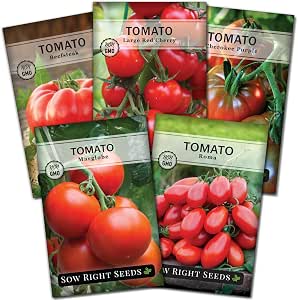 | Best Classic Variety Sampler | Seed varieties: Cherokee Purple, Beefsteak, Large Red Cherry, Marglobe, Roma | Seed type: Non-GMO heirloom | Growing location: Indoor and outdoor | VIEW LATEST PRICE | See Our Full Breakdown |
| Heirloom Rainbow Mix Tomato Seeds, 1 Pack |  | Best for Colorful Heirloom Variety | Plant type: Tomato (Solanum lycopersicum) | Seed type: Open-pollinated heirloom, non-GMO | Seed treatment: Untreated | VIEW LATEST PRICE | See Our Full Breakdown |
| 325 Giant Beefsteak Tomatoes Heirloom Vegetable Seeds, Solanum Lycopersicum |  | Best for Big Slicing Tomatoes | Seed count: 325 | Variety: Giant Beefsteak heirloom | Plant type: Indeterminate | VIEW LATEST PRICE | See Our Full Breakdown |
| Bush Early Girl II Tomato Seeds, 45 Seeds |  | Best for Compact Gardens | Seed count: 45 | Plant type: Determinate tomato | Days to maturity: 54 | VIEW LATEST PRICE | See Our Full Breakdown |
| Roma and San Marzano Paste Tomato Seed Variety Pack |  | Best for Sauce and Canning | Varieties: Roma and San Marzano | Pack count: 2 varieties | Seed type: Heirloom, open-pollinated, non-GMO, untreated | VIEW LATEST PRICE | See Our Full Breakdown |
| Tomato Seeds Variety Pack, 10 Heirloom Non-GMO Varieties |  | Best Variety for Broad Harvests | Varieties: Ace 55, Aunt Ruby’s Green, Beefsteak, Black Krim, Hillbilly, Mortgage Lifter, Red Brandywine, Red Cherry, Roma, Yellow Pear | Number of varieties: 10 | Seed type: Heirloom, non-GMO, open-pollinated | VIEW LATEST PRICE | See Our Full Breakdown |
| Sereniseed Certified Organic Tomato Seeds, 10 Varieties |  | Best Certified Organic Collection | Pack size: 10 varieties | Varieties: Cherokee Purple, San Marzano, Yellow Pear, Chocolate Cherry, Green Zebra, Black Krim, Brandywine Pink, Virginia Sweets, Rosso Sicilian, Amana Orange | Certification: USDA Certified Organic by Oregon Tilth | VIEW LATEST PRICE | See Our Full Breakdown |
| Organo Republic 14-Variety Tomato and Tomatillo Heirloom Seed Kit |  | Best for Maximum Variety | Varieties: 14 tomato and tomatillo varieties | Seed quantity: 1,025+ | Included varieties: Tomatillo Cape Gooseberry, Tomatillo Grande Rio Verde, Tomato Amana Orange, Caribe, Dr. Wyche’s Yellow, Flame, Large Cherry, Pink Thai Egg, Red Beefsteak, Red Pear, Roma VF, White Beefsteak, Yellow Pear, and Yellow Stuffer | VIEW LATEST PRICE | See Our Full Breakdown |
| Sow Right Seeds Cherry Tomato Seed Collection, 6 Varieties |  | Best for Colorful Cherry Tomatoes | Varieties: Black Cherry, Large Red Cherry, White Cherry, Yellow Pear, Orange Cherry, and Bi-Color Cherry | Packet count: 6 | Seeds per packet: About 45 | VIEW LATEST PRICE | See Our Full Breakdown |
| Sow Right Seeds Paste Tomato Seed Collection |  | Best for Sauce and Canning Variety | Seed varieties: Roma, Amish Paste, Striped Paste, and San Marzano | Plant species: Solanum lycopersicum | Growth types: Determinate and indeterminate | VIEW LATEST PRICE | See Our Full Breakdown |
| Organic Roma Tomato Seeds, Approximately 75 Seeds |  | Best Organic Single-Variety Pick | Seed count: Approximately 75 | Tomato type: Roma | Seed type: USDA-certified organic, non-GMO, open-pollinated heirloom | VIEW LATEST PRICE | See Our Full Breakdown |
| RDR Seeds Heirloom Roma VF Tomato Seeds, 300+ Count |  | Best High-Count Roma Pick | Seed count: 300+ | Plant type: Determinate Roma VF tomato | Seed type: Heirloom, open-pollinated, non-GMO | VIEW LATEST PRICE | See Our Full Breakdown |
| tomato seed | Seed type | Expected plant height | Sunlight |
|---|---|---|---|
| Tiny Tim Dwarf Cherry Tomato S | — | 12–18 inches | Full sun |
| Ponderosa Red Beefsteak Organi | — | — | — |
| Large Red Cherry Tomato Seeds | Open-pollinated heirloom | 18 inches | Full sun |
| Sow Right Seeds Classic Tomato | Non-GMO heirloom | — | Full sun |
| Heirloom Rainbow Mix Tomato Se | Open-pollinated heirloom, non-GMO | 48 inches | Full sun |
| 325 Giant Beefsteak Tomatoes H | — | About 80 inches | Full sun |
| Bush Early Girl II Tomato Seed | — | — | Full sun |
| Roma and San Marzano Paste Tom | Heirloom, open-pollinated, non-GMO, untreated | About 7 feet | — |
| Tomato Seeds Variety Pack | Heirloom, non-GMO, open-pollinated | About 48 inches | Full sun |
| Sereniseed Certified Organic T | Non-GMO, open-pollinated | About 48 inches | Full sun |
| Organo Republic 14-Variety Tom | Non-GMO, heirloom, non-hybrid | — | — |
| Sow Right Seeds Cherry Tomato | Non-GMO, heirloom | — | — |
| Sow Right Seeds Paste Tomato S | Non-GMO heirloom | — | — |
| Organic Roma Tomato Seeds | USDA-certified organic, non-GMO, open-pollinated heirloom | — | — |
| RDR Seeds Heirloom Roma VF Tom | Heirloom, open-pollinated, non-GMO | 72 inches | — |
More Details on Our Top Picks
Tiny Tim Dwarf Cherry Tomato Seeds, 1 Pack
Tiny Tim is the space-saving pick for growers who want cherry tomatoes without giving a patio or windowsill over to a tall vine. Its 12–18-inch dwarf growth suits containers, and the determinate habit makes it a more compact choice than the larger plants from Ponderosa Red Beefsteak Organic Tomato Seeds. Clusters of bright red fruit offer a familiar fresh-eating harvest, while untreated, open-pollinated heirloom seeds appeal to gardeners who prefer those traits.
The tradeoff is limited scale: this one-pack option is not the choice for a large harvest or a range of tomato types. It also needs full sun and regular watering, and starting seeds 10–12 weeks before transplanting calls for advance planning. Choose it for tight growing spaces, not for maximum yield.
Pros:- Dwarf 12–18-inch growth fits containers and other space-limited settings.
- Produces clusters of bright red cherry tomatoes.
- Can be grown indoors, outdoors, or hydroponically.
- Untreated, heirloom, non-GMO, open-pollinated seeds.
Cons:- One pack offers less variety and scale than the Sow Right Seeds Classic Tomato Seed Collection.
- Needs full sun and regular watering.
- Requires an early indoor start, 10–12 weeks before transplanting.
Best for: Balcony and patio gardeners, or indoor growers with a genuinely sunny window, who want a compact cherry tomato plant.
Not ideal for: Gardeners seeking large slicing tomatoes, a multi-variety selection, or a substantial harvest from a single pack.
- Plant type:Determinate dwarf cherry tomato (Solanum lycopersicum ‘Tiny Tim’)
- Expected plant height:12–18 inches
- Growing location:Indoor or outdoor
- Sunlight:Full sun
- Planting period:Spring
- Watering needs:Regular watering
- Seed traits:Untreated, heirloom, non-GMO, open-pollinated
- Pack count:1
Our verdict“Choose Tiny Tim if compact growth matters more than a large harvest or broad variety selection.”
Ponderosa Red Beefsteak Organic Tomato Seeds, Approx. 75 Seeds
Ponderosa Red Beefsteak is the focused choice for large, slicing tomatoes, rather than a sampler of different shapes and uses. Its USDA-certified organic, non-GMO, open-pollinated seeds are a clear distinction from the non-GMO heirloom seeds in Sow Right Seeds Classic Tomato Seed Collection, which offers five varieties but no stated organic certification. The expected large, sweet, juicy fruit suits sandwiches and cooking better than the small cherry tomatoes from Tiny Tim Dwarf Cherry Tomato Seeds.
The packet contains approximately 75 seeds, giving growers room to start several plants, but the vines need support and a sunny spot with regular watering. This is a less convenient fit for small containers or gardeners who want a compact plant. Choose it for beefsteak-style fruit and organic seed status, not for low-maintenance growth or a mix of tomato types.
Pros:- USDA-certified organic, non-GMO, heirloom, open-pollinated seeds.
- Selected for large, sweet, juicy fruit suited to slicing and cooking.
- Approx. 75 seeds provide room to start multiple plants.
- Packet includes growing instructions and plant facts.
Cons:- Vining plants need supporting structures.
- Requires full sun and regular watering.
- Offers one beefsteak variety rather than the five types in the Sow Right Seeds Classic Tomato Seed Collection.
Best for: Gardeners who prioritize USDA-certified organic seeds and want large tomatoes for slicing, sandwiches, or cooking.
Not ideal for: Container growers with limited space or buyers seeking compact cherry tomatoes or several varieties in one purchase.
- Variety:Ponderosa Red Beefsteak tomato
- Seed count:Approximately 75
- Seed weight:4.54 g
- Seed traits:USDA Organic, non-GMO, heirloom, open-pollinated
- Growing conditions:Full sun; regular watering
- Planting season:Spring to summer
- Growing season:Summer to fall
- Origin:USA
Our verdict“Pick Ponderosa Red if organic certification and large slicers matter more than compact growth or variety.”
Large Red Cherry Tomato Seeds, 500+ Seeds
The 500-plus seed count is this cherry tomato’s main advantage: it gives gardeners more room to sow a broad patch, share seeds, or try successive starts than the single-pack Tiny Tim Dwarf Cherry Tomato Seeds. The plants are described as about 18 inches tall, with glossy red fruit suited to fresh dishes, grilling, and drying. Untreated, non-GMO, open-pollinated seeds also make this a straightforward choice for growers who value those seed traits without needing a named dwarf variety.
Compared with Tiny Tim, this listing offers a much larger quantity but gives less specific guidance about compact container performance. Its stated full-sun requirement and loam soil preference may narrow the fit for growers with less suitable conditions. An online growing guide is included, but the available product details do not specify a harvest size or timing. Choose it for seed volume, not a guaranteed high yield.
Pros:- 500-plus seeds offer substantially more quantity than Tiny Tim’s one-pack listing.
- Glossy red cherries are described for fresh use, grilling, and drying.
- Untreated, non-GMO, open-pollinated heirloom seed.
- Suitable for indoor and outdoor growing, with an online growing guide.
Cons:- Requires full sun and specifies loam soil.
- Product details do not identify a named variety or provide a harvest timeline.
- The stated 18-inch height is less compact than Tiny Tim’s 12–18-inch dwarf variety designation.
Best for: Gardeners who want a large quantity of cherry tomato seeds for a garden, greenhouse, or repeated sowing.
Not ideal for: Growers who need a specifically named dwarf variety, a confirmed harvest timeline, or growing guidance limited to details on a packet.
- Seed count:500+
- Species:Solanum lycopersicum
- Seed type:Open-pollinated heirloom
- Treatment and GMO status:Untreated, non-GMO
- Growing location:Indoor and outdoor
- Sunlight:Full sun
- Expected plant height:18 inches
- USDA hardiness zones:3–11
Our verdict“Choose this pack if seed quantity is your priority and you have a sunny place to grow cherry tomatoes.”
Sow Right Seeds Classic Tomato Seed Collection
This five-packet collection is the broadest classic-variety choice in this group, pairing Cherokee Purple, Beefsteak, Large Red Cherry, Marglobe, and Roma. That spread gives a gardener more room to match tomatoes to fresh eating, slicing, or cooking than the single-variety Ponderosa Red Beefsteak Organic Tomato Seeds. It also differs from Heirloom Rainbow Mix Tomato Seeds, which emphasizes color diversity rather than naming five distinct classic types. Instructions in each packet help keep the varieties organized as you plan planting.
The tradeoff is that a sampler requires more space and attention than Tiny Tim Dwarf Cherry Tomato Seeds. The listed growing conditions call for full sun and regular watering, and planting is geared to spring through summer. These are non-GMO heirloom seeds, but the listing does not state organic certification or individual packet seed counts. Choose this collection to explore several familiar tomato types, not to grow one compact plant.
Pros:- Includes five named varieties: Cherokee Purple, Beefsteak, Large Red Cherry, Marglobe, and Roma.
- Offers more variety than the single-type Ponderosa Red Beefsteak packet.
- Non-GMO heirloom seeds.
- Growing instructions are included with each packet.
Cons:- Growing several varieties can require more garden space than Tiny Tim’s compact plant.
- Requires full sun and regular watering.
- Organic certification and individual packet seed counts are not specified.
Best for: Home gardeners with room for several tomato plants who want a mix of classic heirloom types for different kitchen uses.
Not ideal for: Small-space growers who need a dwarf plant, or buyers looking specifically for certified organic seeds or stated counts for each variety.
- Seed varieties:Cherokee Purple, Beefsteak, Large Red Cherry, Marglobe, Roma
- Seed type:Non-GMO heirloom
- Growing location:Indoor and outdoor
- Sunlight:Full sun
- Planting period:Spring to summer
- Moisture needs:Regular watering
- Item weight:17.87 g
- Brand:Sow Right Seeds
Our verdict“Choose this collection if you have space to grow several classic tomato varieties and want instructions for each packet.”
Heirloom Rainbow Mix Tomato Seeds, 1 Pack
Heirloom Rainbow Mix is the color-focused pick for gardeners who want tomatoes in red, yellow, orange, pink, and green rather than a set of familiar named varieties. Compared with the Sow Right Seeds Classic Tomato Seed Collection, which lists five specific types, this mix puts the emphasis on a multicolor harvest and includes planting and seed-saving instructions. Its open-pollinated, untreated, non-GMO seeds also suit growers interested in saving seed for future planting.
The expected plants reach about 48 inches, so this is a less suitable option for tight windowsills or small containers than Tiny Tim Dwarf Cherry Tomato Seeds. The plants need full sun, regular watering, an early indoor start 10–12 weeks before transplanting, and support as they grow. The product is listed for outdoor use, which may rule it out for indoor-only gardeners. Choose it for color and seed-saving potential, not compactness or minimal setup.
Pros:- Mix produces tomatoes in red, yellow, orange, pink, and green.
- Open-pollinated seeds can be saved for future planting.
- Includes planting and seed-saving instructions.
- Suitable for gardens, greenhouses, and patio containers.
Cons:- Plants reach about 48 inches and need support as they grow.
- Requires full sun and regular watering.
- Needs an indoor start 10–12 weeks before transplanting and is listed for outdoor use.
Best for: Outdoor gardeners who want a varied, multicolor heirloom harvest and are interested in saving open-pollinated seed.
Not ideal for: Indoor-only or small-space growers who need a compact plant, or gardeners unable to provide full sun and plant support.
- Plant type:Tomato (Solanum lycopersicum)
- Seed type:Open-pollinated heirloom, non-GMO
- Seed treatment:Untreated
- Color:Multicolor
- Expected plant height:48 inches
- Sunlight:Full sun
- Planting period:Spring
- USDA hardiness zones:3–11
- Growing location:Outdoor
Our verdict“Pick Rainbow Mix if a colorful outdoor harvest and seed saving appeal more than compact growth or named varieties.”
325 Giant Beefsteak Tomatoes Heirloom Vegetable Seeds, Solanum Lycopersicum
Classic beefsteak fruit is the draw here: these indeterminate vines are described as producing large, meaty red tomatoes for sandwiches, burgers, and salads. The listed 325 seeds make this a larger sowing supply than the 45-seed Bush Early Girl II, which suits gardeners planning several plants or repeat starts. The tradeoff is space and attention: vines may reach about 80 inches and need staking or cages, while the care guidance calls for consistent watering. Unlike the compact Bush Early Girl II, this is a poor fit for a small patio or an unsupported container. The description gives a 7–10 day germination estimate, but does not specify fruit maturity timing or disease resistance, so buyers seeking those details may prefer a more fully specified option.
Pros:- Large, meaty red fruit is suited to sandwiches, burgers, and salads.
- 325 seeds provide a substantial quantity for multiple sowings.
- Indeterminate growth can keep producing through the season when conditions are favorable.
- Growing guide is included on each seed packet.
Cons:- Tall vines, listed at about 80 inches, need staking or cages and room to grow.
- Consistent watering is called for, which may be demanding in hot or dry conditions.
- No days-to-maturity or disease-resistance details are provided.
Best for: Gardeners with sunny beds, raised beds, or greenhouse space who want large tomatoes for fresh slicing and can support tall vines.
Not ideal for: Container growers with limited room or gardeners seeking a compact, self-supporting plant like Bush Early Girl II.
- Seed count:325
- Variety:Giant Beefsteak heirloom
- Plant type:Indeterminate
- Expected plant height:About 80 inches
- Germination estimate:7–10 days
- Sunlight:Full sun
- Planting period:Spring to summer
- Soil and watering:Sandy soil; consistent watering
- Seed characteristics:Heirloom, GMO-free
Our verdict“Choose these seeds for a large supply of classic slicing tomatoes if you have room, support, and time for tall vines.”
Bush Early Girl II Tomato Seeds, 45 Seeds
Compact, self-supporting growth makes Bush Early Girl II the clearest choice here for patios, containers, and smaller plots. Its stated 24–36-inch height is far easier to fit than the roughly 80-inch vines of Giant Beefsteak, and the 54-day maturity estimate gives buyers a useful timeline for an earlier crop. The 6–7-ounce fruits are firm and meaty, making them more versatile for cooking and fresh meals than a cherry-focused planting. Its listed resistance to VFFN and TMV is another practical point of difference, though it is not a promise of immunity. The compact habit comes with a smaller seed quantity—45 seeds—and full sun plus regular watering remain necessary. Gardeners wanting a range of colors and uses may get more variety from either ten-variety pack.
Pros:- Self-supporting, determinate plants suit containers and tight garden spaces.
- Listed 54-day maturity offers a relatively early harvest target.
- 6–7-ounce firm fruit works for salads, salsa, and cooking.
- Disease resistance is listed for VFFN and TMV.
Cons:- The packet contains 45 seeds, fewer than the 325-seed Giant Beefsteak option.
- Plants require full sun and regular watering.
- A single red variety offers less crop diversity than the ten-variety packs.
Best for: Patio and small-garden growers who want a compact tomato plant, a stated early maturity window, and useful cooking-size fruit.
Not ideal for: Gardeners seeking a broad mix of heirloom colors or a large supply of seeds for many plants.
- Seed count:45
- Plant type:Determinate tomato
- Days to maturity:54
- Fruit size:6–7 oz
- Plant height:24–36 inches
- Disease resistance:VFFN, TMV
- Sunlight:Full sun
- Germination rate:85%
- Watering:Regular
Our verdict“Pick Bush Early Girl II if limited space and an earlier, compact crop matter more than seed quantity or variety range.”
Roma and San Marzano Paste Tomato Seed Variety Pack
For gardeners who cook down their harvest, Roma and San Marzano provide a focused two-variety alternative to the broader ten-variety packs. Both are described as thick-fleshed tomatoes suited to sauce, paste, salsa, and canning, so the planting is aimed at kitchen use rather than a wide spread of colors or fresh-slicing types. That focus can make harvest planning simpler, while the abundant fruit claim may appeal to anyone preserving a larger batch. The tradeoff is vigorous growth: plants are listed at about seven feet and need stakes or cages, unlike the compact Bush Early Girl II. They also call for full sun and regular watering. Buyers get variety-specific packet instructions, but the product data does not give seed count or days to maturity, making sowing plans less precise.
Pros:- Roma and San Marzano offer two distinct paste-tomato options.
- Thick, meaty flesh suits sauces, paste, salsa, and canning.
- Plants are described as producing abundant fruit.
- Packets include variety-specific planting and care instructions.
Cons:- Vines can reach about seven feet and need stakes or cages.
- Full sun and regular watering are required.
- Seed count and days to maturity are not specified.
Best for: Home cooks and preserving gardeners who want two paste varieties for sauces, salsa, and canning.
Not ideal for: Small-space growers who cannot support tall vines or shoppers who want a broad mix of tomato types and colors.
- Varieties:Roma and San Marzano
- Pack count:2 varieties
- Seed type:Heirloom, open-pollinated, non-GMO, untreated
- Growing environment:Outdoor
- Sun exposure:Full sun
- Planting period:Spring to summer
- Expected plant height:About 7 feet
- USDA hardiness zone:3–11
- Watering:Regular
Our verdict“Choose this pair if processing tomatoes is your priority and you have room to support vigorous vines.”
Tomato Seeds Variety Pack, 10 Heirloom Non-GMO Varieties
Ten different tomato types make this pack the broadest general-purpose choice in this group: it spans cherry and pear tomatoes, slicers, and Roma, with red, yellow, purple, and green fruit. Compared with the Roma and San Marzano pack, it gives up a concentrated focus on paste tomatoes in exchange for more options at harvest. The untreated, open-pollinated seeds also come with variety-specific growing and seed-saving guidance, which is useful for gardeners who want to learn what grows well and save seed. The tradeoff is that ten varieties require more labeling and planning than a two-variety pack, and the listing does not provide an individual seed count for each variety. Plants need full sun and regular water, and staking or cages may be needed.
Pros:- Ten varieties cover cherry, pear, slicing, and paste uses.
- Multicolor selection brings red, yellow, purple, and green fruit into the garden.
- Open-pollinated, untreated seeds support seed-saving plans.
- Variety-specific growing and seed-saving instructions are included.
Cons:- Managing and labeling ten varieties takes more planning than growing a focused pair.
- Individual seed counts per variety are not provided.
- Plants need full sun, regular watering, and may require cages or stakes.
Best for: Curious home gardeners who want several heirloom styles for fresh eating, slicing, cooking, and seed saving.
Not ideal for: Growers who want a single predictable crop, a known seed count per variety, or only paste tomatoes for preserving.
- Varieties:Ace 55, Aunt Ruby’s Green, Beefsteak, Black Krim, Hillbilly, Mortgage Lifter, Red Brandywine, Red Cherry, Roma, Yellow Pear
- Number of varieties:10
- Seed type:Heirloom, non-GMO, open-pollinated
- Seed treatment:Untreated
- Growing environment:Indoor and outdoor
- Sunlight:Full sun
- Expected plant height:About 48 inches
- USDA hardiness zones:3–11
- Soil and watering:Loam; regular watering
Our verdict“Choose this collection if variety and seed-saving instruction matter more than a uniform or paste-only harvest.”
Sereniseed Certified Organic Tomato Seeds, 10 Varieties
USDA Certified Organic by Oregon Tilth is the defining difference here, paired with ten named, open-pollinated tomato varieties. The selection includes Cherokee Purple, San Marzano, Yellow Pear, and Brandywine Pink, giving growers a mix of fresh-eating and cooking possibilities much like the other ten-variety pack. Unlike that collection, this one places documented organic certification front and center and includes a growing guide plus packet-level tips. That distinction may matter to gardeners choosing seed production standards, but it does not make the plants easier to grow: the listing still calls for full sun and regular watering, and gives no days-to-maturity or individual seed counts. Compared with the Bush Early Girl II, this is a less focused choice for compact growing or a timed early crop; its strength is variety and certification, not a specified harvest schedule.
Pros:- Ten named tomato varieties provide a wide range of fruit types and colors.
- USDA Certified Organic by Oregon Tilth.
- Seeds are non-GMO, open-pollinated, and untreated.
- Includes a growing guide and additional tips on each packet.
Cons:- No days-to-maturity or per-variety seed counts are listed.
- Full sun and regular watering are needed.
- The ten-variety assortment requires more garden labeling and planning than a single variety.
Best for: Gardeners seeking a certified-organic, open-pollinated selection with multiple named varieties and growing guidance.
Not ideal for: Buyers who need compact plants, a stated maturity date, or a known seed count for each variety.
- Pack size:10 varieties
- Varieties:Cherokee Purple, San Marzano, Yellow Pear, Chocolate Cherry, Green Zebra, Black Krim, Brandywine Pink, Virginia Sweets, Rosso Sicilian, Amana Orange
- Certification:USDA Certified Organic by Oregon Tilth
- Seed type:Non-GMO, open-pollinated
- Seed treatment:Untreated
- Sunlight:Full sun
- Expected plant height:About 48 inches
- Soil and watering:Loam; regular watering
- Growing use:Indoor and outdoor
Our verdict“Choose Sereniseed if organic certification and a diverse seed collection matter more than compact growth or precise harvest timing.”
Organo Republic 14-Variety Tomato and Tomatillo Heirloom Seed Kit
For gardeners who want breadth, this kit pairs 12 tomato types with two tomatillos, from beefsteaks and pears to Roma and yellow stuffer tomatoes. Its 1,025+ seeds and individual packets give you more room to trial varieties than Sow Right Seeds Cherry Tomato Seed Collection, which focuses on six cherry types. The waterproof resealable bag, five included tools, and QR-linked guides also make it a more self-contained starter set. The tradeoff is that breadth means less focus: growers aiming mainly for sauce tomatoes may get more useful choices from Sow Right Seeds Paste Tomato Seed Collection. The stated germination rate is 90%+, but seeds still need cool, dry storage, and the kit calls for regular watering and adequate sun.
Pros:- Offers 14 tomato and tomatillo varieties, with 1,025+ seeds in total.
- Individual packets sit inside a resealable waterproof bag for organized storage.
- Includes five gardening tools and QR-linked growing guides.
- Non-GMO heirloom seeds with a stated germination rate of 90%+.
Cons:- The wide mix includes tomatillos, so it is not a tomato-only collection.
- Cool, dry storage is recommended to help preserve seed viability.
- Growing the full assortment takes space and regular watering.
Best for: Home gardeners who want to grow several tomato colors and shapes, try tomatillos, and value included tools and growing resources.
Not ideal for: Gardeners focused on one tomato purpose, such as making sauce, or those who want a small, simple seed order without extra tools.
- Varieties:14 tomato and tomatillo varieties
- Seed quantity:1,025+
- Included varieties:Tomatillo Cape Gooseberry, Tomatillo Grande Rio Verde, Tomato Amana Orange, Caribe, Dr. Wyche’s Yellow, Flame, Large Cherry, Pink Thai Egg, Red Beefsteak, Red Pear, Roma VF, White Beefsteak, Yellow Pear, and Yellow Stuffer
- Seed type:Non-GMO, heirloom, non-hybrid
- Stated germination rate:90%+
- Packaging:14 individual craft seed packets in a waterproof resealable bag
- Included tools:Leaf clipper, tweezers, seed dibber, weeding fork, and widger
- Growing conditions:Indoor or outdoor; full sun, partial sun, or partial shade; loam soil or potting mix; moderate regular watering
- Storage life:Up to 2 years
Our verdict“Choose this kit if variety, storage, and starter tools matter more than a tightly focused tomato selection.”
Sow Right Seeds Cherry Tomato Seed Collection, 6 Varieties
This collection is the focused choice for gardeners who want small tomatoes in a range of colors rather than a broad mix of fruit sizes and uses. Its six cherry types include black, white, orange, bi-color, large red, and yellow pear, giving it more color-specific choice than the Roma-focused RDR Seeds Heirloom Roma VF Tomato Seeds. Each packet includes growing instructions, and the seeds can be grown indoors or outdoors, though the listed guidance calls for full sun and regular watering. The main limitation is quantity: about 45 seeds per packet is modest beside Organo Republic’s 1,025+ seed kit. That smaller count suits a trial of a few cherry varieties, but it is less appealing if you plan a large planting or want substantial reserves for later seasons.
Pros:- Includes six distinct cherry tomato varieties, including black, white, orange, and bi-color.
- Non-GMO heirloom seed selection.
- Growing instructions are included with each packet.
- Suitable for indoor or outdoor growing.
Cons:- About 45 seeds per packet is a limited quantity for larger plantings.
- The collection is specific to cherry tomatoes rather than cooking or paste varieties.
- Growing guidance calls for full sun and regular watering.
Best for: Gardeners with sunny beds or containers who want to compare several cherry tomato colors without committing to a large seed collection.
Not ideal for: Growers seeking paste, beefsteak, or high-volume planting options, or those whose growing area cannot provide full sun and regular water.
- Varieties:Black Cherry, Large Red Cherry, White Cherry, Yellow Pear, Orange Cherry, and Bi-Color Cherry
- Packet count:6
- Seeds per packet:About 45
- Minimum packet weight:100 mg
- Seed type:Non-GMO, heirloom
- Growing location:Indoor or outdoor
- Planting period:Spring to summer
- Sun and moisture:Full sun; regular watering
Our verdict“Pick this collection if colorful cherry tomatoes are your priority and a modest number of seeds per variety is enough.”
Sow Right Seeds Paste Tomato Seed Collection
Unlike the cherry-focused Sow Right Seeds Cherry Tomato Seed Collection, this set is built around four paste varieties: Roma, Amish Paste, Striped Paste, and San Marzano. That focus suits cooks who want tomatoes for sauces and canning, while still leaving room to compare fruit types rather than planting a single cultivar. The collection also mixes determinate and indeterminate growth habits, a practical distinction for planning harvest timing and garden space. Each packet has growing instructions, and the seeds are non-GMO heirlooms. The listing does not give a seed count, so buyers cannot readily judge how many plants they can start or compare quantity with RDR Seeds Heirloom Roma VF Tomato Seeds, which states 300+ seeds. It is also a seed collection, not a ready-made supply of produce; growing space and care are part of the commitment.
Pros:- Includes four paste types: Roma, Amish Paste, Striped Paste, and San Marzano.
- Mixes determinate and indeterminate growth habits.
- Suited to fresh eating, sauces, and canning.
- Non-GMO heirloom seeds with instructions on each packet.
Cons:- The product data does not specify seed count.
- The focused paste selection offers less variety in fruit size and use than broad collections.
- Growing the plants requires garden space and ongoing care.
Best for: Gardeners who cook or preserve tomatoes and want to compare several heirloom paste types with different growth habits.
Not ideal for: Buyers who need a stated seed count before choosing, want mostly fresh-eating cherry varieties, or have no room to grow multiple plants.
- Seed varieties:Roma, Amish Paste, Striped Paste, and San Marzano
- Plant species:Solanum lycopersicum
- Growth types:Determinate and indeterminate
- Seed type:Non-GMO heirloom
- Color:Red
- Growing instructions:Included on each packet
Our verdict“Choose this set if your main goal is comparing paste tomatoes for cooking and preserving, and an unspecified seed count is acceptable.”
Organic Roma Tomato Seeds, Approximately 75 Seeds
For growers who want one dependable direction rather than a multi-variety experiment, these seeds offer a USDA-certified organic Roma with open-pollinated heirloom status. The determinate growth habit gives this pick a different appeal from Sow Right Seeds Paste Tomato Seed Collection: instead of several paste types and mixed growth habits, it centers on one Roma type with fruit described as ripening over a concentrated two-to-three-week period. That can make harvests easier to plan for cooking or canning, though it also means less variety and a more compressed picking window. The approximately 75-seed count is well below RDR Seeds Heirloom Roma VF Tomato Seeds’ 300+ count. Vines need support, and the listing calls for full sun and warm soil after indoor starting six to eight weeks before the last frost.
Pros:- USDA-certified organic, non-GMO, open-pollinated heirloom seed.
- Determinate Roma plants are described as ripening over a concentrated two-to-three-week period.
- Bright red plum tomatoes suit cooking, canning, salads, and paste.
- Approximately 75 seeds in the package.
Cons:- Offers one tomato variety rather than a mix such as Sow Right Seeds Paste Tomato Seed Collection.
- The concentrated ripening period may mean a short harvest window.
- Requires full sun, warm soil, and support for the vines.
Best for: Organic-minded gardeners who want a single open-pollinated Roma variety and prefer a concentrated harvest for cooking or preserving.
Not ideal for: Growers who want several tomato varieties, a large seed supply, or a longer staggered harvest from plants with different growth habits.
- Seed count:Approximately 75
- Tomato type:Roma
- Seed type:USDA-certified organic, non-GMO, open-pollinated heirloom
- Growth habit:Determinate
- Fruit color:Red
- Ripening period:About 2–3 weeks
- Sun exposure:Full sun
- Indoor start:Sow 6–8 weeks before the last frost
- Growing location:Outdoor
Our verdict“Choose this if organic certification and a focused Roma harvest matter more than variety or a high seed count.”
RDR Seeds Heirloom Roma VF Tomato Seeds, 300+ Count
Seed quantity and stated disease resistance set this Roma VF option apart from Organic Roma Tomato Seeds, which supplies about 75 seeds and carries USDA organic certification. RDR lists 300+ seeds and resistance to Verticillium wilt and Fusarium wilt race 1, giving gardeners more room to start plants and select among them. The meaty, low-seed plum tomatoes are suited to sauce, salsa, roasting, and canning, so this is a more production-minded choice than the colorful Sow Right Seeds Cherry Tomato Seed Collection. The tradeoffs are a narrower variety and a fairly involved start: sow indoors five to six weeks before transplanting, maintain 75–85°F for germination, then provide full sun and 24–48 inches of spacing. Resistance is not immunity, and the product data says seeds only.
Pros:- Includes 300+ heirloom, open-pollinated, non-GMO seeds.
- Lists resistance to Verticillium wilt and Fusarium wilt race 1.
- Meaty, low-seed plum tomatoes suit sauces, canning, roasting, salsa, and fresh cooking.
- Waterproof seed packet includes planting guidance.
Cons:- Requires indoor starting and attention to germination temperature, moisture, and light.
- Plants need full sun and 24–48 inches of spacing, limiting suitability for tight gardens.
- Disease resistance is not immunity, and the listing specifies seeds only.
Best for: Gardeners planning a substantial Roma planting for cooking or preserving who want a high seed count and listed resistance to two common diseases.
Not ideal for: Small-space growers seeking compact plants, gardeners who require certified organic seed, or anyone unable to start seeds indoors and manage warm germination conditions.
- Seed count:300+
- Plant type:Determinate Roma VF tomato
- Seed type:Heirloom, open-pollinated, non-GMO
- Disease resistance:Verticillium wilt and Fusarium wilt race 1
- Expected plant height:72 inches
- Indoor start:5–6 weeks before transplanting
- Germination temperature:75–85°F
- Spacing:24–48 inches
- Sun and watering:Full sun; moderate watering with soil kept evenly moist
Our verdict“Pick this for a larger Roma planting with stated disease resistance, provided you can give the plants the required space and indoor-starting care.”
How We Picked
I compared these options by how clearly each one serves a real tomato-growing goal: compact plants, fresh snacking, large slicing tomatoes, paste and sauce, or variety across a garden. I also weighed the usefulness of the stated seed count, the breadth of a collection, and listed attributes such as heirloom, non-GMO, or certified organic. Those labels and counts help buyers compare listings, but they do not by themselves guarantee germination, harvest size, or performance in a particular climate.
The ranking favors options with broad usefulness and a clear purpose, then distinguishes focused picks by the needs they serve. A multi-type collection can rank above a single-variety packet for gardeners who want choice, while a targeted Roma or dwarf selection can be the stronger fit for a specific goal. I also considered the planning burden: more varieties can broaden a harvest, but they ask buyers to manage more plants and harvest windows. No seed listing is a universal winner, so the order reflects practical flexibility rather than a promise of garden results.
Factors to Consider When Choosing Best Tomato Seeds
Before choosing a packet, match the seed to the garden you can actually maintain and the tomatoes you intend to eat. A generous count or long variety list may sound appealing, but the best fit depends on available space, growing conditions, and how you plan to use the harvest.
Match Growth Habit to Your Available Space
Start with the area where the plants will grow, not the number of seeds in the packet. A dwarf option such as Tiny Tim has an explicit compact role, while beefsteak and broad collections may call for more room and support. Check the full listing or seed packet for mature plant size and whether the variety is determinate or indeterminate; those details affect spacing, pruning, and harvest timing. A common mistake is to buy several varieties before working out how many plants the garden can hold. For containers, confirm that the chosen variety suits container growing and plan for a stable pot and regular watering. If space is tight, one suitable plant can be more useful than a large assortment that must compete for light.
Choose Tomatoes for the Way You Will Use Them
Fresh eating, slicing, snacking, and cooking point toward different types of tomatoes. Cherry seeds favor small fruit for quick snacks, beefsteak types are aimed at larger slices, and Roma or San Marzano selections are commonly chosen for paste and sauce. This distinction matters because a high-yielding harvest can still be a poor match if you do not enjoy using that kind of fruit. Before buying, think about the meals you make and whether you want a steady supply for salads or a batch suitable for cooking. Mixed collections offer range, but they may also produce more kinds of tomatoes than you can use at once. If you have one clear purpose, a focused variety pack can be simpler to manage.
Read Seed Counts Alongside Your Planting Plan
Listings in this roundup range from small packets to 300- and 500-plus-seed options, but seed count is not the same as the number of plants you should grow. You may sow extra seeds to allow for germination variability, then keep only the strongest seedlings that fit your space. A large packet is useful for succession planting, sharing, or repeated sowing; it can be wasteful if you need only a few plants and cannot store the remainder well. Check whether the count is approximate and how the seller recommends storing unused seed. Plan the number of mature plants first, then decide whether a high-count listing offers useful flexibility. Buying more seeds does not remove the need to thin seedlings or provide adequate spacing.
Decide Whether Variety Is Worth the Extra Planning
A seed collection can let you compare colors, shapes, or uses in one growing season, but each additional variety adds a label to track and a different harvest to plan around. The roundup includes single-purpose packets as well as collections of six, ten, and 14 varieties, so the choice is not simply small versus large. A broad kit makes sense if you have room and enjoy experimenting; a narrower collection can make planting and harvest easier to organize. Avoid buying several overlapping assortments just because the total variety count looks appealing. Check which types are included and whether they match your goals, since one collection may focus on cherry tomatoes while another includes tomatillos. Keep variety labels with seedlings so the plants remain identifiable after transplanting.
Treat Seed Labels as Selection Criteria, Not Guarantees
Terms such as heirloom, non-GMO, and certified organic describe attributes that may matter to your purchasing preferences, but they do not predict how a variety will perform in your garden. This roundup includes listings that call out those traits, while other products emphasize a particular tomato type or seed count. Read the exact listing details rather than assuming every seed in a collection carries the same certification or growing trait. Also check whether the seller provides variety names, planting guidance, and a clear count. A label can help narrow the choices, but climate fit, care, and disease pressure still shape the harvest. If certification matters to you, confirm the stated scope and certification details before ordering.
Plan Around Local Growing Conditions
Tomato seeds that suit one garden may struggle in another because growing seasons, heat, humidity, and disease pressure vary. Look for days to maturity and regional guidance on the packet, then compare that information with your frost dates and the length of your season. Early or compact varieties may be attractive where the season is short or space is limited, but the listing should support that choice with specific growing information. Do not assume that a variety’s name alone guarantees early harvest or resilience in your location. Local extension resources can help identify common regional tomato problems and varieties suited to them. When a listing leaves key details unclear, favor the packet with better growing instructions over a longer list of varieties.
Frequently Asked Questions
Should I choose a tomato seed collection or one variety?
Choose a collection if you have space to grow several types and want to compare flavors, shapes, or uses in one season. A single variety is often easier when you have limited room, a specific cooking goal, or little experience tracking multiple plants. Collections in this roundup vary from cherry-focused selections to broader tomato assortments, so check the varieties rather than buying by count alone. More types can spread out your harvest, but they also add labeling and care decisions. Match the number of varieties to the time you can give them.
Are high-count tomato seed packets a better buy for a small garden?
Not necessarily: a packet with hundreds of seeds can be more than a small garden needs. Extra seed can help if you plan to sow repeatedly, share with other gardeners, or keep seed for another season, but storage conditions affect how long it remains viable. Decide how many mature plants your space can support, then allow for some extra seedlings before thinning. Compare the listed count with the number of varieties and your planting plan. A smaller packet may be the more practical choice when you want only a few plants.
Which tomato seeds should I choose for making sauce?
Look for paste types, such as Roma or San Marzano, rather than choosing a seed packet based only on a large fruit count. The roundup includes a Roma and San Marzano variety pack, a paste collection, and individual Roma options, giving sauce-focused gardeners several routes. A mixed paste pack offers a chance to grow more than one type, while a single Roma packet keeps the plan simpler. Check the packet for variety details and growing guidance before ordering. Also consider how much cooking you plan to do, since a large harvest can require time and storage space.
Can I grow tomato seeds in containers if I have no garden bed?
Container growing is possible, but the variety’s growth habit and mature size matter. Tiny Tim is the clearest compact pick in this roundup, while larger beefsteak or broad multi-variety selections may need more room than a small pot offers. Check the seed packet for container suitability, plant size, and support needs before sowing. Containers dry out faster than garden beds, so plan for consistent watering and a pot large enough for the plant. If the listing does not give useful size information, seek that detail before committing.
Do heirloom or organic tomato seeds guarantee better results?
No; those labels describe traits or production standards, not a guaranteed harvest in every garden. The roundup includes heirloom-labeled selections and certified-organic listings, but garden conditions, seed handling, and plant care still affect results. Choose heirloom seeds if preserving or growing named traditional varieties is part of your goal, and verify certification details when organic status matters to you. Then check days to maturity, plant size, and local suitability. A well-matched variety is more useful than a label that does not fit your needs.
Conclusion
For the broadest starting point, I recommend the Sow Right Seeds Classic Tomato Seed Collection as best overall, especially for gardeners who want more than one type to try. The best value for repeat sowing is Large Red Cherry Tomato Seeds, 500+ Seeds, if you have room for a generous planting and want a large seed count rather than a varied collection. For a more extensive selection, I’d choose Organo Republic’s 14-Variety Tomato and Tomatillo Heirloom Seed Kit as best premium, while recognizing that it takes more planning and garden space. Beginners with limited room should start with Tiny Tim Dwarf Cherry Tomato Seeds; cooks focused on sauce should choose a paste collection or Roma and San Marzano pack. If none of those needs fits, match the packet to your intended harvest first: compact plants for small spaces, cherries for snacking, beefsteaks for slicing, and paste types for cooking.