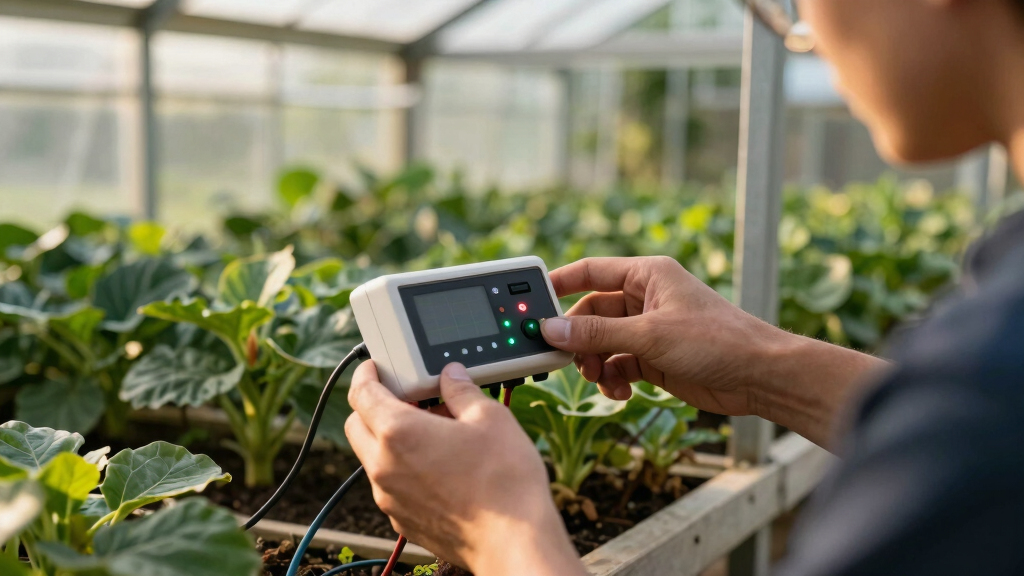
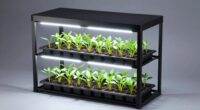
When selecting a greenhouse monitor with WiFi sensors, the goal is to find a device that offers reliable tracking of temperature and humidity, easy connectivity, and smart alerts. The eMylo Smart WiFi Thermometer stands out as the overall best for its straightforward app integration and accurate readings. The YoLink Wireless Thermometer appeals for its long battery life and wide range, making it ideal for larger or remote setups. However, the main tradeoffs involve balancing cost, ease of setup, and sensor accuracy. Continue reading for a detailed breakdown of these options to help you find the perfect fit.
Key Takeaways
- The best monitors combine reliable WiFi connectivity with long-lasting batteries to reduce maintenance.
- Higher-end models tend to offer more precise sensors and comprehensive app features, justifying the premium price.
- Many affordable options provide decent basic monitoring but may lack advanced alerts or sensor accuracy.
- Long-range models like YoLink are better suited for large greenhouses or outdoor setups where WiFi coverage is spotty.
- Ease of use varies significantly; beginners should prioritize intuitive apps and straightforward installation.



More Details on Our Top Picks
eMylo Smart WiFi Thermometer Hygrometer with LCD Display and App Alerts
This model stands out for its straightforward setup and reliable real-time monitoring via a dedicated app, making it ideal for those who want a no-fuss device with smart home compatibility. Compared to the YoLink sensors, it supports WiFi directly without a hub, which can simplify installation but limits its connection to only 2.4GHz networks. Its LCD display provides instant readings, which is handy when you need quick info without opening an app. The ability to set alerts and integrate with Alexa or Google Home adds convenience, but its battery reliance means you’ll need to replace AAA batteries periodically. Data export is limited to one year, which may be short for long-term trend analysis. For users seeking a simple, WiFi-enabled monitor with smart features, this makes a compelling choice, though those needing long-term data storage might find it lacking.
Pros:- Easy setup and direct WiFi connection without a gateway
- High-contrast LCD display with °C/°F toggle
- Smart alerts and voice control integration for convenience
- Mobile app supports real-time monitoring from anywhere
Cons:- Limited to 2.4GHz WiFi networks, potentially problematic in crowded networks
- Battery-powered with AAA batteries needing periodic replacement
- Data history capped at one year, not ideal for long-term tracking
Best for: Homeowners or hobbyists who want an easy-to-use, WiFi-connected thermometer with smart voice control.
Not ideal for: Greenhouse growers needing continuous long-term data or devices with extensive data storage options.
- Connectivity:2.4GHz WiFi (no gateway required)
- Display Type:LCD
- Accuracy:±5%RH, ±1°C
- Temperature Range:14.2°F to 140°F (-9.9°C to 60°C)
- Humidity Range:0% to 99%RH
- Batteries:2 AAA (included)
Bottom line: This pick is best for users seeking a straightforward, WiFi-enabled thermometer with smart home compatibility and easy setup.
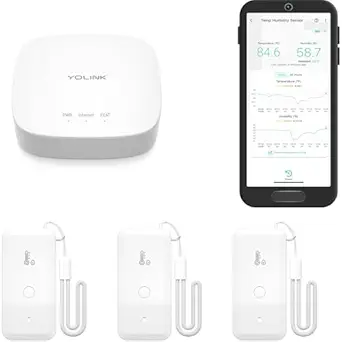
YoLink Smart Wireless Thermometer Hygrometer, 3-Pack, Wide Temp Range for Freezer, Fridge, Green House, Pet Cage, App Alerts, Emails, Text/SMS alerts, 5 Years Battery Life- Hub Included
Compared with the eMylo, the YoLink system offers the advantage of LoRa technology, giving it an impressive 1/4 mile open-air range without congesting your WiFi. This makes it ideal for large properties, outdoor environments, or multiple zones in a greenhouse where WiFi signals are weak or unavailable. Its long-lasting batteries and optional hub support continuous monitoring over several years with minimal maintenance. However, it’s limited to indoor applications, and without WiFi, remote access via internet isn’t direct—you need the hub and app. While it excels in wide-range environments, it’s less suited for users who prefer straightforward WiFi setups or need real-time internet access without extra hardware. This makes it perfect for users prioritizing extensive coverage over WiFi dependence.
Pros:- Exceptional 1/4 mile LoRa range for outdoor and multi-zone use
- Battery life up to 5 years with minimal maintenance
- No WiFi required, avoiding network congestion
- Multiple alert options via app, email, and SMS
Cons:- Limited to indoor use without outdoor protection or WiFi connectivity
- Requires a hub for remote internet access, adding setup complexity
- No direct WiFi connection or easy integration with existing smart home systems
Best for: Farmers, greenhouse operators, or property managers needing long-range, outdoor, or multi-zone monitoring without relying on WiFi.
Not ideal for: Indoor-only users who prefer simple WiFi connections and integrated app access without additional hubs.
- Range (Open Air):1/4 mile
- Battery Life:Up to 5 years
- Connectivity:LoRa wireless
- Included Components:3 sensors + hub
- Compatibility:Alexa, IFTTT
- Temperature Range:-4°F to 129°F
Bottom line: Ideal for users needing extensive outdoor or large-area monitoring where WiFi signals are weak or unreliable.
Govee Smart Thermometer Hygrometer, WiFi Humidity Temperature Sensor with App Notification Alert, 2 Years Free Data Storage Export, Wireless Remote Monitor for Room Greenhouse Incubator Wine Cellar
This Govee sensor offers highly accurate readings thanks to a Swiss-made sensor, making it well-suited for greenhouse environments where precise control matters. Compared to the eMylo, its 2-year free data storage and export capabilities provide valuable long-term insights, especially for growers needing detailed records. Its dual WiFi and Bluetooth connectivity ensure flexible placement, and app alerts help react quickly to environmental shifts. However, its WiFi connection is limited to 2.4GHz, and Bluetooth-only mode can be less reliable in larger greenhouses or outdoor setups. Its focus on indoor environments makes it less suitable for outdoor or outdoor-adjacent applications. If you prioritize precision and long-term data, this model stands out, but it’s not designed for extended outdoor use or complex smart integrations.
Pros:- Swiss-made sensor for high accuracy
- Two-year free data storage and export
- Flexible WiFi and Bluetooth connectivity
- Real-time alerts for rapid response
Cons:- Limited to WiFi 2.4GHz, which could cause interference
- Bluetooth connection less reliable over large indoor spaces
- Primarily designed for indoor environments, not outdoor use
Best for: Indoor growers or hobbyists who need detailed, long-term environmental data with high accuracy.
Not ideal for: Users seeking outdoor or remote monitoring without reliable WiFi or Bluetooth limitations.
- Temperature Accuracy:±0.54℉/±0.3℃
- Humidity Accuracy:±3%
- Data Storage:2 years free
- Connectivity:WiFi (2.4GHz) & Bluetooth
- Wireless Range:Indoor
- App Support:iOS and Android
Bottom line: Best suited for indoor growers needing precise, long-term monitoring with extensive data management.
SensorPush HT1 Smart Temperature Sensor & Humidity Sensor – Thermometer & Hygrometer w/App Monitoring – Indoor/Outdoor Temperature and Humidity Monitor w/Heat Index for RV, Fridge & More
This SensorPush model excels in versatility, with a simple setup and reliable Bluetooth connectivity, making it suitable for various environments from refrigerators to greenhouses. While the device itself doesn’t connect directly via WiFi, adding the optional G1 WiFi Gateway transforms it into a remote-access monitor comparable to the eMylo. Compared to the Govee sensor, its focus on reliable Bluetooth performance and simple operation makes it ideal for users who want a no-hassle device that can be expanded with a gateway. Its 1-2 year battery life remains competitive, but users must purchase the gateway separately for remote WiFi access. If you prefer a straightforward sensor that can be made fully remote with an accessory, this model offers a good balance, especially for those who value ease of use over built-in WiFi.
Pros:- Simple and quick setup process
- Reliable Bluetooth connection within 100m line of sight
- Supports optional WiFi gateway for remote access
- Calculates heat index for more accurate comfort levels
Cons:- Requires separate purchase of WiFi gateway for remote access
- Bluetooth range may be limited in larger spaces
- No built-in WiFi or app alert system without gateway
Best for: Users seeking a reliable, versatile sensor that can be easily expanded into a remote monitoring system with the optional gateway.
Not ideal for: Customers requiring plug-and-play WiFi monitoring without additional hardware or complex setup.
- Bluetooth Range:Up to 100m
- Battery Life:1-2 years
- Heat Index Monitoring:Yes
- Indoor/Outdoor:Indoor and outdoor compatible
- App Support:iOS and Android
- Additional Hardware:G1 WiFi Gateway (sold separately)
Bottom line: Best for users who want a dependable sensor that can be expanded into a remote WiFi system with minimal hassle.
YoLink Smart Temp & Humidity Sensor with LoRa Long Range and 2-Year Battery
This YoLink sensor offers an impressive 1/4 mile range, making it perfect for large greenhouses or multiple zones where WiFi signals are weak or absent. Its two-year battery life minimizes maintenance, and the long-range LoRa protocol ensures stable communication over considerable distances. Compared to the WiFi-based options, it requires a hub, which adds an initial setup step but offers the benefit of avoiding WiFi congestion and interference. However, it’s strictly an indoor solution, so outdoor applications are not recommended. For users managing multiple zones or large properties with limited WiFi, this sensor provides reliable, long-distance environmental monitoring, but those wanting direct internet access might find the need for additional hardware inconvenient.
Pros:- Extended 1/4 mile LoRa range for large properties
- Two-year battery life reduces upkeep
- No reliance on WiFi, avoiding network congestion
- Multiple alert options via app, email, and SMS
Cons:- Limited to indoor use — unsuitable for outdoor environments
- Requires a hub for internet connectivity, adding complexity
- No direct WiFi connection or integrated smart home features
Best for: Large-scale greenhouse operators or property managers needing extensive indoor coverage with minimal maintenance and no WiFi dependency.
Not ideal for: Home users or small-scale growers who prefer plug-and-play WiFi sensors with straightforward app controls.
- Range (Open Air):1/4 mile
- Battery Life:2 years
- Connectivity:LoRa wireless
- Included Components:2 sensors + hub
Bottom line: Ideal for users managing large indoor environments or multiple zones where WiFi is unreliable or unavailable.
Govee WiFi Thermometer Hygrometer H5103, Indoor Bluetooth Temperature Humidity Sensor with Electronic Ink Display, App Notification Alert, Free Data Storage Export, Digital Remote Monitor for Bedroom
This Govee model stands out for its combination of reliable Wi-Fi and Bluetooth connectivity, making remote monitoring straightforward compared to the more specialized Frigga 4G Cellular Monitor, which relies solely on cellular data. Its Swiss-made sensor offers precision to ±0.54°F and ±3%RH, ensuring accurate readings essential for sensitive setups like wine cellars or greenhouses. The electronic ink display enhances readability, especially in well-lit environments, and the app lets you set real-time alerts for out-of-range conditions—helpful for quick responses. Unlike the SensorPush, which requires a separate gateway for remote access, Govee’s free data export and 13-day graph viewing make data analysis easier. The main tradeoff involves its Bluetooth range limitation of 164 feet, which could be restrictive in larger spaces.
Pros:- Accurate Swiss-made sensors with precise temperature and humidity readings
- Electronic ink display for easy reading in various lighting conditions
- Free data export for up to 2 years with online graphing
Cons:- Limited Bluetooth range of 164 feet, reducing coverage in larger spaces
- No built-in cellular connectivity, which could restrict remote access in areas without Wi-Fi
Best for: Homeowners or small greenhouse operators needing reliable remote monitoring with easy data export.
Not ideal for: Large commercial greenhouses or off-grid locations where Wi-Fi stability is questionable or cellular support is necessary.
- Temperature accuracy:±0.54°F
- Humidity accuracy:±3%RH
- Connectivity:Wi-Fi and Bluetooth
- Display:Electronic ink
- Data storage:13 days online, 2 years export
- Power:AA alkaline batteries
Bottom line: This pick suits users seeking a balance of accuracy, ease of use, and detailed data management in a home or small-scale setting.
Frigga 4G Cellular Temperature & Humidity Monitor, No WiFi Required (WiFi Optional), Remote Temperature Sensor with App, Email & Voice Alerts for RV, Pets, Vacation Home
Compared with the Govee WiFi model, the Frigga 4G Cellular Monitor offers the distinct advantage of cellular connectivity, making it ideal for vacation homes, RVs, or remote sites where Wi-Fi might be unreliable or unavailable. Its built-in global SIM supports 2 years of service, and the device can switch seamlessly between 4G cellular and Wi-Fi, providing flexible options for different environments. The device supports multiple alert channels—app push, email, and voice—ensuring you’re notified promptly of any conditions that fall outside your preset ranges. Its rechargeable battery lasts up to 7 days, which is a tradeoff for portability in off-grid scenarios, unlike the Govee model that relies on mains power or batteries. Overall, it’s better suited for long-term, off-grid monitoring than indoor use or small-scale setups.
Pros:- Supports 4G cellular with a global SIM for anywhere monitoring
- Multiple alert options including voice and email
- Two-year service plan included, no setup complexity
Cons:- Rechargeable battery lasts only about a week per charge
- Requires cellular coverage, limiting use in areas with poor signal
Best for: RVs, vacation cabins, or remote farms where Wi-Fi coverage is inconsistent or nonexistent.
Not ideal for: Indoor environments with stable Wi-Fi or users requiring long-term battery life without frequent recharging.
- Connectivity:4G cellular + Wi-Fi (optional)
- Battery life:Up to 7 days
- Temperature range:Up to 158°F
- Alerts:App, email, voice
- Included service:2 years
- Power:Rechargeable battery
Bottom line: Ideal for users needing reliable remote data in off-grid or mobile locations, accepting the need for periodic recharging.
Govee Digital Hygrometer Indoor Thermometer Room H5075, Bluetooth Temperature Humidity Meter with 164ft Remote App Control, Notification Alerts, 2 Years Data Storage Export for Bedroom, Wine Cellar
This Govee model excels in indoor environments like bedrooms or wine cellars, offering a reliable Bluetooth connection up to 164 feet—more limited than the Wi-Fi-based Govee H5103 but perfectly suited for smaller spaces. Its Swiss-made sensor provides accurate readings to ±0.54°F and ±3%RH, with a refresh rate of just 2 seconds, ensuring quick updates. The bright LCD display makes it easy to read at a glance, and the app alerts you to any out-of-range conditions, which is particularly useful for sensitive environments. While it doesn’t support remote access outside Bluetooth range, its 2-year data storage/export feature offers detailed historic data for analysis. Compared to the SensorPush, which requires a separate gateway, this Govee model offers a more integrated solution for indoor monitoring at a reasonable price.
Pros:- Accurate Swiss-made sensors with fast refresh rate
- Bright, easy-to-read LCD display
- Supports 2 years of data storage and export
Cons:- Limited Bluetooth range of 164 feet, not suitable for large areas
- No Wi-Fi or cellular connectivity for remote access
Best for: Indoor environments like bedrooms, wine cellars, or small greenhouses requiring accurate data and export capabilities.
Not ideal for: Large or outdoor spaces where Bluetooth range is insufficient for effective monitoring.
- Temperature accuracy:±0.54°F
- Humidity accuracy:±3%RH
- Connectivity:Bluetooth
- Range:164 feet
- Data storage:2 years
- Display:LCD
Bottom line: Best suited for indoor users prioritizing quick updates, clear display, and data export in smaller spaces.
SensorPush HT.w Smart Temperature Sensor & Humidity Sensor – Thermometer & Hygrometer w/App Monitoring – Water Resistant Temperature and Humidity Monitor w/Heat Index for RV, Fridge & More
Compared to the Govee indoor models, the SensorPush HT.w emphasizes versatility with its water-resistant design and capability for outdoor use, though it relies primarily on Bluetooth with optional gateway for remote access. The sensor offers reliable hardware with 1-2 year battery life and a line-of-sight range of 100 meters, making it suitable for outdoor gardens or refrigerators, much like the SensorPush G1 Gateway. Its detailed measurements include heat index, dew point, and VPD, providing a comprehensive environmental picture—valuable for sensitive plants or equipment. Setting up is straightforward, much like the other SensorPush model, but without a built-in Wi-Fi or cellular option, remote monitoring requires the extra purchase of a gateway. This model is ideal when outdoor durability and precise data are needed, with the understanding that remote access depends on additional hardware.
Pros:- Water-resistant and outdoor durable design
- Accurate, detailed environmental measurements including heat index
- Reliable Bluetooth with up to 100m line-of-sight range
Cons:- Requires extra gateway for remote Wi-Fi access, adding cost
- Battery life of 1-2 years may require periodic replacement
Best for: Outdoor growers, refrigerators, or equipment needing water resistance and detailed environmental data.
Not ideal for: Indoor-only users who do not want to invest in additional hardware for remote access.
- Water resistance:Water-resistant
- Battery life:1-2 years
- Range:100 meters line-of-sight
- Measurements:Temperature, humidity, heat index
- Connectivity:Bluetooth (gateway optional)
- Durability:Outdoor rated
Bottom line: This sensor is perfect for outdoor or water-exposed environments where detailed data and durability are more important than built-in Wi-Fi.
How We Picked
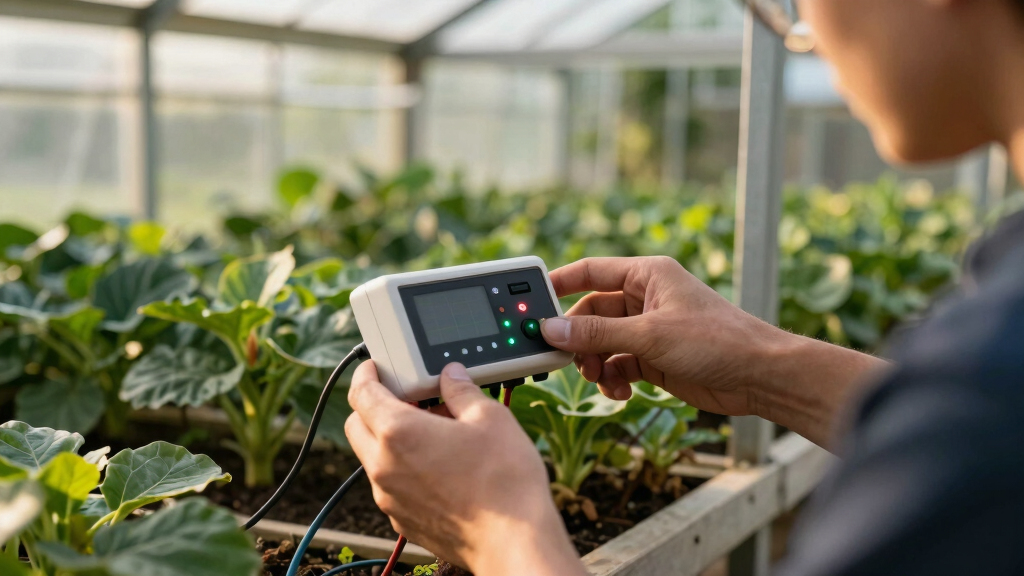
To evaluate these greenhouse monitors, I focused on core factors that matter for effective remote sensing: sensor accuracy, WiFi stability, ease of setup, battery life, and app usability. Devices with consistent data transmission and clear alert systems received higher scores. I also considered build quality and value for money, aiming to identify options that balance performance with affordability. The ranking reflects a mix of these criteria, emphasizing reliability and user experience while accounting for different greenhouse sizes and user expertise levels.Factors to Consider When Choosing Best Greenhouse Monitor With Wifi Sensors
Choosing the right greenhouse monitor with WiFi sensors requires balancing several key factors. First, sensor accuracy is fundamental, as you need trustworthy data to make informed decisions about your plants’ environment. Second, WiFi stability and range determine whether the device can reliably transmit data without interruptions. Ease of installation and user interface impact how quickly you can set up and interpret readings, especially for beginners. Battery life is another critical factor—longer-lasting batteries reduce maintenance, particularly in remote or hard-to-reach locations. Finally, consider the expandability and app features, like alerts and data export, which can enhance your control and analysis.Sensor Accuracy and Reliability
Accurate sensors are vital for maintaining optimal greenhouse conditions. Devices with proven precision in temperature and humidity readings provide peace of mind, especially for sensitive crops. Cheaper sensors often introduce noise or drift over time, leading to false alerts or missed issues. Look for models that have good reviews on sensor consistency and calibration options. Remember, a highly accurate sensor in a device with unstable WiFi or poor app support can still fall short in practical use.
WiFi Connectivity and Range
A monitor’s ability to connect reliably over WiFi directly impacts its usefulness. Devices with strong, stable connections ensure continuous data flow and timely alerts. For larger or outdoor greenhouses, long-range models like YoLink excel due to their LoRa technology, which extends coverage beyond typical WiFi limits. Conversely, standard WiFi-only models may struggle in extensive setups or areas with weak signals. Consider your space size and existing network infrastructure when choosing.
Ease of Setup and Use
If you’re new to smart monitoring, a device with a simple installation process and an intuitive app is crucial. Some monitors require complex wiring or app configurations, which can cause frustration and delay deployment. Look for products with clear instructions, minimal hardware, and user-friendly interfaces. Additionally, the ability to set customizable alerts and export data easily can make ongoing management more straightforward, especially for hobbyists or small-scale growers.
Battery Life and Power Options
Long-lasting batteries reduce the need for frequent replacements, making maintenance easier, particularly in hard-to-access locations. Many wireless sensors now offer multi-year battery life, but those with additional features like cellular connectivity or higher data transmission frequency may drain faster. If your greenhouse is remote or lacks power outlets, prioritize models with extended battery longevity or alternative power options like solar or cellular power.
App Features and Expandability
The app ecosystem can significantly influence your monitoring experience. Features like customizable notifications, data export, historical trend analysis, and integration with other smart devices add value. Consider whether the app is compatible with your smartphone platform and if it offers remote access. For larger setups, models that support multiple sensors and centralized dashboards provide better oversight and scalability.
Frequently Asked Questions
Can I use these monitors outdoors or in a humid greenhouse?
Many of these sensors are designed for indoor use, but some, like the SensorPush HT1 and HT.w, are water-resistant and suitable for outdoor or humid environments. Always check the product specifications for IP ratings or water resistance features before deploying in wet conditions. A monitor that isn’t water-resistant may give false readings or fail prematurely in high humidity or rain. For optimal durability, select models explicitly rated for outdoor use or humid settings.
What is the typical range I should expect from WiFi sensors in a greenhouse?
Most WiFi sensors operate effectively within a range of 50 to 150 feet indoors, but this can vary based on obstacles like walls or metal structures. Larger greenhouses or outdoor setups often require sensors with extended range capabilities, such as LoRa or mesh WiFi systems. If your space exceeds typical WiFi limits, consider models like YoLink, which provide long-range communication, or plan to enhance your network with extenders or mesh systems for seamless coverage.
Are cellular-based monitors worth the extra cost for a small greenhouse?
Cellular monitors provide the advantage of independent connectivity, making them ideal for remote or large-scale greenhouses where WiFi may be unreliable. For small, WiFi-connected setups, the added cost may not justify the benefit unless your internet connection is unstable. Cellular models like Frigga offer peace of mind by ensuring continuous data flow regardless of local network issues, but consider whether your budget aligns with this added reliability.
How important is data storage and export for greenhouse monitoring?
Data storage and export capabilities allow you to track environmental trends over time, which can inform better management decisions. If you’re managing a commercial operation or conducting experiments, exporting historical data can be invaluable. Many monitors now include free cloud storage or local export options. Prioritize models that offer easy data access if long-term analysis or record keeping is part of your routine.
Should I choose a monitor with additional sensors like CO2 or light?
While temperature and humidity are the primary factors, additional sensors such as CO2, light, or soil moisture can provide a more comprehensive view of your greenhouse environment. If your plants are sensitive to these factors or you aim for precise climate control, investing in a multi-sensor setup makes sense. However, for basic needs, a reliable temperature and humidity monitor should suffice, especially if you’re just starting out or working with a limited budget.