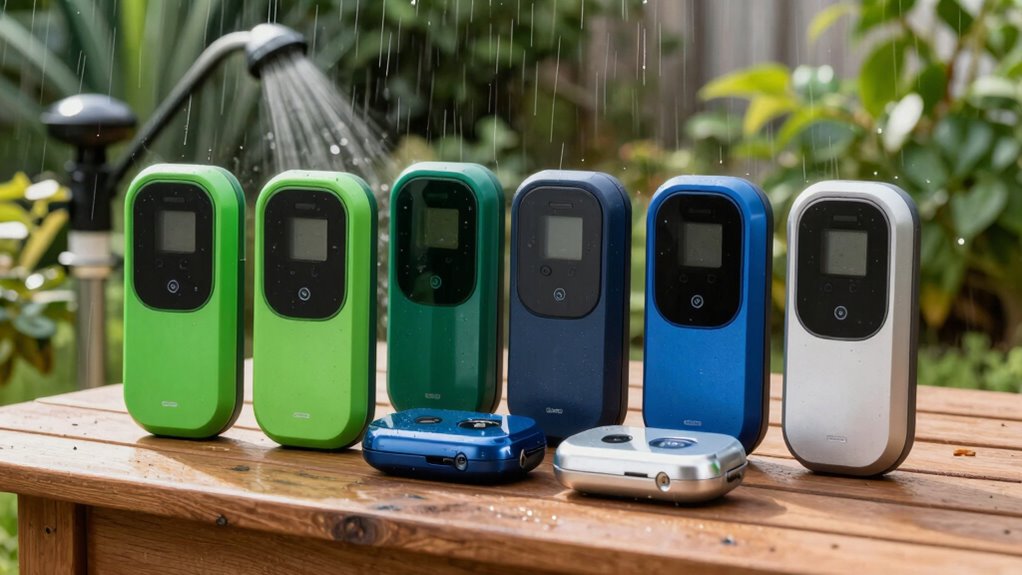

When selecting a rain sensor and freeze sensor kit for sprinklers, it’s vital to consider how well each system detects weather changes and integrates with your existing setup. The Hunter Sprinkler Mini-Click Rain Sensor stands out as the best overall for its reliability and straightforward installation. The Orbit Rain and Freeze Sensor offers excellent value with dual sensing capabilities, while the Rainbird Wireless System provides advanced wireless features for seamless control. The main tradeoffs include balancing upfront cost, sensor accuracy, and compatibility with your sprinkler controller. Keep reading for a detailed breakdown to find the best fit for your needs.

Get garden gear delivered free with Prime
- Fast, free delivery on millions of items
- Prime Video, Amazon Music and more included
- Member-only deals all year
Key Takeaways
- Wireless sensors tend to offer easier installation and more flexible placement than wired options.
- Top-performing sensors combine rain and freeze detection to prevent watering during adverse weather, saving water and preventing damage.
- Durability and weather resistance are critical for longevity, especially in extreme climates.
- Higher-priced kits often include smarter features, like wireless connectivity and app control, but may not be necessary for all users.
- Compatibility with existing sprinkler controllers is essential; check compatibility before purchasing.
| Hunter Sprinkler Mini-Click Rain Sensor |  | Best Compact and Easy-to-Install Rain Sensor | Installation Type: Wired | Rain Detection: Pre-set level | Compatibility: Any irrigation system with sensor port | VIEW ON AMAZON | See Our Full Breakdown |
| Orbit Rain and Freeze Sensor for Sprinkler Controllers – Model 57069 |  | Best Value for Combined Rain and Freeze Protection | Model: 57069 | Compatibility: Orbit, Hydro-Rain, others | Features: Weather-resistant wire, adjustable thresholds | VIEW ON AMAZON | See Our Full Breakdown |
| Rainbird Wireless Rain and Freeze Sensor System with Controller Interface and Sensor |  | Best Wireless System with Customizable Settings | Sensor Type: Wireless Rain and Freeze | Controller Compatibility: Rain Bird and competitors | Rainfall Adjustment: 1/8 in to 1/2 in | VIEW ON AMAZON | See Our Full Breakdown |
| Rain Bird WR2RFC48 A554800 WR2 Rain/Freeze Sensor Combo with 48-Hour Hold |  | Best for Water Conservation with Extended Hold Time | Hold Time: 48 hours | Water Savings: Up to 35% | Wireless: Yes | VIEW ON AMAZON | See Our Full Breakdown |
| Hunter Wireless Mini-Clik Sensor with Rain and Freeze Sensing WM-CLIK |  | Best Wireless, Quick-Response Sensor for Active Gardens | Sensor Type: Wireless Rain and Freeze | Response Technology: Quick Response | Wireless Frequency: 433 MHz | VIEW ON AMAZON | See Our Full Breakdown |
| Hunter Rain-Clik Wireless Rain/Freeze Sensor for Sprinkler System |  | Best Overall for Residential Water Conservation | Sensor Type: Rain and Freeze | Temperature Threshold: 37°F | Wireless: Yes | VIEW ON AMAZON | See Our Full Breakdown |
| Irritrol RFS1000 Wireless Rain/Freeze Sensor |  | Best for Reliable Wireless Communication | Communication: Wireless | Mounting options: Gutter bracket, conduit adapter | Technology: Wireless | VIEW ON AMAZON | See Our Full Breakdown |
| Irritrol RS1000 Wireless Rain Sensor |  | Best for Accurate, Power-Outage Resilient Communication | Communication: Wireless | Mounting options: Gutter bracket, conduit adapter | Power: Requires no special tools | VIEW ON AMAZON | See Our Full Breakdown |
| Rain Bird WR2-RFC Wireless Rain/Freeze Sensor Complete Kit |  | Best for Easy Installation and Programming | Distance between Mounting Holes: 6.25 Inches | Includes: Rain and freeze sensor | Mounting hardware: Not included | VIEW ON AMAZON | See Our Full Breakdown |
| Orbit Sprinkler System Hard Wired Rain and Freeze Sensor |  | Best for Wired Systems with Adjustable Settings | Type: Rain and Freeze Sensor | Wireless: Yes | Adjustable Threshold: Yes | VIEW ON AMAZON | See Our Full Breakdown |
| Hunter Sprinkler Wireless Rain/Freeze-Clik Sensor System |  | Best for Flexible, Wireless Installation and Automatic Weather Response | Sensor Type: Wireless Rain/Freeze Sensor | Mounting Options: Eave, wall, fence, gutter | Compatibility: Sprinkler controllers | VIEW ON AMAZON | See Our Full Breakdown |
| rain sensor and freeze sensor kit for sprinkler | Compatibility | Sensor Type |
|---|---|---|
| Hunter Sprinkler Mini-Click Ra | Any irrigation system with sensor port | — |
| Orbit Rain and Freeze Sensor f | Orbit, Hydro-Rain, others | Rain and Freeze |
| Rainbird Wireless Rain and Fre | — | Wireless Rain and Freeze |
| Rain Bird WR2RFC48 A554800 WR2 | Most compatible systems | Rain/Freeze |
| Hunter Wireless Mini-Clik Sens | — | Wireless Rain and Freeze |
| Hunter Rain-Clik Wireless Rain | Most standard sprinkler controllers | Rain and Freeze |
| Irritrol RFS1000 Wireless Rain | — | — |
| Irritrol RS1000 Wireless Rain | — | — |
| Rain Bird WR2-RFC Wireless Rai | — | — |
| Orbit Sprinkler System Hard Wi | Orbit, Hydro-Rain, and other major brands | — |
| Hunter Sprinkler Wireless Rain | Sprinkler controllers | Wireless Rain/Freeze Sensor |
More Details on Our Top Picks
Hunter Sprinkler Mini-Click Rain Sensor
The Hunter Mini-Click Rain Sensor stands out for its straightforward installation and reliable rain detection, making it ideal for homeowners who want a simple, plug-and-play solution. Compared with wireless options like the Hunter WM-CLIK, this wired sensor offers a more direct connection, which can be more dependable in certain setups but limits flexibility. Its main tradeoff is the lack of detailed adjustability for rain sensitivity, which might be a downside for those needing fine control. This sensor is best suited for users seeking quick installation without complex programming, especially if their irrigation controller supports wired sensors directly. It isn’t ideal for those who want adjustable thresholds or wireless convenience. Pros: Easy to install on any system; Reliable rain detection; No need for batteries; Compatible with most irrigation controllers.
Cons: Limited adjustability; No wireless capability; Lacks detailed rain sensitivity controls.
Verdict: Perfect for homeowners seeking a straightforward, wired rain sensor that fits seamlessly into existing systems.- Installation Type:Wired
- Rain Detection:Pre-set level
- Compatibility:Any irrigation system with sensor port
- Weather Resistance:Yes
- Adjustable Thresholds:No
- Power Source:Wired
Our verdict“Best Compact and Easy-to-Install Rain Sensor — a strong pick in this lineup.”
Orbit Rain and Freeze Sensor for Sprinkler Controllers – Model 57069
The Orbit Model 57069 offers a compelling balance of affordability and functionality, combining rain and freeze detection in a single device, which makes it a versatile choice for budget-conscious users. Unlike the more advanced Rainbird wireless systems, this sensor requires installation in an open area to perform optimally, which could be a limitation in enclosed yards. Its adjustable thresholds allow some customization, but this remains less precise compared to the wireless systems with digital interfaces. This pick makes the most sense for homeowners who want basic combined rain and freeze protection without extra features or wireless setup. It’s less suitable for those needing precise temperature control or wireless flexibility. Pros: Combines rain and freeze detection; Weather-resistant design; Adjustable thresholds; Affordable price.
Cons: Needs open-area installation; Limited to compatible controllers; Less precise than wireless systems.
Verdict: An economical, reliable choice for basic rain and freeze protection in suitable outdoor locations.- Model:57069
- Compatibility:Orbit, Hydro-Rain, others
- Features:Weather-resistant wire, adjustable thresholds
- Sensor Type:Rain and Freeze
- Installation:Open area recommended
- Power:Wired
Our verdict“Best Value for Combined Rain and Freeze Protection — a strong pick in this lineup.”
Rainbird Wireless Rain and Freeze Sensor System with Controller Interface and Sensor
The Rainbird wireless system excels with its intuitive, icon-driven interface and adjustable rainfall and temperature settings, making it suitable for tech-savvy users who value easy programming. Compared to the Hunter WM-CLIK, this model provides more granular control over thresholds, but it is incompatible with Rain Bird’s ESP-SMT smart controllers, which could be a drawback for users with advanced systems. Its reliable wireless signal and weather-resistant design make it a dependable choice for outdoor installations. The tradeoff is that wireless systems typically cost more and may require more space for optimal signal transmission. This system is best suited for those who want flexible, programmable control and are willing to invest in wireless technology. It’s less ideal for users with Rain Bird ESP-SMT controllers or those preferring wired sensors. Pros: Wireless operation; Easy to program; Adjustable rainfall and temperature thresholds; Reliable signal performance.
Cons: Not compatible with some Rain Bird smart controllers; Higher cost; Requires wireless setup space.
Verdict: Designed for tech-savvy homeowners who want customizable, wireless rain and freeze protection with straightforward controls.- Sensor Type:Wireless Rain and Freeze
- Controller Compatibility:Rain Bird and competitors
- Rainfall Adjustment:1/8 in to 1/2 in
- Temperature Adjustment:33°F to 41°F
- Signal Type:Enhanced antenna wireless
- Interface:Icon-driven
Our verdict“Best Wireless System with Customizable Settings — a strong pick in this lineup.”
Rain Bird WR2RFC48 A554800 WR2 Rain/Freeze Sensor Combo with 48-Hour Hold
The Rain Bird WR2RFC48 combines a wireless rain and freeze sensor with a generous 48-hour hold period, making it ideal for users focused on water savings and regulatory compliance. Unlike shorter-hold sensors like the Rainbird Wireless Rain and Freeze Sensor, this model offers a longer delay after rainfall, reducing unnecessary watering. Its ease of programming and effective water savings—up to 35%—are significant advantages. However, it requires a compatible irrigation system and is limited to a 48-hour hold, which could be a concern for those needing longer or more flexible shutdown periods. This makes it a solid choice for environmentally conscious users who want a simple, reliable, and effective sensor. It’s less suitable for those needing extensive customization or with incompatible controllers. Pros: Long 48-hour hold; Easy to program; Water savings up to 35%; Wireless operation.
Cons: Limited to compatible systems; Fixed 48-hour delay; Not as customizable as some wireless systems.
Verdict: An excellent option for water-conscious homeowners seeking a simple, long-delay rain/ freeze sensor that’s easy to set up.- Hold Time:48 hours
- Water Savings:Up to 35%
- Wireless:Yes
- Temperature Range:Set below 32°F
- Sensor Type:Rain/Freeze
- Compatibility:Most compatible systems
Our verdict“Best for Water Conservation with Extended Hold Time — a strong pick in this lineup.”
Hunter Wireless Mini-Clik Sensor with Rain and Freeze Sensing WM-CLIK
The Hunter WM-CLIK offers rapid response times thanks to its Quick Response technology, making it ideal for gardeners who want immediate shutdown during rain or freeze conditions. Its wireless communication simplifies installation, especially in larger or difficult-to-wire yards. Compared to the Rainbird wireless system, the WM-CLIK’s fast activation helps protect plants more effectively during sudden weather changes. However, it lacks detailed threshold adjustments and the specifications don’t specify maximum range or battery life, which could impact long-term reliability. This sensor is best for active gardens where quick response is crucial, but less suitable for users needing precise control or extensive customization. It’s a good fit for those prioritizing speed and ease of installation over detailed settings. Pros: Wireless with quick response; Wireless communication simplifies setup; No wiring needed; Debris tolerant.
Cons: Limited adjustment options; Range and battery life not specified; No detailed threshold controls.
Verdict: Ideal for active garden settings where rapid protection from rain and freeze is desired, with minimal setup fuss.- Sensor Type:Wireless Rain and Freeze
- Response Technology:Quick Response
- Wireless Frequency:433 MHz
- Range:800′ line of sight
- Debris Tolerance:Yes
- Installation:Wireless, no wiring
Our verdict“Best Wireless, Quick-Response Sensor for Active Gardens — a strong pick in this lineup.”
Hunter Rain-Clik Wireless Rain/Freeze Sensor for Sprinkler System
The Hunter Rain-Clik sensor stands out for its automatic response to both rain and freezing temperatures, making it a comprehensive solution for protecting your sprinkler system. Compared with the Irritrol RFS1000, it offers a more customizable reset timing, which can be advantageous for users who want precise control over watering schedules. Its wireless, maintenance-free design simplifies installation, especially on existing gutter or wall mounts. However, it requires a compatible sprinkler controller with sensor ports, limiting its use to certain systems. This sensor is ideal for homeowners seeking an easy-to-install, all-in-one rain and freeze protection that minimizes water waste and freeze damage without frequent adjustments.
Pros:- Automatic rain and freeze shutoff to prevent water waste and damage
- Wireless and maintenance-free for easy setup
- Adjustable reset timing for customization
Cons:- Requires compatible sprinkler controller with sensor ports
- Limited to residential irrigation systems
Best for: Homeowners with compatible sprinkler controllers seeking a reliable, all-in-one rain and freeze sensor
Not ideal for: Users with older or non-compatible controllers, or those needing a more budget-friendly wired solution
- Sensor Type:Rain and Freeze
- Temperature Threshold:37°F
- Wireless:Yes
- Installation:Gutter or Wall Mount
- Adjustable Reset:Yes
- Compatibility:Most standard sprinkler controllers
Our verdict“This sensor is perfect for homeowners wanting a hassle-free, all-in-one solution that automatically adjusts watering based on weather conditions.”
Irritrol RFS1000 Wireless Rain/Freeze Sensor
The Irritrol RFS1000 excels in providing a dependable wireless connection with your controller, making it ideal for gardens where reliable communication is critical. Its versatile mounting options, including gutter brackets and conduit adapters, make installation adaptable to various setups. Compared with the Rain Bird WR2-RFC kit, the RFS1000 offers a signal strength indicator, which helps ensure proper setup and performance. Nonetheless, it requires a compatible wireless controller, which could limit its use for those with older systems. This pick makes sense for users who prioritize consistent wireless performance and flexible mounting over simplicity or wired options.
Pros:- Reliable wireless communication with controller
- Versatile mounting options for easy installation
- Signal strength indicator to confirm proper setup
Cons:- Requires compatible wireless controller
- Limited to rain and freeze detection
Best for: Garden enthusiasts with compatible wireless controllers seeking dependable rain and freeze detection
Not ideal for: Users with wired controllers or systems that do not support wireless sensors
- Communication:Wireless
- Mounting options:Gutter bracket, conduit adapter
- Technology:Wireless
Our verdict“This sensor is ideal for those needing a dependable wireless connection and flexible mounting options in a modern irrigation setup.”
Irritrol RS1000 Wireless Rain Sensor
The Irritrol RS1000 offers a notable advantage over other wireless sensors like the Irritrol RFS1000 by maintaining accurate status communication even after power outages, thanks to its continuous link between transmitter and receiver. Its versatile mounting options and signal strength indicator ensure reliable setup. However, it necessitates wireless setup and configuration, which might be daunting for less tech-savvy users. This sensor suits those who want a resilient, long-term wireless rain sensor that won’t lose data during power disruptions, especially in areas prone to outages.
Pros:- Maintains accurate status after power outages
- Reliable wireless communication with signal strength indicator
- Versatile mounting options for easy installation
Cons:- Requires wireless setup and configuration
- Limited to compatible irrigation systems
Best for: Tech-savvy homeowners or landscape professionals requiring dependable, outage-resistant wireless sensors
Not ideal for: Users uncomfortable with wireless configuration or those using non-compatible irrigation controllers
- Communication:Wireless
- Mounting options:Gutter bracket, conduit adapter
- Power:Requires no special tools
Our verdict“This sensor is best for users needing a durable, outage-proof wireless solution for rain and freeze detection.”
Rain Bird WR2-RFC Wireless Rain/Freeze Sensor Complete Kit
The Rain Bird WR2-RFC kit simplifies installation with its included components, making it suitable for those who prefer straightforward setup. Its reliable wireless signal and combined rain and freeze sensors make it a solid choice for residential use. Compared to wired sensors like the Orbit Hard Wired Sensor, it offers more convenience at the expense of needing to purchase mounting hardware separately, as the panel is sold separately. This kit makes the most sense for homeowners who want a ready-to-install, wireless solution without complex wiring, but should be aware of the extra cost for mounting hardware.
Pros:- Easy to install and program
- Reliable wireless signal
- Includes both rain and freeze sensors
Cons:- Mounting hardware not included
- Panel sold separately
Best for: Homeowners seeking a plug-and-play wireless rain and freeze sensor kit for easy installation
Not ideal for: Users who prefer all-in-one packages with mounting hardware included or have complex irrigation systems
- Distance between Mounting Holes:6.25 Inches
- Includes:Rain and freeze sensor
- Mounting hardware:Not included
- Panel:Sold separately
Our verdict“This kit suits those who prioritize quick setup and reliable wireless operation over bundled hardware convenience.”
Orbit Sprinkler System Hard Wired Rain and Freeze Sensor
The Orbit hard-wired sensor offers a straightforward solution for systems that support wiring, providing automatic rain and freeze protection with an adjustable rain delay threshold. Its wireless link to the controller simplifies installation compared to traditional wired sensors, but it still requires compatible controllers like Orbit or Hydro-Rain. Compared with wireless models like the Rain Bird WR2-RFC, this wired sensor eliminates potential wireless interference but demands more initial wiring effort. It makes the most sense for users with existing wired controllers who want to fine-tune rain delays and temperature thresholds without relying on wireless technology.
Pros:- Automatically detects rain and freezing temperatures
- Wireless link to controller simplifies installation
- Adjustable rain delay threshold
Cons:- Requires compatible controllers for full functionality
- Limited details on sensor range and power source
Best for: Existing wired sprinkler systems needing customizable rain and freeze detection
Not ideal for: Users seeking a wireless, plug-and-play sensor or with non-wired controllers
- Type:Rain and Freeze Sensor
- Wireless:Yes
- Adjustable Threshold:Yes
- Compatibility:Orbit, Hydro-Rain, and other major brands
Our verdict“This sensor is ideal for wired systems where adjustable, reliable rain and freeze detection is needed without wireless dependency.”
Hunter Sprinkler Wireless Rain/Freeze-Clik Sensor System
The Hunter Sprinkler Wireless Rain/Freeze-Clik Sensor System stands out for its wireless design, making installation straightforward without the need for complex wiring. Unlike wired options like the Orbit Sprinkler System Hard Wired Rain and Freeze Sensor, this model offers greater placement flexibility—mount it on eaves, fences, or gutters to suit your setup. Its ability to detect both rain and freezing temperatures automatically shuts off your sprinkler system, helping conserve water and prevent freeze damage. However, its reliance on compatible controllers means it isn’t a universal fix—if your controller lacks support, you’ll need an adapter or a different sensor. Battery life can be variable, which might require periodic replacements. Compared with other wireless sensors like the Rain Bird WR2RFC48, this system is easier to install but offers fewer mounting options. This pick makes the most sense for homeowners who want an easy, wireless solution that adapts flexibly to their property’s layout, but are aware that it needs compatible controllers and may require battery attention.
Pros:- Wireless setup simplifies installation without wiring hassles
- Flexible mounting options for eaves, fences, walls, or gutters
- Automatically detects rain and freeze conditions to protect systems
Cons:- Requires compatible sprinkler controllers, limiting universality
- Battery life can vary, potentially needing replacements
Best for: Homeowners seeking a wireless, easy-to-install sensor that covers multiple mounting locations and automatically responds to weather conditions.
Not ideal for: Those with incompatible sprinkler controllers or looking for a wired setup that doesn’t rely on batteries, since this sensor requires controller compatibility and battery maintenance.
- Sensor Type:Wireless Rain/Freeze Sensor
- Mounting Options:Eave, wall, fence, gutter
- Compatibility:Sprinkler controllers
- Detection Capabilities:Rain and freeze
- Power Source:Battery operated
- Wireless Range:Limited (depends on model)
Our verdict“This sensor is ideal for users who prioritize wireless convenience and flexible placement, accepting the need for compatible controllers and occasional battery swaps.”

How We Picked
The products in this roundup were evaluated based on their detection accuracy, ease of installation, build quality, and integration capabilities with existing sprinkler systems. We prioritized models that reliably detect rain and freezing conditions, as these directly impact watering schedules and water conservation. Cost was also a factor, balancing affordability with features. Wireless options were given special consideration for their convenience and flexibility, but wired sensors were included for users seeking simplicity and durability. Ultimately, the rankings reflect a combination of performance, value, and user-friendliness, aiming to match different buyer needs.| rain sensor and freeze sensor kit for sprinkler | Compatibility | Sensor Type |
|---|---|---|
| Hunter Sprinkler Mini-Click Ra | Any irrigation system with sensor port | — |
| Orbit Rain and Freeze Sensor f | Orbit, Hydro-Rain, others | Rain and Freeze |
| Rainbird Wireless Rain and Fre | — | Wireless Rain and Freeze |
| Rain Bird WR2RFC48 A554800 WR2 | Most compatible systems | Rain/Freeze |
| Hunter Wireless Mini-Clik Sens | — | Wireless Rain and Freeze |
| Hunter Rain-Clik Wireless Rain | Most standard sprinkler controllers | Rain and Freeze |
| Irritrol RFS1000 Wireless Rain | — | — |
| Irritrol RS1000 Wireless Rain | — | — |
| Rain Bird WR2-RFC Wireless Rai | — | — |
| Orbit Sprinkler System Hard Wi | Orbit, Hydro-Rain, and other major brands | — |
| Hunter Sprinkler Wireless Rain | Sprinkler controllers | Wireless Rain/Freeze Sensor |
Factors to Consider When Choosing Rain Sensor And Freeze Sensor Kit For Sprinklers
Choosing the right rain and freeze sensor kit for sprinklers involves several key considerations. The right sensor can save water, prevent system damage, and improve lawn health. However, buyers often face tough tradeoffs between cost, ease of installation, and feature set. Understanding these factors helps ensure you get a system that matches your specific needs and climate conditions.Sensor Accuracy and Reliability
Accurate detection of rain and freezing temperatures is crucial for preventing unnecessary watering or system damage. Look for sensors with proven sensitivity and quick response times. Cheaper models may miss certain weather events, leading to either water waste or damage, while higher-end sensors tend to be more precise but at a higher cost. Consider models with independent rain and freeze detection for better control over watering schedules.
Wireless vs. Wired Systems
Wireless sensors offer easier installation and flexible placement, especially in complex or large landscapes. They typically connect via Wi-Fi or RF, allowing remote monitoring and control, which can be a big advantage. Wired sensors, on the other hand, provide a more straightforward, durable connection, less vulnerable to interference or battery failure. Your choice depends on your setup, climate, and preference for convenience versus simplicity.
Compatibility and Integration
Ensure the sensor kit is compatible with your existing sprinkler controller or automation system. Some sensors come with dedicated controllers, while others are designed to work with popular brands like Hunter, Rainbird, or Orbit. Mismatched systems can lead to installation issues or unreliable operation. Double-check connector types, communication protocols, and whether additional adapters are needed.
Durability and Weather Resistance
Since sensors are exposed to the elements, durability is vital. Look for models with weatherproof enclosures, UV resistance, and sturdy mounting options. In colder climates, freeze sensors need to withstand snow, ice, and fluctuating temperatures. Investing in robust construction reduces the need for frequent replacements and ensures consistent performance over time.
Additional Features and User-Friendliness
Some sensors include features like 48-hour hold functions, app notifications, or integration with smart home systems. These can enhance convenience and control but often come at a higher price. Simpler models with basic rain and freeze detection are easier to set up and maintain, making them suitable for beginners. Balance the feature set with your technical comfort level and budget.
Frequently Asked Questions
Will a rain and freeze sensor protect my sprinkler system from damage during cold snaps?
Yes, a good rain and freeze sensor can prevent sprinklers from operating during freezing temperatures, which helps avoid damage caused by ice expansion. These sensors detect falling temperatures and automatically shut off watering, protecting your system from potential freezing damage. However, their effectiveness depends on proper placement and installation, so make sure to position them where they can accurately sense the weather conditions relevant to your system.
Are wireless sensors more reliable than wired ones for outdoor use?
Wireless sensors offer significant installation advantages and flexibility, especially over large or complex landscapes. They eliminate the need for running cables, which can be costly and cumbersome. While wireless technology has improved significantly, they can sometimes face interference or signal issues in certain environments. Wired sensors tend to be more straightforward and resilient over time but require more extensive installation efforts. Your choice should consider your landscape size, climate, and preference for ease of setup.
Can I use a rain sensor and freeze sensor from different brands together?
Compatibility depends on the communication protocols and connector types used by the sensors and your sprinkler controller. Many modern sensors are designed to be compatible with multiple systems, but mixing brands can sometimes lead to connection or communication issues. It’s best to verify compatibility with your existing controller or opt for a sensor kit that is explicitly designed for your system to avoid potential problems.
How often should I replace or service my rain and freeze sensor?
Most sensors should be inspected annually to ensure they are clean and functioning properly. Over time, dirt, debris, or corrosion can affect sensitivity. Replace batteries in wireless models as recommended, typically once a year. If the sensor shows signs of damage, wear, or inconsistent performance, replacement is advisable. Proper maintenance extends the life of the sensor and maintains reliable weather detection.
Is a higher-priced sensor kit worth the extra investment?
Higher-priced kits often include advanced features such as wireless connectivity, smartphone alerts, and more precise sensors, which can improve convenience and performance. If you have a large or complex landscape, or if water conservation is a priority, investing in a premium model can be worthwhile. However, for smaller gardens or basic needs, more affordable options still provide effective rain and freeze detection without the extra bells and whistles. Consider your specific needs and budget when choosing.
Conclusion
For most homeowners seeking a reliable, easy-to-install solution, the Hunter Sprinkler Mini-Click Rain Sensor offers a great balance of performance and simplicity, making it ideal for beginners or those on a budget. The Orbit Rain and Freeze Sensor stands out for excellent value, especially for those who want dual detection capabilities without extra complexity. For users with existing smart irrigation systems or larger landscapes, investing in a premium, wireless setup like the Rainbird Wireless System can provide seamless control and peace of mind. Ultimately, selecting the right kit depends on your climate, system compatibility, and how much convenience you desire.
As an affiliate, we earn on qualifying purchases.Halloween Picks
halloween