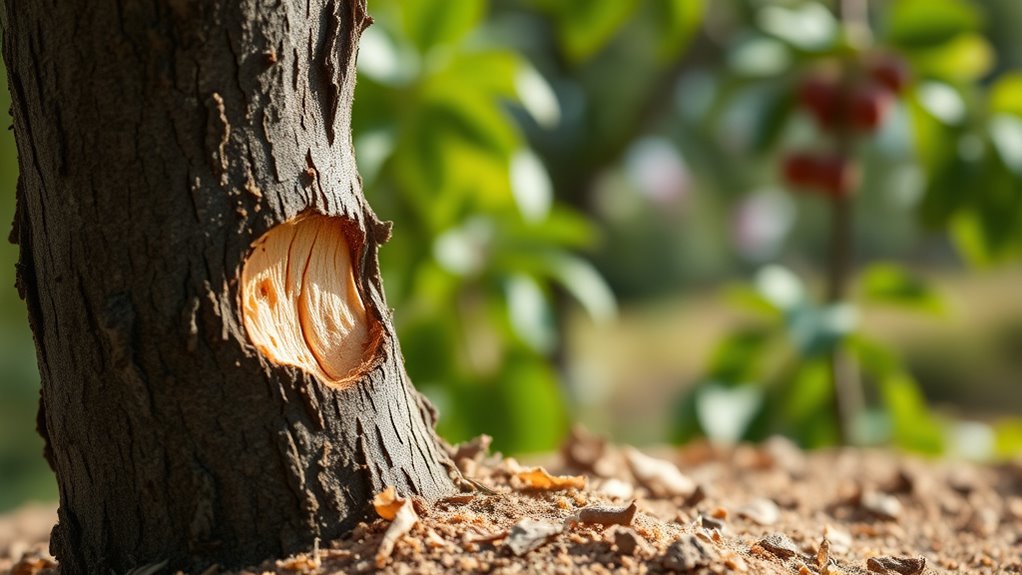

Rodent girdling happens when mice or rats gnaw around the trunk base of your fruit trees, damaging the bark and disrupting nutrient and water flow. If unnoticed, this can kill your trees over time. To prevent it, install protective barriers like hardware cloth or wire mesh, clear debris around the base, and set traps to control rodent populations. For effective prevention strategies you can implement now, continue exploring the best methods.
Open a free Amazon Business account
Business pricing, bulk buying and tax-exempt orders.
As an affiliate, we earn on qualifying purchases.
Key Takeaways
- Rodents cause girdling by chewing around the trunk base, disrupting nutrient and water flow, which can kill fruit trees.
- Installing physical barriers like hardware cloth or wire mesh around trunks prevents rodent access and damage.
- Regular inspection of trunks and surrounding areas helps detect early gnaw marks or burrows indicating rodent activity.
- Habitat management, including removing debris and trimming grass, reduces rodent nesting sites near fruit trees.
- Combining physical barriers, trapping, and habitat modification offers effective long-term prevention of rodent girdling.

Have you ever noticed signs of missing bark around the base of your fruit trees? If you have, it might be a sign that rodents are gnawing on the bark, potentially girdling your trees. Girdling prevention becomes vital because when rodents chew through the bark and underlying cambium layer, it disrupts the flow of nutrients and water, eventually killing the tree. Recognizing early damage is key to avoiding long-term loss, so keeping an eye on the trunk’s appearance can save your trees.
Rodent control methods are your first line of defense. Installing physical barriers, like hardware cloth or wire mesh around the trunk, can effectively prevent rodents from reaching the bark. Make sure the mesh extends a few inches into the soil to block burrowing rodents like voles and mice. Regularly inspecting the trunk and surrounding area helps you catch any early signs of gnawing or burrows before significant damage occurs. Trapping rodents using live traps or snap traps can also reduce their population around your orchard or garden, especially during winter months when rodents seek shelter near trees. Baiting traps with appropriate attractants increases their effectiveness and helps you monitor rodent activity.
You can also employ habitat modification to make your yard less attractive to rodents. Clearing away leaf litter, woodpiles, and dense ground cover minimizes hiding spots close to your trees. Keep grass trimmed short around the base of your trees, as tall grass provides cover for rodents and encourages their presence. Additionally, installing underground barriers or concrete collars around the trunk can prevent burrowing rodents from gaining access to the tree’s base. These physical barriers are simple but effective girdling prevention measures that protect your trees over time.
Using repellents or natural deterrents is another option, although their success varies. Some gardeners spray capsaicin-based solutions or use predator scents to discourage rodents. However, these methods are often less reliable than physical barriers and habitat management. Regularly maintaining your orchard or garden by pruning and removing debris reduces potential nesting sites, making the environment less inviting to rodents. Incorporating essential oils like peppermint or eucalyptus as natural repellents is a common practice, but their effectiveness can vary based on application and concentration. Combining these rodent control methods with vigilant monitoring creates a thorough approach to prevent girdling damage.
Ultimately, stopping rodent girdling requires consistent effort and preventative measures. By combining physical barriers, habitat modification, trapping, and regular inspection, you can protect your fruit trees from gnawing damage and ensure healthy growth for years to come. The key is staying proactive, so you catch problems early and implement girdling prevention strategies before significant harm occurs.
hardware cloth for tree protection
As an affiliate, we earn on qualifying purchases.
As an affiliate, we earn on qualifying purchases.
Frequently Asked Questions
How Can I Identify Rodent Girdling Early?
To identify rodent girdling early, look for warning signs like missing bark, especially around the trunk or branches. Damage symptoms include exposed, chewed cambium or a sudden wilting of leaves. You might also notice small gnaw marks or shredded bark at the base. Regularly inspect your trees, especially during winter or after storms, to catch these early warning signs before girdling causes serious harm.
Are Certain Fruit Tree Varieties More Susceptible?
Did you know some fruit tree varieties are twice as susceptible to rodent girdling? Certain types, like young apple and cherry trees, have thinner bark, making them easier targets. For girdling prevention, choose hardy varieties with thicker bark, and consider protective measures like hardware cloth. Being aware of fruit tree susceptibility helps you take proactive steps to shield your trees from rodent damage effectively.
What Natural Predators Help Control Rodent Populations?
Certain predator species, like owls, hawks, and foxes, play a crucial role in natural control of rodent populations. These predators help keep rodents in check, reducing their impact on your fruit trees. To encourage these beneficial predators, you can install nesting boxes or preserve natural habitats. Supporting predator species creates an eco-friendly way to manage rodents, helping protect your fruit trees without relying on chemical controls.
Can Girdling Cause Long-Term Damage to Roots?
Girdling can cause long-term damage to roots, leading to significant tree stress. When the bark and cambium layers are compromised, it disrupts nutrient flow, which may weaken the roots over time. This damage can make your tree more vulnerable to disease and reduce its liveliness. To protect your fruit trees, avoid girdling and monitor for signs of stress, ensuring healthy root development and sustained fruit production.
What Are Effective Deterrents for Rodents on Fruit Trees?
You can effectively deter rodents from your fruit trees by using natural deterrents like peppermint oil or predator urine, which discourage their presence. Additionally, installing physical barriers such as wire mesh or tree guards around the trunk creates a sturdy defense. Combining these methods provides a strong, humane approach to protect your trees from rodent damage, ensuring healthy growth and fruit production.
As an affiliate, we earn on qualifying purchases.
Conclusion
Don’t ignore signs of rodent girdling—your fruit trees’ health depends on quick action. You might think traps or repellents alone will solve the issue, but without regular monitoring and preventive measures, rodents will keep damaging your trees. Act now to protect your investment and enjoy healthy, fruitful harvests. Remember, early detection saves you time, money, and frustration. Stay vigilant, and don’t let rodents ruin your orchard’s potential.
As an affiliate, we earn on qualifying purchases.
natural rodent repellents for trees
As an affiliate, we earn on qualifying purchases.
As an affiliate, we earn on qualifying purchases.
Fall Picks
fall essentials
As an affiliate, we earn on qualifying purchases.