
To protect beneficial wildlife from light pollution, you can use fully shielded, downward-directed fixtures that minimize spillover and skyglow. Choose warm-colored bulbs to reduce scatter and avoid unnecessary outdoor lighting, especially during late hours. Adjust lights with timers or motion sensors to limit excess illumination. Supporting policies and community efforts further help reduce artificial glow, safeguarding ecosystems and the natural night sky. Keep exploring to discover simple steps that make a big difference.
Key Takeaways
- Use fully shielded, downward-directed fixtures to minimize light spill and skyglow.
- Implement warm-colored, low-intensity lighting to reduce wildlife disruption.
- Install timers and motion sensors to limit unnecessary nighttime illumination.
- Support local policies requiring responsible outdoor lighting and curfews.
- Educate communities on the ecological impacts of artificial light and promote dark sky practices.
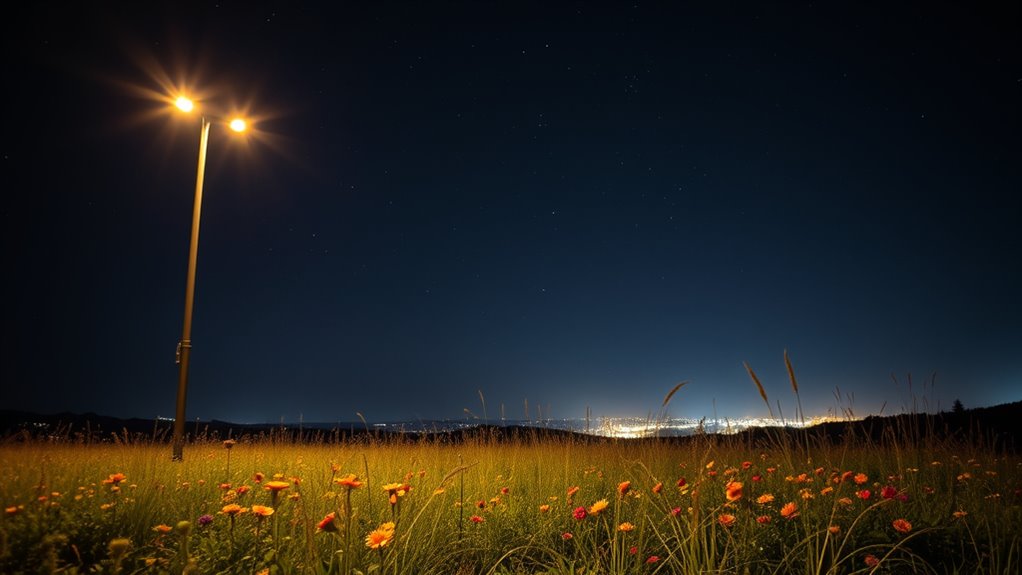
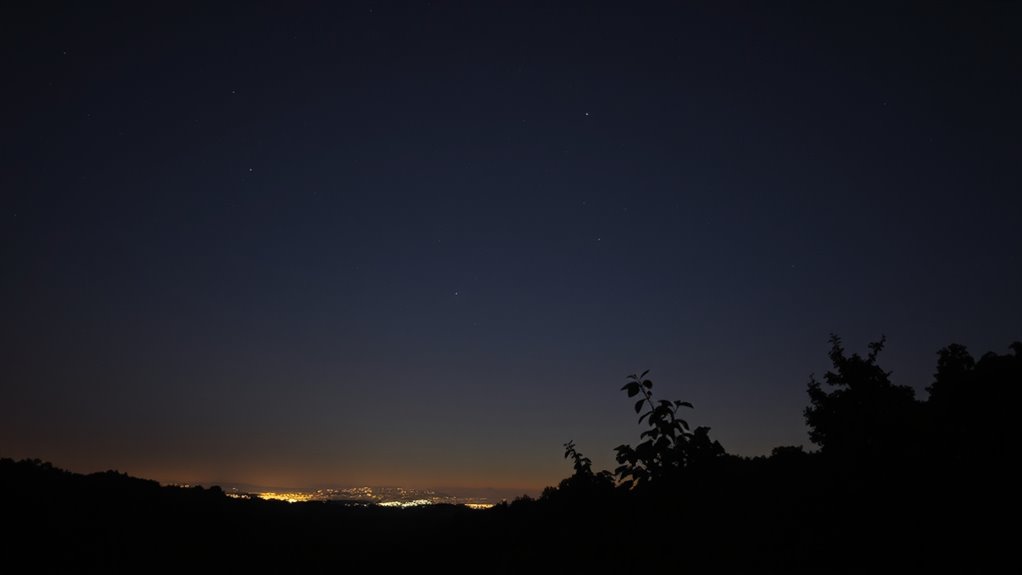
Light pollution dims our night sky and disrupts ecosystems, but you can make a difference. One of the most noticeable sources of this pollution is urban lighting. Cities often install bright, unshielded lights to illuminate streets, buildings, and public spaces, which contributes considerably to skyglow—the luminous halo that spreads over urban areas and extends into the night sky. This excess light doesn’t just obscure stars; it interferes with the natural behaviors of nocturnal wildlife, including insects, birds, and mammals. To combat this, focusing on effective skyglow mitigation strategies becomes essential. By reducing unnecessary artificial lighting and directing light downward, you can help restore darker skies and protect the creatures that depend on natural darkness for survival.
Implementing smarter urban lighting is a practical step you can take. Choose fixtures with fully shielded designs that prevent light from spilling sideways and upwards. This not only minimizes light pollution but also conserves energy, lowering costs and reducing greenhouse gas emissions. When designing or modifying outdoor lighting, prioritize warm-colored bulbs, as they produce less scatter and are less disruptive to wildlife and human health. Adjustable lighting controls, such as timers and motion sensors, also play a crucial role by ensuring lights are only on when needed, preventing wasteful over-illumination. These measures are straightforward but highly effective in mitigating skyglow and reducing overall light pollution in your community.
Skyglow mitigation isn’t solely about individual choices; it involves advocating for policies that promote responsible urban lighting. You can support local ordinances that require shielded fixtures and enforce curfews on unnecessary exterior lighting. Participating in community efforts to educate neighbors and businesses about the impacts of excessive lighting can lead to collective action that benefits everyone. When you push for regulations that limit light trespass and skyglow, you help create a healthier environment for nocturnal species and preserve the beauty of the night sky for future generations.
Ultimately, reducing light pollution through thoughtful urban lighting practices and skyglow mitigation efforts empowers you to make a tangible difference. Every step counts—from choosing darker sky-friendly fixtures to supporting policies that prioritize dark skies. By taking these actions, you contribute to protecting ecosystems, enhancing human health, and maintaining the natural wonder of a star-filled night. Your commitment to responsible lighting can inspire others to follow suit, creating a ripple effect that helps restore darkness to our nights and benefits all living beings that depend on it. Incorporating light pollution awareness into community planning can further amplify these efforts and foster widespread change.
fully shielded outdoor light fixtures
As an affiliate, we earn on qualifying purchases.
As an affiliate, we earn on qualifying purchases.
Frequently Asked Questions
How Does Light Pollution Affect Human Health?
Light pollution effects your health by causing circadian disruption, which messes with your sleep-wake cycle. When artificial light is excessive or poorly timed, it can make it harder for you to fall asleep and stay asleep, leading to fatigue and stress. Over time, this disruption increases your risk of health issues like depression, obesity, and weakened immunity. Reducing light pollution helps you maintain better sleep patterns and overall well-being.
What Are Cost-Effective Methods to Reduce Outdoor Lighting?
Reducing outdoor lighting costs is easier than you think—you can cut expenses like slicing through butter. Use energy-efficient fixtures to lower energy bills and invest in smart lighting controls, which turn lights off when not needed. These solutions are budget-friendly and highly effective, helping you save money while protecting the environment. Implementing them is a small step with a huge impact, making your outdoor lighting smarter and more sustainable.
Can Reducing Light Pollution Benefit Local Ecosystems?
Yes, reducing light pollution benefits local ecosystems by supporting wildlife migration and preserving nocturnal habitats. When you minimize unnecessary outdoor lighting, you help nocturnal animals navigate better and prevent disorientation. This reduction also allows ecosystems to function naturally, maintaining biodiversity and ecological balance. Your efforts in controlling light pollution create a healthier environment for all species, ensuring that wildlife can thrive and migrate without artificial barriers.
Are There Specific Regulations for Outdoor Lighting in My Area?
You should check if your local government has municipal ordinances or lighting standards that regulate outdoor lighting. Many areas implement these rules to reduce light pollution, improve safety, and protect wildlife. Contact your city or county office, visit their website, or speak with local officials to find out about specific regulations. Following these guidelines guarantees your outdoor lighting is compliant and helps support healthy ecosystems.
How Can Individuals Contribute to Reducing Light Pollution?
You can contribute to reducing light pollution by using outdoor lighting wisely, such as installing fixtures that direct light downward and using lower-intensity bulbs. Support urban planning efforts that prioritize dark-sky initiatives and advocate for technological innovations like smart lighting systems. By making these changes, you help protect beneficial insects and wildlife, promote energy efficiency, and create a healthier environment for everyone. Your actions make a meaningful difference.
As an affiliate, we earn on qualifying purchases.
Conclusion
By making small adjustments to your outdoor lighting, you help create a brighter future for beneficial insects and wildlife. When you dim or shield your lights, you’re softly guiding nature back to its natural rhythm, allowing beneficials to thrive without the harsh glare of excessive illumination. Together, these gentle changes brighten the night in a way that benefits everyone—helping the environment and making your outdoor space more peaceful and inviting for all living things.
As an affiliate, we earn on qualifying purchases.
As an affiliate, we earn on qualifying purchases.