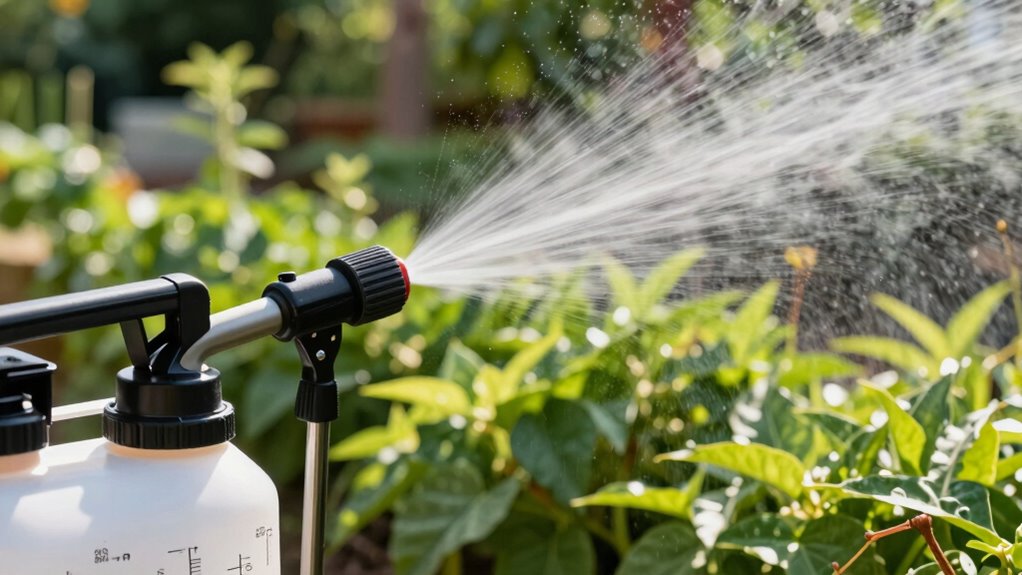

To master sprayer PSI, flow rate, and coverage, you need to understand how adjustments influence your application. Increasing PSI widens the spray, but too high can cause drift and waste. The flow rate controls how much liquid is delivered per minute, impacting coverage consistency. Proper calibration and steady pressure guarantee even application and prevent issues like streaking. Keep these points in mind, and you’ll find it easier to achieve efficient, uniform spraying—more tips ahead.

Get garden gear delivered free — and shop member deals
- Fast, free delivery on millions of items
- Access to Prime Big Deal Days deals on October 6–7
- Prime Video, Amazon Music and more included
Key Takeaways
- Proper PSI, flow rate, and technique ensure uniform coverage and prevent waste or overspray.
- Adjust flow control and pressure based on area size and liquid type for optimal results.
- Regular calibration maintains consistent spray pattern and coverage quality.
- Higher PSI increases coverage width but may cause drift; lower PSI offers more control.
- Consistent equipment maintenance prevents malfunction-related uneven application.
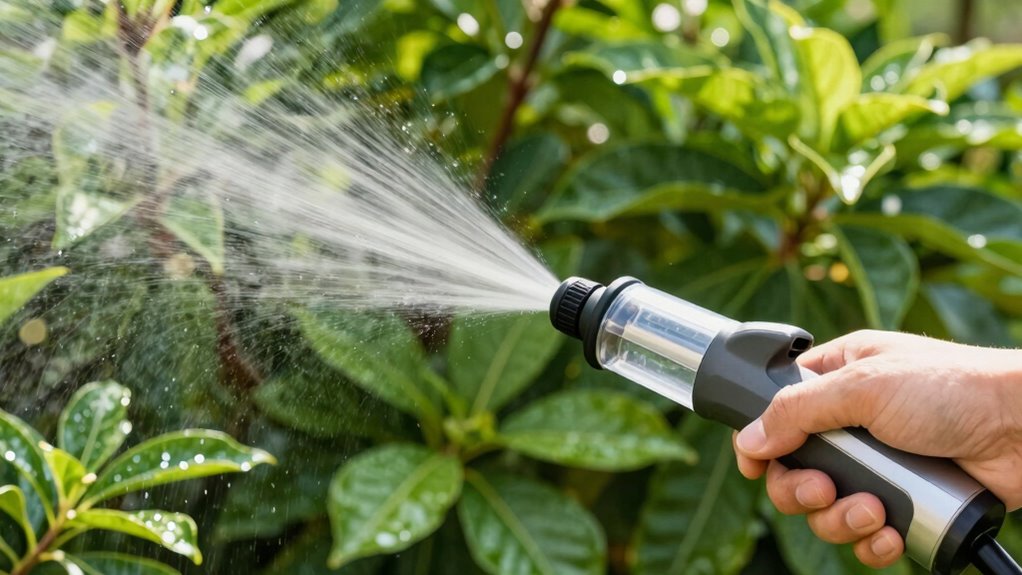
Understanding how sprayer PSI, flow rate, and coverage interact is essential for achieving efficient and effective application of liquids, whether you’re spraying pesticides, fertilizers, or paint. If you don’t get these elements right, you risk wasting product, damaging plants, or creating unsafe conditions. To keep your sprayer performing well, you need to prioritize regular sprayer maintenance. This means cleaning nozzles thoroughly, checking hoses for leaks, and ensuring all parts are functioning properly. Proper maintenance prevents clogs that can skew flow rates or cause uneven coverage, which diminishes the effectiveness of your application. It also extends the lifespan of your equipment, saving you money over time.
Regular maintenance ensures optimal sprayer performance, prevents clogs, and extends equipment lifespan for efficient application.
When adjusting your sprayer, understanding safety precautions is just as crucial as getting the technical settings right. Always wear appropriate protective gear, including gloves, goggles, and a mask if necessary, especially when handling chemicals. Make sure you’re working in a well-ventilated area to avoid inhaling fumes or overspray. Before starting, double-check your sprayer’s pressure settings—high PSI might seem efficient, but it can lead to drift or over-application, which can be hazardous. Always follow the manufacturer’s guidelines for safe operation, and never bypass safety features or ignore warning labels. Proper safety precautions reduce the risk of accidents and ensure you’re applying liquids safely and responsibly. Additionally, understanding sprayer pressure can help you avoid issues like overspray or equipment stress, as maintaining consistent pressure is key to uniform application. Maintaining proper equipment calibration is also vital to achieve consistent results and prevent wastage. Regularly inspecting your equipment helps to identify potential issues before they cause problems during application.
Getting the flow rate right is another key element. The flow rate determines how much liquid your sprayer delivers per minute, directly influencing coverage. If your flow rate is too high, you might waste product and cause runoff; too low, and coverage could be uneven or insufficient. To find the optimal flow rate, consider the size of the area you’re treating and the type of liquid you’re spraying. Adjust the flow control valve accordingly, and test spray on a small patch first. This helps you fine-tune the settings for precise application, saving you time and resources in the long run. Additionally, understanding sprayer flow rate can help you select the right equipment for specific tasks, ensuring efficiency and effectiveness. Regularly checking your flow rate during application helps maintain consistent coverage and prevents common issues like streaking or patchy areas. Using a flow meter can further improve accuracy and consistency in your spraying process. Furthermore, a well-maintained sprayer with calibrated settings ensures that you’re applying liquids at the correct pressure and flow, leading to better results.
Coverage is the ultimate goal, and it hinges on balancing PSI, flow rate, and your spraying technique. A higher PSI can increase coverage width but might cause drift or overspray, especially in windy conditions. Conversely, lower PSI offers better control but might require multiple passes. Keep in mind that consistent coverage depends on maintaining steady pressure and flow during spraying. Regularly check and calibrate your equipment to ensure uniform application. When you combine good sprayer maintenance, strict safety precautions, and proper adjustments, you’ll master the trio that guarantees efficient, safe, and effective spraying every time.
garden sprayer with adjustable PSI
As an affiliate, we earn on qualifying purchases.
As an affiliate, we earn on qualifying purchases.
Frequently Asked Questions
How Do I Choose the Right Sprayer for My Garden Size?
To pick the right sprayer for your garden size, consider the sprayer types suited for your needs—handheld for small gardens, backpack for medium, and wheeled for larger areas. Focus on nozzle selection to control spray pattern and coverage effectively. For small gardens, a handheld with adjustable nozzles works well, while larger gardens benefit from a wheeled sprayer with a broad spray pattern. Match the sprayer to your garden to guarantee efficient, even coverage.
What Safety Precautions Should I Take When Using a Sprayer?
When using a sprayer, you should always wear protective gear like gloves, goggles, and a mask to avoid chemical exposure. Make sure to handle chemicals carefully, storing them in labeled, secure containers away from children and pets. Before starting, read the label instructions thoroughly. After use, clean your sprayer properly and store chemicals safely. These precautions help protect your health and prevent accidents during gardening.
How Often Should I Clean My Sprayer to Maintain Performance?
Think of your sprayer as a trusted garden partner that needs regular care. You should clean it after every use to prevent clogs and buildup. Follow a consistent cleaning schedule, especially if you switch between chemicals. Maintenance tips include rinsing thoroughly, checking for damage, and lubricating moving parts. By doing so, you guarantee peak performance and extend your sprayer’s lifespan, making every gardening session smoother and more effective.
Can I Use the Same Sprayer for Different Chemicals?
You shouldn’t use the same sprayer for different chemicals without checking chemical compatibility first. Some chemicals can corrode or damage your sprayer’s components, leading to poor performance. Always clean your sprayer thoroughly between uses, and select the right nozzle for each chemical to guarantee proper application. This prevents cross-contamination and ensures safety, effectiveness, and longevity of your equipment. Always follow label instructions for best results.
What Are Signs of a Sprayer Malfunction or Damage?
A stitch in time saves nine—so watch for signs of sprayer malfunction. If you notice leaks or inconsistent spray patterns, it’s a red flag. Sprayer leaks often indicate worn seals or cracks, while pump failure can cause poor pressure and no spray. Regularly inspect your equipment, and don’t overlook these signs. Address issues promptly to avoid damage and guarantee your sprayer works efficiently when you need it most.
chemical spray nozzle calibration kit
As an affiliate, we earn on qualifying purchases.
As an affiliate, we earn on qualifying purchases.
Conclusion
Understanding sprayer PSI, flow rate, and coverage isn’t just technical; it’s vital for effective gardening. Did you know that incorrect settings can waste up to 30% of your product? By mastering these three factors, you’ll guarantee your plants get the right amount of treatment without overspending or causing damage. Keep experimenting with your sprayer, and soon, you’ll see healthier, more vibrant gardens with less waste and effort.
garden sprayer flow rate control
As an affiliate, we earn on qualifying purchases.
As an affiliate, we earn on qualifying purchases.
As an affiliate, we earn on qualifying purchases.
Fall Picks
fall essentials
As an affiliate, we earn on qualifying purchases.