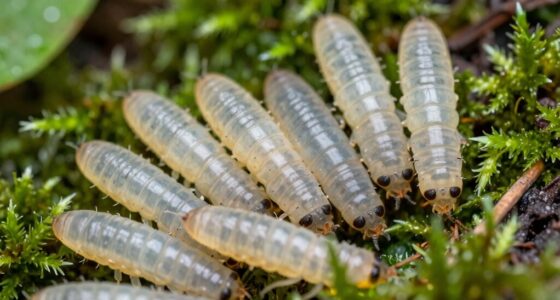

To recognize parasitized pests in the field, look for physical signs like swollen or deformed bodies and unusual color patterns. Check for tiny exit holes or darkened areas where parasites have emerged. Behaviorally, parasitized pests may move sluggishly or cluster abnormally. Using hand lenses, microscopes, or dissection can help confirm internal parasitism. Spotting these signs early can improve your pest management strategies—keep going to discover more about these helpful indicators.
Key Takeaways
- Look for swollen, deformed, or discolored pest bodies indicating internal parasitism.
- Observe behavioral changes such as sluggishness, clustering, or reduced activity.
- Use magnification tools to detect small exit holes or darkened areas on pests.
- Dissect pests to confirm the presence of developing parasitoid larvae or pupae inside.
- Monitor pests for signs like abnormal movement patterns or altered feeding behaviors.
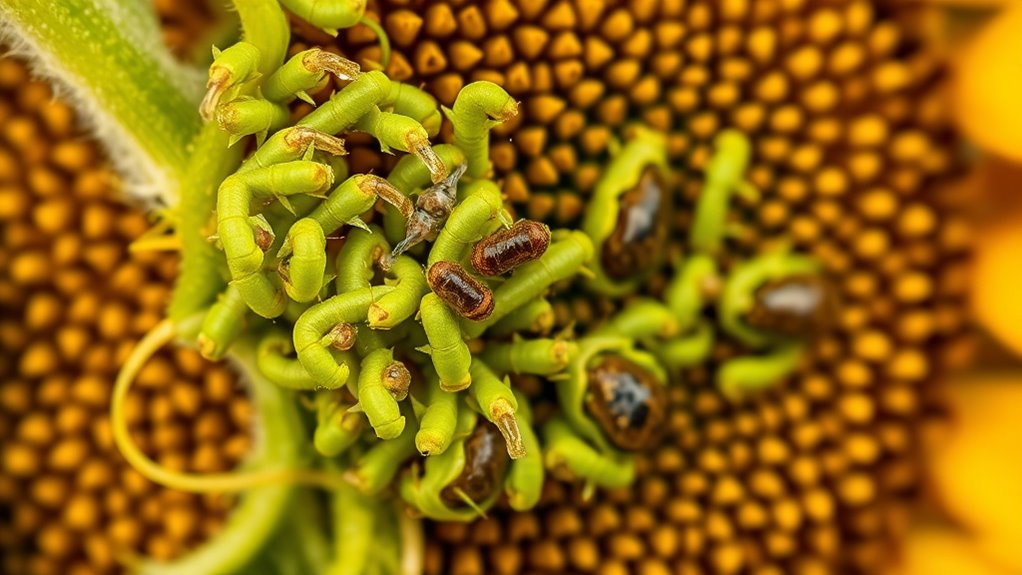
Have you ever wondered how to tell if a pest has been parasitized? Recognizing parasitized pests is essential for effective pest management, especially if you’re considering biological control strategies. Parasitized pests often show subtle signs, but with careful observation and proper pest identification techniques, you can identify these signs and make informed decisions. Biological control relies heavily on understanding the natural enemies of pests, such as parasitic wasps or flies, which lay their eggs inside or on pest hosts. When these parasites develop, they can alter the appearance and behavior of the host, signaling their presence.
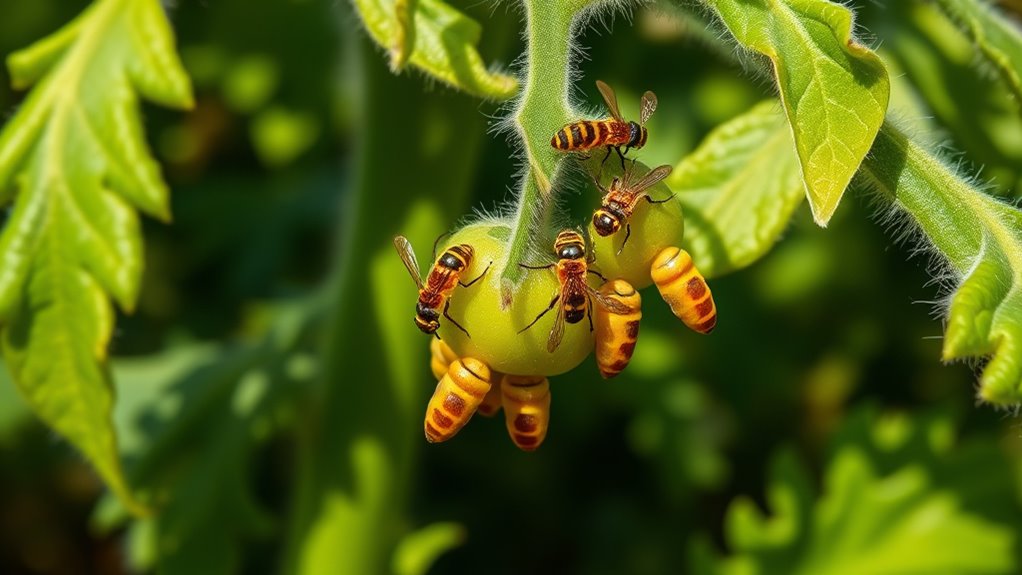
One of the key pest identification techniques involves closely inspecting pests for physical changes. For instance, parasitized insects may appear swollen, deformed, or exhibit unusual color patterns. You might notice a pest with a swollen abdomen, which could indicate that parasitoid larvae are developing inside. In some cases, you could see small exit holes or darkened areas where the parasite has emerged. These visual cues are often subtle but become more apparent with experience and careful examination.
Inspect pests for swelling, deformities, exit holes, or darkened areas indicating parasitism.
Another effective method is observing behavioral changes. Parasitized pests might become sluggish, less active, or even exhibit abnormal movement patterns. They may also cluster in specific areas or show signs of impaired mobility, which can be a result of internal parasitism. Monitoring these behavioral signs alongside physical symptoms helps refine pest identification techniques and confirms parasitism.
To enhance your detection skills, it’s useful to familiarize yourself with the typical life cycles of common parasitoids. Knowing what to look for at each stage of development can help you determine whether a pest is parasitized. For example, some wasps lay eggs inside caterpillars, and the internal development of larvae can be confirmed through dissection or magnification. Using tools like hand lenses or microscopes can improve your ability to spot minute details that indicate parasitism. Additionally, understanding the vetted products and techniques for pest identification can increase your confidence in managing pest populations effectively.
Incorporating biological control into your pest management plan hinges on accurately identifying parasitized pests. Recognizing these signs early allows you to assess the effectiveness of natural enemies and decide if supplementary actions are needed. By honing your pest identification techniques and understanding the signs of parasitism, you can support sustainable pest control efforts that reduce reliance on chemical pesticides. Ultimately, the more skilled you become at detecting parasitized pests, the better you can manage outbreaks naturally and maintain the health of your crops or garden.
hand lens for pest identification
As an affiliate, we earn on qualifying purchases.
As an affiliate, we earn on qualifying purchases.
Frequently Asked Questions
How Can Parasitized Pests Be Distinguished From Healthy Ones Visually?
You can distinguish parasitized pests from healthy ones by observing visual cues like coloration patterns and physical changes. Parasitized pests often show deformed bodies, abnormal coloration, or duller hues compared to healthy insects. Look for signs like swollen abdomens or discoloration, which indicate parasitism. These visual cues help you identify and target parasitized pests effectively, ensuring better management and control in your field.
Are There Specific Signs of Parasitism in Different Pest Species?
Yes, there are specific parasitism markers across pest species that you can identify. Look for changes in the pest’s appearance or behavior, such as abnormal growth or dead, mummified bodies. These markers often appear during different stages of the pest life cycle. Recognizing these signs helps you determine parasitism, enabling targeted management. Keep observing pest stages closely to spot these subtle, yet telling, parasitism indicators.
What Tools or Techniques Are Best for Detecting Parasitized Pests in the Field?
A picture is worth a thousand words, so using biological sampling and trap monitoring is your best bet for detecting parasitized pests. You can identify parasitism by examining traps for specific signs or collecting pests for closer inspection. These tools help you spot subtle differences, revealing parasitized individuals early. Regular monitoring and careful sampling make certain you catch parasitism in time, giving you a fighting chance to manage pests effectively.
How Does Parasitism Affect the Pest’s Behavior and Appearance?
Parasitism alters pest behavior and appearance markedly. You’ll notice parasitized pests often exhibit abnormal or sluggish behavior, such as reduced movement or feeding. Physically, they may show distinct changes like swollen or discolored abdomens, and sometimes visible parasitoid larvae or pupae. These physical changes and parasitized behavior help you identify parasitized pests, indicating they’re affected by natural enemies and may be less of a threat to crops.
Can Parasitized Pests Still Cause Damage Before They Die?
Yes, parasitized pests can still cause damage before they die. During biological control efforts, you might notice these pests still feeding and damaging crops, even as the parasitism progresses. This means you should continue monitoring and manage pest populations carefully to prevent crop losses. Parasitized pests are part of integrated pest management, helping reduce reliance on chemical controls and promoting sustainable pest management strategies.
microscope for insect examination
As an affiliate, we earn on qualifying purchases.
As an affiliate, we earn on qualifying purchases.
Conclusion
By learning to identify parasitized pests quickly, you can make smarter decisions in your pest management efforts. Did you know that parasitized pests are often 30% less likely to cause damage compared to untreated pests? Recognizing those telltale signs helps you save crops and reduce pesticide use. Keep an eye out for the subtle changes, and you’ll become a more effective, eco-friendly pest manager. Your vigilance can truly make a difference!
As an affiliate, we earn on qualifying purchases.
biological pest control products
As an affiliate, we earn on qualifying purchases.
As an affiliate, we earn on qualifying purchases.