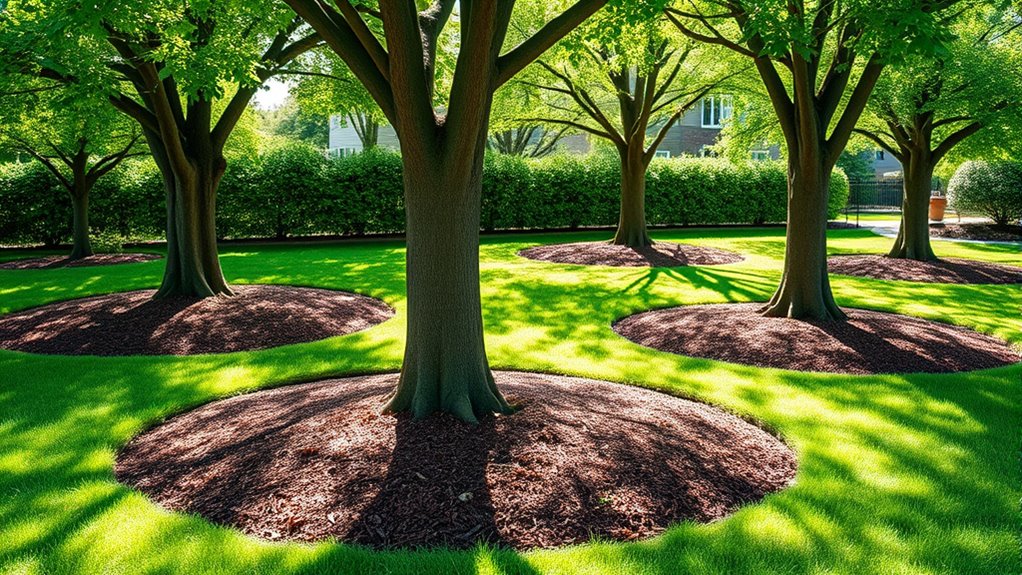
When installing mulch rings around your trees, do keep the mulch 2-4 inches deep, and avoid piling it against the trunk to prevent rot. Use organic mulch like wood chips or shredded leaves for added soil benefits. Don’t over-mulch or cover the roots too tightly, and guarantee the mulch stays a few inches away from the tree trunk. Proper application and maintenance prevent issues and promote healthy growth—keep these tips in mind to learn more.

Get garden gear delivered free — and shop member deals
- Fast, free delivery on millions of items
- Access to Prime Big Deal Days deals on October 6–7
- Prime Video, Amazon Music and more included
Key Takeaways
- Keep mulch 2-4 inches thick and away from the trunk to prevent rot and suffocation.
- Use organic mulch like wood chips or bark to improve soil health around the tree.
- Avoid piling mulch directly against bark; leave a few inches of space to prevent decay.
- Regularly refresh mulch every 1-2 years and avoid over-mulching to prevent root stress.
- Maintain a clear, weed-free zone within the mulch ring to promote healthy root development.
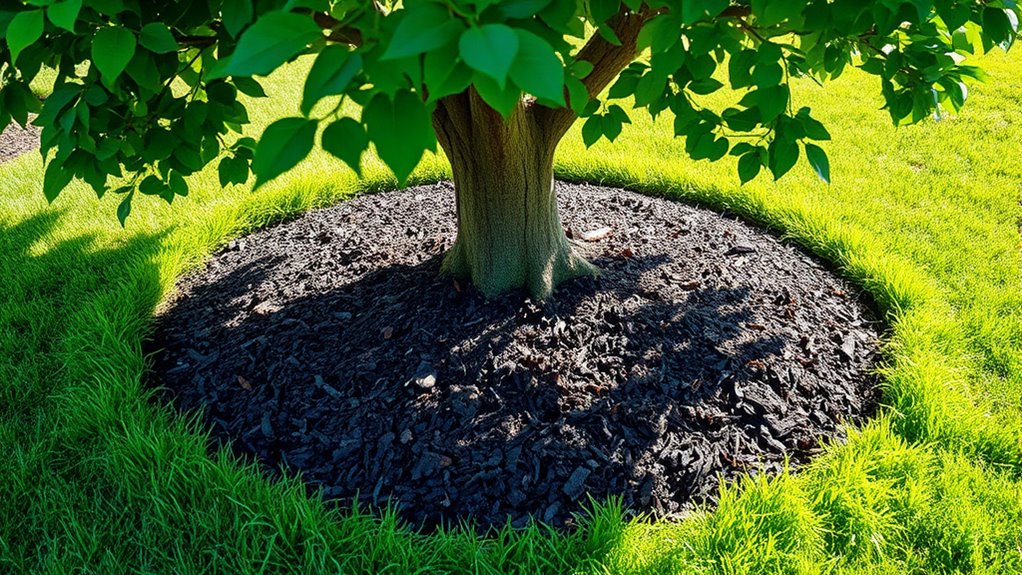
Mulch rings around trees are an effective way to protect roots, conserve moisture, and reduce weeds. When setting up your mulch ring, it’s important to consider your watering practices to ensure your tree stays healthy. Proper watering helps the mulch do its job by preventing the soil from drying out completely. Water deeply and infrequently, allowing the moisture to penetrate the mulch and reach the roots. Avoid overwatering, as this can lead to root rot, especially if the mulch retains too much moisture. Establishing a consistent watering schedule around your mulch ring helps maintain the right moisture levels, encouraging healthy root growth.
Choosing the right mulch types is crucial for the success of your mulch ring. Organic mulches like wood chips, bark, straw, or shredded leaves are popular because they break down over time, enriching the soil with nutrients. In contrast, inorganic options like rubber or plastic are less beneficial for soil health but might be suitable for specific aesthetic or weed control purposes. Organic mulches also help regulate soil temperature and suppress weeds, but be cautious not to layer too thickly—around 2 to 4 inches is ideal. A thicker layer can suffocate roots or prevent water from reaching the soil effectively. Additionally, avoid piling mulch directly against the tree trunk; instead, maintain a clear space of a few inches to prevent moisture buildup against the bark, which can cause decay or disease.
When applying your mulch, keep in mind that different mulch types have different maintenance needs. Wood-based mulches can decompose faster, requiring occasional replenishment, especially in high-traffic or windy areas. Mulch should be refreshed before it decomposes fully, typically every one to two years. Also, steer clear of using fresh, unaged wood chips or bark, as they can temporarily deplete nitrogen in the soil as they break down. If you choose inorganic mulch, remember it doesn’t require replenishing as often but doesn’t improve soil fertility either.
As an affiliate, we earn on qualifying purchases.
Frequently Asked Questions
How Deep Should Mulch Be Within the Ring?
You should keep the mulch depth around 2 to 4 inches within the ring. Too deep, and it can suffocate roots or cause rot; too shallow, and it won’t protect the planting space effectively. Spread mulch evenly, maintaining this depth, and leave a small gap near the tree trunk to prevent moisture buildup. This ensures healthy growth and proper moisture retention for your tree’s roots.
Can Mulch Rings Prevent All Weed Growth?
Mulch rings help with weed suppression, but they can’t prevent all weed growth. While they block sunlight and reduce weeds, some persistent weeds might still emerge through gaps or cracks. Using an appropriate mulch depth maintains soil moisture, which benefits your tree, but also encourages weed growth if not monitored. Regular maintenance, like pulling weeds and replenishing mulch, ensures your mulch ring remains effective in controlling unwanted plants.
Is Rubber Mulch Suitable for Tree Rings?
Rubber mulch is suitable for tree rings, but you should consider its impact on tree health. It doesn’t decompose like organic mulches, which can hinder water and nutrient absorption. You might want to use it sparingly or combine it with organic mulch to promote better tree health. While rubber mulch lasts longer, make certain you regularly check for proper drainage and avoid excessive heat buildup that could damage roots.
How Often Should I Replenish Mulch Around Trees?
You should replenish mulch around your trees once or twice a year, depending on the mulch type and its consistency. Keep the mulch layer about 2-4 inches deep to maintain effectiveness. Check regularly for compaction or erosion, and add fresh mulch as needed to guarantee proper moisture retention and weed control. Using appropriate mulch types like organic mulch helps promote healthy growth, so stay attentive to the mulch’s condition and replenish accordingly.
Are There Specific Mulch Types Better for Certain Trees?
Yes, certain mulch types suit specific trees better. For example, cedar mulch’s natural repellents work well for oak trees, while pine mulch’s acidity benefits acid-loving plants like azaleas. Choose mulch color and placement carefully; dark mulch retains heat, so avoid it for cold-sensitive trees. Keep mulch a few inches away from the trunk, ensuring proper mulch placement to promote healthy growth and prevent pests.
As an affiliate, we earn on qualifying purchases.
Conclusion
Remember, creating mulch rings around your trees is like giving them a cozy blanket—protecting roots and conserving moisture. When I first mulched my apple tree, I noticed it thrived, much like a child feeling warm and secure. Just keep the mulch a few inches away from the trunk, and you’ll foster healthy growth. Think of your mulch ring as a shield, helping your tree flourish for years to come.
As an affiliate, we earn on qualifying purchases.
As an affiliate, we earn on qualifying purchases.
Halloween Picks
halloween
As an affiliate, we earn on qualifying purchases.