To calibrate your backpack sprayer, start by reviewing the manufacturer’s instructions and verifying your equipment is clean and in good condition. Adjust the nozzle, flow rate, and pressure to match the desired application rate. Wear protective gear and work in a well-ventilated area for safety. Regular maintenance and proper calibration help you apply chemicals accurately, prevent waste, and ensure safety. Keep going for detailed steps to master the process effectively.

Get garden gear delivered free with Prime
- Fast, free delivery on millions of items
- Prime Video, Amazon Music and more included
- Member-only deals all year
Key Takeaways
- Read and understand the sprayer’s operational and calibration instructions before beginning.
- Adjust flow rate, pressure, and nozzle settings to match the desired application rate.
- Use a measuring container to determine the spray volume over a known area for accuracy.
- Perform calibration outdoors or in well-ventilated areas, wearing protective gear.
- Regularly inspect and clean nozzles, hoses, and seals to ensure consistent spray and avoid malfunctions.
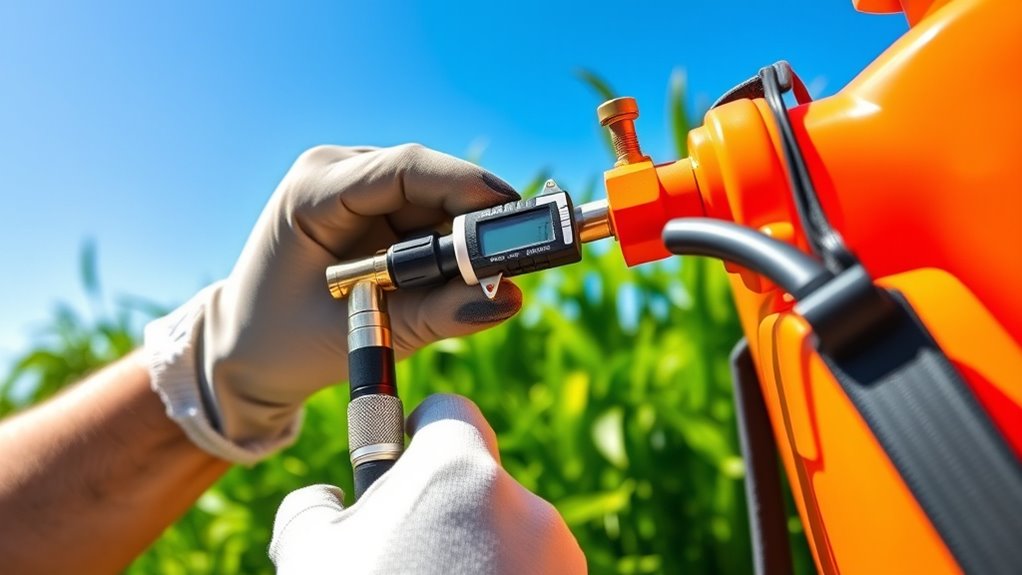
Calibrating a backpack sprayer guarantees you apply the right amount of liquid to your target area, preventing waste and ensuring effective results. Proper calibration not only saves you money but also maximizes the effectiveness of your application. To achieve this, you need to focus on sprayer maintenance and safety precautions. Regularly maintaining your sprayer ensures it functions correctly and delivers consistent results. Check hoses, nozzles, and seals for leaks or clogs before starting. Clean the tank thoroughly to prevent buildup that could affect spray accuracy. Inspect the nozzle to make sure it’s not damaged or worn, as a faulty nozzle can alter spray patterns and volume. Keeping your equipment in top shape makes calibration more precise and reduces the risk of malfunction during application. Quality assessment of your equipment plays a key role in achieving accurate calibration.
Safety precautions are essential when calibrating your backpack sprayer to avoid accidents or exposure to chemicals. Wear protective gear such as gloves, goggles, and a mask to shield yourself from harmful substances. Work in a well-ventilated area or outdoors to prevent inhaling fumes. Always read the label on your pesticide or liquid fertilizer to follow the recommended safety protocols. Handling chemicals carefully reduces health risks and ensures you don’t contaminate unintended areas. Before calibrating, make sure you understand the sprayer’s operational instructions. Familiarize yourself with how to measure and adjust the flow rate, pressure, and nozzle settings. This preparation helps you work efficiently and safely.
backpack sprayer calibration kit
As an affiliate, we earn on qualifying purchases.
As an affiliate, we earn on qualifying purchases.
Frequently Asked Questions
How Often Should I Calibrate My Backpack Sprayer?
You should calibrate your backpack sprayer at least once a season or whenever you notice uneven spray patterns. Regular sprayer maintenance and following a proper calibration schedule help guarantee accurate application and efficient use of chemicals. If you change products or nozzle sizes, recalibrate more frequently. Consistent calibration not only saves money but also protects your crops and the environment by preventing over-application.
What Are Signs of Incorrect Calibration?
If your backpack sprayer is applying unevenly or the spray pattern looks irregular, you’re likely experiencing calibration errors. For example, a gardener noticed her weeds weren’t treated evenly, leading to ineffective control. Signs of incorrect calibration include inconsistent application rates, over- or under-application, and noticeable spray pattern issues. These problems often result from calibration errors, causing inconsistent application and compromising treatment efficiency. Regular checks help prevent these issues.
Can Calibration Improve Spray Coverage?
Yes, calibration can improve your spray coverage by ensuring the spray pattern is even and consistent. When you calibrate your sprayer, you can select the right nozzle, which affects droplet size and coverage area. Proper calibration helps you adjust the nozzle selection and pressure settings, leading to better control over spray distribution. This results in more effective pest or weed control and reduces waste, saving you time and money.
Is Calibration Necessary for All Types of Pesticides?
You should calibrate your sprayer for all types of pesticides to guarantee safe and effective application. Proper calibration considers pesticide toxicity, helping you avoid over-application that can harm plants, humans, or the environment. Regular sprayer maintenance, including calibration, guarantees uniform coverage and prevents clogging or leaks. By calibrating, you optimize pesticide use, reduce waste, and minimize risks associated with varying pesticide formulations and toxicity levels.
What Tools Are Needed for Calibration?
You’ll need a few simple tools for calibration—think of them as your secret weapons in sprayer maintenance. A measuring cup or graduated cylinder helps you track output accurately, while a scale guarantees proper chemical amounts. A timer keeps your calibration techniques precise, and a pressure gauge ensures consistent spray pressure. These tools make sure your backpack sprayer performs perfectly, preventing waste and ensuring effective, even coverage every time.
garden sprayer nozzle adjustment tool
As an affiliate, we earn on qualifying purchases.
As an affiliate, we earn on qualifying purchases.
Conclusion
Once you’ve calibrated your backpack sprayer, you’ll find it as reliable as a trusted compass, guiding you to precise and efficient application. Proper calibration guarantees you use the right amount of solution, saving you time, money, and effort. Remember, consistent calibration is like tuning a fine instrument—it keeps everything working smoothly. With this knowledge, you’re now ready to tackle any spraying task confidently and accurately.
chemical application measuring container
As an affiliate, we earn on qualifying purchases.
As an affiliate, we earn on qualifying purchases.
garden sprayer maintenance tools
As an affiliate, we earn on qualifying purchases.
As an affiliate, we earn on qualifying purchases.
Halloween Picks
halloween
As an affiliate, we earn on qualifying purchases.