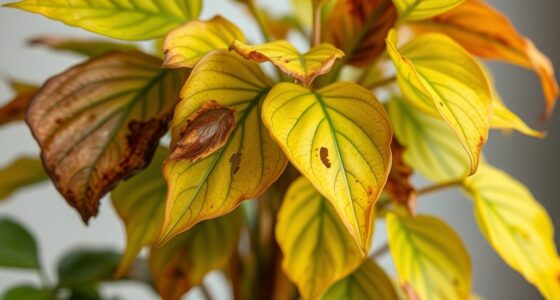
Leafminers tunnel inside leaves, making winding, translucent trails that often appear on the underside, and may cause curling or leaf drop. Fungal leaf spots form static, usually circular or irregular lesions with defined edges, sometimes fuzzy or powdery in texture. To tell them apart, look for tunneling versus clearly defined spots. Recognizing these differences helps you choose effective treatments; keep going to uncover more tips on managing these issues confidently.
Key Takeaways
- Leafminers create serpentine, transparent tunnels beneath leaves, while fungal spots appear as static, defined lesions on the leaf surface.
- Leafminer damage results in leaf distortion and curling; fungal spots cause discoloration and necrosis without tunneling.
- Leafminer presence can be identified by winding trails and adult flies; fungal spots are recognized by fuzzy or powdery lesions.
- Managing leafminers involves insecticides and biological predators; fungal spots require fungicides and removing infected debris.
- Proper diagnosis ensures targeted treatment, preventing further plant damage from either pest or disease.
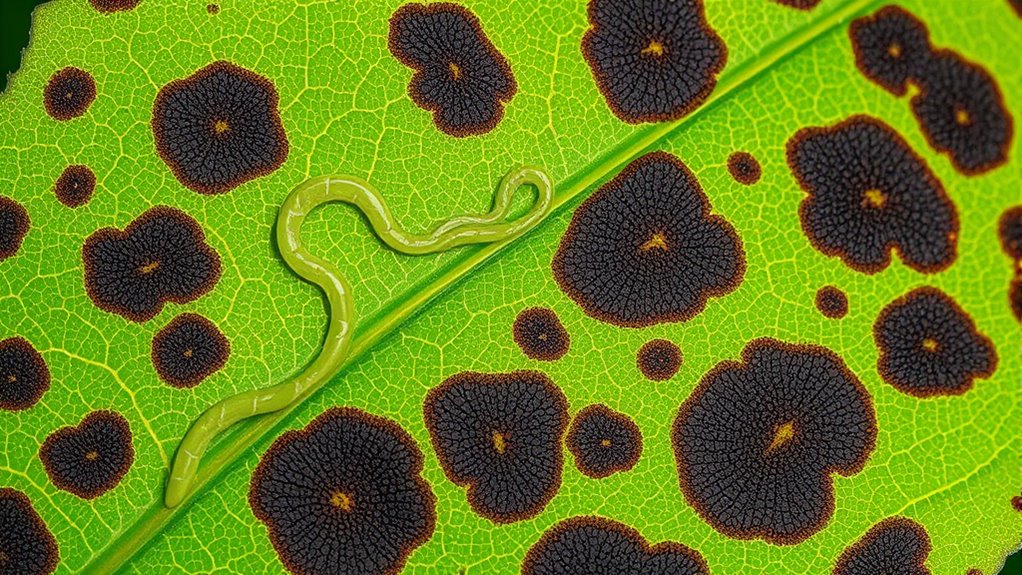
When your plants show signs of damage, it can be tricky to tell whether leafminers or fungal leaf spots are to blame. Both issues can cause unsightly foliage and weaken your plants, but understanding their differences is essential for effective pest management. Leafminers are insect larvae that tunnel between leaf surfaces, creating winding, translucent trails that often look like scribbles or blotches. Fungal leaf spots, on the other hand, are caused by pathogenic fungi that produce distinct, often round or irregularly shaped lesions with defined borders and sometimes fuzzy or powdery textures. Recognizing these differences helps you decide whether to target pests or fungi with the appropriate treatment. Regular monitoring and identification are crucial for effective plant health management.
In pest management, identifying leafminers involves observing their characteristic signs. You might notice tiny, serpentine tunnels on the underside of leaves, often accompanied by small, discolored patches. These tunnels can cause leaves to curl, distort, or drop prematurely. You may also see adult leafminer flies fluttering around your plants, which indicates active infestation. Effective pest management for leafminers typically includes removing and destroying heavily infested leaves, applying insecticidal treatments specifically labeled for leafminer control, and encouraging natural predators like parasitic wasps. Since leafminers spend part of their lifecycle inside the leaf tissue, systemic insecticides may provide better control, but always follow label instructions to minimize environmental impact.
Plant pathology, on the other hand, focuses on fungal leaf spots. To distinguish these, look for spots that are often round, with well-defined edges, and may be yellow, brown, black, or gray. Unlike leafminer tunnels, fungal spots tend to be static and don’t create the winding trails associated with insect larvae. They can appear as small specks that enlarge over time, sometimes merging into larger blotches. Fungal infections thrive in humid, wet conditions, so improving air circulation and avoiding overhead watering can help prevent their spread. When treating fungal leaf spots, fungicides are often necessary, along with removing fallen infected leaves to break the disease cycle. Proper plant sanitation and crop rotation are also key components of plant pathology strategies to minimize future outbreaks.
Understanding the differences between leafminers and fungal leaf spots empowers you to implement targeted solutions. Accurate diagnosis is vital because mistaking one for the other can lead to ineffective treatments and further damage. Monitoring your plants regularly, paying attention to specific symptoms, and applying appropriate pest management or plant pathology techniques will keep your garden healthier and more resilient. Whether it’s controlling insect larvae tunneling through leaves or combating fungal pathogens, addressing these issues promptly and correctly ensures vigorous, vibrant plants that can better withstand future challenges.
Frequently Asked Questions
How Can I Prevent Leafminer Infestations Effectively?
To prevent leafminer infestations, you should practice good cultural habits like removing affected leaves and avoiding over-fertilizing, which attracts pests. Biological control options, such as introducing natural predators like parasitic wasps, can also help keep populations down. Regularly inspect your plants for early signs of infestation, and take prompt action to disrupt their life cycle before damage becomes severe.
Are Fungal Leaf Spots Contagious to Other Plants?
Think of fungal leaf spots like a cold in a crowded room; they can spread easily if you’re not careful. Yes, fungal leaf spots are contagious to other plants through spores, especially when plant immunity is weak. Disease transmission happens via wind, water, or contact. You can protect your plants by removing infected leaves promptly and maintaining good airflow to reduce the risk of spreading.
What Are Natural Remedies for Treating Leafminers?
You can naturally treat leafminers by using biological control methods like introducing beneficial insects such as parasitic wasps that target leafminers. Additionally, applying neem oil acts as a natural insecticide, disrupting the pests’ life cycle. Spray neem oil on affected leaves, ensuring thorough coverage. Combining these methods effectively reduces leafminer populations without harming your plants or the environment, providing a safe, eco-friendly solution.
How Long Does It Take for Fungal Spots to Spread?
Fungal spots typically take about 7 to 14 days to spread noticeably, depending on environmental conditions like humidity and temperature. You’ll see the fungal progression start with small, dark spots that enlarge and merge over time. To slow this spread, guarantee good air circulation, avoid overhead watering, and remove infected leaves promptly. Staying vigilant helps prevent the fungus from rapidly covering your plant and causing more damage.
Can Leafminers Cause Long-Term Damage to Plants?
Yes, leafminers can cause long-term damage to your plants. By burrowing within leaves, they disrupt plant essentiality, weaken stems, and reduce overall growth. Their insect life cycles, if unchecked, lead to repeated infestations, compounding damage over time. You need to monitor their activity closely, control their populations early, and protect your plants’ health to prevent lasting harm. Ignoring leafminers risks diminishing your plants’ vigor and long-term productivity.
Conclusion
While both leafminers and fungal leaf spots may subtly alter your plant’s beauty, they each tell a different story. With gentle care and keen observation, you can guide your plants back to health, letting their natural charm shine through. Remember, every leaf has a story to tell—sometimes a little patience and understanding are all it takes to restore their vibrant tale. Embrace the journey, and your garden will flourish in time.