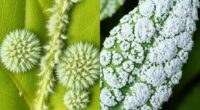
Powdery mildew thrives in warm, dry weather with high humidity, especially when air circulation is poor or plants are overcrowded. To manage it, you can use organic treatments like neem oil or potassium bicarbonate, remove infected parts, and improve airflow by spacing and pruning your plants. Monitoring early signs helps prevent widespread damage. Keep learning how combining resistant varieties with organic methods can give you long-term control of this common fungal problem.
Key Takeaways
- Powdery mildew appears as a white, powdery coating on leaves and stems, mainly during spring and fall in warm, dry, humid conditions.
- High humidity, poor air circulation, overcrowding, shading, and warm, dry weather promote fungal growth.
- Organic controls like neem oil, potassium bicarbonate, sulfur fungicides, and removing infected plant parts help manage early infections.
- Developing resistant plant varieties and maintaining garden hygiene (spacing, pruning, watering at the base) reduce infection risk.
- Regular monitoring and early intervention with organic methods, combined with resistant plants, provide sustainable long-term management.

Have you ever noticed a white, powdery coating on your plants’ leaves or stems? That’s a classic sign of powdery mildew, a common fungal disease that can quickly spread and weaken your plants if not managed promptly. Understanding how this fungus thrives and implementing effective control measures can save your garden. One key approach involves resistance breeding, which focuses on selecting or developing plant varieties naturally resistant to powdery mildew. This method offers a long-term solution by reducing the plant’s susceptibility, meaning you won’t need to rely as heavily on chemical treatments. Pairing resistant varieties with organic controls can give you a more sustainable and eco-friendly way to keep your plants healthy.
When conditions favor powdery mildew, you’ll notice it often appears in warm, dry weather with high humidity—especially during spring and fall. Poor air circulation, overcrowding, and shaded areas can also create ideal environments for the fungus to thrive. Once you spot the white, powdery growth, act quickly to prevent the disease from spreading further. Organic controls are particularly effective at managing early infections. These include applying neem oil, potassium bicarbonate, or sulfur-based fungicides, which are less toxic alternatives to synthetic chemicals. Regularly spraying affected plants with these solutions can disrupt the fungal growth and reduce its spread. Additionally, removing infected leaves and stems helps eliminate sources of spores, stopping the cycle before it can take hold again.
Prevention is always better than cure, and cultivating resistant plant varieties is one of the most effective strategies. Many horticultural companies now breed and offer plants with built-in resistance to powdery mildew, making it easier for gardeners to maintain healthy plants without heavy chemical use. When combined with organic controls, resistance breeding becomes a powerful tool in your disease management arsenal. Remember, maintaining good garden hygiene—such as proper spacing, pruning, and watering at the base of plants—further minimizes the risk of infection. It’s also essential to monitor your plants regularly so you can catch any signs of powdery mildew early, when organic controls are most effective.
organic neem oil for powdery mildew
As an affiliate, we earn on qualifying purchases.
As an affiliate, we earn on qualifying purchases.
Frequently Asked Questions
Can Powdery Mildew Affect Indoor Plants?
Yes, powdery mildew can affect indoor plants if conditions favor its growth. You should monitor indoor humidity levels, keeping them lower to prevent spores from thriving. Proper plant placement is vital—ensure good air circulation and avoid overcrowding. Regularly check your plants for early signs of mildew, and treat affected areas promptly. Maintaining ideal humidity and thoughtful placement helps keep your indoor plants healthy and free from powdery mildew.
Are There Organic Treatments for Powdery Mildew?
Yes, there are organic solutions for treating powdery mildew. You can use natural fungicides like neem oil, baking soda, or diluted apple cider vinegar to combat it effectively. These options are safe for your plants and environment. Apply them regularly, especially when you notice early signs of infection, to prevent spread. Organic treatments not only control powdery mildew but also promote healthy plant growth without harmful chemicals.
How Long Does It Take to See Results After Treatment?
Imagine applying an organic neem oil treatment today; most gardeners see visible improvement within 7 to 10 days. Treatment effectiveness varies, but you typically notice the fungal growth slowing down or disappearing after a week. Keep in mind, consistent application enhances results. If you stay diligent, you’ll soon observe clearer, healthier leaves, confirming your efforts are working. Patience and persistence are key to managing powdery mildew effectively.
Is Powdery Mildew Contagious Between Different Plant Species?
Yes, powdery mildew can spread between different plant species through cross species transmission. The pathogen’s adaptability allows it to infect various hosts, making it easier to move from one plant to another. You should be cautious, especially when plants are close together, and practice good sanitation to prevent spreading. Regularly inspect your plants and remove infected leaves to minimize the risk of cross species transmission.
Can Weather Forecasts Predict Powdery Mildew Outbreaks?
Weather forecasts can help predict powdery mildew outbreaks, as studies show that specific weather patterns increase risks by up to 80%. You should monitor these forecasts closely because they provide valuable clues for outbreak prediction. Warm, dry days followed by cooler, humid nights create ideal conditions for the fungus to spread. Using weather data, you can time your preventive treatments more effectively and reduce the likelihood of severe infections.
potassium bicarbonate fungicide for plants
As an affiliate, we earn on qualifying purchases.
As an affiliate, we earn on qualifying purchases.
Conclusion
Think of your plants as brave knights facing a sneaky enemy. With the right defenses—good air circulation, proper watering, and timely treatment—you’re helping them stand strong against powdery mildew’s attack. By staying vigilant and acting quickly, you become the guardian of your garden’s domain. Remember, every small effort is like raising your shield—keeping your plants healthy and resilient in the ongoing battle. Stay proactive, and your garden will thrive like a victorious territory.
resistant plant varieties for powdery mildew
As an affiliate, we earn on qualifying purchases.
As an affiliate, we earn on qualifying purchases.
As an affiliate, we earn on qualifying purchases.