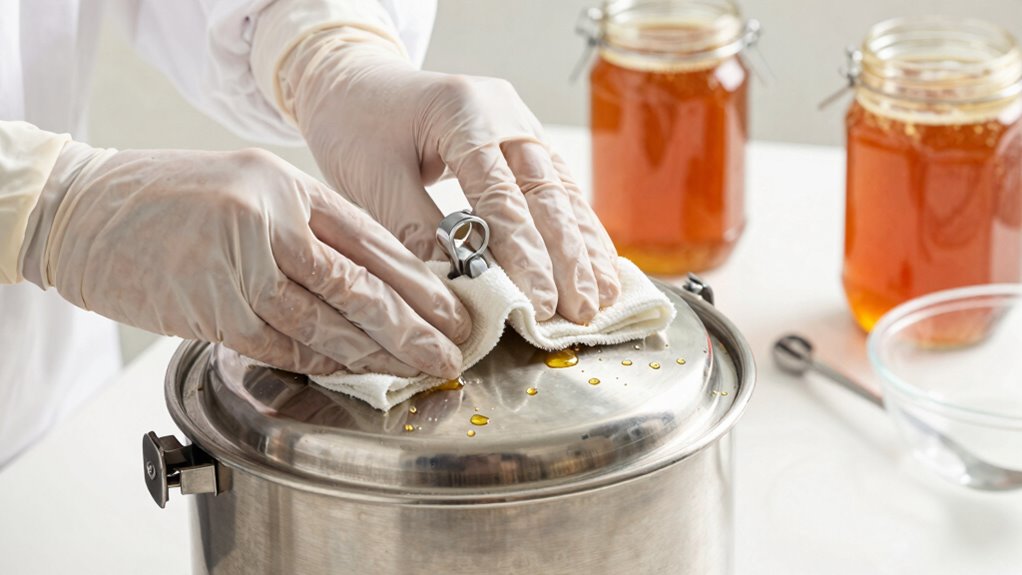

To keep your honey clean and your equipment safe, it’s essential to thoroughly sanitize all tools and surfaces after each use with food-grade cleaners and disinfectants. Always handle honey with sanitized equipment, store it in airtight containers away from sunlight, and monitor for signs of contamination like mold or off odors. Regular cleaning routines and proper storage maintain honey’s quality and prevent spoilage. If you follow these steps, you’ll ensure your honey stays pure and safe for consumption—learn more about effective practices to keep your honey pristine.

Get garden gear delivered free — and shop member deals
- Fast, free delivery on millions of items
- Access to Prime Big Deal Days deals on October 6–7
- Prime Video, Amazon Music and more included
Key Takeaways
- Use food-grade cleaning agents and disinfectants to thoroughly clean honey extraction equipment after each use.
- Regularly inspect honey for signs of contamination like mold, off odors, or debris, and filter as needed.
- Maintain a strict sanitation routine, including drying equipment completely to prevent microbial growth.
- Store honey in airtight, cool, dry containers to preserve quality and prevent spoilage.
- Practice proper handling, cleaning, and equipment maintenance to ensure long-term honey safety and equipment hygiene.
food-grade honey equipment sanitizer
As an affiliate, we earn on qualifying purchases.
As an affiliate, we earn on qualifying purchases.
Why Proper Sanitation Is Essential for Honey Quality
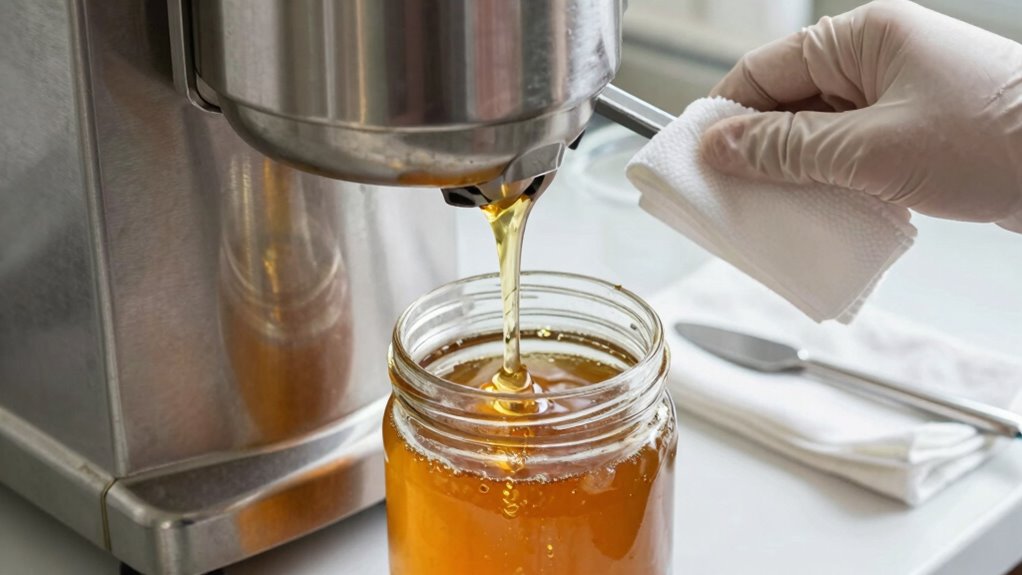
Proper sanitation is essential because contamination during honey extraction can quickly compromise its quality and safety. If you neglect cleanliness, microbial contamination can take hold, leading to spoilage and potential health risks. Microbes like yeast and bacteria can cause honey fermentation, which alters its taste, texture, and overall quality. Once these microorganisms enter your honey, they can proliferate rapidly, making the product unsafe for consumption. Ensuring your equipment and workspace are sanitized reduces the risk of introducing unwanted microbes. This not only preserves honey’s natural flavor and consistency but also prevents fermentation issues that can ruin a batch. Maintaining strict sanitation standards is crucial to prevent microbial contamination and safeguard honey quality. Additionally, honey fermentation can be accelerated by improper sanitation, increasing the likelihood of spoilage. Proper sanitation practices also support the honey preservation process, ensuring the final product remains fresh and safe for longer periods. Consistently adhering to sanitation protocols helps eliminate microbial contamination sources, further protecting your honey. Incorporating hygienic handling practices into your routine further minimizes risks and maintains the integrity of your honey.
honey extraction equipment cleaning brushes
As an affiliate, we earn on qualifying purchases.
As an affiliate, we earn on qualifying purchases.
What Supplies Do You Need to Sanitize Your Equipment

To effectively sanitize your honey extraction equipment, you’ll need a few essential supplies. First, gather your sanitization supplies, including food-grade cleaning agents designed for honey equipment. These cleaning agents are specifically formulated to remove residues and kill bacteria without contaminating your honey. You’ll also need brushes or scrubbers suitable for cleaning different parts of your equipment, ensuring thorough coverage. Additionally, have clean, lint-free cloths or towels ready for drying surfaces after cleaning. A spray bottle or sanitizing solution applicator will help evenly distribute the cleaning agents. Don’t forget gloves and eye protection for safe handling. Properly selecting and preparing these supplies guarantees your equipment stays hygienic, maintaining honey quality and preventing contamination. Incorporating proper cleaning techniques is essential to achieving thorough sanitation and ensuring your honey remains pure and safe. Remember to follow manufacturer instructions for each cleaning product to maximize their effectiveness and safety. Using appropriate sanitizing solutions can further enhance the sanitation process, ensuring all bacteria and residues are effectively eliminated. Paying attention to sanitize all equipment thoroughly helps prevent cross-contamination and preserves honey purity.
airtight honey storage containers
As an affiliate, we earn on qualifying purchases.
As an affiliate, we earn on qualifying purchases.
How to Properly Sanitize Honey Extraction Tools
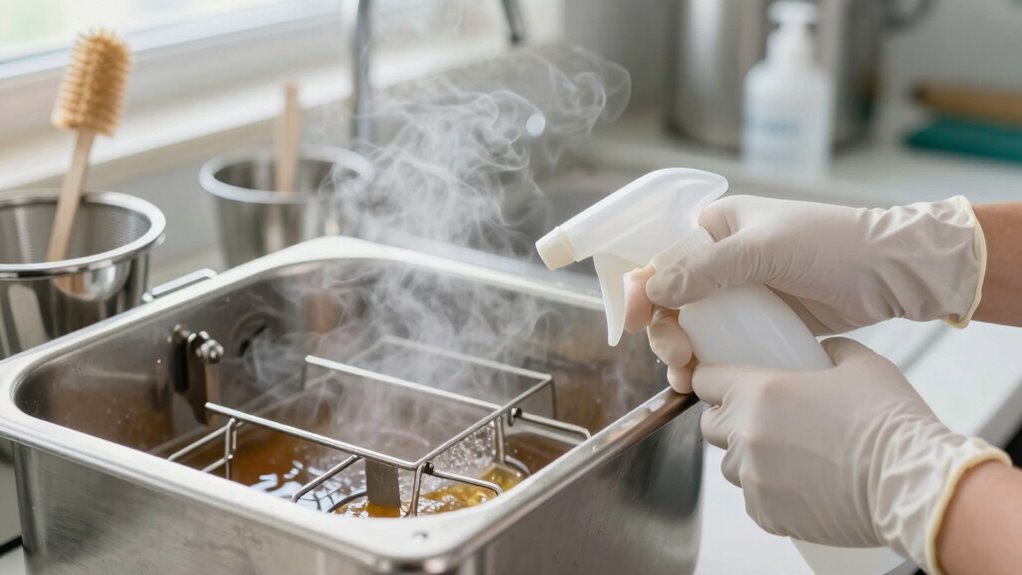
Before sanitizing, you should thoroughly clean your tools to remove any residue. Then, use the proper sanitizers recommended for honey equipment to make certain everything is germ-free. Following these steps helps protect your honey’s quality and keeps your equipment safe for future use. Ensuring your tools are free from contaminants is essential for maintaining honey quality. Using appropriate essential oils in your cleaning process can also provide added antimicrobial benefits. Additionally, selecting safe sanitization practices ensures the process remains effective without compromising the safety of your honey. Incorporating attention to detail during sanitation helps prevent oversight and ensures thorough cleanliness. To maximize effectiveness, it’s important to understand the proper cleaning techniques, which are foundational for effective sanitation.
Clean Before Use
Making certain honey extraction tools are sanitized before use is crucial for maintaining honey purity and preventing contamination. If your tools aren’t clean, bacteria or mold could compromise the honey’s flavor and potentially harm bee health. Start by rinsing the equipment with hot water to remove any residues. Use a brush to scrub all surfaces thoroughly, paying close attention to crevices where dirt can hide. Avoid using harsh chemicals that could leave residues affecting the honey’s natural taste. Dry everything completely to prevent microbial growth. Proper cleaning not only preserves the honey’s delicate flavor but also guarantees the equipment remains safe for ongoing use. Regular sanitation also helps prevent the buildup of bacterial contamination, ensuring the safety and quality of your honey. Incorporating a proper cleaning routine into your hive management practices further supports overall hive health and productivity. Additionally, understanding honey extraction sanitation best practices can help you maintain high standards of cleanliness and honey quality. Being aware of sanitation protocols ensures consistent hygiene standards are kept, reducing risks of spoilage.
Use Proper Sanitizers
Using proper sanitizers is crucial to effectively eliminate bacteria, mold, and other contaminants from your honey extraction tools. Choose food grade sanitizers that are safe for use with honey and equipment, guaranteeing no harmful residues remain. Natural disinfectants, like vinegar or hydrogen peroxide, can be effective options for sanitizing surfaces without introducing chemicals. Always follow the manufacturer’s instructions for dilution and contact time to ensure proper sanitation. Rinse tools thoroughly after sanitizing to remove any leftover residues, and let them air dry completely before use. Regularly sanitizing your equipment with appropriate sanitizers helps prevent contamination, preserves honey quality, and maintains a safe working environment. Additionally, filter maintenance and cleaning are essential to ensure your tools stay sanitized and function correctly. Proper use of sanitizers is a simple but crucial step in honey extraction sanitation, and incorporating proper sanitation protocols can further enhance hygiene practices.
honey filtration and contamination test kit
As an affiliate, we earn on qualifying purchases.
As an affiliate, we earn on qualifying purchases.
Best Practices for Handling and Storing Honey Safely
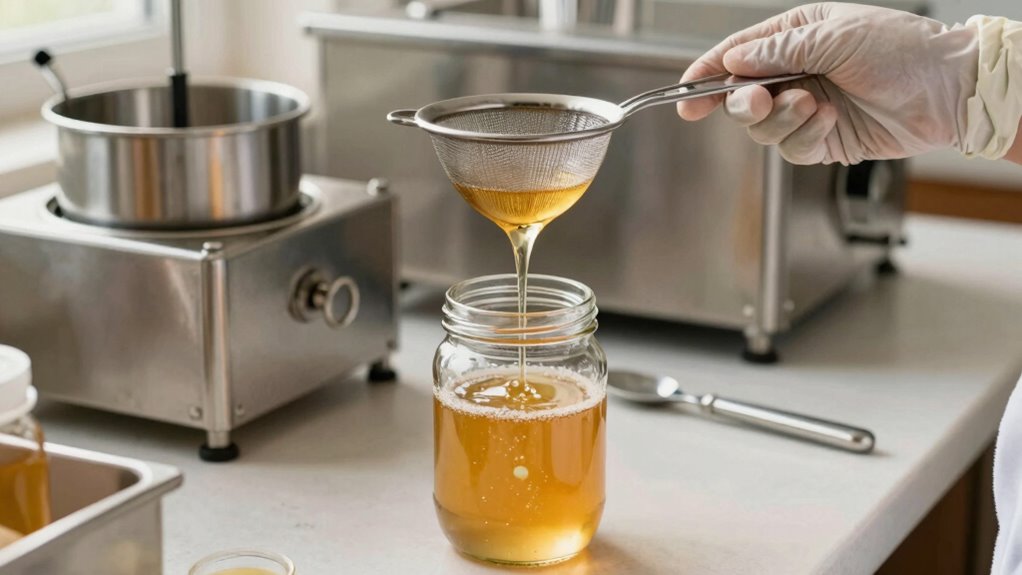
Handling and storing honey safely is essential to maintain its quality and prevent contamination. Proper handling minimizes the risk of honey fermentation, which occurs when moisture levels rise and spoilage bacteria develop. Always use clean, sanitized equipment to prevent introducing contaminants that could harm bee health or compromise honey purity. Store honey in airtight containers in a cool, dry place away from direct sunlight, which helps preserve its natural enzymes and flavor. Avoid temperature fluctuations that can cause crystallization or fermentation. Label containers clearly to track storage times and batch origins. By following these best practices, you protect your honey’s quality, support bee health, and ensure your product remains safe and delightful for consumers.
How to Detect and Fix Contamination in Your Honey
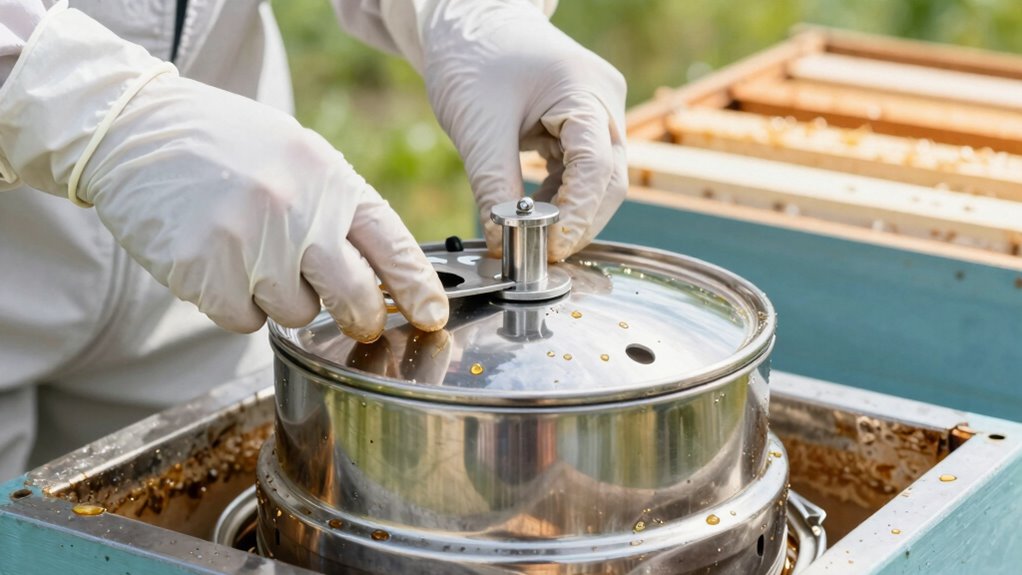
Detecting contamination in your honey quickly is vital to prevent spoilage and guarantee safety. Honey mold often appears as fuzzy patches or unusual discoloration, indicating moisture issues or improper storage. Pollen contamination, while natural, can sometimes signal over-harvesting or mixing from different hive sources, affecting honey purity. To identify these issues, examine your honey visually and smell for any off odors or fermentation signs. If you notice mold or unexpected particles, immediately remove affected honey. To fix contamination, filter out mold or pollen debris using fine mesh or cheesecloth, and ensure your equipment is thoroughly cleaned and dry before reuse. Proper storage in airtight containers at consistent temperatures also prevents future contamination, keeping your honey safe and high-quality. Understanding thermal behavior of honey during processing can also help prevent spoilage and maintain quality over time. Regular inspection of your equipment for hygienic integrity is crucial to avoid cross-contamination and preserve honey purity. Additionally, maintaining a stable environment during storage helps inhibit microbial growth and prolongs honey’s shelf life. Incorporating proper filtering techniques can further enhance the removal of contaminants and extend the shelf life of your honey. Employing proper cleaning practices for your equipment is essential to sustain honey’s natural properties and prevent microbial contamination.
Tips for Maintaining a Clean Honey Extraction Environment Long-Term
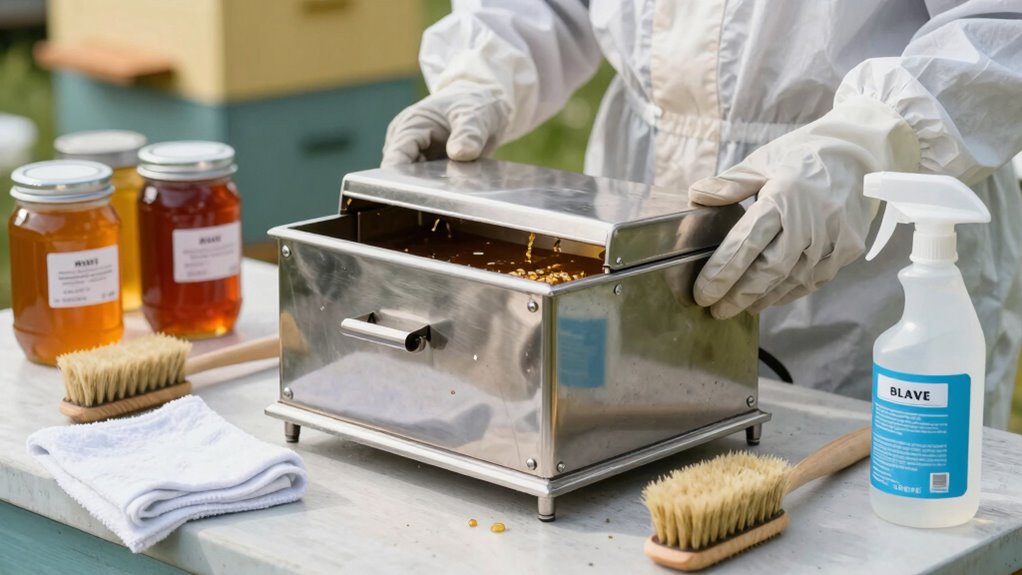
Maintaining a clean honey extraction environment over the long term requires consistent effort and attention to detail. To support hive health and bee nutrition, you should:
- Regularly clean and disinfect extraction tools to prevent contamination buildup.
- Monitor hive conditions and address any issues promptly to reduce disease risk.
- Keep your workspace organized, minimizing cross-contamination between equipment and honey.
- Practice good apiary hygiene by removing debris and ensuring proper ventilation.
Common Mistakes to Avoid When Sanitizing Equipment
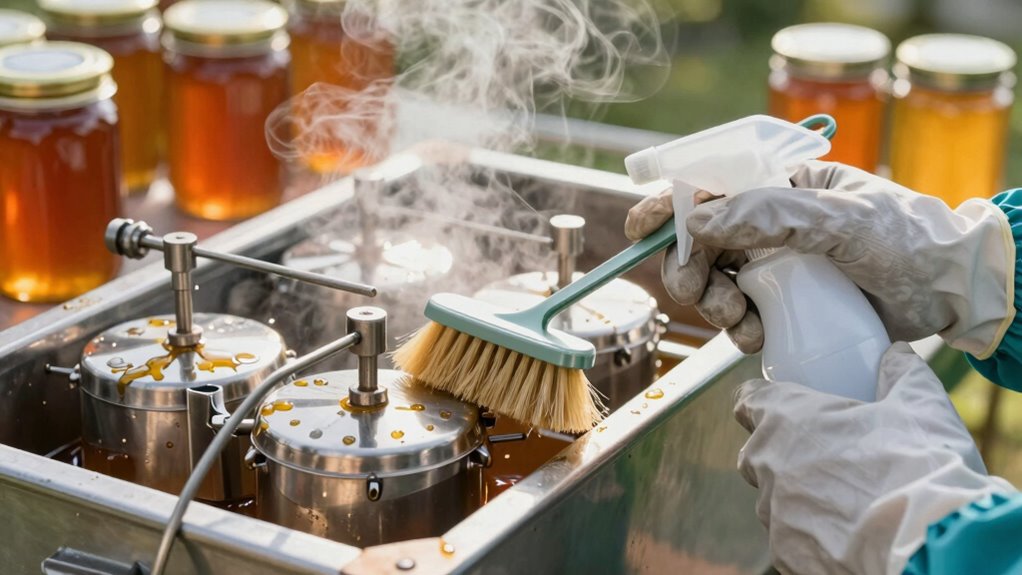
Even with the best intentions, it’s easy to make mistakes when sanitizing equipment that can compromise honey quality and hive health. One common error is using improper sanitizers, which may leave residues or fail to eliminate harmful microbes. Neglecting to thoroughly dry equipment afterward can promote mold growth or contamination. To avoid these pitfalls, pay attention to proper sanitizer selection and application. Use the right concentration and follow manufacturer instructions. Guarantee all equipment is completely dry before storing or reuse to prevent moisture-related issues. Here’s a quick reminder:
| Mistake | Consequence | Tip |
|---|---|---|
| Using improper sanitizers | Residue, contamination | Use food-grade, bee-safe sanitizers |
| Not drying equipment | Mold, microbial growth | Air dry or wipe thoroughly |
| Rushing the process | Insufficient sanitation | Take your time to sanitize properly |
How to Keep Your Honey Extraction Sanitation Consistent
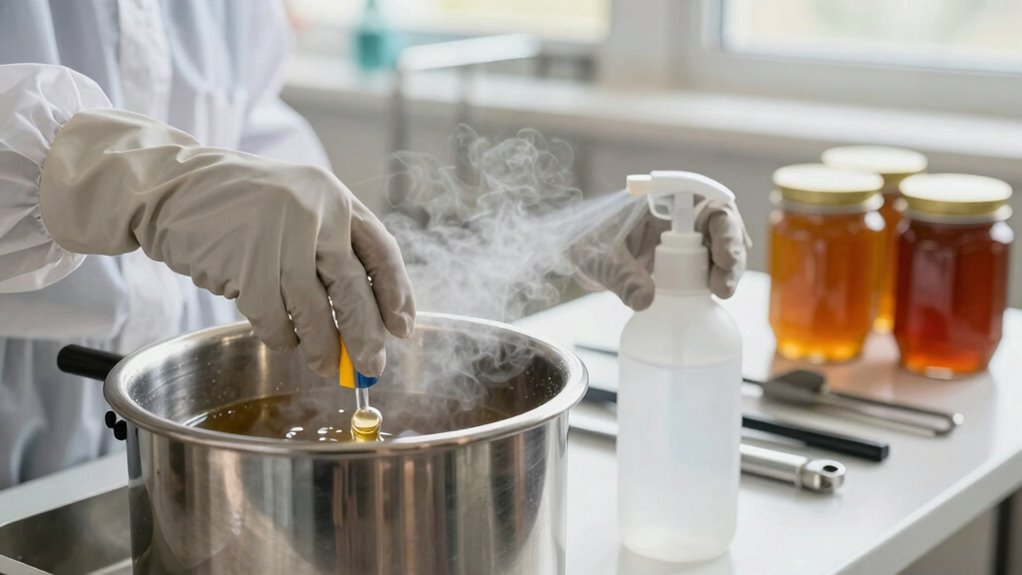
Consistency in honey extraction sanitation is essential for ensuring high-quality honey and maintaining hive health over time. To achieve this, establish a routine that aligns with beekeeping hygiene and honey processing standards. Here are four key steps:
- Develop a cleaning schedule and stick to it, ensuring equipment is sanitized after each use.
- Use approved sanitizing agents compatible with honey processing standards to prevent contamination.
- Train all team members on proper sanitation procedures to maintain uniformity.
- Record each cleaning session to monitor adherence and identify areas for improvement.
Frequently Asked Questions
How Often Should I Sanitize My Honey Extraction Equipment?
You should sanitize your honey extraction equipment after every use to prevent honey contamination and guarantee proper equipment maintenance. Regular sanitation removes residues and prevents mold or bacteria growth, keeping your honey pure and safe. If you notice any buildup or spills, clean immediately. Consistent sanitation not only protects your honey quality but also prolongs the life of your equipment, making your honey extraction process efficient and hygienic every time.
Can I Reuse Cleaning Supplies for Multiple Sanitization Sessions?
They say “don’t bite the hand that feeds you,” and that’s true for cleaning supplies too. You can reuse cleaning supplies for multiple sanitization sessions if you’re cautious. Just guarantee you thoroughly clean and disinfect them between uses to maintain reuse safety. Keep in mind, contaminated supplies can compromise honey quality and equipment safety, so always prioritize proper sanitation practices and replace supplies if they show signs of wear or contamination.
What Are the Signs of Inadequate Sanitation in Honey Containers?
You’ll notice contamination indicators such as mold, fermentation, or an off smell, which signal inadequate sanitation. Poor container cleanliness often results in visible residues or debris, compromising honey quality. If your honey appears cloudy or has unusual particles, it’s a sign that your containers aren’t properly sanitized. Regularly inspect your containers for these signs and guarantee thorough cleaning to maintain honey purity and prevent contamination.
Are There Eco-Friendly Sanitizing Options Suitable for Honey Extraction?
Did you know that over 60% of honey producers now prefer eco-friendly sanitizing options? You can use natural disinfectants like vinegar or lemon juice, which effectively clean without harmful chemicals. Biodegradable cleaners are also a great choice—they break down safely in the environment. These options keep your honey pure and your equipment safe, ensuring quality production while reducing your ecological footprint.
How Does Sanitation Impact Honey’s Shelf Life and Flavor?
Sanitation directly impacts honey’s shelf stability and flavor preservation. If you keep your equipment clean, you prevent microbial growth that can cause fermentation or spoilage, extending honey’s shelf life. Proper sanitation also maintains the pure, natural flavor you want for your honey, ensuring it stays fresh and aromatic longer. Without good sanitation, your honey risks developing off-flavors and losing its quality, making it less appealing to consumers.
Conclusion
By maintaining diligent sanitation habits, you nurture the purity of your honey and the trust of those who enjoy it. A clean extraction environment acts as a gentle guardian, safeguarding your hard work and passion. When you prioritize cleanliness, you’re tending to a delicate harmony that honors the bees’ labor and your craft. Keep your tools shining and your spirits high—your commitment guarantees every jar reflects the sweetness of your dedication.
Fall yard work Picks
leaf blowers
As an affiliate, we earn on qualifying purchases.