
To keep pests out of your greenhouse before they get established, focus on sanitation, such as removing debris and cleaning surfaces regularly. Quarantine new plants and inspect them carefully for pests. Maintain ideal environmental conditions—stay on top of humidity, temperature, and airflow—and use fine mesh screens to block pest entry. Release natural predators at the right times to control pests early. Staying proactive with these strategies helps prevent infestations and keeps your plants healthy; learn more for effective pest prevention.
Key Takeaways
- Quarantine and thoroughly inspect new plants before introducing them to the greenhouse.
- Maintain cleanliness by removing debris and regularly disinfect surfaces to eliminate pest habitats.
- Use physical barriers like fine mesh screens on openings to prevent pest entry.
- Employ biological pest control methods and release natural predators at early signs of pest activity.
- Monitor environmental conditions closely and adjust humidity and temperature to deter pest development.
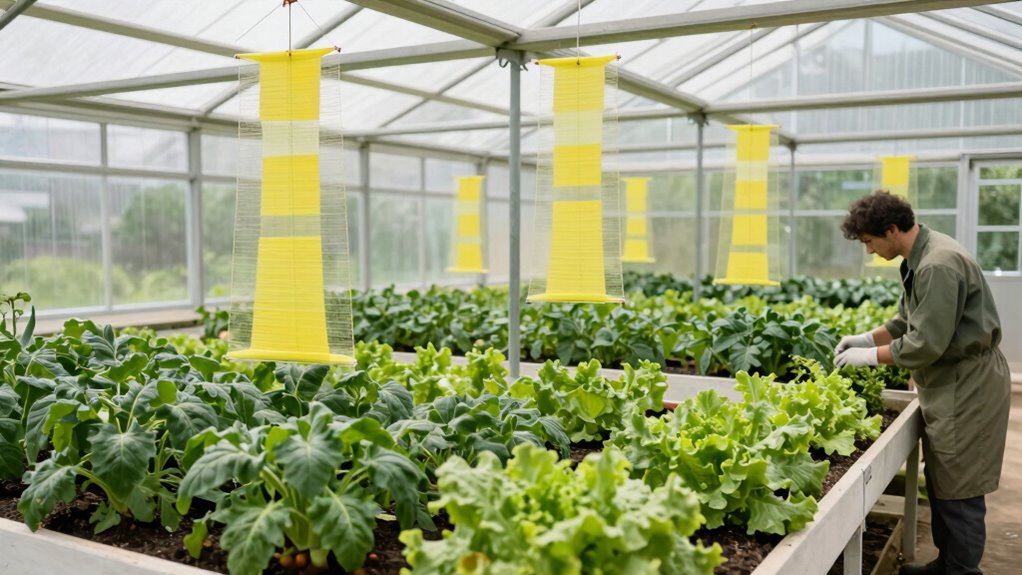
In addition to soil sterilization, leveraging natural predators can significantly reduce the risk of pest infestations. Introducing beneficial insects like ladybugs, predatory mites, or parasitic wasps creates a natural pest control system that keeps harmful pests in check. These predators are a sustainable alternative to chemical pesticides and help maintain a balanced ecosystem within your greenhouse. Be sure to research which natural predators target specific pests you’re concerned about, and release them at the right time to prevent pests from establishing a foothold. Incorporating biological pest control methods can further enhance your integrated pest management strategy, reducing reliance on chemical solutions.
Prevention also hinges on good hygiene practices. Regularly inspect your plants for early signs of pests, and promptly remove any affected foliage or plants. Clean your greenhouse surfaces frequently, removing plant debris and dust that can harbor pests or their eggs. Proper watering techniques—avoiding overwatering and ensuring good drainage—also help prevent conditions that favor pest outbreaks, like mold or fungus, which can attract pests. Additionally, maintaining a clean environment minimizes the presence of pest habitats that pests can use to establish themselves. Understanding pest biology and lifecycle patterns can help you anticipate and prevent infestations more effectively, especially when combined with proper sanitation.
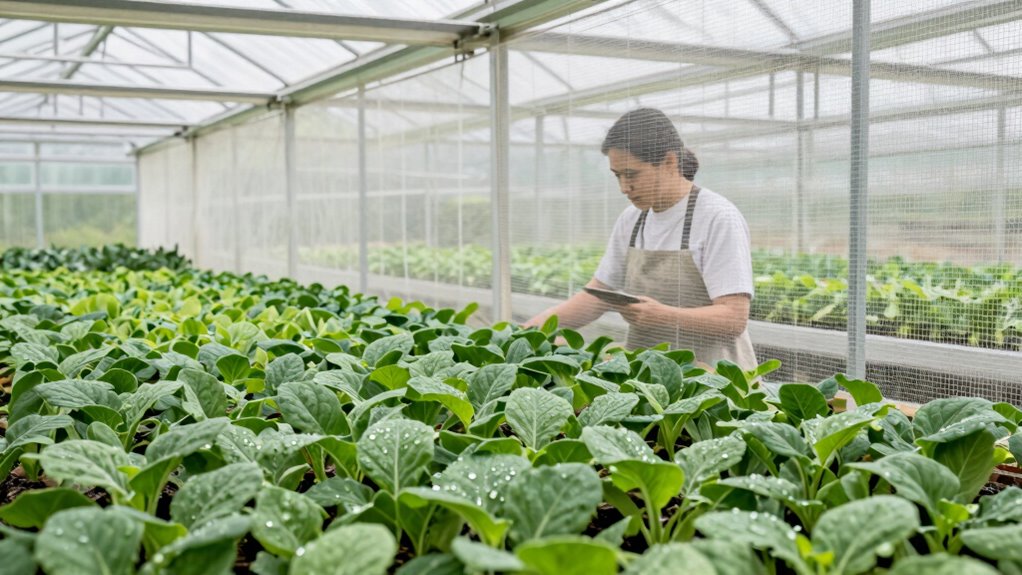
Controlling the environment inside your greenhouse plays a key role in pest prevention. Maintain optimal humidity and temperature levels to discourage pest proliferation. Proper ventilation helps reduce humidity and keeps air circulating, making it less inviting for pests to settle and reproduce. Covering openings with fine mesh screens prevents pests from sneaking inside, especially during peak pest seasons. Regular environmental monitoring can help you identify early signs of pest activity before they become a serious problem. Being aware of environmental conditions that favor pests allows you to implement timely adjustments to keep your greenhouse pest-free.
Lastly, be cautious when introducing new plants into your greenhouse. Quarantine new additions and inspect them thoroughly for pests or signs of disease before they join your existing collection. This small step can save you from a major infestation down the line.

Mighty Mint Peppermint Oil Plant Protection Spray – Insect & Pest Control for Gnats, Spider Mites & Aphids – Plant-Based, Easy-to-Use – 16 oz
Plant-Based Pest Protection: Helps protect plants from common pests including gnats, spider mites, aphids, fungus issues, and other…
As an affiliate, we earn on qualifying purchases.
As an affiliate, we earn on qualifying purchases.
Frequently Asked Questions
Can Natural Predators Effectively Control Greenhouse Pests?
Yes, natural predators can effectively control greenhouse pests through biological control methods like predator release. By introducing beneficial insects, you target specific pests without chemicals, reducing infestations naturally. Regularly releasing predators helps maintain pest populations at manageable levels and prevents outbreaks. Make sure you choose the right predators for your pests and release them at ideal times for best results. This eco-friendly approach keeps your greenhouse healthy and pest-free.
What Are the Best Organic Pest Prevention Methods?
Think of pest prevention as building a fortress around your plants. You’d start with organic methods like companion planting, which acts as friendly guards to deter pests naturally. Biological barriers, such as beneficial insects, serve as vigilant sentinels, preventing invaders from establishing. These organic pest prevention methods work together, creating a strong, eco-friendly shield that keeps pests at bay without harming your plants or the environment.
How Often Should I Inspect My Greenhouse for Pests?
You should inspect your greenhouse at least once a week for pests. Regular pest identification helps you catch issues early, preventing infestations. Prevention timing is vital; start inspections before plants mature or when introducing new plants. During inspections, look for eggs, larvae, and damage signs. Consistent monitoring allows you to act quickly, applying organic prevention methods to keep pests from establishing and spreading throughout your greenhouse.
Are Certain Plant Varieties More Resistant to Pests?
You’ll find that resistant plant varieties and pest-resistant cultivars can really make a difference in pest management. These plants are bred to resist common pests, reducing your need for chemical treatments. While no plant is completely pest-proof, choosing resistant varieties can substantially lower infestation risks. Incorporate pest-resistant cultivars into your greenhouse to give your plants an added layer of defense and keep pests at bay naturally.
How Does Humidity Influence Pest Prevention Strategies?
Humidity control plays a vital role in pest prevention strategies. By maintaining ideal humidity levels, you make your greenhouse less inviting for pests like fungal gnats and spider mites, which thrive in humid environments. You should regularly monitor and adjust humidity to prevent excess moisture. Keeping the environment dry and well-ventilated disrupts pests’ breeding cycles, reducing infestations and supporting healthier plant growth.

2 Pack Garden Netting 8 x 10 ft Ultra Fine Mesh Garden Netting Green Mesh Plant Cover Raised Beds Barrier Screen Protection for Vegetable Fruits Flowers Crops Greenhouse Rows from Birds Squirrels
Ideally Sized and Quantity: our garden mesh netting barrier is sizeable, approximately 8 x 10 ft/ 2.5 x…
As an affiliate, we earn on qualifying purchases.
As an affiliate, we earn on qualifying purchases.
Conclusion
By proactively preventing pests, you can save yourself time, effort, and frustration down the line. Many gardeners believe that a clean, well-maintained greenhouse naturally resists infestations, and research backs this up—healthy plants are less vulnerable. Think of pest prevention as a form of insurance; it’s easier and more cost-effective to keep pests out from the start than to fight a full-blown invasion later. Stay vigilant and consistent, and your greenhouse will thrive pest-free.

3000 Live Ladybugs – (2 X 1500 Live Ladybugs) – Guaranteed Live Delivery!
Includes a Ladybug educational sheet with Release Tips, Release Rates, Ladybug Fun Facts and FAQ's
As an affiliate, we earn on qualifying purchases.
As an affiliate, we earn on qualifying purchases.
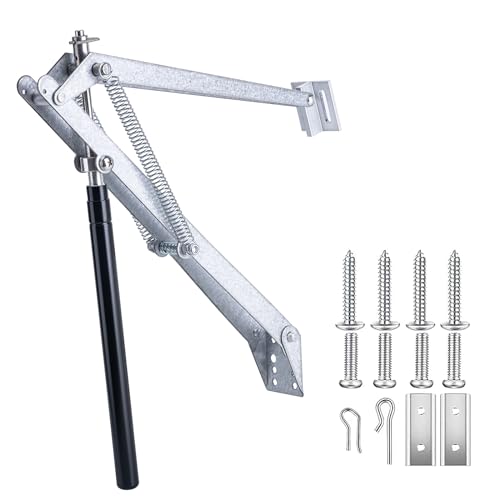
CHANGE MOORE Auto Vent Opener 1Pack Automatic Greenhouse Window Opener, Roof Vent Opener Auto Vent Kit Sensitive Gardening Tools, Automatic Greenhouses Supplies (Dual Spring Up to 33lbs)
TEMPERATURE-ACTIVATED AUTOMATIC VENTILATION: This automatic greenhouse window opener features a solar heat sensitive hydraulic cylinder that triggers between…
As an affiliate, we earn on qualifying purchases.
As an affiliate, we earn on qualifying purchases.