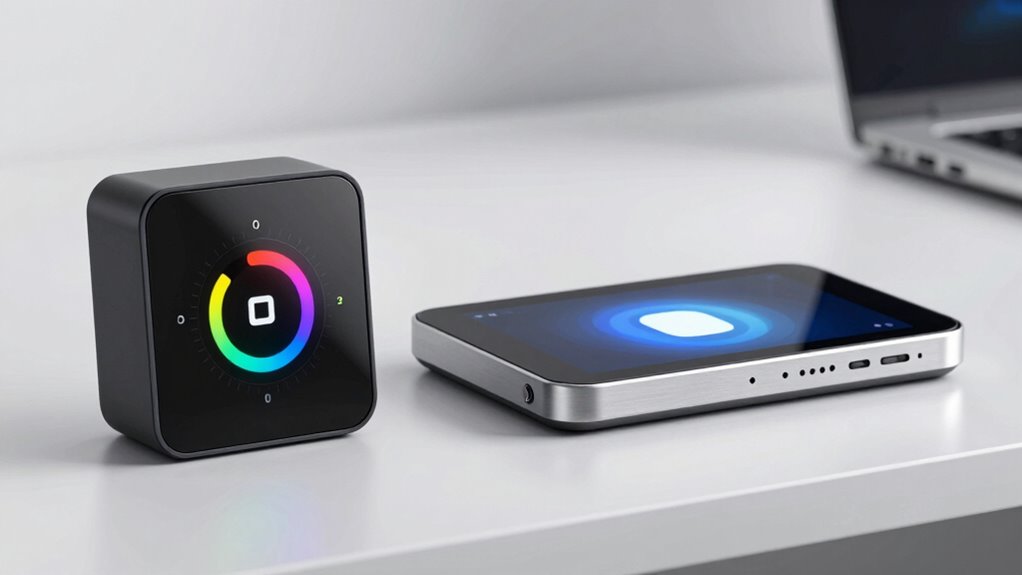

Smart timers automate outdoor tasks on fixed schedules, making them simple and budget-friendly, but they don’t adjust based on weather or soil conditions. Smart controllers connect to Wi-Fi and use real-time data, allowing you to manage your system remotely and optimize performance. If you want quick, reliable scheduling, timers work well; for smarter, more efficient control, controllers are better. Keep exploring to find out which option suits your needs best.
Open a free Amazon Business account
Business pricing, bulk buying and tax-exempt orders.
As an affiliate, we earn on qualifying purchases.
Key Takeaways
- Smart timers operate on fixed schedules without remote access, while smart controllers connect to Wi-Fi for remote control and real-time adjustments.
- Controllers offer advanced features like weather-based adjustments and system monitoring, unlike basic timers.
- Timers are simpler, more affordable, and easier to install, suitable for straightforward scheduling needs.
- Controllers provide remote management via apps, enhancing convenience, while timers require manual reprogramming.
- The choice depends on whether you prefer basic automation or advanced, adaptive outdoor system control.
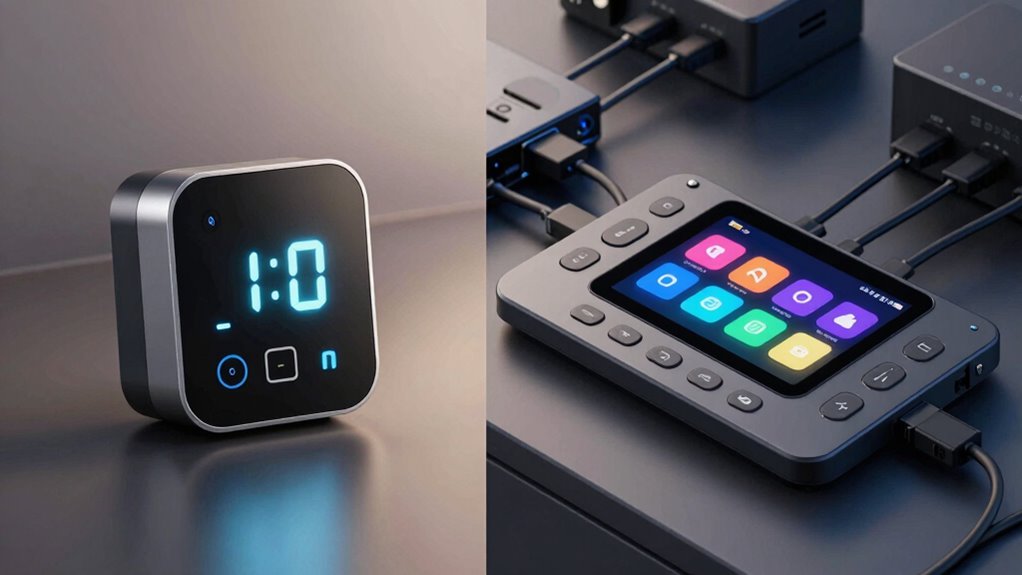
When it comes to automating your home or garden, understanding the differences between smart timers and smart controllers is essential. Both devices aim to make your life easier by managing your outdoor systems, but they do so in distinct ways. Smart timers are straightforward devices that let you set specific schedules for watering or lighting, often with simple interfaces like buttons or digital screens. They focus on automating routine tasks, ensuring your garden gets watered or lights turn on at designated times. Their primary advantage is ease of use, especially if you prefer a no-fuss setup. However, their user interface can be limited, sometimes requiring you to manually reprogram them if your schedule changes.
Smart timers simplify routine tasks with easy schedules but lack advanced remote control features.
Smart controllers, on the other hand, are more sophisticated. They connect to your Wi-Fi network and can be controlled remotely via smartphone apps or web portals. This connectivity grants you greater flexibility, allowing you to adjust settings on the go or respond to weather changes without needing to be physically present. The user interface of smart controllers is typically more advanced and user-friendly, with intuitive apps that display real-time data, weather forecasts, and system status. Such features enhance energy efficiency because you can fine-tune watering schedules based on actual conditions, avoiding wasteful overwatering or unnecessary energy use. Smart controllers also often incorporate soil moisture sensors and weather data, making them smarter and more responsive to your garden’s needs. Understanding these features can help you select the right device for your specific needs. Additionally, network connectivity plays a crucial role in enabling these advanced features, offering remote management capabilities that improve convenience. Being aware of system compatibility is also important to ensure the device integrates seamlessly with your existing outdoor systems.
A smart timer is generally less expensive and simpler to install, making it an attractive option for those on a budget or who prefer a straightforward setup. While both devices aim to improve your outdoor system’s efficiency, their approach varies. A smart timer works well if your schedule is simple and predictable, providing a reliable, low-cost solution. However, if you want more control and the ability to optimize energy efficiency, a smart controller is the better choice. Its remote access and advanced user interface make managing your garden easier and more efficient. You can quickly make adjustments, monitor system performance, and ensure your watering or lighting runs precisely when needed, conserving water and energy.
Ultimately, the decision boils down to how much control you want and how you prefer to interact with your outdoor systems. If you value simplicity and straightforward scheduling, a smart timer will serve you well. But if you’re looking for a more connected, intelligent system that adapts to real-time conditions, investing in a smart controller is the smarter move. Either way, understanding these differences helps you choose the right device to enhance your home or garden automation, saving energy and making your outdoor space more manageable.
As an affiliate, we earn on qualifying purchases.
Frequently Asked Questions
Can Smart Timers Integrate With Voice Assistants?
Yes, smart timers can integrate with voice assistants, enhancing your smart home experience. With voice assistant integration, you can control your smart timer hands-free, making it more convenient to manage your devices. Many smart timers are designed for compatibility with popular voice assistants like Alexa or Google Assistant. Just make certain your smart timer supports smart timer compatibility and has the necessary integrations, so you can enjoy seamless voice commands and automation.
Are Smart Controllers Suitable for Large-Scale Industrial Use?
Smart controllers are like the backbone of large-scale operations, making them suitable for industrial use. They excel in industrial scalability and system integration, handling complex automation needs efficiently. You can connect multiple devices and manage extensive systems seamlessly. If you’re looking to streamline operations and guarantee reliable control across a vast industrial setup, smart controllers are a smart choice, providing the robustness and flexibility required for demanding environments.
Do Smart Timers Require Wi-Fi Connectivity?
Smart timers don’t always require Wi-Fi connectivity; many operate on wireless connectivity like Bluetooth or Zigbee, making them versatile. However, some models depend on Wi-Fi for remote access or synchronization. They’re often battery-powered, so you don’t need a constant power source, but this makes them battery-dependent. If you want a timer with minimal wiring and easy setup, choose one that suits your wireless and power needs.
How Secure Are Smart Timer and Controller Systems?
You’re probably wondering about the safety of your smart timer or controller system. While they’re designed with security in mind, some security vulnerabilities and privacy concerns exist, especially if you don’t update software regularly or use weak passwords. To keep your system secure, stick to trusted brands, enable two-factor authentication, and stay vigilant with updates. That way, you can enjoy the convenience without worrying too much about the risks.
Can Both Devices Be Controlled Remotely via Apps?
Yes, both smart timers and smart controllers can be controlled remotely via apps, but device compatibility varies. Smart controllers often offer broader compatibility with home automation systems, while smart timers might limit you to specific devices or brands. Keep in mind, some smart timers rely on batteries, which means you need to monitor their power levels for consistent control. Overall, app control provides convenience, but check each device’s compatibility and battery dependency first.
Wi-Fi smart sprinkler controller
As an affiliate, we earn on qualifying purchases.
As an affiliate, we earn on qualifying purchases.
Conclusion
So, whether you choose a smart timer or a smart controller, remember that sometimes, the smallest device can make the biggest difference. It’s funny how a simple switch can seamlessly fit into your day, almost as if it was meant to be there all along. In the end, it’s not just about technology—it’s about creating harmony between your routines and your home. Coincidentally, the right choice can turn everyday moments into effortless, smarter experiences.
As an affiliate, we earn on qualifying purchases.
As an affiliate, we earn on qualifying purchases.
Flea & tick season Picks
flea and tick prevention
As an affiliate, we earn on qualifying purchases.