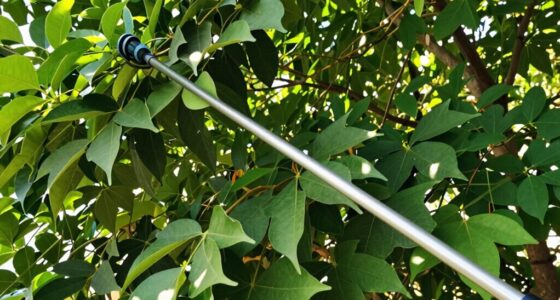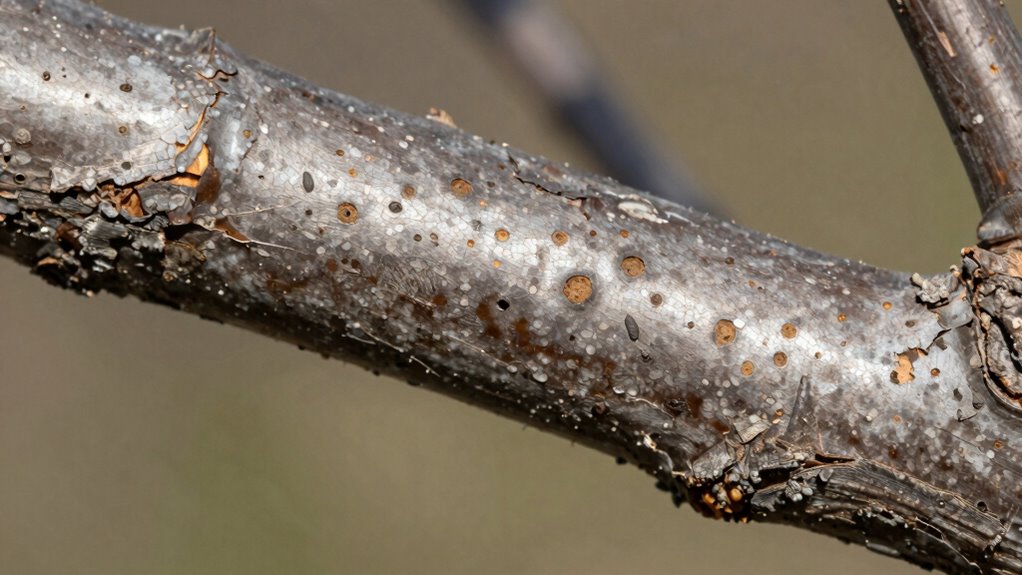

To spot borer trouble early, look for tiny holes or exit points around your plants or trees, along with sawdust-like frass showing tunneling activity. Check for cracks, sunken bark, or weakened branches that seem to be dying back without an obvious reason. Regular inspections, especially during peak pest seasons, help catch signs before serious damage occurs. If you stay vigilant, you’ll find extra tips on how to keep these pests in check before branch dieback begins.
Key Takeaways
- Look for tiny holes or exit points on the bark surface before visible dieback occurs.
- Check for sawdust-like frass around branches or tree base as an early tunneling sign.
- Inspect cracked, sunken, or weakened bark areas that indicate internal wood damage.
- Monitor stressed or dying branches for early signs of borer activity.
- Conduct regular, thorough inspections during peak pest activity periods for early detection.
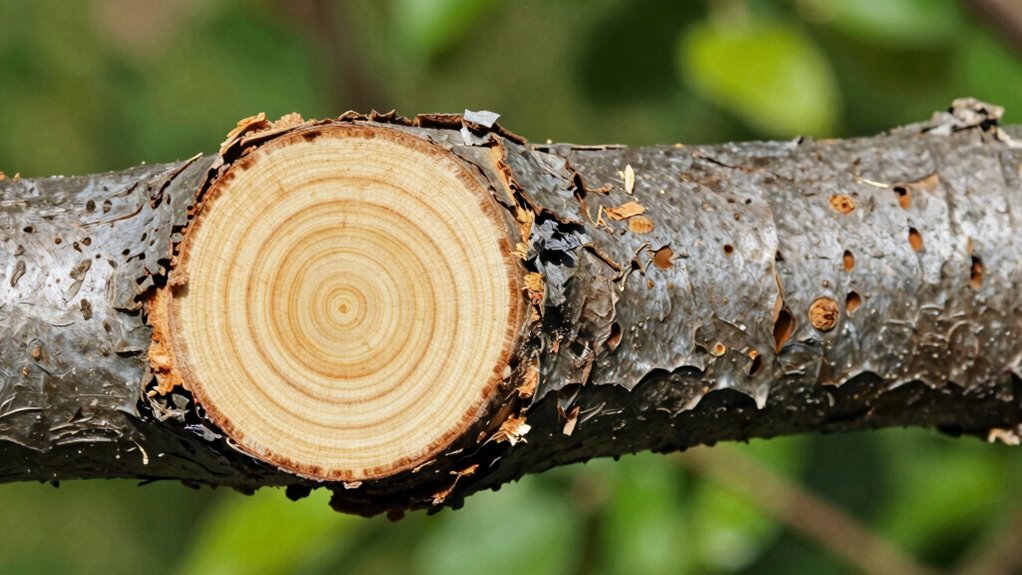
Have you ever noticed tiny holes or frass around your plants or trees? That’s often the first sign of borer activity, and catching it early can save your greenery from serious damage. Borers are insects whose larval stage bores into wood, disrupting the plant’s vascular system. Understanding the pest lifecycle helps you recognize when to act. These pests typically have a multi-stage lifecycle: eggs are laid on or near the plant, larvae tunnel into the wood, then pupate within, and finally emerge as adults to repeat the cycle. Knowing this cycle allows you to identify vulnerable periods and implement prevention strategies before the damage becomes irreversible.
Early signs of borer activity include tiny holes and frass, so catch infestations early to protect your plants.
The early signs of borer trouble include not just tiny holes but also sawdust-like frass, which indicates tunneling activity beneath the bark. If you notice these signs, it’s essential to inspect the affected area closely. Look for areas where the bark appears cracked or sunken; these are potential entry points or exit holes. You should also check for weakened or dead branches that seem to be dying back without an obvious reason, as borers often attack stressed or weakened parts of the plant. The key to effective intervention is early detection—before the branch or trunk shows signs of dieback, which usually occurs when the infestation has become severe. Vulnerable plant stages are critical periods for monitoring and intervention. Additionally, understanding the pest lifecycle can help you time your inspections for maximum effectiveness. Recognizing how the pest’s larval tunneling damages the plant’s internal structures emphasizes the importance of early action. Regularly inspecting your plants can also help you detect early infestation signs before they develop into serious problems. Being aware of the damage symptoms associated with borers can further improve your chances of early detection.
Prevention strategies are your best tools to combat borers. Start by maintaining plant health through proper watering, fertilization, and pruning, as healthy plants are less attractive to pests. Applying physical barriers, like tree wraps, can help prevent eggs from being laid on the bark surface. Regular inspections are essential; by checking your plants every few weeks, especially during peak borer activity seasons, you can catch early signs before the infestation spreads. You might also consider applying insecticides targeted at the borer’s vulnerable stages—such as when eggs are laid or larvae are just beginning to tunnel in. Always follow label instructions and opt for products suited for your specific plant type.
Incorporating these prevention strategies into your routine makes a real difference. The sooner you identify borer activity, the easier it becomes to control it. Remember, once the pest has established itself deep within the wood, treatment becomes more complicated and less effective. So, stay vigilant, keep a close eye on your plants, and act swiftly at the first signs of trouble. A proactive approach is your best defense against borer damage, helping you preserve your plants’ health and vitality long before branch dieback even begins.

VivaTrap VT-105 Peach Tree Borer + Clearwing Moth Trap & Lure (2 Pack, 8 Week)
Attracts greater & lesser Peach Tree Borers (Synanthedon exitiosa) as well as many other clearwing moth species.
As an affiliate, we earn on qualifying purchases.
As an affiliate, we earn on qualifying purchases.
Frequently Asked Questions
Can Borers Infest Healthy Trees Without Visible Signs?
Yes, borers can infest healthy trees without immediate visible signs of infestation. You might not notice the signs of infestation until significant damage occurs, like branch dieback. To catch trouble early, regularly inspect your trees for subtle indicators such as small holes or frass. Implement borer prevention strategies like keeping trees healthy and avoiding stress, which makes them less attractive to pests. Early detection helps prevent severe damage and preserves your trees’ health.
Are Certain Tree Species More Vulnerable to Borer Attacks?
Yes, some tree species are more vulnerable to borer attacks, especially those with thin bark or weakened health. To protect your trees, focus on pest identification early and implement prevention strategies like proper watering, pruning, and avoiding injury. Regular inspections help catch signs of borers before damage worsens. Understanding which species are at higher risk allows you to take targeted actions, reducing the chances of severe infestations.
How Do Borers Spread From Tree to Tree?
Borers spread from tree to tree mainly through their behavior of tunneling into bark and wood, often hitching a ride on insects or being carried by wind, animals, or human activity. You can improve tree resilience by keeping trees healthy, avoiding injury, and removing infested wood. Recognizing borer behavior early helps prevent widespread damage, as healthy, resilient trees are less attractive and more resistant to borer infestations.
Do Borers Affect Only Specific Types of Branches?
Borers don’t just pick any branch—they target specific ones with selective vulnerability, based on species susceptibility. You’ll notice they often affect weaker, stressed, or older branches first, rather than all branches equally. This means some branches are more prone to borer damage due to their species or health. Keep an eye on these vulnerable spots, and you can catch trouble early before it spreads or causes widespread damage.
What Are the Long-Term Effects of Borer Infestation on Tree Health?
Borer infestations can cause severe long-term damage to your tree’s health. They often lead to root damage, weakening the tree’s foundation and making it more vulnerable to stress. Additionally, borers disrupt nutrient flow, causing deficiencies that stunt growth and increase disease susceptibility. Over time, these issues can result in branch dieback, canopy thinning, or even tree death if not addressed promptly. Regular inspections help catch infestations early and protect your tree’s resilience.

FJYXCHENXM 2 Pack Bark Removal Tool Professional Log Peeler Debarking Tool for Tree Girdling
High-Quality Debarking Tool: Made of high-carbon steel and PP material, this bark removal tool ensures strength and reliability…
As an affiliate, we earn on qualifying purchases.
As an affiliate, we earn on qualifying purchases.
Conclusion
If you catch borer trouble early, you’re fundamentally armed with a magic wand against a silent invasion. Ignoring those tiny exit holes is like ignoring a tiny crack in a dam—soon, your whole tree could be swept away in a flood of dead branches and decay. Stay vigilant, inspect regularly, and act fast. With sharp eyes and quick action, you can stop borers in their tracks before they turn your beautiful tree into a ghostly skeleton!
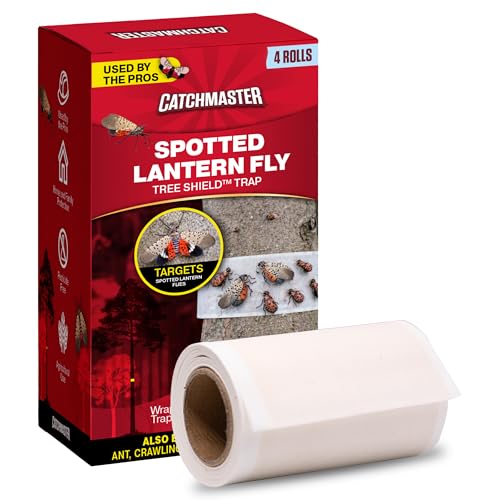
Catchmaster Tree Shield Lantern Fly & Ant Traps Insect Barrier, 4 Rolls 30ft Each, Outdoor Adhesive Crawling Insect Trap to Protect Trees, Fruit & Plants, Pest Control Lawn & Garden
IMPRESSIVE TREE COVERAGE: Catchmaster's Tree Shield Insect Barrier is a heavy-duty crawling and flying insect trap. The tree…
As an affiliate, we earn on qualifying purchases.
As an affiliate, we earn on qualifying purchases.

Engine Crack Detection Kit
Crack Detection for Aluminum cylinder heads
As an affiliate, we earn on qualifying purchases.
As an affiliate, we earn on qualifying purchases.