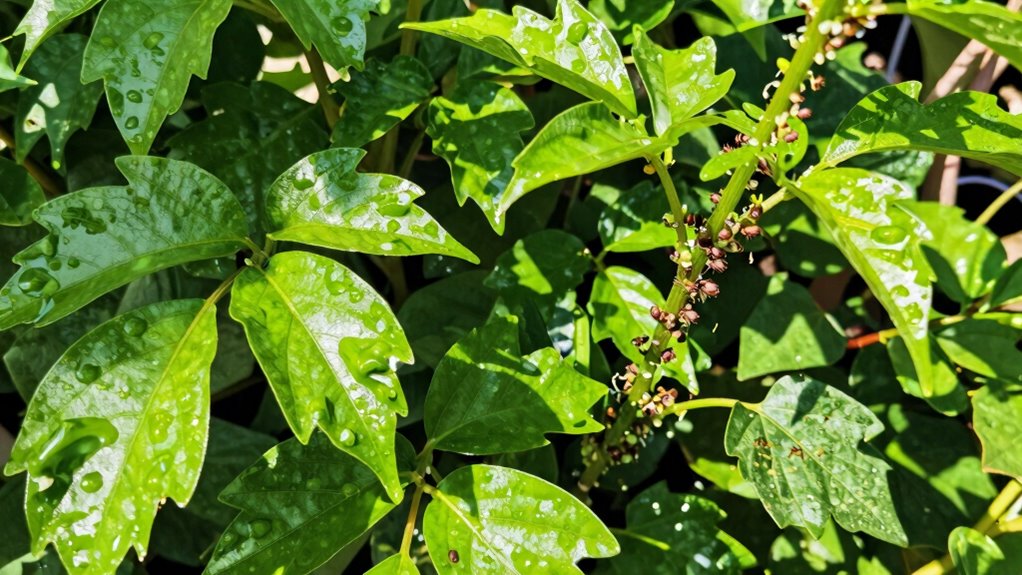

Overfeeding your plants weakens their natural defenses by disrupting the soil balance and causing nutrient toxicity. This stress makes plants more vulnerable to pests like aphids, mites, and whiteflies, which thrive on weakened plants. Excess nutrients also promote pest-friendly chemical signals and encourage harmful fungi and bacteria. Over time, this cycle of damage makes your plants less resilient and more attractive to invaders. Keep going to discover how you can prevent this and keep pests at bay.
Key Takeaways
- Overfeeding causes plant stress, weakening defenses and making pests more likely to attack.
- Excess nutrients attract pests by signaling a nutrient-rich environment.
- Chemical imbalances from overfeeding impair plant immunity, increasing vulnerability to pests.
- Soil imbalance from overfeeding promotes harmful fungi and bacteria that attract pests.
- Weakened plants due to overfeeding are less capable of resisting pest infestations.
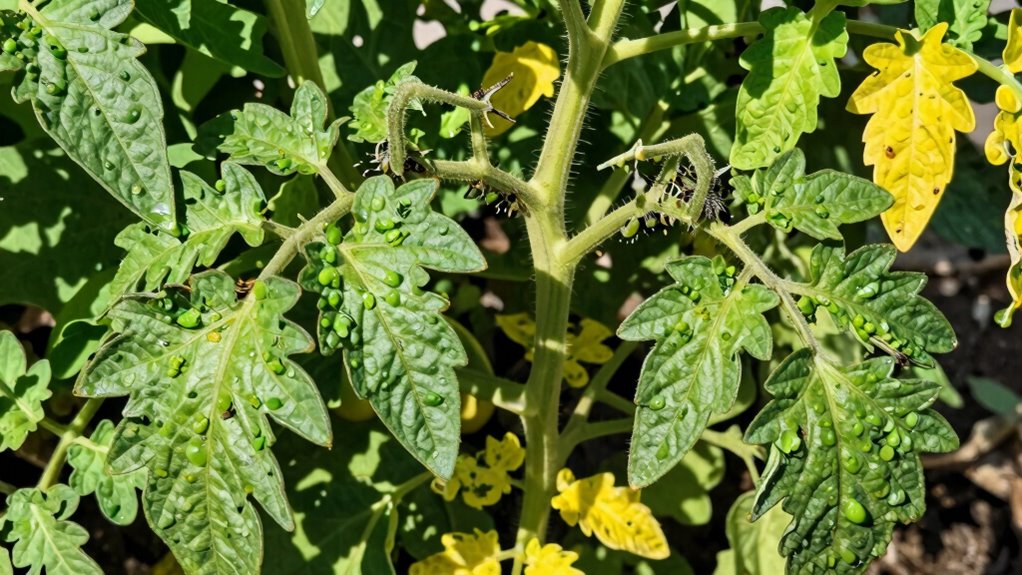
Overfeeding your plants might seem like a way to boost growth, but it often leads to more harm than good. When you give your plants too much fertilizer or nutrients, you disturb the delicate balance of the soil. This soil imbalance can cause roots to become overwhelmed, making it harder for plants to absorb what they truly need. Instead of healthy growth, you may notice yellowing leaves, weak stems, or even root rot. Overfeeding creates a perfect storm for nutrient toxicity, where excess nutrients build up to toxic levels. This toxicity stresses your plants, weakening their natural defenses against pests and diseases.
When plants are stressed by nutrient toxicity, they become more vulnerable to pest infestations. Pests like aphids, spider mites, and whiteflies thrive on weakened, stressed plants because they’re easier to feed on and less capable of defending themselves. Overfeeding doesn’t just affect the plant; it alters the soil environment, encouraging the growth of harmful fungi and bacteria that can further weaken your plants’ health. These pathogens can create a cycle where pests find it easier to invade, leading to persistent infestations that are hard to control. Additionally, overfeeding can disrupt the soil microbiome, which plays a crucial role in maintaining plant health and nutrient uptake.
Moreover, overfeeding can cause an excess of nutrients in the soil, which attracts pests that are drawn to specific chemical cues or nutrient-rich environments. For example, certain pests are attracted to nitrogen-rich foliage, which results from overfeeding. When you add too much fertilizer, you may inadvertently signal pests to settle in your garden or indoor plants. This creates a situation where pests establish themselves more easily, making pest problems even more difficult to manage. Additionally, excessive fertilization can lead to the buildup of salts in the soil, which further inhibits nutrient uptake and stresses the plants. An imbalance in soil nutrients can also lead to poor plant growth and reduced resilience against pests.
In addition to inviting pests, overfeeding can also lead to a buildup of salts in the soil, further inhibiting nutrient uptake and stressing the plants. This salt accumulation can make the soil inhospitable, forcing roots to work harder or become damaged, which again weakens the plant’s immune response. This can also cause chemical imbalances that negatively affect overall plant health. A weakened plant is less capable of resisting pest attacks, so the cycle of stress, pest invasion, and damage continues. Proper feeding practices, combined with understanding soil health, help maintain a healthy environment for your plants. Maintaining awareness of plant nutrient requirements and adjusting feeding routines accordingly can prevent these issues and promote a thriving garden.

Miracle-Gro Organic Plant Food, 32 fl. oz.
MADE FROM PLANTS: Miracle-Gro Organic Plant Food is an outdoor and indoor plant fertilizer made from plants for…
As an affiliate, we earn on qualifying purchases.
As an affiliate, we earn on qualifying purchases.
Frequently Asked Questions
How Can I Tell if I’M Overfeeding My Plants?
You can tell if you’re overfeeding your plants by observing signs like yellowing leaves, stunted growth, or nutrient imbalance symptoms. Overfeeding often leads to soil degradation, which harms plant health. If you notice excess fertilizer runoff or salt buildup in the soil, you’re likely overdoing it. Regularly check your plants and soil, and adjust fertilization accordingly to prevent nutrient imbalance and protect your plants from pests and problems.
Are Certain Plants More Prone to Pest Issues From Overfeeding?
Yes, some plants are more prone to pest issues from overfeeding. Nutrient imbalances caused by excess fertilizer weaken their natural defenses, making them more susceptible. Plants like tomatoes and roses tend to be especially vulnerable because overfeeding can lead to lush, tender growth that pests love. You should monitor feeding carefully and guarantee you’re providing the right nutrients in the right amounts to reduce pest problems and keep your plants healthy.
What Are the Signs of Pest Infestation Caused by Overfeeding?
You’ll notice pests like aphids, spider mites, or whiteflies appearing more frequently if overfeeding causes an infestation. You might see distorted leaves, sticky residues, or unusual webbing. To combat this, practice companion planting with pest-repelling herbs like basil or marigolds, and use natural repellents such as neem oil or insecticidal soap. Regularly inspecting your plants helps catch problems early and keeps pests at bay, especially when overfeeding worsens the situation.
How Does Overwatering Differ From Overfeeding in Pest Attraction?
It’s no coincidence that overwatering and overfeeding attract pests differently. Overwatering harms root health by causing rot, creating a damp environment that invites fungi and certain pests. Overfeeding, however, leads to nutrient imbalance, which weakens plants and makes them more appealing to pests. While overwatering saturates roots, overfeeding disrupts nutrient uptake, making plants vulnerable. Both issues increase pest attraction, but through distinct mechanisms affecting plant resilience differently.
Can Using Organic Fertilizers Reduce Pest Problems From Overfeeding?
Yes, using organic fertilizers can reduce pest problems from overfeeding. Organic options like compost tea boost plant health naturally, making them more resistant to pests. Plus, they encourage beneficial insects and soil microbes that act as natural repellents. Avoid synthetic fertilizers, which can weaken plants and attract pests. By choosing organic fertilizers, you create a balanced environment where pests are less likely to thrive, helping keep your plants healthier.

Rapitest Soil Test Kit for Gardens, Vegetables, Flowers and Lawns. USA designed and assembled soil tester completely, quickly and accurately measures/analyzes soil pH acidity and garden nutrients.
Quick, at home results for Soil pH, Nitrogen, Phosphorous and Potash Innovative and inexpensive soil test kit features…
As an affiliate, we earn on qualifying purchases.
As an affiliate, we earn on qualifying purchases.
Conclusion
Remember, overfeeding your plants can open the floodgates for pests, turning your lush garden into a pest paradise. Just like giving an inch can lead to taking a mile, too much fertilizer can upset the balance, inviting unwanted trouble. Keep your plants well-fed but not overindulged, and you’ll avoid turning a simple gardening task into a pest control nightmare. Stay vigilant, and your garden will thrive without the pest problems.
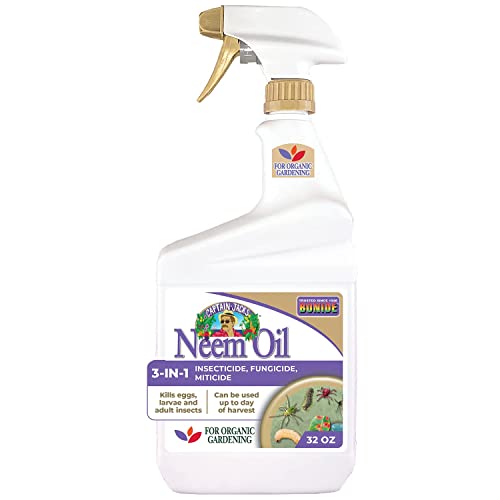
Bonide Captain Jack's Neem Oil, 32 oz Ready-to-Use Spray, Multi-Purpose Fungicide, Insecticide and Miticide for Organic Gardening
MULTI-PURPOSE BUG KILLER – Bonide Neem Oil is a perfect pest control solution for any garden dealing with…
As an affiliate, we earn on qualifying purchases.
As an affiliate, we earn on qualifying purchases.

Hydroponics pH Up Down Solution pH Control Kit,pH Adjuster for Hydroponic, Aquaponic, Balance Nutrient Solution, Include pH Test Strips(8.45oz/250ml)
✅Precise pH Control – Formulated with food-grade phosphoric acid (pH Down) and premium buffering agents, this kit ensures…
As an affiliate, we earn on qualifying purchases.
As an affiliate, we earn on qualifying purchases.