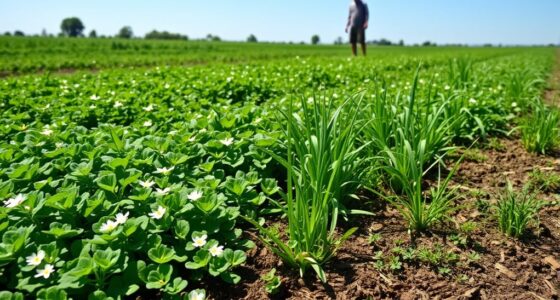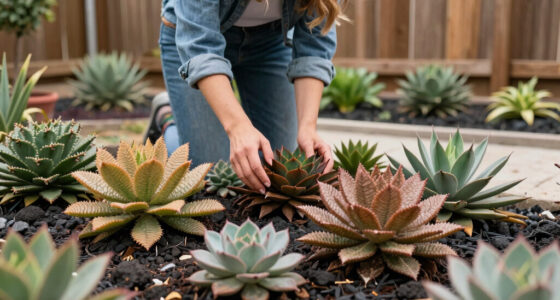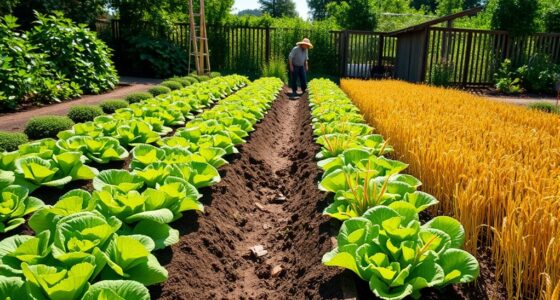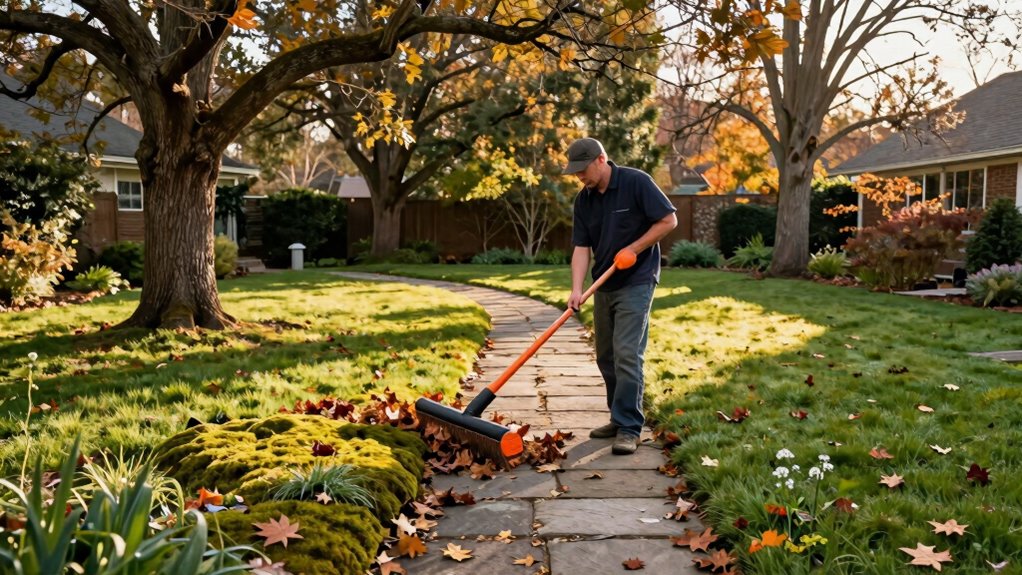

A late-season cleanup should be selective, not extreme, because removing all leaf litter and debris can harm wildlife habitats, disrupt soil health, and reduce natural pest control. Leaving some organic material helps maintain biodiversity and supports beneficial microbes that improve soil fertility. Gentle cleanup practices protect these essential ecosystems while still keeping your yard tidy. If you want to learn how to strike the right balance, there’s more to weigh for a healthy, thriving landscape all year round.
Key Takeaways
- Preserving some leaf litter supports overwintering insects, which are vital for early spring bird diets.
- Complete removal can disturb soil health, reducing nutrients and increasing erosion risks.
- Selective cleanup maintains habitats for wildlife, promoting biodiversity and ecosystem resilience.
- Balancing debris removal controls pests without eliminating beneficial microorganisms that naturally manage pests.
- Thoughtful, moderate cleanup ensures long-term landscape vitality and environmental sustainability.
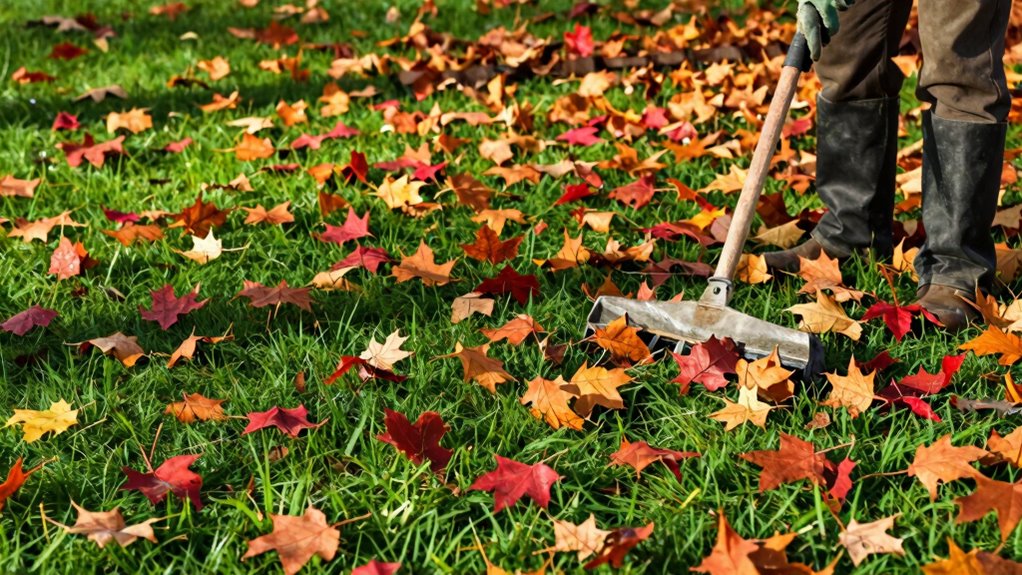
Have you ever wondered why a harsh, all-or-nothing approach to late-season cleanup might do more harm than good? When you clear out every last leaf, branch, or dead plant material, you might think you’re helping your yard look tidy and preparing it for winter. But in reality, you’re risking the health of your soil and the wildlife that depends on your outdoor space. Instead, adopting a selective approach to cleanup can foster a healthier environment and support local ecosystems.
Wildlife preservation is a key reason to be cautious with your cleanup efforts. Many creatures, such as insects, birds, and small mammals, rely on leaf litter and plant debris for shelter, nesting, and food. Removing all debris can disturb these habitats, forcing animals to abandon their homes or leave the area altogether. For example, some insects overwinter in leaf piles, providing an essential food source for birds come spring. By leaving some of this natural cover intact, you help sustain local wildlife populations and promote biodiversity. Maintaining a natural habitat in your yard encourages a thriving ecosystem and helps support the complex food chain.
Beyond protecting animals, a selective cleanup benefits soil health. When you clear every leaf and plant residue, you disrupt the natural cycle of decomposition. Organic matter in your yard acts as an indispensable nutrient reservoir, enriching the soil as it breaks down. This process supports beneficial microbes and fungi that improve soil structure, enhance water retention, and promote healthy plant growth. Removing all debris can expose soil to erosion and compaction, which diminishes its fertility. Instead, leaving some organic material in place allows nature to do the work for you, gradually recycling nutrients and maintaining the integrity of your soil. Incorporating soil conservation practices can further enhance these benefits and help sustain a healthy landscape. Additionally, a balanced cleanup minimizes disruption to the soil ecosystem, ensuring it remains resilient through seasonal changes. A resilient soil system is essential for long-term plant health and environmental stability.
A balanced cleanup approach also helps prevent the spread of pests and diseases. Many pathogens overwinter in leaf litter or decaying plant material. Clearing everything away might seem like a good idea, but if you remove only the most obvious threats and leave behind some natural debris, you reduce the chances of disturbing beneficial insects and microorganisms that naturally control pests. It’s about striking the right balance—removing enough to keep pests at bay, but not so much that you eliminate crucial habitat and soil benefits.
Additionally, understanding the importance of biodiversity can guide your cleanup practices to support a diverse array of species. In the end, your goal should be to create a yard that’s both tidy and sustainable. By being selective in your late-season cleanup, you support wildlife preservation, protect soil health, and foster a resilient, thriving outdoor space. It’s a way to be environmentally responsible while still preparing for the colder months ahead. Think of your yard as a miniature ecosystem—treat it with care, and it will reward you with a healthier, more vibrant landscape year-round.
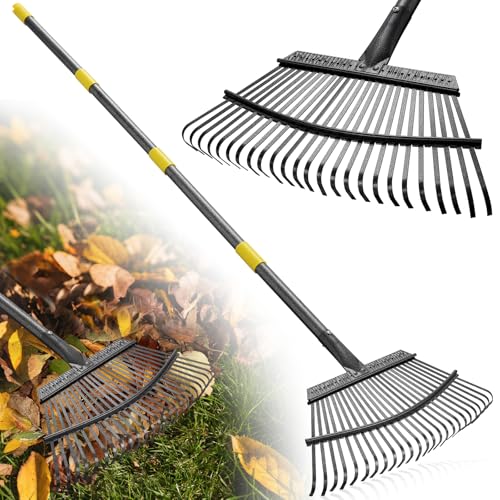
Garden Rake for Leaves: 18” Wide Metal Leaf Rake, 65” Long Adjustable Handle, Heavy Duty 25 Teeth, Fast Kids Women Large Lawn Yard Garden Leaf Cleanup Gardening Rakes: Grass,Debris,Pine Needles Pick
Heavy Duty Rake: Garden leaf rake made of durable steel is more durable than plastic rakes. 25 Metal…
As an affiliate, we earn on qualifying purchases.
As an affiliate, we earn on qualifying purchases.
Frequently Asked Questions
How Do I Determine Which Plants to Prune Late in the Season?
You determine which plants to prune late in the season by evaluating their plant health and growth. Remove only dead, damaged, or diseased branches using proper pruning techniques to avoid stressing the plant. Focus on shaping and maintaining the plant’s structure rather than over-pruning. This selective approach helps protect the plant during winter, promotes healthy growth, and guarantees it’s prepared for the upcoming season.
What Tools Are Best for Selective Cleanup?
You should use sharp pruning shears and loppers for selective cleanup, as they give precise cuts and prevent damage. For thicker branches, power pruning tools like electric or gas-powered pruners work best. Always maintain your tools by cleaning and sharpening them regularly, ensuring clean cuts and preventing disease spread. Proper tool maintenance makes your pruning safer and more effective, helping you target only the plants that need it without overdoing the cleanup.
When Is the Ideal Time for Late-Season Cleanup?
You should aim for late-season cleanup when the weather cools, leaves fall, and plants show signs of dormancy. During this time, you safeguard garden aesthetics by tidying up without overdoing it, while preserving wildlife habitats that rely on plant cover. This balance ensures your garden remains visually appealing and ecologically healthy, encouraging beneficial insects and wildlife to thrive through the winter and into spring.
Can Late-Season Cleanup Prevent Pest Infestations?
Yes, late-season cleanup can help prevent pest infestations by removing decaying plant material that attracts pests. You should adopt composting strategies that discourage pests, like turning compost regularly and avoiding added meats or dairy. Keep some plant debris for wildlife preservation, providing habitat for beneficial insects and birds. This balanced approach reduces pests and supports local ecosystems, ensuring your garden stays healthy and productive into the next season.
Should I Remove All Fallen Leaves in My Yard?
You shouldn’t remove every single fallen leaf, or your yard might look like a barren wasteland! Instead, leave some leaves for garden aesthetics and natural insulation. Plus, those leaves can provide composting benefits, enriching your soil naturally. A selective cleanup maintains the beauty of your yard while supporting beneficial insects and soil health. So, strike a balance—clean up thoughtfully, not excessively, for a healthier, more attractive yard.
garden compost bin
As an affiliate, we earn on qualifying purchases.
As an affiliate, we earn on qualifying purchases.
Conclusion
As you near the end of the season, remember that cleanup isn’t about striking everything down like a storm. Instead, be gentle, selective—like tending a fragile garden that needs care, not destruction. Your yard’s beauty lies in its balance, in the quiet resilience that remains after a thoughtful touch. Embrace the art of restraint, and let your landscape breathe and flourish, whispering stories of growth and renewal for seasons to come.
wildlife-friendly yard debris removal tools
As an affiliate, we earn on qualifying purchases.
As an affiliate, we earn on qualifying purchases.

Walensee Lawn Aerator Spike Metal Manual Dethatching Soil Aerating Lawn with 15 Iron Spikes, Pre-Assembled Grass Plug Aerator Tools for Yard, Lawn Aeration, Garden Tool, Revives Lawn Health, Patented
【EFFECTIVE MANUAL LAWN AERATOR TOOL】: Walensee spike lawn aerator helps loosen soil and create small channels so air,…
As an affiliate, we earn on qualifying purchases.
As an affiliate, we earn on qualifying purchases.