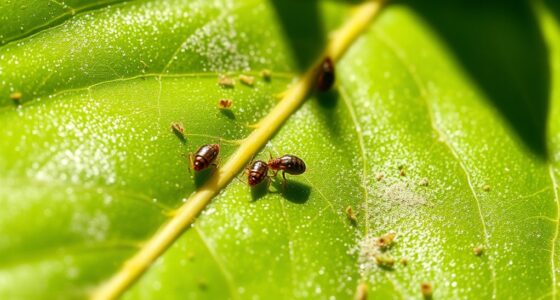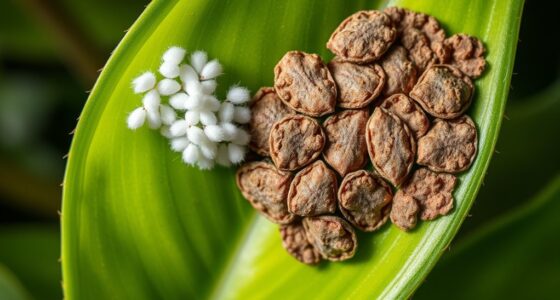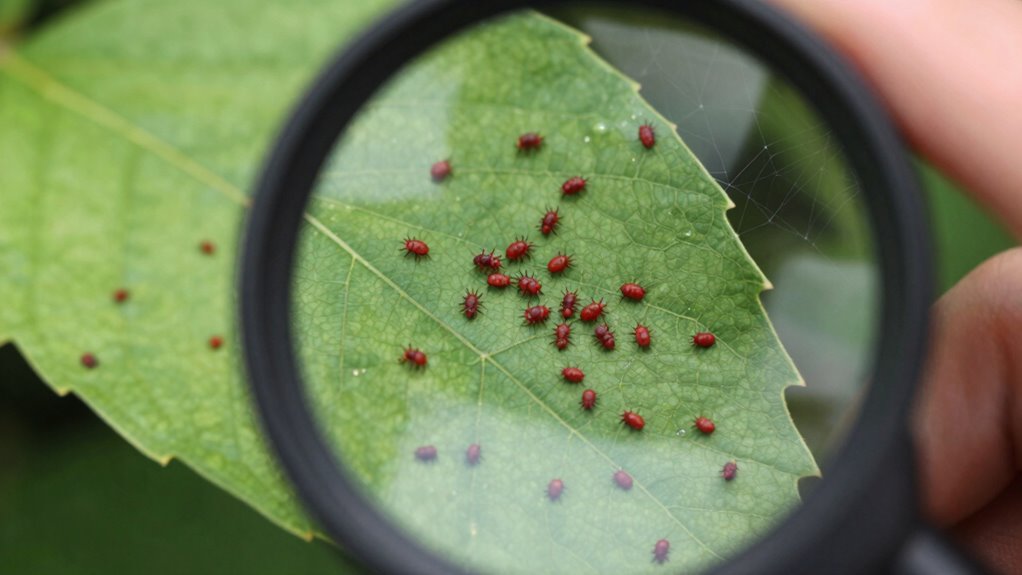

To catch spider mites early with a hand lens, hold the lens close to your eye and position it over the leaf surface, focusing carefully on the undersides where mites hide. Look for tiny moving dots, stippling, or faint webbing—signs of infestation before the webbing develops. Use the magnification to distinguish mites from other surface textures. Staying vigilant with this technique helps you identify problems early; keep exploring for more tips on effective inspection.

Get garden gear delivered free with Prime
- Fast, free delivery on millions of items
- Prime Video, Amazon Music and more included
- Member-only deals all year
Key Takeaways
- Hold the hand lens close to your eye and position it directly over the leaf surface to magnify tiny pests.
- Focus on the undersides of leaves where spider mites often hide and lay eggs.
- Look for tiny moving dots, stippling, and faint webbing as early infestation signs.
- Scan each leaf thoroughly in a methodical manner for consistent detection.
- Use the lens to distinguish mites from surface textures, aiding early identification before webbing forms.
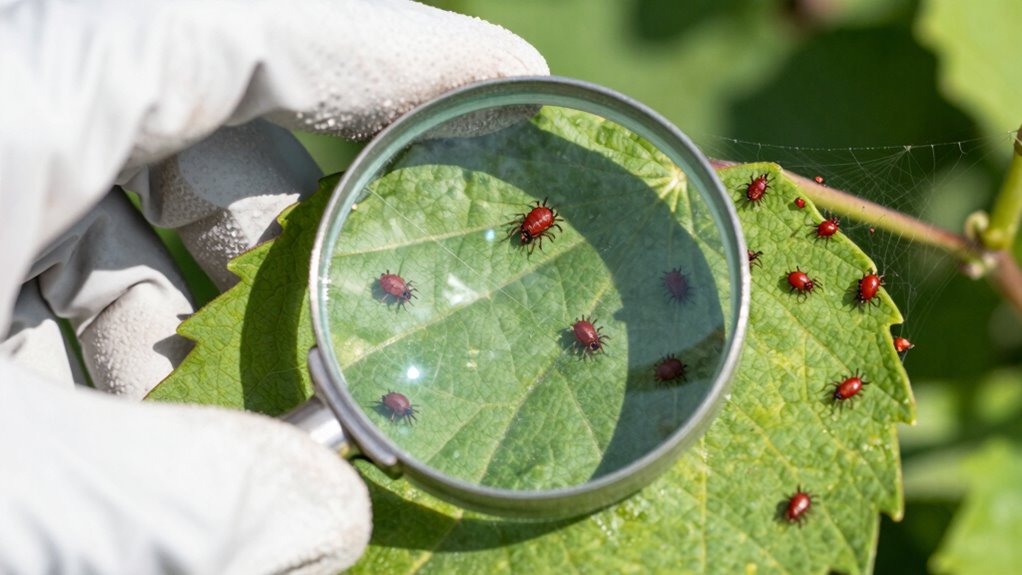
Ever wonder how to spot tiny spider mites on your plants? These pests are so small that they can easily hide from the naked eye, making early detection tricky but essential. Using a hand lens is one of the best plant inspection techniques you can adopt to catch these pests early, before they start weaving their webs. When you’re aiming for natural pest control, catching spider mites early allows you to manage them without resorting to harsh chemicals. Your eye, paired with a good-quality hand lens, becomes your most effective tool to identify problems before they escalate.
Start by closely examining the undersides of your plant leaves, where spider mites tend to congregate. Hold the hand lens close to your eye and position it over the leaf surface. Look for tiny specks that move, which could be spider mites, or their faint, silvery webbing. With plant inspection techniques like this, you can detect the mites at a very early stage. The key is to be thorough and methodical, scanning each leaf and noting any irregular coloration, stippling, or fine webbing. Often, the mites will appear as tiny moving dots, but they can be difficult to distinguish without magnification. Regular inspection helps build a consistent detection routine for early pest management. Incorporating visual inspection techniques into your routine enhances your ability to catch pests before they cause significant damage. Additionally, understanding the tiny size of spider mites emphasizes the importance of magnification for accurate identification. Recognizing the early signs of infestation can help prevent extensive damage to your plants.
When inspecting, don’t just focus on the top of the leaves—check the undersides, where mites tend to hide and lay eggs. Use the hand lens to get a close-up view of the surface textures, looking for the small, oval bodies of the mites. If you notice any small, moving specks or a fine webbing pattern, it’s a sign that spider mites are present. Catching them early with a good plant inspection routine helps you implement natural pest control measures, like spraying with a jet of water or introducing beneficial insects, before the infestation gets out of hand. Recognizing how plant pests behave and hide makes your inspections more effective and targeted.
It’s also important to be consistent with your inspections—make it part of your weekly plant care routine. The sooner you detect the mites, the easier it is to control them naturally. Using a hand lens makes it easier to spot these tiny pests and helps you avoid unnecessary pesticide use. Plus, it gives you confidence in your ability to identify problems early, ensuring your plants stay healthy and vibrant. Remember, early detection through diligent plant inspection techniques is your best defense against spider mites, and a good hand lens is your best tool for catching them before webbing appears.
As an affiliate, we earn on qualifying purchases.
Frequently Asked Questions
What Is the Ideal Magnification Level for Inspecting Spider Mites?
You should use a hand lens with at least 10x magnification for inspecting spider mites. This level offers ideal magnification clarity, allowing you to see mites clearly without losing detail. When choosing a lens, prioritize durability so it withstands regular use. A sturdy, high-quality hand lens ensures you can spot mites early, preventing webbing and damage. Remember, the right magnification and durable design are key to effective inspection.
Can a Hand Lens Be Used to Identify Different Mite Species?
A hand lens can help you identify different mite species, but don’t expect it to be foolproof—”looks can be deceiving.” Mite behavior and physical features vary, making identification challenges common. Using a hand lens with good magnification and careful observation, you can spot differences in size, color, and body shape. However, for precise identification, consulting a specialist or microscope is often necessary. Always stay observant and patient.
How Often Should I Check My Plants for Spider Mites?
You should check your plants for spider mites weekly, especially during warm, dry weather when pests thrive. Regular inspections help maintain plant health and aid in pest prevention. Use a hand lens to examine the undersides of leaves for tiny specks or webbing. Catching mites early prevents infestations from spreading and causing damage, ensuring your plants stay healthy and vibrant. Consistent monitoring is key to effective pest management.
Are LED or Incandescent Lights Better for Inspecting Mites?
LED lights are better for inspecting mites because they emit a bright, focused light that reveals tiny details clearly, helping you catch pests early. Notably, LEDs use about 75% less energy than incandescent bulbs and produce less heat, making your inspection more comfortable and safer for your plants. Incandescent lights, on the other hand, tend to generate more heat and often cast weaker, uneven light, which can make spotting mites more difficult.
What Are the Signs of Early Spider Mite Infestation?
You’ll notice early signs of spider mite infestation through tiny, speckled or stippled leaves, which indicate plant health is declining. You might see fine webbing starting to form or tiny moving dots on the undersides of leaves when inspecting closely with a hand lens. Catching these signs early helps with pest prevention, safeguarding your plants from severe damage. Regular monitoring ensures you address issues before they become widespread.
magnifying glass for plant pests
As an affiliate, we earn on qualifying purchases.
As an affiliate, we earn on qualifying purchases.
Conclusion
Think of your hand lens as a magnifying mirror, revealing hidden worlds on your plants. Like a detective in a forest, you spot the tiny intruders before they spin their webs of trouble. Catching spider mites early is your expedition’s secret weapon, helping your garden stay healthy and vibrant. With this simple tool, you become the guardian of your green sanctuary, stopping the invisible menace before it takes over. Your vigilant eye keeps your plants safe and thriving.
As an affiliate, we earn on qualifying purchases.
garden magnifier for spider mites
As an affiliate, we earn on qualifying purchases.
As an affiliate, we earn on qualifying purchases.
Halloween Picks
halloween
As an affiliate, we earn on qualifying purchases.