You can create a makeshift root cellar at home by choosing a cool, dark, and humid spot like a basement, closet, or sturdy cupboard. Use crates, baskets, or cardboard boxes lined with straw or paper to keep produce off damp surfaces. Keep the environment around 32-40°F with 85-95% humidity, using water bowls or humidifiers if needed. Regularly check your setup for spoilage and make adjustments to extend produce freshness. Keep exploring to learn more about maintaining ideal storage conditions.
Key Takeaways
- Replicate a root cellar environment by choosing a cool, dark, humid space like a basement or closet.
- Use insulated containers or crates lined with straw or paper to maintain proper humidity.
- Keep temperatures between 32-40°F (0-4°C) and humidity at 85-95% for optimal storage.
- Ensure good ventilation to prevent mold and regulate moisture levels.
- Regularly monitor and inspect stored produce to detect spoilage early and adjust conditions accordingly.
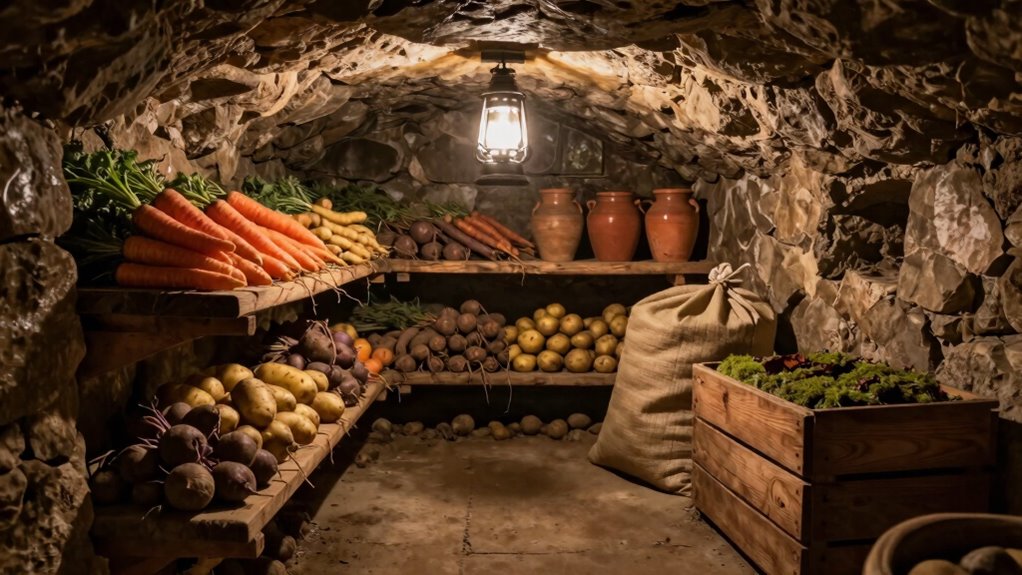
First, focus on choosing the right storage locations within your home. A cool, dark, and humid space is ideal. Think about a basement, closet, or even a sturdy cupboard away from direct sunlight and heat sources. These spots can serve as makeshift root cellars if you regulate the environment properly. To improve storage techniques, you might consider using crates, baskets, or cardboard boxes lined with straw or paper to prevent direct contact with cold, damp surfaces. This setup helps maintain consistent temperatures and humidity levels, essential for seasonal preservation. Maintaining proper indoor air quality can also help regulate humidity levels naturally, reducing the need for artificial humidification. Temperature control is important. Aim for storage conditions around 32 to 40°F (0 to 4°C) with high humidity—around 85-95%. If your space isn’t naturally cool enough, you can use DIY methods. For example, placing a bowl of water nearby can increase humidity, while wrapping produce in moist cloths or using humidifiers can help. Conversely, if you notice your stored veggies wilting or rotting, it’s a sign that conditions are too warm or dry, and you should adjust accordingly. Regularly inspecting your stored produce allows you to remove any spoiled items promptly, preventing the spread of decay. Additionally, understanding storage environment is vital, as it directly impacts how well your produce stays fresh over time. Proper ventilation can also prevent excess moisture buildup, reducing mold and decay risks. Ensuring proper humidity regulation is key to keeping produce fresh longer and avoiding spoilage. Being aware of temperature fluctuations can further help in maintaining optimal storage conditions.
root vegetable storage crates
As an affiliate, we earn on qualifying purchases.
As an affiliate, we earn on qualifying purchases.
Frequently Asked Questions
Can I Build a Root Cellar Indoors?
Yes, you can build an indoor root cellar, but you’ll need to control indoor humidity and guarantee proper ventilation. Use a dehumidifier to maintain stable humidity levels and incorporate ventilation techniques like fans or vents to prevent moisture buildup and mold. Choose a cool, dark, and insulated space, such as a basement or closet, and reinforce it with shelves to store root vegetables securely. Proper ventilation and humidity control are key to successful indoor storage.
What Are the Best Alternative Storage Options?
You should consider options like cool, dark basements, insulated closets, or wine coolers, which offer stable temperature regulation and good ventilation systems. Keep these spaces dark and maintain consistent temperatures between 32-55°F to preserve your produce. Ventilation is essential to prevent humidity buildup and mold. Regularly monitor temperature and humidity levels, and guarantee airflow to keep your stored items fresh and safe without a traditional root cellar.
How Do I Prevent Mold in a Root Cellar?
To prevent mold in a root cellar, you should focus on proper ventilation techniques and mold prevention. Guarantee good airflow by installing vents or fans, which reduce humidity and moisture buildup. Keep the temperature consistent and avoid excess moisture by inspecting stored produce regularly. Using moisture absorbers like charcoal or silica gel can also help. Proper ventilation and moisture control are key to preventing mold and keeping your stored foods fresh.
Is a Root Cellar Suitable for All Climates?
Is a root cellar suitable for all climates? Think of it like a chameleon—climate adaptation is key. In cool, humid areas, it works wonders, maintaining the right storage temperature to preserve produce. However, in hot, dry climates, it might struggle with temperature control, making it less ideal. You’ll need to take into account local conditions and possibly adapt your storage strategies to guarantee your produce stays fresh.
How Long Can I Store Food Without a Root Cellar?
You can store food for several months without a root cellar by practicing seasonal food preservation and using proper container insulation. Keep root vegetables in cool, dark places like a basement or insulated garage, and consider wrapping them in materials that maintain consistent temperatures. Properly cured and stored, foods like potatoes and carrots can last 2-6 months, depending on your environment. Insulation and cool conditions are key to extending shelf life without a dedicated cellar.
humidifier for produce storage
As an affiliate, we earn on qualifying purchases.
As an affiliate, we earn on qualifying purchases.
Conclusion
Now, you’ve got the essentials to store your harvest without a traditional root cellar. But what if there’s more to discover—secrets that could extend your food’s freshness even further? Keep experimenting, stay curious, and you might reveal storage solutions you never imagined. The possibilities are endless, and your next great idea could be just around the corner. Are you ready to take your food preservation to the next level? The journey’s only just beginning.
insulated storage containers for root vegetables
As an affiliate, we earn on qualifying purchases.
As an affiliate, we earn on qualifying purchases.
home makeshift root cellar setup
As an affiliate, we earn on qualifying purchases.
As an affiliate, we earn on qualifying purchases.