
Insect hotels often favor the wrong occupants because poor design, maintenance, and placement create ideal conditions for pests instead of beneficial insects. Damaged or damp materials, along with cluttered surroundings, attract pests like spiders and beetles. Habitats with too many nooks or unintentional shelter sites can also invite unwanted visitors. If you want to learn how to attract the right insects and keep pests out, keep exploring the factors that influence their occupants.
Key Takeaways
- Poor maintenance and decaying materials create ideal breeding sites for pests like mold, ants, and wasps.
- Excess habitat complexity can shelter both beneficial insects and unwanted pests such as spiders and beetles.
- Placement near pest hotspots or unmanaged areas increases the likelihood of pest colonization.
- Neglect and infrequent inspections allow damp, decayed materials to attract and harbor pests.
- Design choices mimicking natural habitats may inadvertently attract pest species if not carefully planned.
Insect hotels are innovative structures designed to provide safe habitats for beneficial insects, supporting local ecosystems and promoting biodiversity. However, despite their good intentions, these hotels often end up attracting the wrong occupants. One major reason is pest attraction. If the hotel isn’t properly maintained or built with pest control in mind, it can become a haven for unwanted insects like wasps, ants, or even mold-spreading bugs. These pests are often drawn to the same shelter sites as the beneficial insects, especially if the materials used are decaying, damp, or poorly ventilated. For example, decaying wood or overly damp materials can attract wood-boring pests or fungi, making the hotel a breeding ground for insects that aren’t helpful or could even be harmful.
Decaying or damp materials in insect hotels attract pests and fungi, turning shelters into breeding grounds for harmful insects.
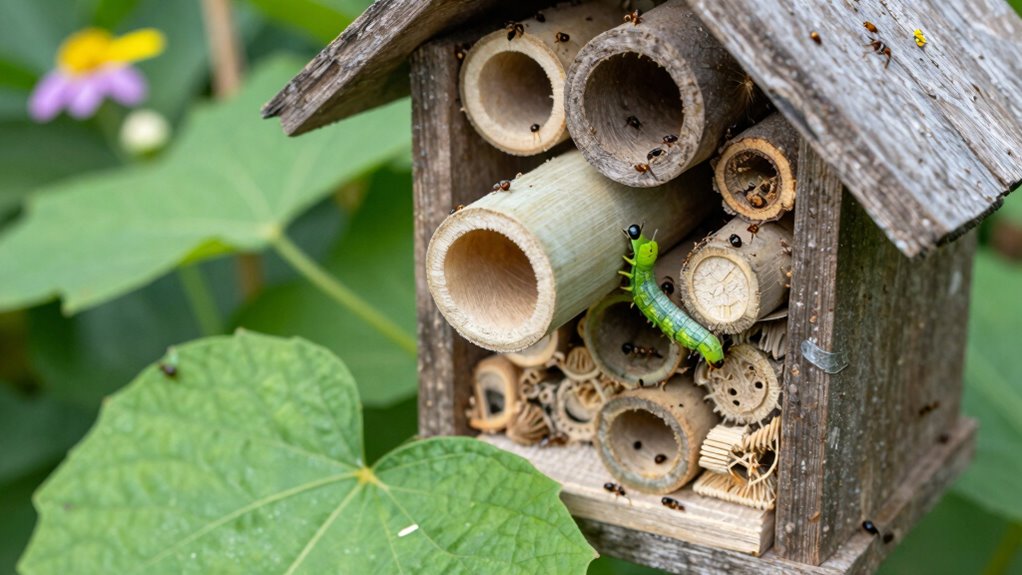
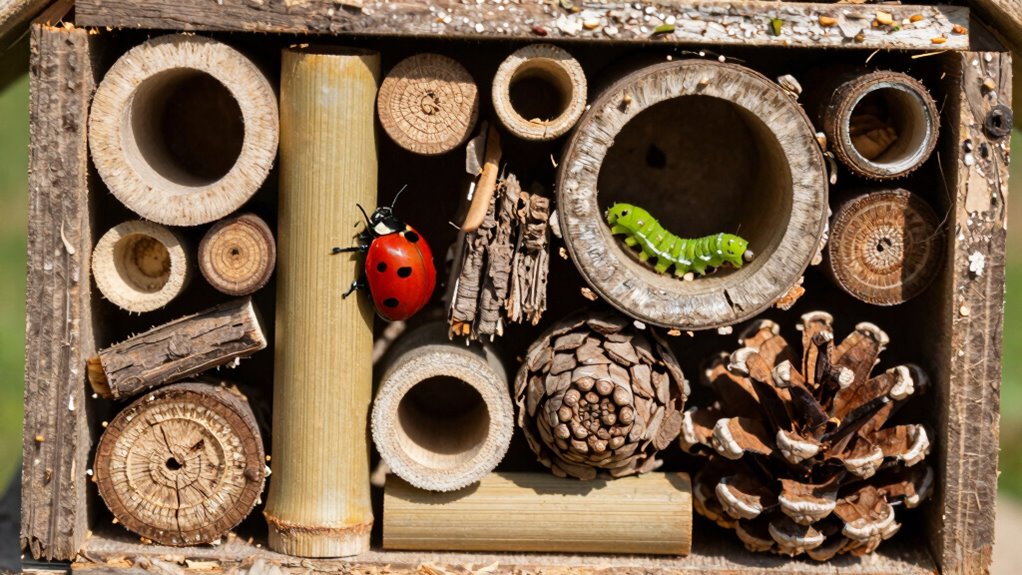
Another factor that influences the types of insects that move in is habitat diversity. While a diverse environment is generally good for supporting a wide array of beneficial insects, it can also inadvertently attract species that aren’t meant to be there. For instance, if your insect hotel offers a variety of nooks, tubes, and crevices, it might seem ideal for solitary bees or ladybugs. But these same structures can also provide shelter for pests like spiders or certain beetles that aren’t beneficial to your garden. Sometimes, the design of the hotel makes it easier for pests to take over, especially if it mimics natural habitats that pests already favor.
Additionally, the location of your insect hotel can influence who moves in. Placing it in an area with lots of pest activity, like near compost piles or overgrown weeds, increases the likelihood of attracting pests. The surroundings can also impact habitat diversity; a cluttered or unmanaged garden might foster a broader range of insects, including pests, than a well-maintained, carefully planned habitat. Over time, if you don’t regularly check and clean your insect hotel, it can become a breeding ground for pests rather than a sanctuary for beneficial insects. Pest attraction is often a result of neglect or poor design, and habitat diversity, while generally positive, can sometimes work against you if it allows pests to settle comfortably alongside your intended beneficial occupants.
In the end, understanding how pest attraction and habitat diversity influence your insect hotel helps you create a more effective, pest-free space. Regular maintenance, thoughtful placement, and choosing the right materials will make it easier to attract the good insects while keeping the pests at bay.
As an affiliate, we earn on qualifying purchases.
Frequently Asked Questions
How Do Insect Hotels Attract Specific Beneficial Insects?
You attract specific beneficial insects by customizing the habitat with diverse materials suited for their needs, enhancing pollinator diversity. Use hollow stems, wood blocks with holes, and layered vegetation to create ideal nesting sites. By tailoring the environment, you encourage targeted insects like solitary bees and ladybugs to settle in, ensuring your insect hotel supports the right beneficial occupants. This approach promotes healthier ecosystems and more effective natural pest control.
Can Insect Hotels Be Used Indoors Effectively?
You can definitely use insect hotels indoors, turning your space into a bustling insect metropolis. Place it in a quiet corner with good airflow, away from direct sunlight and drafts. Indoor placement helps with pest control by attracting beneficial insects like ladybugs and lacewings, which naturally keep pest populations in check. This microhabitat becomes a tiny ecosystem, working silently to balance your indoor garden’s health and harmony.
What Materials Are Best for Insect Hotel Construction?
You should use natural materials like untreated wood, bamboo, and hollow stems for your insect hotel, as they mimic insects’ natural habitats. Avoid treated or painted wood, which can be harmful. Opt for sustainable design by repurposing recyclable materials whenever possible. These choices attract the right occupants, support biodiversity, and guarantee your insect hotel remains eco-friendly and effective. Your thoughtful selection helps create a thriving, balanced environment.
How Often Should Insect Hotels Be Cleaned or Maintained?
You should clean and maintain your insect hotel at least once a year, ideally in early spring or fall. Follow a regular cleaning schedule to remove debris and prevent mold or pests. Maintenance tips include gently cleaning out old nesting materials, checking for damage, and replacing worn parts. This keeps the hotel inviting and safe for beneficial insects, ensuring they thrive and do their job in your garden.
Are There Any Risks of Attracting Pests With Insect Hotels?
Yes, insect hotels can attract pests and unwanted visitors, leading to pest infestations. If you don’t position and maintain your hotel properly, it might become a haven for ants, spiders, or even wasps, which could pose problems. To minimize risks, keep the hotel clean, avoid placing it near trash or dense shrubbery, and regularly check for signs of unwanted visitors. Proper management helps guarantee only beneficial insects take up residence.
As an affiliate, we earn on qualifying purchases.
Conclusion
Just like a poorly chosen guest can turn a cozy home into chaos, insect hotels often attract the wrong occupants, sometimes hosting invasive species instead of beneficial pollinators. Imagine setting a welcoming table for friends, only to have uninvited guests crash the party—it’s frustrating, but it underscores the importance of thoughtful design. When you carefully select materials and placement, you create a haven that truly supports the insects you want, making your garden a thriving, balanced ecosystem.
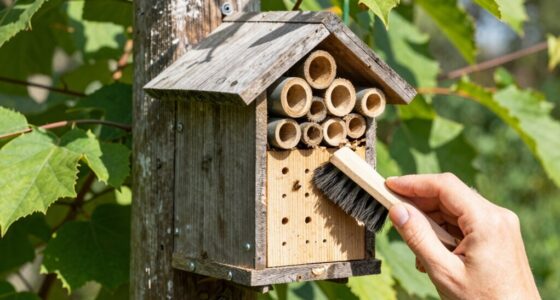
wooden insect hotel with ventilation
As an affiliate, we earn on qualifying purchases.
As an affiliate, we earn on qualifying purchases.
As an affiliate, we earn on qualifying purchases.