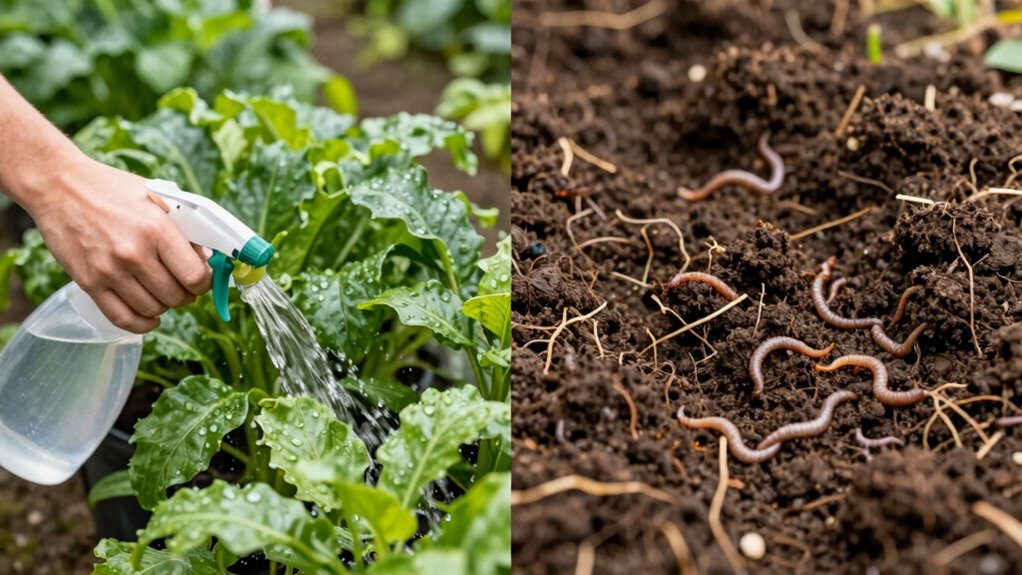

Feeding plants means providing nutrients directly to their roots through fertilizers, giving an immediate boost to growth. Fixing soil, on the other hand, involves improving the soil’s health—adding organic matter, encouraging microbial activity, and building structure to support long-term plant well-being. While feeding offers quick results, fixing soil creates a sustainable environment for healthy roots and better resilience. If you want to understand how caring for soil benefits your garden, there’s more to uncover.

Get garden gear delivered free — and shop member deals
- Fast, free delivery on millions of items
- Access to Prime Big Deal Days deals on October 6–7
- Prime Video, Amazon Music and more included
Key Takeaways
- Feeding plants involves applying nutrients directly to support immediate growth, often through fertilizers.
- Fixing soil focuses on improving soil structure, microbial health, and organic matter for long-term fertility.
- Over-reliance on fertilizers can disrupt soil microbial balance, while soil fixing enhances ecosystem resilience.
- Feeding provides quick nutrient boosts, but fixing soil ensures sustainable nutrient cycling and root health.
- Healthy soil reduces the need for frequent feeding by maintaining a steady nutrient supply naturally.

When it comes to healthy plant growth, many gardeners focus on feeding their plants with fertilizers, but neglecting the soil’s health can limit their success. You might add fertilizer regularly, expecting your plants to thrive, but if the soil isn’t healthy, your efforts won’t yield the best results. Healthy soil supports root health, which is essential for nutrient uptake and overall vitality. When roots are strong and well-developed, they can absorb nutrients more efficiently, leading to vigorous growth. Conversely, poor soil conditions can cause roots to become stunted or diseased, hampering nutrient cycling—the process that naturally makes nutrients available to plants. Without proper nutrient cycling, even the most fertilized plants may struggle to get what they need from the soil.
Healthy soil is key to strong roots and vibrant plant growth.
Focusing solely on feeding plants with chemical fertilizers or organic amendments can provide a quick fix, but it often overlooks the importance of soil structure and microbial activity. Healthy soil isn’t just dirt; it’s a living ecosystem full of microorganisms that break down organic matter, releasing nutrients in forms your plants can absorb. By nurturing this ecosystem, you enhance nutrient cycling, which ensures your plants get a steady supply of essential nutrients over time. When you improve soil health, you’re helping roots establish a stronger connection to their environment, which promotes better water retention, aeration, and disease resistance. Recognizing the significance of soil microbiology is crucial for understanding how organic matter decomposition and nutrient availability work in a thriving garden.
Many gardeners make the mistake of relying heavily on fertilizers without considering soil health. This approach can lead to nutrient imbalances, salt buildup, and reduced microbial activity. Instead, you should aim to build a resilient soil foundation through practices like adding organic matter, composting, and avoiding chemical overuse. These methods foster a healthy soil structure that supports root growth and microbial communities. As a result, nutrient cycling becomes more efficient, and your plants become less dependent on external feeding because they can access nutrients naturally from the soil. Moreover, understanding soil health principles can guide gardeners in making more sustainable choices that benefit the entire ecosystem. Improving soil microbial activity is key to supporting a balanced and productive garden system.
In essence, fixing soil health isn’t about replacing fertilizers but understanding that they’re most effective when the soil ecosystem is thriving. Your focus should be on creating conditions that promote root health and efficient nutrient cycling. When your soil is healthy, your plants are healthier, stronger, and more resilient. By investing in soil vitality, you ensure that your plants have a lasting foundation for growth, reducing the need for constant feeding and helping your garden reach its full potential.
organic soil amendment for garden
As an affiliate, we earn on qualifying purchases.
As an affiliate, we earn on qualifying purchases.
Frequently Asked Questions
How Often Should I Feed My Plants?
You should feed your plants every 2 to 4 weeks, depending on their growth stage and nutrient needs. Regular feeding helps maintain a healthy plant nutrient balance, ensuring they get essential nutrients. Using organic fertilizer benefits your plants by improving soil health and providing gradual nutrient release. Keep an eye on your plants for signs of nutrient deficiency, adjusting feeding frequency as needed for ideal growth and vigor.
Can Fixing Soil Eliminate Plant Diseases?
Fixing soil is like mending a broken foundation, but it won’t automatically wipe out plant diseases. Soil remediation improves soil health and enhances disease prevention, but it doesn’t eliminate existing pathogens. To truly combat plant diseases, you need a combination of soil health strategies and targeted treatments. While healthy soil creates a strong defense, ongoing vigilance and proper care are essential for keeping plants disease-free.
What’s the Best Time to Fix Soil?
You should fix your soil when you notice nutrient imbalances or perform soil testing to identify deficiencies. The best time is during early spring or fall, when plants are less stressed and soil conditions are ideal for amendments. By balancing nutrients and improving soil health during these periods, you give your plants a strong foundation for healthy growth, reducing disease risks and boosting overall vigor.
Do All Plants Require Fertilization?
Not all plants require fertilization, but many benefit from soil amendments that enhance plant nutrition. You should assess your plants’ specific needs, considering soil quality and growth stage. Some plants thrive with minimal fertilization, while others need regular feeding to produce healthy blooms or fruits. By understanding their requirements, you can provide appropriate soil amendments, ensuring ideal plant nutrition and growth without overfeeding.
How Do I Know if My Soil Needs Fixing?
You can tell if your soil needs fixing by conducting a soil test to check nutrient levels and pH. If the test shows deficiencies or imbalances, it indicates your soil needs improvement. To fix it, consider adding organic amendments like compost or manure to enrich the soil naturally. These amendments help restore nutrients, improve structure, and promote healthy plant growth, ensuring your garden thrives.
As an affiliate, we earn on qualifying purchases.
Conclusion
Now that you’ve learned the difference, aren’t you curious how your garden would thrive if you focused on fixing soil first before feeding your plants? Remember, healthy soil acts like a nourishing foundation, giving your plants everything they need to flourish naturally. By understanding and balancing both, you create a vibrant, sustainable garden. So, why not start by nurturing your soil today and watch your plants grow stronger and more beautiful tomorrow?
As an affiliate, we earn on qualifying purchases.
soil structure improving products
As an affiliate, we earn on qualifying purchases.
As an affiliate, we earn on qualifying purchases.
Fall yard work Picks
leaf blowers
As an affiliate, we earn on qualifying purchases.