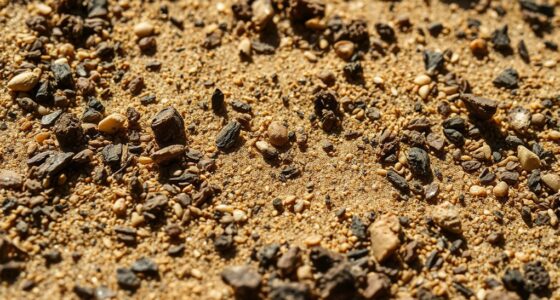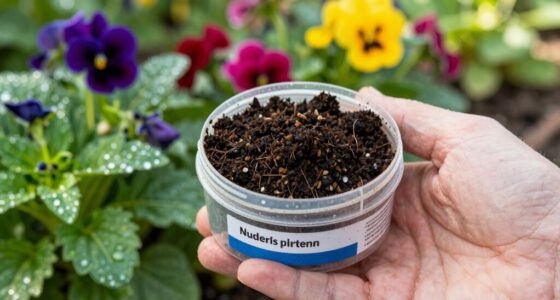
Applying compost in thin layers allows you to maximize nutrient absorption and promote healthier grass more effectively. It prevents smothering and uneven decomposition, ensuring your lawn stays lush and uniform. Thin layers also improve soil aeration, creating tiny air pockets for stronger root growth. Plus, it helps compost decompose evenly and releases nutrients gradually. This simple approach boosts soil health and lawn resilience over time. Keep exploring to discover even more tips for thriving, sustainable lawns.

Get garden gear delivered free with Prime
- Fast, free delivery on millions of items
- Prime Video, Amazon Music and more included
- Member-only deals all year
Key Takeaways
- Thin layers facilitate efficient nutrient absorption without smothering the grass or causing uneven decomposition.
- They promote better soil aeration and structure, encouraging healthy root growth and resilience.
- Light topdressing ensures quicker decomposition and steady, gradual nutrient release.
- Applying compost in thin layers simplifies application and reduces labor, enabling consistent maintenance.
- Overall, thin layers enhance lawn health, sustainability, and eco-friendly soil management.
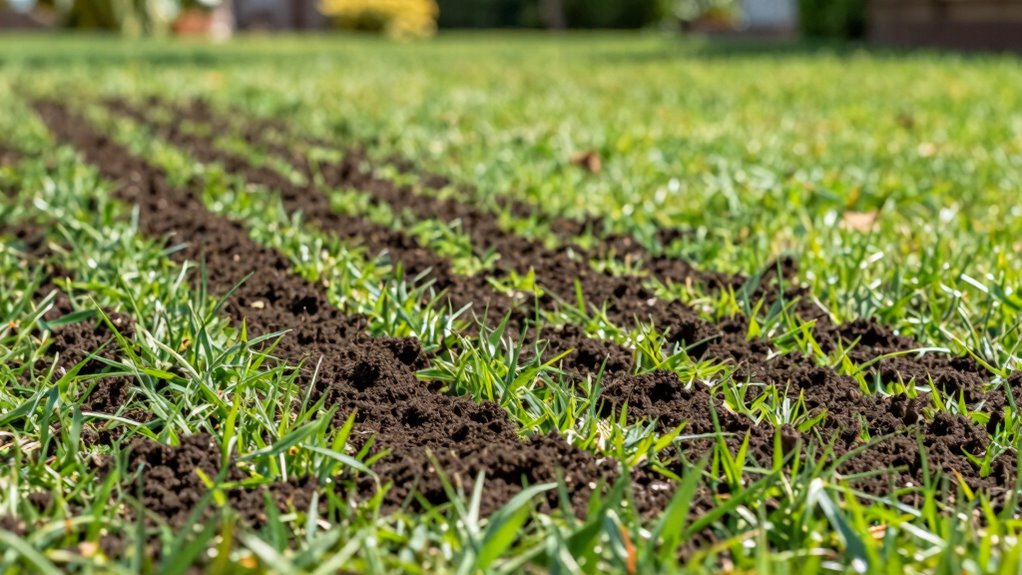
Have you ever wondered how to improve your lawn’s health without heavy or disruptive methods? One effective way is through compost topdressing in thin layers. This technique involves spreading a light, even coating of compost across your grass, which might seem simple, but it offers powerful benefits. When you apply compost in thin layers, you allow your lawn to absorb nutrients more efficiently, promoting healthier growth. Unlike thick applications, thin layers prevent smothering the grass and encourage better soil interaction, making sure your lawn gets what it needs without the risk of suffocation or uneven decomposition.
Applying compost in thin layers also supports soil aeration. When you spread compost lightly, you help loosen the soil, creating tiny pockets of air that improve overall soil structure. Better soil aeration means roots can breathe easier, which boosts their ability to take up water and nutrients. This process enhances nutrient absorption because healthy, well-aerated soil allows roots to access vital elements more readily. As a result, your grass becomes more resilient, vibrant, and better equipped to withstand droughts, pests, and disease.
Light compost topdressing improves soil aeration, helping roots breathe, absorb nutrients, and boost lawn resilience.
Another reason thin layers work so well is that they decompose more evenly and quickly. Thick layers tend to trap moisture and can lead to anaerobic conditions, which slow down decomposition and may cause harmful mold or fungi. In contrast, a light coating of compost breaks down steadily, releasing nutrients gradually over time. This sustained nutrient release supports continuous growth, giving your lawn a steady supply of the elements it needs. Plus, because the compost is spread evenly, it prevents patchy growth and keeps your lawn looking lush and uniform. Proper soil management is essential for maintaining a healthy lawn, and thin compost layers facilitate this process naturally.
Applying compost in thin layers also makes the process less labor-intensive and easier to manage. You don’t need special equipment or a lot of time to spread a light layer across your entire yard. The simplicity of this method means you’re more likely to do it regularly, which compounds the benefits over the long term. Regular application techniques can help maximize nutrient uptake and soil health. Consistent, light topdressing encourages a strong, healthy soil ecosystem. This creates a foundation where your grass can thrive naturally, reducing the need for chemical fertilizers and other interventions. Additionally, using airless paint sprayers or similar equipment can help evenly distribute materials like compost in a controlled manner, making the process even more efficient. Incorporating proper techniques can further optimize the benefits and ensure even coverage.
In essence, compost topdressing in thin layers is a smart, gentle approach to lawn care. It enhances soil aeration, improves nutrient absorption, and promotes even, healthy growth. You’ll notice your lawn becoming more resilient, vibrant, and easier to maintain—without heavy work or risk of damage. This method transforms your yard into a thriving, eco-friendly space that’s both beautiful and sustainable.
As an affiliate, we earn on qualifying purchases.
Frequently Asked Questions
Can Compost Topdressing Be Used on All Types of Grass?
Yes, compost topdressing can be used on all types of grass, but its effectiveness depends on your grass health and soil nutrition needs. You should apply it in thin layers to avoid smothering the grass, regardless of the grass type. Compost enriches soil nutrition, helping your lawn grow stronger and greener. Always consider your specific grass variety and soil condition to guarantee the best results.
How Often Should I Apply Compost Topdressing?
You should apply compost topdressing about twice a year, typically in spring and fall. This frequency helps improve soil aeration and supplies organic nutrients, promoting healthy grass growth. Applying in thin layers ensures the compost integrates well without smothering the grass. Regular topdressing maintains soil vitality, boosts resilience, and encourages lush, green turf. Adjust the frequency based on your lawn’s condition and specific needs for effective results.
Does Compost Topdressing Improve Soil pH?
Yes, compost topdressing can improve soil pH balance by helping to neutralize soil alkalinity or acidity. When you apply compost in thin layers, it gradually releases organic acids and nutrients that adjust the soil’s pH, making it more suitable for plant growth. This natural process supports healthier roots and better nutrient uptake, ultimately enhancing your garden’s overall soil health and ensuring ideal conditions for your plants.
Can Compost Topdressing Prevent Weed Growth?
Yes, compost topdressing can help prevent weed growth by providing weed suppression. When you spread a thin layer of compost, it blocks sunlight from reaching weed seeds, reducing their chances to sprout. Plus, compost enhances soil nutrients, promoting healthy grass and plants that naturally outcompete weeds. This dual action makes compost topdressing an effective, natural way to maintain a lush, weed-free lawn while boosting overall soil health.
What Signs Indicate I Need Compost Topdressing?
You notice your lawn’s color fading or patchy growth—that’s a sign you need compost topdressing. When your soil struggles with poor aeration and nutrient absorption, it hampers healthy grass development. Adding a thin layer of compost revitalizes the soil, improving aeration and nutrient uptake. Don’t wait until it’s too late—address these signs promptly to restore lush, vibrant turf and maintain a thriving, healthy lawn.
As an affiliate, we earn on qualifying purchases.
Conclusion
Think of your garden as a delicate tapestry, each layer woven with care. When you apply compost topdressing in thin layers, you’re like a skilled artisan gently adding subtle strokes to enhance the overall masterpiece. Just as a painter respects the canvas, you nurture your soil with light touches, allowing nutrients to seep in gradually. This careful approach keeps your garden thriving, turning everyday tending into an art form that sustains beauty and growth over time.
As an affiliate, we earn on qualifying purchases.
As an affiliate, we earn on qualifying purchases.
Fall yard work Picks
leaf blowers
As an affiliate, we earn on qualifying purchases.