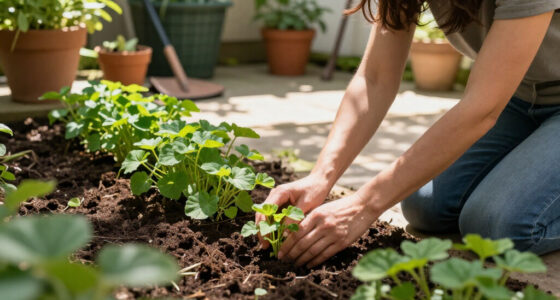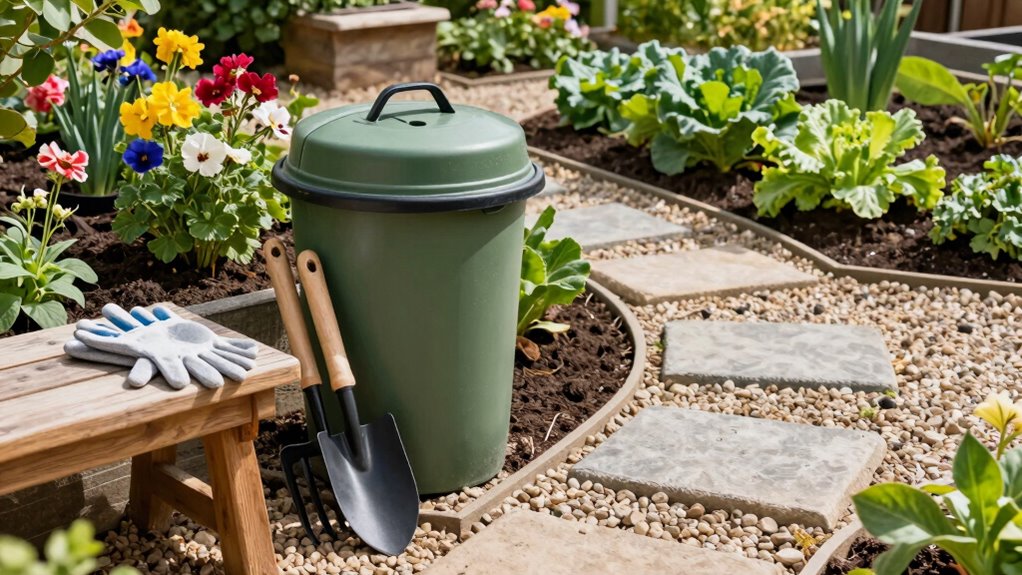
To place your compost, tools, and beds for less walking, position them close to each other in a logical layout. Keep the compost near your main planting beds for easy access and frequent additions. Store tools nearby in wall-mounted racks at comfortable heights to minimize bending. Arrange planting beds for smooth flow, with pathways at least 18 inches wide connecting all zones. Prioritizing ergonomic placement and grouping similar tasks will boost efficiency—more tips await to help you perfect your layout.

Get garden gear delivered free — and shop member deals
- Fast, free delivery on millions of items
- Access to Prime Big Deal Days deals on October 6–7
- Prime Video, Amazon Music and more included
Key Takeaways
- Position compost near main planting beds to minimize carry distance and facilitate easy access for adding and turning.
- Place tool storage close to work zones and organize tools by task for quick retrieval.
- Arrange beds in a circular or linear layout to streamline movement and reduce unnecessary walking.
- Use wide pathways (at least 18 inches) to connect zones, ensuring comfortable access and smooth workflow.
- Design zones at ergonomic heights to reduce bending and fatigue, enhancing overall efficiency.
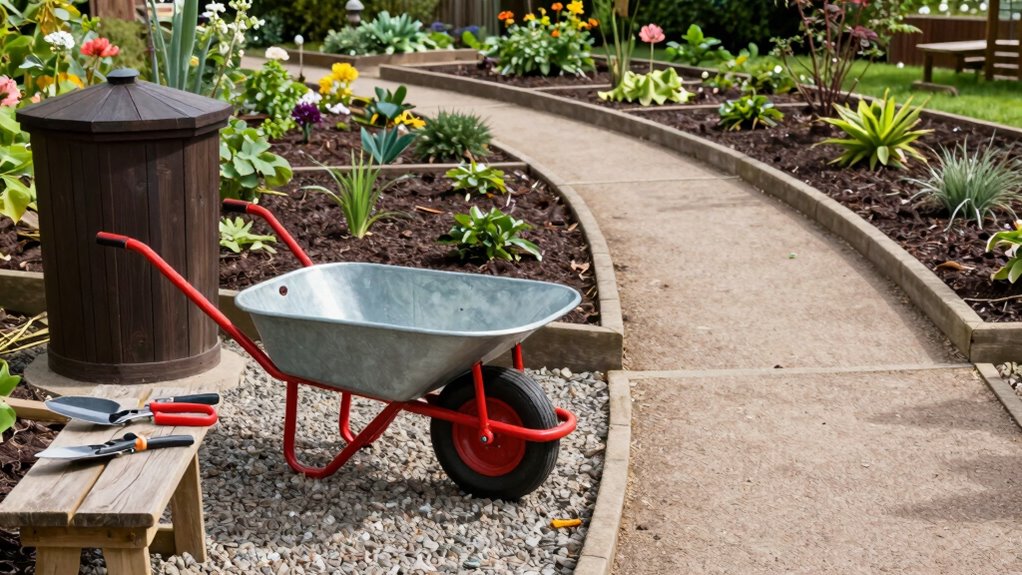
Creating an efficient garden layout can substantially reduce how much you walk while tending your plants. To achieve this, you need to focus on a well-thought-out design that minimizes unnecessary movement. A good garden layout revolves around ergonomic design principles, ensuring that everything you need is within easy reach. When planning, start by mapping out your primary zones—such as compost areas, tool stations, and planting beds—and position them close to each other. This way, you cut down on the distance you travel, saving time and energy.
Begin by placing your compost area conveniently near your main planting beds. Compost should be easily accessible because you’ll be adding scraps frequently and turning it regularly. Position it at a comfortable height if you’re using a compost bin or pile, and keep it close enough to your beds so you don’t have to carry compost long distances. This not only streamlines your workflow but also prevents back strain from unnecessary bending or carrying heavy loads across the yard. When designing your garden, think about ergonomics—place your compost station at an angle or height that reduces strain and makes access effortless.
Next, position your tool storage close to your working zones. Whether it’s a shed, a tool bench, or a wall-mounted rack, keeping your tools within arm’s reach means you won’t waste time searching or walking back and forth. Consider installing hooks or shelves at a comfortable height so you can quickly grab what you need. If you have multiple tools, organize them logically—pruners near pruning areas, watering cans near the beds—so you don’t have to cross the garden multiple times for different tasks. Additionally, incorporating spatial organization into your layout can further optimize your movement and efficiency. Implementing garden ergonomics can also help reduce fatigue and improve your overall comfort while working.
Your planting beds should form the core of your garden layout. Arrange them in a way that allows easy movement around each bed. Wide enough pathways—ideally at least 18 inches—give you room to work comfortably without stepping on soil or plants. If space allows, create a circular or linear flow where you can move from your compost station to your beds and tool station without detours. This flow reduces walking distance and makes tending your plants more efficient. Also, group similar plants or zones together—insect netting, herb sections, vegetable patches—so you don’t have to travel far for specific tasks.
garden compost bin with height adjustment
As an affiliate, we earn on qualifying purchases.
As an affiliate, we earn on qualifying purchases.
Frequently Asked Questions
What Are the Best Materials for Compost Bins?
The best materials for compost bins depend on your compost bin design and the organic waste types you plan to include. Durable, rot-resistant wood or recycled plastic work well, offering longevity and weather resistance. Metal can also be effective but may rust over time. Make sure your bin allows good airflow and easy access for turning your organic waste types to speed up composting. Choose materials that suit your space and budget for maximum results.
How Can I Prevent Pests in My Compost Area?
To prevent pests in your compost area, use a pest deterrent like a tight-fitting compost cover to keep critters out. Make sure to balance greens and browns, avoiding meat and dairy, which attract pests. Turn your compost regularly to aerate and discourage pests. Keep the area tidy, remove any spoiled food promptly, and consider installing a secure bin or lid for added protection.
What Are Cost-Effective Tools for Gardening?
You get what you pay for, so choose versatile, durable tools that suit your urban gardening needs without breaking the bank. Look for multi-purpose hand tools like trowels, pruners, and cultivators, which can handle various tasks. Opt for secondhand or DIY options to save money. These cost-effective tools support sustainable practices and make urban gardening more accessible, helping you grow efficiently while keeping costs down and reducing waste.
How Do I Choose the Right Bed Size?
You should choose garden bed dimensions based on your available space and the plants you want to grow. Opt for bed sizes that are manageable for you to reach across comfortably, typically 3-4 feet wide. Use bed placement strategies that maximize sunlight and accessibility, reducing the need for excessive walking. Smaller beds are easier to maintain and can be arranged efficiently, making your gardening more enjoyable and less tiring.
How Often Should I Rotate Compost Piles?
Think of your compost pile as a living organism that needs regular check-ins. You should rotate your compost every 1-2 weeks through compost turning, which helps aerate and speed up decomposition. During this process, monitor moisture management—adding water if it’s too dry, or carbon-rich materials if it’s too wet. Consistent turning keeps your compost healthy, active, and ready to nourish your garden.
As an affiliate, we earn on qualifying purchases.
Conclusion
By strategically placing your compost, tools, and beds close together, you’ll save time and energy, making gardening more enjoyable. Remember, a recent study shows that gardeners who minimize walking spend up to 30% less time on chores, freeing up more moments for relaxation. So, plan your layout thoughtfully—less walking not only boosts efficiency but also keeps you motivated to nurture your garden every day. Happy gardening!
garden pathway edging and wide stepping stones
As an affiliate, we earn on qualifying purchases.
As an affiliate, we earn on qualifying purchases.
As an affiliate, we earn on qualifying purchases.
Fall yard work Picks
leaf blowers
As an affiliate, we earn on qualifying purchases.