
TL;DR

Get garden gear delivered free with Prime
- Fast, free delivery on millions of items
- Prime Video, Amazon Music and more included
- Member-only deals all year
An Amateur Gardening report has collected seven plants associated with Halloween traditions, death folklore or poisonous risks, from marigolds used in Day of the Dead observances to yew and deadly nightshade. The report combines documented plant characteristics with historical traditions and legends; some origin stories are presented as beliefs rather than verified history.
Amateur Gardening has published a guide to seven plants associated with Halloween folklore, death customs or poisonous hazards, including marigolds, kale, apples, ghost plant, voodoo lily, yew and deadly nightshade. The report brings together plant descriptions and traditional stories, while some accounts—such as claims about the origins of apple bobbing—are presented as beliefs rather than established history.
The plants cover a range of traditions, not all of them specifically Halloween customs. The report says marigolds, sometimes called flowers of the dead, are used in Mexican Day of the Dead observances. Families may arrange petals as pathways believed to help guide the spirits of deceased relatives from cemeteries to home altars. The observance takes place on November 2, and the flowers’ vivid color and distinctive scent are part of the tradition described.
Scottish Halloween customs feature in the report’s accounts of kale and apples. It cites Robert Burns’s 1785 poem “Halloween,” which describes people pulling kale stalks blindfolded to divine details about a future partner. Apple bobbing, meanwhile, is linked to a possible courtship custom in which apples were associated with prospective partners. The report also recounts a much darker alleged connection between apple bobbing and witch persecution, but does not establish that as the game’s historical origin.
The remaining entries draw on unusual appearance, scent or toxicity. Ghost plant, also called Indian pipe, is pale because it lacks chlorophyll and obtains nutrients through a relationship with fungi. The report says voodoo lily flowers produce a smell like decaying meat that attracts flies, and warns that the plant’s sap can irritate skin. It describes yew and deadly nightshade as poisonous plants with long associations with death, while noting historical accounts of deadly nightshade’s cosmetic and medicinal use.
Folklore Meets Garden Safety
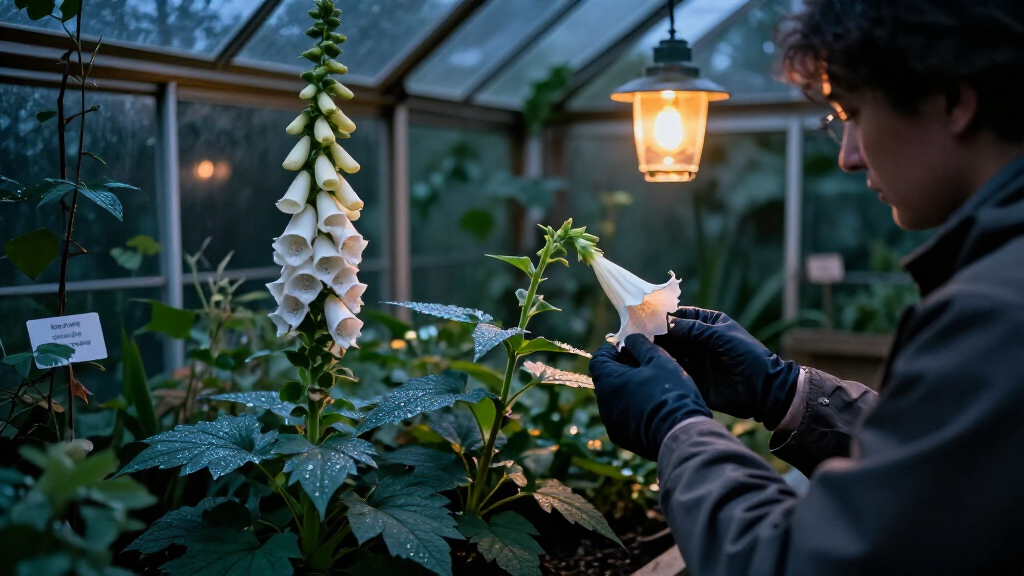
The guide matters to readers in two different ways: it records how plants have acquired cultural meanings, and it draws attention to real hazards in gardens. Yew and deadly nightshade are not simply spooky symbols; the source identifies them as poisonous. Voodoo lily sap can irritate skin, making careful handling relevant to gardeners.
Those practical warnings should be kept distinct from the legends. A story about a plant warding off spirits or an apple game originating in witch trials is not evidence of the claim. By placing both traditions and safety information together, the report offers a seasonal reminder to check plant identification and avoid touching or eating unknown plants, especially where children or pets may be present.
poisonous garden plants for Halloween
As an affiliate, we earn on qualifying purchases.
As an affiliate, we earn on qualifying purchases.
The Traditions Behind Seven Plants
The report is framed around Halloween, but its examples come from different places, periods and practices. The marigold account refers to Day of the Dead traditions in Mexico, while the kale custom is connected to Scottish Halloween folklore and Burns’s eighteenth-century poem. The plants therefore do not share a single origin or a uniform relationship to Halloween.
Other entries rely on their physical characteristics or later historical associations. The pale ghost plant’s appearance gives it a spectral name; the voodoo lily’s odor is related to pollination; and the yew’s presence in graveyards is tied in the report to beliefs about protection from evil and the dead. Such explanations describe cultural interpretations, not proof that supernatural beliefs were true.
““flower of the dead””
— Amateur Gardening report
decorative marigold plants for Day of the Dead
As an affiliate, we earn on qualifying purchases.
As an affiliate, we earn on qualifying purchases.
Origins and Risks Still Need Care
The source does not provide evidence establishing apple bobbing’s precise origin. It presents courtship as one possible explanation and describes a link to witch persecution as a darker interpretation. The account of women being ducked underwater is not supported in the supplied material with citations or further historical detail, so it should not be treated as a confirmed explanation for the game.
The report also does not identify every species covered by common names such as “voodoo lily,” nor does it provide detailed medical guidance, exposure thresholds or treatment advice. Plant toxicity can depend on the species and the part involved. Readers should not use the article as a substitute for authoritative identification or poison-control advice.
deadly nightshade ornamental plant
As an affiliate, we earn on qualifying purchases.
As an affiliate, we earn on qualifying purchases.
Check Plants Before Handling
The report offers a seasonal overview rather than announcing a new study or policy. For gardeners, the immediate practical step is to identify plants before touching or tasting them, keep potentially poisonous plants away from children and pets, and follow reliable local safety guidance. The supplied source gives no further publication schedule or planned follow-up.
For the historical claims, readers would need to consult cited cultural or archival research to assess how particular customs developed. Until then, the article’s folklore accounts are best understood as traditions and reported interpretations, while its warnings about toxic plants should be treated with appropriate caution.
garden safety gloves for toxic plants
As an affiliate, we earn on qualifying purchases.
As an affiliate, we earn on qualifying purchases.
Key Questions
Which plants are included in the report?
It covers marigolds, kale, apples, ghost plant, voodoo lily, yew and deadly nightshade.
Are all seven plants poisonous?
No. The report identifies yew and deadly nightshade as poisonous and says voodoo lily sap can irritate skin. Its other entries focus mainly on folklore, customs or unusual plant characteristics.
Is apple bobbing proven to have begun as a witch test?
No. The source presents that as a darker interpretation, not a confirmed origin. It also mentions a possible courtship connection but provides no supporting historical citations.
Why are marigolds associated with the dead?
The report says marigold petals are used in Day of the Dead observances in Mexico, where pathways of petals are believed to guide deceased relatives toward family altars.
What should gardeners do around potentially toxic plants?
Identify plants reliably, do not eat unknown plants, and keep hazardous species away from children and pets. The report is not a medical guide; seek local poison-control or medical advice after a possible exposure.
Source: rss
Halloween Picks
halloween
As an affiliate, we earn on qualifying purchases.