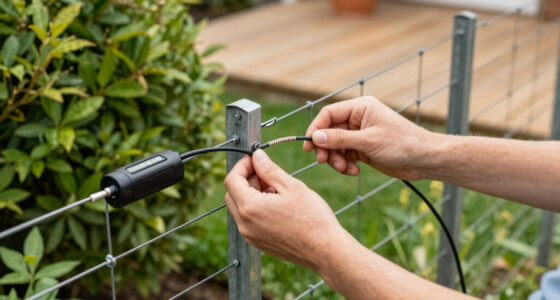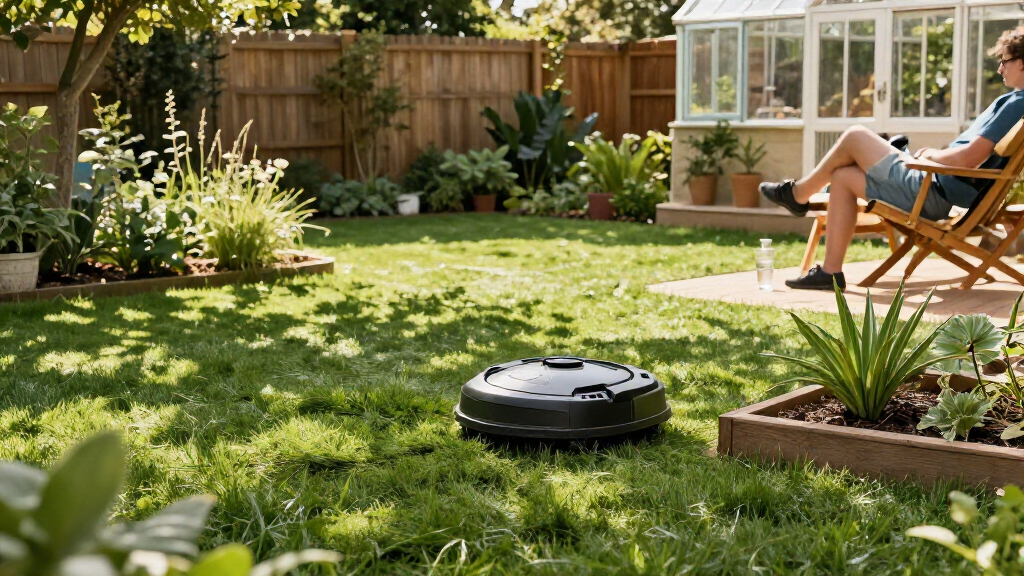
The best robotic lawn mowers combine reliable navigation with enough cutting capacity for your lawn, without making setup or upkeep a chore. I rate the Mammotion LUBA mini 2 AWD 1500H as the best overall pick for buyers who need all-wheel drive and capable terrain handling; the Segway Navimow i105N stands out as a more approachable wire-free option, while the Husqvarna Automower 550 is aimed at demanding commercial use. The main tradeoffs are navigation method, how much setup your yard requires, and whether the mower can manage slopes, obstacles, and separate areas. Lawn size matters, but it is only part of the decision: layout and terrain can make a smaller yard harder to mow than a larger open one. Read on for the full comparison and guidance on matching a mower to your property.

Get garden gear delivered free with Prime
- Fast, free delivery on millions of items
- Prime Video, Amazon Music and more included
- Member-only deals all year
Complete the kit


Key Takeaways
- Terrain handling sets the lead: The LUBA mini 2 AWD is the best overall choice in this lineup for buyers prioritizing traction and uneven ground; a flat, simple lawn may not need that capability.
- Wire-free does not mean setup-free: RTK, LiDAR, and vision-based models avoid perimeter-wire installation, but their reliability still depends on yard layout, signal conditions, boundary setup, and obstacle detection.
- Capacity claims need context: The LOPKIN L2500-NEO and HOOKII Neomow X SE target larger lawn areas, while compact options such as the RoboUP Raccoon 2 SE are better matched to smaller properties.
- Navigation approaches bring different compromises: RTK can suit open lawns, LiDAR can help map complex spaces, and vision systems can identify obstacles, but no single method is ideal for every mix of trees, structures, and narrow passages.
- Commercial capability is a different buying brief: The Husqvarna Automower 550 is positioned for professional workloads, so residential buyers should compare its intended use and setup demands against less specialized options.
| Mammotion LUBA mini 2 AWD 1500H Robot Lawn Mower |  | Best for Steep, Complex Lawns | Drive: All-wheel drive | Maximum lawn coverage: 0.37 acres | Mowing zones: Up to 20 | VIEW LATEST PRICE | See Our Full Breakdown |
| Segway Navimow i105N Robot Lawn Mower |  | Best for Small, Quiet Lawns | Coverage area: 1/8 acre | Navigation: RTK + Vision (EFLS 2.0) | Noise level: 58 dB(A) | VIEW LATEST PRICE | See Our Full Breakdown |
| LOPKIN L2500-NEO Robot Lawn Mower for Lawns up to 0.9 Acres |  | Best Wire-Free Pick for Larger Yards | Coverage: Up to 0.9 acres | Navigation: NetRTK, AI vision, and GNSS/INS fusion | Maximum slope: 57% (30°) | VIEW LATEST PRICE | See Our Full Breakdown |
| RoboUP Raccoon 2 SE Wire-Free Robot Lawn Mower, 0.15 Acre |  | Best for Straightforward Small Yards | Maximum lawn area: 0.15 acre (600 m²) | Zones: Up to 3 | Cutting height: 3–8 cm, adjustable via app | VIEW LATEST PRICE | See Our Full Breakdown |
| Husqvarna Automower 550 Commercial Robotic Lawn Mower |  | Best for Large Commercial-Style Properties | Coverage area: Up to 1.25 acres | Guide wires: 3 | Remote start points: 5 | VIEW LATEST PRICE | See Our Full Breakdown |
| ECOVACS GOAT O1000 RTK Wire-Free Robotic Lawn Mower |  | Best for Narrow Passages | Lawn coverage: Up to 1/4 acre (10,890 sq. ft.) | Navigation: RTK, vision, and 3D ToF | Setup time: About 5 minutes | VIEW LATEST PRICE | See Our Full Breakdown |
| ECOVACS GOAT O1000 LiDAR PRO Wire-Free Robot Lawn Mower |  | Best for Edge Trimming | Lawn coverage: Up to 1/4 acre | Navigation: HoloScope 360° dual LiDAR | Positioning accuracy: Up to 2 cm | VIEW LATEST PRICE | See Our Full Breakdown |
| WORX Landroid Vision Cloud WR310 Robot Lawn Mower for Up to 1/4 Acre |  | Best for Custom Mowing Patterns | Lawn coverage: Up to 1/4 acre | Navigation: Cloud-based RTK with V-SLAM sensor fusion | Perimeter wire: Not required | VIEW LATEST PRICE | See Our Full Breakdown |
| ECOVACS GOAT O1000 RTK CARE Robotic Lawn Mower, Wire-Free Navigation, Up to 1/4 Acre |  | Best for Longer Listed Runtime | Lawn coverage: Up to 1/4 acre | Navigation: RTK, wire-free | Battery runtime: 90 minutes | VIEW LATEST PRICE | See Our Full Breakdown |
| LEBOSBO V3 AI Vision Robotic Lawn Mower |  | Best for Tiny Lawns | Recommended lawn area: Up to 1,600 sq. ft. | Navigation: AI vision | Boundary setup: No boundary wires required | VIEW LATEST PRICE | See Our Full Breakdown |
| Sunseeker S4 Wire-Free Robot Lawn Mower with 3D LiDAR and Vision AI |  | Best for Complex Small Yards | Maximum yard area: 0.25 acre (10,890 sq. ft.) | Navigation: 360° 3D LiDAR and Vision AI | Cutting width: 7 inches | VIEW LATEST PRICE | See Our Full Breakdown |
| Segway Navimow i206 AWD Wire-Free Robotic Lawn Mower |  | Best for Steep, Compact Lawns | Drive system: All-wheel drive | Maximum slope: 45% | Coverage per charge: Up to 1,350 sq. ft. | VIEW LATEST PRICE | See Our Full Breakdown |
| KraftSense 20V Brushless Robotic Lawn Mower |  | Best for Quiet, Small-Lawn Care | Motor: 20V brushless DC | Motor speed: 3,000 RPM | Coverage: Up to 1/8 acre | VIEW LATEST PRICE | See Our Full Breakdown |
| Roborock RockNeo Q110H Wire-Free Robot Lawn Mower |  | Best for All-Terrain Quarter-Acre Lawns | Navigation: Full-Band RTK and VSLAM | Mapping: AI auto-mapping and app-controlled manual mapping | Obstacle avoidance: Dual-camera AI vision | VIEW LATEST PRICE | See Our Full Breakdown |
| HOOKII Neomow X SE Robotic Lawn Mower with 360° 3D LiDAR Navigation, for Lawns up to 0.75 Acre | 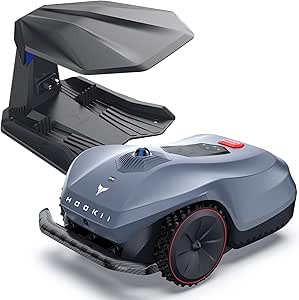 | Best for Larger Wire-Free Lawns | Maximum lawn area: 0.75 acre (32,670 sq. ft.) | Area per charge: Up to 0.17 acre (7,535 sq. ft.) | Navigation: 360° 3D LiDAR and AI vision | VIEW LATEST PRICE | See Our Full Breakdown |
| robotic lawn mower | Navigation | Maximum slope | Cutting height | Cutting width |
|---|---|---|---|---|
| Mammotion LUBA mini 2 AWD 1500 | 360° LiDAR and dual-camera AI vision | 80% | — | — |
| Segway Navimow i105N Robot Law | RTK + Vision (EFLS 2.0) | — | — | — |
| LOPKIN L2500-NEO Robot Lawn Mo | NetRTK, AI vision, and GNSS/INS fusion | 57% (30°) | 1.18–2.76 inches (3–7 cm) | — |
| RoboUP Raccoon 2 SE Wire-Free | — | 36% (20°) | 3–8 cm, adjustable via app | — |
| Husqvarna Automower 550 Commer | — | 45% | 2–3.5 inches | 9.45 inches |
| ECOVACS GOAT O1000 RTK Wire-Fr | RTK, vision, and 3D ToF | 45% (24°) | 1.2–3.2 inches | 8.66 inches |
| ECOVACS GOAT O1000 LiDAR PRO W | HoloScope 360° dual LiDAR | — | — | 8.66 inches |
| WORX Landroid Vision Cloud WR3 | Cloud-based RTK with V-SLAM sensor fusion | 30% | — | — |
| ECOVACS GOAT O1000 RTK CARE Ro | RTK, wire-free | — | 1.2–3.2 inches | 8.66 inches |
| LEBOSBO V3 AI Vision Robotic L | AI vision | — | — | 6.3 inches |
| Sunseeker S4 Wire-Free Robot L | 360° 3D LiDAR and Vision AI | 22° (42%) | 1.6–3.2 inches | 7 inches |
| Segway Navimow i206 AWD Wire-F | — | 45% | 2–3.6 inches | 7.1 inches |
| KraftSense 20V Brushless Robot | — | 22° (42% grade) | 0.7–2.4 inches | 7.9 inches |
| Roborock RockNeo Q110H Wire-Fr | Full-Band RTK and VSLAM | 45% | — | — |
| HOOKII Neomow X SE Robotic Law | 360° 3D LiDAR and AI vision | — | 1.18–3.35 inches | — |
More Details on Our Top Picks
Mammotion LUBA mini 2 AWD 1500H Robot Lawn Mower
The LUBA mini 2 is the strongest fit here for a lawn where traction and uneven ground matter more than raw acreage. Its all-wheel drive, adaptive suspension, and stated ability to manage slopes up to 80% give it an advantage over the RoboUP Raccoon 2 SE, which is limited to 36% slopes. 360° LiDAR and dual-camera AI vision guide navigation and help detect obstacles, while support for up to 20 zones suits properties with separated sections. A dedicated edge-cutting disc may also reduce the amount of trimming left around borders. The tradeoff is its 0.37-acre coverage limit; the Husqvarna Automower 550 is a better match for much larger properties. DropMow adds flexibility for one-time jobs, but the steep-slope figure may not apply equally across every surface or layout.
Pros:- All-wheel drive and adaptive suspension are suited to slopes and uneven ground.
- 360° LiDAR and dual-camera AI vision support navigation and obstacle detection.
- Manages up to 20 mowing zones and offers a one-time DropMow mode.
- A dedicated edge-cutting disc can help reduce trimming along lawn borders.
Cons:- Coverage is limited to 0.37 acres, below the Husqvarna Automower 550 and LOPKIN L2500-NEO.
- The stated 80% slope capability may vary with surface conditions and lawn layout.
Best for: Owners of hilly, obstacle-filled lawns up to 0.37 acres who want all-wheel drive and flexible zone management.
Not ideal for: Owners of lawns larger than 0.37 acres or buyers whose property is mostly flat and does not need the added traction capability.
- Drive:All-wheel drive
- Maximum lawn coverage:0.37 acres
- Mowing zones:Up to 20
- Maximum slope:80%
- Navigation:360° LiDAR and dual-camera AI vision
- Cutting system:Dual cutting discs, including an edge-cutting disc
- Obstacle clearance:Up to 45 mm
- Battery capacity:Up to 350 m² per charge
Our verdict“Choose the LUBA mini 2 for a compact but steep or divided lawn where traction and zone flexibility matter more than broad coverage.”
Segway Navimow i105N Robot Lawn Mower
For a smaller property, the Navimow i105N pairs wire-free setup with a relatively quiet 58 dB(A) operating level, making it a practical choice where mowing noise and installation effort matter. Its RTK+Vision navigation and AI-assisted mapping help manage narrow corridors and garden layouts without perimeter wire, while the app supports up to 12 zones. Compared with the RoboUP Raccoon 2 SE, it covers less ground—1/8 acre versus 0.15 acre—but offers more zones and a stated 3-year warranty. Its camera-based obstacle detection identifies more than 150 object types, although it is not the same large-property solution as the LOPKIN L2500-NEO or Husqvarna Automower 550. Initial mapping requires a smartphone app, so buyers who want setup without a connected device should skip it; 4G theft tracking is optional.
Pros:- Virtual boundaries and AI-assisted mapping avoid the need for perimeter wire.
- RTK+Vision navigation is designed for complex layouts, narrow corridors, and areas under trees.
- Quiet 58 dB(A) operation is suitable for noise-sensitive settings.
- Supports up to 12 zones and includes a 3-year warranty.
Cons:- Its 1/8-acre coverage is smaller than the RoboUP Raccoon 2 SE and several larger-area picks.
- Initial mapping and configuration require the smartphone app.
- 4G anti-theft tracking is an optional add-on.
Best for: Owners of compact, subdivided lawns up to 1/8 acre who want wire-free mapping, quiet operation, and app-managed zones.
Not ideal for: Owners of larger lawns or buyers who do not want to use a smartphone app for initial setup and mapping.
- Coverage area:1/8 acre
- Navigation:RTK + Vision (EFLS 2.0)
- Noise level:58 dB(A)
- Obstacle detection:140° camera with AI; detects 150+ object types
- Zone management:Up to 12 zones
- Connectivity:App control and OTA updates
- Warranty:3 years
Our verdict“Pick the Navimow i105N for a small, complex lawn where quiet wire-free mowing and app-based zone control take priority over coverage.”
LOPKIN L2500-NEO Robot Lawn Mower for Lawns up to 0.9 Acres
The LOPKIN L2500-NEO stands out among these wire-free models for combining 0.9-acre coverage with navigation that fuses NetRTK, AI vision, and GNSS/INS. That gives it a much larger stated working area than the Segway Navimow i105N, while avoiding the guide-wire setup used by the Husqvarna Automower 550. AI vision is specified to recognize more than 300 common objects, and the app supports scheduling, mowing paths, and multiple zones. Its 8Ah battery is listed for up to 200 minutes of mowing, though charging takes about 180 minutes. The slope figures need context: 57% is the maximum, while stable slope capability is listed as 40%. HaLow connectivity can reach far in ideal open conditions, but terrain and interference may shorten that range; its battery warranty is also shorter than the mower warranty.
Pros:- Covers up to 0.9 acres without a boundary wire.
- Combines NetRTK, AI vision, and GNSS/INS navigation.
- AI vision identifies and avoids more than 300 common objects.
- Includes an 8Ah battery with up to 200 minutes of mowing time per charge.
Cons:- The 57% maximum slope rating is higher than its listed 40% stable slope capability.
- HaLow range depends on terrain, obstacles, and interference.
- The battery warranty is 1 year, compared with 2 years for the mower.
Best for: Owners of lawns approaching 0.9 acres who want wire-free navigation, app-based scheduling, and multi-zone control.
Not ideal for: Buyers who need established guide-wire routing, predictable connectivity across obstructed properties, or a battery covered as long as the mower.
- Coverage:Up to 0.9 acres
- Navigation:NetRTK, AI vision, and GNSS/INS fusion
- Maximum slope:57% (30°)
- Stable slope capability:40% (22°)
- Cutting height:1.18–2.76 inches (3–7 cm)
- Battery capacity:8Ah
- Mowing time:Up to 200 minutes per charge
- Water resistance:IP66
Our verdict“Choose the L2500-NEO if you want wire-free mowing across a larger property and can work within its connectivity and slope limits.”
RoboUP Raccoon 2 SE Wire-Free Robot Lawn Mower, 0.15 Acre
The Raccoon 2 SE keeps its brief focused: wire-free mowing for lawns up to 0.15 acre, with app scheduling, automatic recharging, and rain detection. It is a little less compact in coverage than the Segway Navimow i105N’s 1/8-acre rating, but the RoboUP adds up to three zones and a stated 150-minute runtime. AI vision works alongside bumper sensors, while lift and tilt sensors add another layer of response to movement or handling. A 56 dB(A) noise level and IPX6 water resistance suit routine outdoor use. Its 36% slope limit is well below the LUBA mini 2’s stated 80%, so it is not the pick for steep terrain. Boundary stakes are sold separately, which adds a setup requirement buyers should factor in.
Pros:- Wire-free operation supports app-based scheduling across up to three zones.
- AI vision and bumper sensors help detect and avoid obstacles.
- Automatically returns to its station when the battery is low, at night, or in rain.
- Operates at a stated 56 dB(A) and has IPX6 water resistance.
Cons:- The 0.15-acre coverage limit is unsuitable for larger properties.
- Its 36% maximum slope rating is far below the LUBA mini 2’s stated slope capability.
- Boundary stakes for setting virtual boundaries are sold separately.
Best for: Owners of small lawns up to 0.15 acre who want wire-free mowing, basic multi-zone scheduling, and automatic returns for charging or rain.
Not ideal for: Owners of steep or expansive lawns, or buyers who want boundary stakes included with the mower.
- Maximum lawn area:0.15 acre (600 m²)
- Zones:Up to 3
- Cutting height:3–8 cm, adjustable via app
- Maximum slope:36% (20°)
- Runtime:Up to 150 minutes
- Charging time:70 minutes
- Noise level:56 dB(A)
- Water resistance:IPX6
Our verdict“The Raccoon 2 SE suits a small, mostly manageable lawn where automatic scheduling and rain response matter more than steep-slope performance.”
Husqvarna Automower 550 Commercial Robotic Lawn Mower
With stated coverage up to 1.25 acres, the Automower 550 is the largest-area choice in this group. Its three guide wires and five remote start points are aimed at properties with separated areas or routes that need deliberate coverage, unlike the wire-free LOPKIN L2500-NEO. GPS navigation, geofencing, theft tracking, fleet management, and remote control make the Husqvarna more suited to managed or shared grounds than a small residential yard. Its 45% slope capability is useful, though it falls short of the LUBA mini 2’s stated 80% maximum. The tradeoffs are the guide-wire installation and a 9.45-inch cutting width that may mean more passes on broad lawns. At 33 pounds, it is also a substantial unit, and its plastic construction may not appeal to buyers seeking a more rugged exterior.
Pros:- Covers up to 1.25 acres, the largest stated area among these five models.
- Three guide wires and five remote start points support divided properties.
- GPS navigation, fleet management, geofencing, and theft tracking support remote oversight.
- Compatible with Amazon Alexa and Google Home.
Cons:- Guide wires require installation, unlike the wire-free LOPKIN L2500-NEO.
- The 9.45-inch cutting width may require more passes across large lawns.
- The 45% slope rating is below the LUBA mini 2’s stated 80% maximum, and the mower is made primarily of plastic.
Best for: Property managers and owners of large, divided lawns up to 1.25 acres who want remote oversight and guided coverage.
Not ideal for: Owners of small lawns who want a wire-free setup, or buyers who need the highest stated slope capability or a wider cutting path.
- Coverage area:Up to 1.25 acres
- Guide wires:3
- Remote start points:5
- Maximum slope:45%
- Cutting width:9.45 inches
- Cutting height:2–3.5 inches
- Item weight:33 pounds
- Smart home compatibility:Amazon Alexa and Google Home
Our verdict“Choose the Automower 550 for large or divided grounds where guided coverage and remote fleet-style control outweigh wire installation and a narrower cutting width.”
ECOVACS GOAT O1000 RTK Wire-Free Robotic Lawn Mower
The GOAT O1000 RTK suits a small-to-medium yard where wire-free setup and tight paths matter more than extended runtime. RTK, vision, and 3D ToF work together to map the lawn, while obstacle avoidance and a 2.3-foot minimum passage width give it an advantage in yards divided by narrow walkways. App controls let you set zones and no-go areas without laying boundary wire. Compared with the WORX Landroid Vision Cloud WR310, this ECOVACS lists a steeper slope capability, but the WORX offers more mowing-pattern choices. The tradeoff here is scale: coverage tops out at a quarter acre, and its listed 65-minute battery life may mean more frequent returns to recharge. Choose it for precise routing, not for a large property or fewer interruptions.
Pros:- RTK, vision, and 3D ToF provide wire-free mapping and navigation
- Navigates passages as narrow as 2.3 feet
- AIVI 3D obstacle avoidance helps it route around yard objects
- App supports zones, no-go areas, cutting height, and schedules
Cons:- Coverage is limited to lawns up to a quarter acre
- Listed battery life is 65 minutes
- The 8.66-inch cutting width may require more passes than a wider mower
Best for: Owners of lawns up to a quarter acre with narrow connecting paths, varied obstacles, and a preference for app-managed wire-free setup
Not ideal for: Owners of larger properties or anyone who wants longer listed battery runtime between charging trips
- Lawn coverage:Up to 1/4 acre (10,890 sq. ft.)
- Navigation:RTK, vision, and 3D ToF
- Setup time:About 5 minutes
- Minimum passage width:2.3 ft
- Maximum slope:45% (24°)
- Cutting width:8.66 inches
- Cutting height:1.2–3.2 inches
- Battery life:65 minutes
Our verdict“Pick the GOAT O1000 RTK for a quarter-acre-or-smaller yard with narrow paths; skip it if coverage capacity or longer runtime is your priority.”
ECOVACS GOAT O1000 LiDAR PRO Wire-Free Robot Lawn Mower
The GOAT O1000 LiDAR PRO is the standout here for buyers who want wire-free mapping plus less hand trimming along lawn borders. Its integrated TruEdge trimmer tackles edges as it mows, while dual LiDAR and AI vision handle positioning and obstacle detection without perimeter wire or an RTK antenna. It can pass through paths as narrow as 0.8 m, making it a practical fit for compact lawns with connected sections. Compared with the GOAT O1000 RTK, this model trades RTK-based navigation for dual LiDAR and adds built-in edge trimming; both are rated for up to a quarter acre. The edge feature is not a promise of perfect coverage: complex corners, tight gaps, and raised borders can still need manual work, and app setup may take adjustment.
Pros:- Dual LiDAR maps and navigates without perimeter wire or an RTK antenna
- Integrated TruEdge trimmer reduces routine border trimming
- AI vision and 3D LiDAR detect a wide range of obstacles
- Narrow body can pass through paths as slim as 0.8 m
Cons:- Complex corners, narrow gaps, and raised edges may still need manual trimming
- Initial app setup and lawn-layout fine-tuning may take adjustment
- Coverage is limited to a quarter acre
Best for: Owners of quarter-acre-or-smaller lawns who want wire-free navigation and less routine trimming along accessible edges
Not ideal for: Buyers with intricate lawn borders, raised edges, or layouts that depend on precise trimming in tight corners
- Lawn coverage:Up to 1/4 acre
- Navigation:HoloScope 360° dual LiDAR
- Positioning accuracy:Up to 2 cm
- Obstacle detection:AI Vision and 3D ToF LiDAR; over 200 obstacle types
- Minimum path width:0.8 m
- Edge trimming:Integrated TruEdge trimmer
- Cutting width:8.66 inches
- Maximum adjustable cutting height:3.6 inches
Our verdict“Choose the LiDAR PRO if edge work is your main pain point, but expect to finish awkward corners by hand.”
WORX Landroid Vision Cloud WR310 Robot Lawn Mower for Up to 1/4 Acre
The WORX Landroid Vision Cloud WR310 makes the most sense for quarter-acre lawns where owners want to shape how different areas are cut. It maps automatically without perimeter wire or an on-site antenna, then lets you set unlimited zones, pathways, and no-go areas in the app. Parallel, checkerboard, diamond, and natural patterns give it more explicit mowing-style control than the ECOVACS options listed here. Its V-SLAM sensor fusion is designed to help maintain navigation in shade, a useful distinction for tree-covered yards. The tradeoff is its cloud-based RTK positioning, which makes its primary navigation dependent on that approach rather than the LiDAR system of the GOAT O1000 LiDAR PRO. It is also rated for a 30% maximum slope, so steep terrain favors the RTK GOAT’s listed 45% capability.
Pros:- Maps lawns without perimeter wire or an on-site antenna
- App supports unlimited zones, custom pathways, and no-go areas
- Offers parallel, checkerboard, diamond, and natural mowing patterns
- V-SLAM sensor fusion helps maintain navigation in shaded areas
Cons:- Primary positioning relies on cloud-based RTK navigation
- Coverage is limited to lawns up to a quarter acre
- Its 30% maximum slope rating is below the ECOVACS GOAT O1000 RTK’s listed 45%
Best for: Owners of quarter-acre lawns who want app-managed zones, custom pathways, and selectable mowing patterns
Not ideal for: Buyers with steep slopes or those who prefer a mower that does not rely on cloud-based RTK for primary positioning
- Lawn coverage:Up to 1/4 acre
- Navigation:Cloud-based RTK with V-SLAM sensor fusion
- Perimeter wire:Not required
- Zone management:Unlimited zones, custom pathways, and no-go areas
- Mowing patterns:Parallel, Checkerboard, Diamond, Natural
- Maximum slope:30%
- Drive style:Two-wheel drive
- Manufacturer warranty:3 years
Our verdict“Choose the WR310 for flexible zone and pattern control on a modest, gently sloped lawn; look elsewhere for steeper terrain.”
ECOVACS GOAT O1000 RTK CARE Robotic Lawn Mower, Wire-Free Navigation, Up to 1/4 Acre
The GOAT O1000 RTK CARE is the better fit among these quarter-acre ECOVACS options if longer listed runtime and maintenance supplies matter more than a compact footprint. Its 90-minute battery runtime exceeds the 65 minutes listed for the GOAT O1000 RTK, and automatic mapping, multi-zone app controls, and self-charging support a hands-off routine. The CARE bundle also includes 36 replacement blades and an RTK extension cable, giving owners spare blades and more flexibility with antenna placement. Unlike the GOAT O1000 LiDAR PRO, it does not list an integrated edge trimmer, so it may leave more finishing work along borders. The runtime is still finite, its 8.66-inch cutting width is not especially broad, and its listed 44.5-pound weight makes it the heavier choice in this comparison.
Pros:- 90-minute listed runtime is longer than the 65 minutes listed for the GOAT O1000 RTK
- Automatically maps the yard and supports app-controlled multi-zone management
- Returns to recharge automatically
- Includes 36 replacement blades and an RTK extension cable
Cons:- Coverage is limited to lawns up to a quarter acre
- The 8.66-inch cutting width may mean more passes than a wider mower
- Listed item weight is 44.5 pounds
Best for: Owners of lawns up to a quarter acre who want RTK wire-free mapping, multi-zone schedules, and included replacement blades
Not ideal for: Buyers who prioritize integrated edge trimming, a lighter mower, or a wider cutting path
- Lawn coverage:Up to 1/4 acre
- Navigation:RTK, wire-free
- Battery runtime:90 minutes
- Zone management:Multi-zone, app-controlled
- Cutting width:8.66 inches
- Cutting height:1.2–3.2 inches
- Included extras:36 replacement blades; RTK extension cable
- Noise level:62 dB
Our verdict“Pick the RTK CARE for a small lawn when longer listed runtime and spare blades outweigh a heavier unit and the lack of an advertised edge trimmer.”
LEBOSBO V3 AI Vision Robotic Lawn Mower
The LEBOSBO V3 is the clear small-yard pick: its recommended area is just 1,600 square feet, far below the quarter-acre capacity of the ECOVACS and WORX mowers in this batch. That smaller brief can suit a compact residential lawn where a larger robot would be more mower than needed. AI vision identifies lawn areas and obstacles, app controls cover schedules and operating modes, and no boundary wire is required. For no-go areas, it uses an included 32-foot magnetic strip rather than relying only on mapped app boundaries. Compared with the GOAT O1000 LiDAR PRO, it offers a simpler small-lawn fit but lacks the listed dual LiDAR navigation and integrated edge trimmer. Its 6.3-inch cutting width also means it is not the choice for covering broad stretches quickly.
Pros:- Sized for compact lawns up to 1,600 square feet
- AI vision recognizes obstacles and lawn areas
- No boundary wires are required
- Includes a 32-foot magnetic strip for no-go zones and offers app controls
Cons:- Recommended lawn area is limited to 1,600 square feet
- The 6.3-inch cutting width may require more passes
- No integrated edge trimmer is listed, unlike the GOAT O1000 LiDAR PRO
Best for: Owners of compact lawns up to 1,600 square feet who want app controls and no boundary-wire installation
Not ideal for: Owners of quarter-acre lawns or larger properties, and buyers seeking a wide cutting path or integrated edge trimming
- Recommended lawn area:Up to 1,600 sq. ft.
- Navigation:AI vision
- Boundary setup:No boundary wires required
- No-go zone accessory:32 ft magnetic strip
- Cutting width:6.3 inches
- Adjustable cutting height:0.8–2.4 inches
- Dimensions:17 × 14 × 8.6 inches
- Power source:Battery powered
Our verdict“Choose the V3 for a tiny lawn where wire-free operation matters, but pick a quarter-acre model if your grass area is larger.”
Sunseeker S4 Wire-Free Robot Lawn Mower with 3D LiDAR and Vision AI
The Sunseeker S4 is a strong fit for a small, irregular yard where trees, shaded patches, or weak signals can complicate mapping. Its 360° 3D LiDAR and Vision AI navigate without boundary wire, while the app lets you save up to five maps and configure as many as 100 zones and no-go areas. That makes it more adaptable across separate lawn sections than the KraftSense, which is limited to a smaller 1/8-acre lawn. The tradeoff is scale: the S4 tops out at 0.25 acre, and its 7-inch cutting width may mean more passes than the HOOKII Neomow X SE’s 11-inch deck. A 22° slope rating and rear-wheel drive add versatility, but this is best chosen for mapping flexibility rather than the widest coverage.
Pros:- Wire-free LiDAR and Vision AI navigation is designed for shaded and weak-signal areas.
- Supports up to five maps and 100 zones or no-go areas.
- Rear-wheel drive and a 22° slope rating suit uneven ground.
- Rain-sensor return and edge-oriented mowing modes support routine unattended care.
Cons:- The 0.25-acre maximum excludes larger properties.
- The 7-inch cutting width can require more passes than the HOOKII Neomow X SE’s 11-inch deck.
- The 31.5-inch minimum passage width rules out some narrow garden routes.
Best for: Owners of up to 0.25-acre yards with trees, shaded areas, narrow routes, or several distinct mowing zones.
Not ideal for: Owners of larger lawns or buyers who want a wider cutting deck to reduce mowing passes.
- Maximum yard area:0.25 acre (10,890 sq. ft.)
- Navigation:360° 3D LiDAR and Vision AI
- Cutting width:7 inches
- Cutting height:1.6–3.2 inches
- Maximum slope:22° (42%)
- Minimum passage width:31.5 inches
- Maps and zones:Up to 5 maps; up to 100 zones and no-go areas
- Noise level:60 dB
- Warranty:2 years
Our verdict“Choose the S4 for a smaller, obstacle-filled lawn where flexible wire-free mapping matters more than wide coverage.”
Segway Navimow i206 AWD Wire-Free Robotic Lawn Mower
The Navimow i206 AWD prioritizes traction and controlled turning over broad coverage. All-wheel drive and stability control are built for slopes up to 45%, while zero-turn steering is intended to limit turf scuffing during tight maneuvers. Its RTK-and-vision mapping avoids boundary wire and supports up to 20 zones, a useful setup for a compact lawn split by paths or planting beds. Compared with the Roborock RockNeo Q110H, which also claims a 45% slope rating and covers up to a quarter acre, the i206’s stated coverage is much more constrained: up to 1,350 sq. ft. per charge. Its 7.1-inch deck also favors smaller areas over fast coverage. Choose it for difficult terrain, not for a large property or minimal charging interruptions.
Pros:- All-wheel drive and stability control are designed for slopes up to 45%.
- Zero-turn steering aims to reduce turf damage during tight turns.
- RTK and vision support wire-free auto-mapping.
- Supports up to 20 mowing zones and auto-resume charging.
Cons:- Coverage is limited to 1,350 sq. ft. per charge.
- The 7.1-inch cutting width may require many passes on larger lawns.
- Its slope capability is more compelling than its stated per-charge coverage for buyers with larger properties.
Best for: Owners of compact, steep lawns who value all-wheel traction and careful turning more than extended coverage per charge.
Not ideal for: Buyers with broad lawns or anyone who needs a mower to cover more than 1,350 sq. ft. per charge.
- Drive system:All-wheel drive
- Maximum slope:45%
- Coverage per charge:Up to 1,350 sq. ft.
- Battery:2.5 Ah
- Cutting height:2–3.6 inches
- Cutting width:7.1 inches
- Mowing zones:Up to 20
- Mapping:EFLS Network RTK and vision; one-tap auto-mapping
- Steering:Zero-turn
Our verdict“Pick the i206 AWD for a compact, steep lawn where traction and turning control outweigh limited coverage per charge.”
KraftSense 20V Brushless Robotic Lawn Mower
The KraftSense suits buyers who want app-scheduled mowing for a modest lawn without stepping up to the more elaborate LiDAR mapping on the Sunseeker S4. Wi-Fi and Bluetooth support scheduling and zone customization, while its brushless motor and operating noise below 59 dB make it a quieter-profile option. It handles slopes up to 22° and covers lawns up to 1/8 acre, so it fits small properties better than the S4’s 0.25-acre capacity or the HOOKII Neomow X SE’s much larger intended lawn area. That smaller scale is also the key limitation: the 7.9-inch deck still needs repeated passes, and IPX4 protection is not a license for heavy water exposure. Buyers should also factor in a battery warranty shorter than the tool warranty.
Pros:- Brushless 20V motor is designed for efficient operation and reduced maintenance.
- Wi-Fi and Bluetooth enable scheduling and zone customization.
- Operating noise is specified at under 59 dB.
- Supports slopes up to 22° and automatic firmware updates.
Cons:- Coverage is limited to lawns up to 1/8 acre, less than the Sunseeker S4’s 0.25-acre rating.
- The 7.9-inch cutting width may mean more passes than a wider-deck mower.
- IPX4 protection is limited, and the battery warranty is one year.
Best for: Owners of lawns up to 1/8 acre seeking quiet scheduled mowing, app controls, and a manageable mower footprint.
Not ideal for: Owners of larger properties, buyers seeking wire-free LiDAR navigation, or anyone needing stronger water protection.
- Motor:20V brushless DC
- Motor speed:3,000 RPM
- Coverage:Up to 1/8 acre
- Cutting width:7.9 inches
- Cutting height:0.7–2.4 inches
- Maximum slope:22° (42% grade)
- Connectivity:2.4GHz Wi-Fi and Bluetooth
- Weather resistance:IPX4
- Warranty:Tool: 3 years; battery: 1 year
Our verdict“Choose the KraftSense for a small lawn where quiet, connected scheduling matters more than large-area coverage or advanced wire-free mapping.”
Roborock RockNeo Q110H Wire-Free Robot Lawn Mower
The RockNeo Q110H balances quarter-acre coverage with demanding terrain features. Full-Band RTK and VSLAM provide wire-free mapping, with AI auto-mapping or app-guided setup; dual-camera vision is designed to identify obstacles along the route. Its floating deck and large wheels are rated for slopes up to 45% and obstacles up to 1.57 inches, making it a more terrain-focused choice than the KraftSense, whose slope rating is 22°. It also offers a Wildlife-Friendly mode and PIN lockout. The tradeoffs are practical: manual mapping and schedule changes depend on the app, while edge-cutting and 4G tracking require separate modules. Compared with the HOOKII Neomow X SE, it covers a smaller maximum lawn area, but its obstacle and slope ratings make it appealing for a varied quarter-acre yard.
Pros:- Wire-free RTK and VSLAM navigation offers both automatic and app-guided mapping.
- Dual-camera AI vision is designed to avoid people, pets, and garden objects.
- Floating deck and large wheels support slopes up to 45% and obstacles up to 1.57 inches.
- Includes multi-zone scheduling, Wildlife-Friendly mode, and PIN-code security.
Cons:- Edge-cutting and 4G tracking modules are sold separately.
- Manual mapping and schedule customization require app control.
- Its quarter-acre coverage is below the HOOKII Neomow X SE’s stated 0.75-acre lawn capacity.
Best for: Owners of lawns up to a quarter acre with slopes, uneven ground, obstacles, or shaded passages who want wire-free mapping.
Not ideal for: Buyers who want included edge trimming or 4G tracking, or who prefer to set schedules without using an app.
- Navigation:Full-Band RTK and VSLAM
- Mapping:AI auto-mapping and app-controlled manual mapping
- Obstacle avoidance:Dual-camera AI vision
- Maximum lawn coverage:Up to 1/4 acre
- Maximum slope:45%
- Maximum obstacle height:1.57 inches
- Narrow passage clearance:2.3 feet
- Included security:PIN code lockout and alarm
- Optional accessories:Edge-cutting module; 4G tracking and anti-theft module
Our verdict“Choose the RockNeo Q110H for a quarter-acre lawn where slopes, obstacles, and flexible wire-free mapping matter more than included edge trimming.”
HOOKII Neomow X SE Robotic Lawn Mower with 360° 3D LiDAR Navigation, for Lawns up to 0.75 Acre
The Neomow X SE is the lineup’s largest-capacity LiDAR option, designed for lawns up to 0.75 acre without boundary wires or an RTK station. Its 360° 3D LiDAR and AI vision support mapping and obstacle detection, while breakpoint resume lets it continue after charging rather than restarting a route. The 11-inch floating deck is wider than the Sunseeker S4’s 7-inch deck, which can reduce the number of mowing passes; the HOOKII also offers up to 40 areas and no-go zones. Its rated lawn area is not the same as coverage on one charge: the mower covers up to 0.17 acre per charge and may need several charging cycles on a large property. It also needs passages at least 2.53 feet wide, so narrow garden links can rule it out.
Pros:- 360° 3D LiDAR and AI vision operate without boundary wires or an RTK station.
- Rated for lawns up to 0.75 acre and supports up to 40 areas and no-go zones.
- The 11-inch floating deck is wider than the Sunseeker S4’s 7-inch deck.
- Breakpoint resume, IPX5 water resistance, and a 13,000 mAh battery support ongoing maintenance.
Cons:- Coverage is up to 0.17 acre per charge, so large lawns require multiple charging cycles.
- Passageways must be at least 2.53 feet wide.
- Obstacle height is limited to about 1.6 inches.
Best for: Owners of larger lawns up to 0.75 acre who want wire-free LiDAR navigation, a wider deck, and mowing that resumes after charging.
Not ideal for: Owners with narrow passages under 2.53 feet or buyers expecting a 0.75-acre lawn to be cut on one charge.
- Maximum lawn area:0.75 acre (32,670 sq. ft.)
- Area per charge:Up to 0.17 acre (7,535 sq. ft.)
- Navigation:360° 3D LiDAR and AI vision
- Battery and runtime:13,000 mAh; up to 2 hours per charge
- Floating deck width:11 inches
- Cutting height:1.18–3.35 inches
- Maximum obstacle height:About 1.6 inches
- Minimum passage width:2.53 feet (77 cm)
- Water resistance:IPX5
Our verdict“Pick the Neomow X SE for a larger wire-free lawn if its per-charge limits and passage width fit your yard.”
How We Picked
I compared these robotic lawn mowers by the factors that most affect day-to-day fit: intended lawn area, navigation approach, terrain capability, setup demands, obstacle handling, and maintenance. I also considered how clearly each model’s stated strengths match a real buyer need, such as managing slopes, avoiding boundary-wire installation, or serving a compact yard. A larger advertised area alone does not earn a higher position; the mower also needs to make sense for the property’s layout and the owner’s tolerance for setup and troubleshooting.
The ranking favors versatile residential choices first, then models with a clear advantage for a specific lawn, budget brief, or user type. The LUBA mini 2 AWD leads for its terrain-focused proposition, while Segway’s i105N offers a more accessible wire-free direction. Specialized commercial, compact, and larger-area models rank where their intended use is strongest, with tradeoffs made explicit rather than treating every feature as an advantage for every buyer.
Factors to Consider When Choosing Robotic Lawn Mowers
Before choosing a mower, I would start with the shape and conditions of the lawn rather than the headline coverage figure. These factors help explain why two models rated for similar areas can deliver very different ownership experiences.
Match the navigation system to the yard
Wire-free navigation can save the work of burying or securing a perimeter cable, but it shifts some of the effort to mapping, positioning, and troubleshooting. RTK-based systems generally need suitable satellite reception and a well-placed reference setup, so trees, tall buildings, and tight courtyards can complicate operation. LiDAR builds a view of nearby surfaces and can be useful where satellite signals are less dependable, though layout and obstacle handling still matter. Vision systems rely on cameras and recognition, which makes lighting, grass boundaries, and visual clutter relevant. Before buying, map the areas where the mower will operate and check the manufacturer’s guidance for obstructions and passages. A boundary-wire model can still make sense if you prefer a fixed, predictable boundary over wireless setup.
Measure usable lawn, not just total property
Coverage claims are most useful when they reflect the area the mower can actually reach and cut. Subtract patios, garden beds, driveways, and other non-grass spaces, then account for narrow routes between lawn sections. A mower may be rated for a large area yet spend too much time returning to charge if the property is divided into distant zones. Conversely, an open lawn can be easier to maintain than a smaller property packed with obstacles. Check whether the model supports multiple zones and how it handles travel between them. Buying far beyond your actual needs can add cost and setup complexity without improving the cut.
Treat slopes and ground conditions as a separate requirement
Maximum slope figures do not tell the whole story: traction depends on the surface, grass length, moisture, and the direction the mower must travel. A steep lawn with loose soil or frequent wet patches is a different challenge from a dry, even incline. All-wheel drive may be useful when traction is a recurring problem, but it is unnecessary weight and capability for many level yards. Look for the maker’s slope guidance and check whether it applies to the whole lawn or only specific conditions. Mark steep transitions, hollows, and soft spots before choosing. If your property includes challenging terrain, prioritize tested design intent and clear operating limits over a larger coverage number.
Plan for boundaries, obstacles, and narrow passages
Robotic mowers need more than a perimeter: trees, play equipment, garden edging, and temporary objects can all affect their route. Ask how the mower detects obstacles and what happens when it encounters something it cannot classify. Camera-based detection may help with visible objects, but small or low-contrast items can still pose a problem, so lawn preparation remains part of ownership. Narrow passages may require careful mapping or fall outside a model’s reliable operating range. Measure gates and corridors, and check clearance around borders before ordering. If children, pets, or frequent yard activity are part of your routine, prioritize safe operating procedures and manufacturer guidance rather than assuming automated detection replaces supervision.
Weigh setup effort against future flexibility
Some systems require a one-time mapping session, while others may need boundary installation, reference-station placement, or adjustments as the garden changes. A simpler layout can make an entry-level mower the easier choice even if it offers fewer navigation features. A complex property may justify more sophisticated mapping, but only if you are comfortable maintaining the digital boundaries and correcting route issues. Consider whether garden beds or lawn edges are likely to change; fixed boundaries can take physical work to revise, while mapped areas may be easier to edit but depend on the system’s software. Read setup requirements before focusing on cutting specifications. The best choice is often the one whose maintenance and mapping routine you will actually keep up with.
Budget for upkeep, service, and seasonal storage
Purchase cost is only one part of owning a robotic mower. Blades are consumable, and regular cleaning helps prevent grass buildup from affecting cutting and movement. Battery condition, replacement-part availability, weather guidance, and access to service can matter more over several seasons than a small difference in cutting width. Commercial models may be built for heavier workloads, but they can be more than a homeowner needs. Check what maintenance tasks the manufacturer expects and whether parts are easy to source in your area. Also plan for winter storage and charging guidance, since climate and seasonal use affect how much care the mower requires.
Frequently Asked Questions
Is a wire-free robotic mower a good choice if my yard has many trees?
It depends on the navigation system and how much open sky or clear mapping space your property offers. RTK models can have trouble where buildings or dense tree cover disrupt satellite reception, while LiDAR or vision-based navigation may suit some obstructed spaces better. Those systems still have their own limits, including sensor visibility, layout complexity, and mapping needs. Check the manufacturer’s requirements for reference-station placement and signal conditions against your actual lawn. If you cannot meet them, a perimeter-wire model may be the more predictable choice.
Should I buy a mower rated for a larger lawn than mine?
Some extra capacity can help if your lawn grows quickly or is split across several zones, but a much larger rating is not automatically better. Actual mowing time depends on layout, obstacles, charging cycles, and travel between sections. A simple open lawn may be easy for a smaller-capacity model, while a tangled layout can challenge a larger one. Compare the usable grass area with the mower’s stated coverage and zone support. Choose a modest buffer for your needs rather than paying for capacity your property is unlikely to use.
Can a robotic lawn mower handle steep or uneven ground?
Some models are designed with stronger traction or all-wheel drive, but capability varies by slope, surface, and weather. A stated maximum incline may not apply equally to wet grass, loose soil, or every direction of travel. Uneven ground can also create clearance problems even when the slope itself is within the listed limit. Check the operating guidance for your specific terrain and inspect transitions, dips, and soft areas. If traction is a key need, favor a model built around terrain handling rather than assuming any mower with a high coverage figure will cope.
Are robotic lawn mowers suitable for lawns divided into separate sections?
They can be, but the connection between sections is often the deciding factor. Check whether the mower supports multiple zones and whether it can travel through the gates or narrow corridors on your property. Some setups need each area mapped carefully, and a disconnected lawn may require you to move the mower by hand. Measure passage width and check manufacturer limits before choosing a model. If moving between zones is awkward, compare the time and effort of manual relocation with a mower that better supports multi-zone operation.
What should I prioritize if I am buying my first robotic mower?
For a first purchase, I would prioritize clear setup instructions, a lawn layout the navigation system can handle, accessible maintenance guidance, and reliable support. Advanced sensors can be useful, but they do not remove the need to map boundaries, clear hazards, and maintain blades. A smaller, straightforward model may be easier to live with than a feature-heavy mower meant for complex terrain. Before choosing, check app and zone requirements, charging arrangements, and winter-care instructions. Match the mower to your actual yard rather than paying for features you may not use.
Conclusion
For most buyers seeking a capable residential mower, I recommend the Mammotion LUBA mini 2 AWD 1500H as the best overall pick, especially when slopes or uneven ground are part of the job. The RoboUP Raccoon 2 SE is the best value direction for a smaller lawn, while the Husqvarna Automower 550 is the best premium choice for commercial workloads rather than typical home use. Beginners with a modest yard should start by comparing the more approachable Segway Navimow i105N against their setup conditions. For larger coverage, review the LOPKIN L2500-NEO and HOOKII Neomow X SE; for sensor-led navigation, compare the ECOVACS, Sunseeker, and Roborock options against the obstacles and signal conditions in your yard. Choose by terrain, layout, and setup tolerance first, then use coverage and extra features to narrow the final decision.
Fall yard work Picks

EGO POWER+ LB7654 56V Cordless Leaf Blower with 5.0Ah Battery
As an affiliate, we earn on qualifying purchases.