
TL;DR
A seed-starting rack featured by YouTube channel Greens and Machines is built from about 50 feet of ¾-inch PVC pipe, tees and cross connectors. The roughly 54-by-18-by-60-inch design has three shelves, can be taken apart for storage and can be adjusted to fit a space, but light clearance needs to match the type of grow light used.
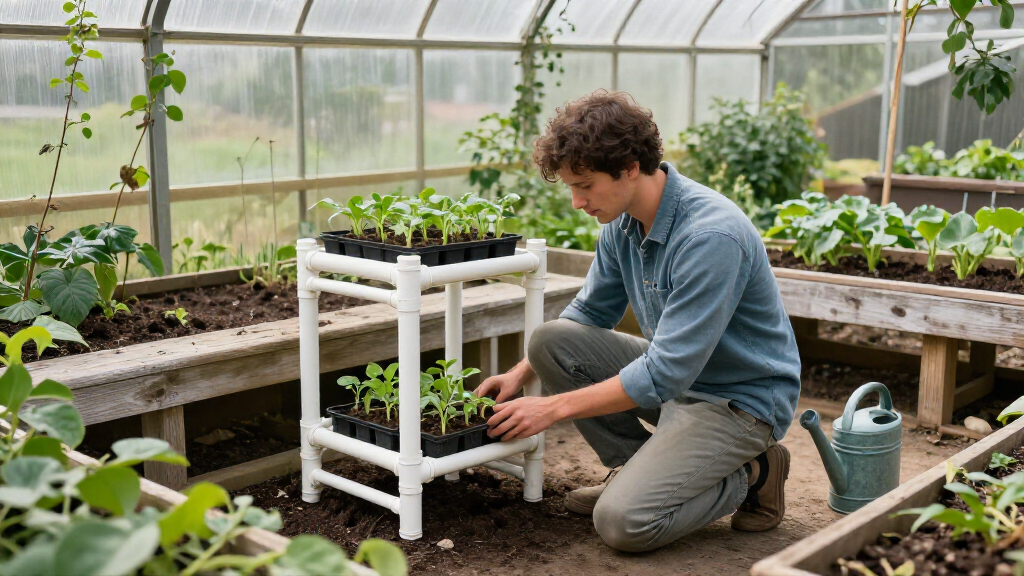
A DIY design featured by YouTube channel Greens and Machines, as described in a Hunker article, turns PVC pipe and fittings into a three-shelf rack for starting seeds, with space to hang adjustable grow lights. The proposed build measures about 54 inches wide, 18 inches long and 60 inches tall, and its unfixed connections make it possible to disassemble and adapt the rack.

Get garden gear delivered free with Prime
- Fast, free delivery on millions of items
- Prime Video, Amazon Music and more included
- Member-only deals all year
According to the project description cited by Hunker, the design calls for about 50 feet of ¾-inch PVC pipe, three cross connectors and 52 tee fittings. The pipes form three shelf frames, with tees joining sections at the edges and a cross connector supporting each shelf near its center. The fittings also connect the frame to its legs and serve as feet. The project description estimates materials, including a pair of pipe cutters, at around $100; a hand saw or miter saw can be used instead of pipe cutters.
The project description says each shelf can hold seed trays, and the frame provides points for chain-adjustable grow lights that can be raised or lowered. It says the design can be resized with longer or shorter pipe pieces or changed by adding or removing shelves. Because the pieces are not fastened together with hardware, the frame can be taken apart for storage. The project description characterizes the PVC structure as sturdy enough for heavy seed trays, but gives no tested load limit.
The rack’s measurements and shelf spacing need to work with the intended lights as well as the available space. The project description gives different suggested clearances for different equipment: fluorescent lights 3 to 12 inches above plants and LED lights about 24 inches or higher. These are presented as general spacing guidance, not as a specification for every light model or plant.
Build a seed-starting rack from PVC pipe
This take-apart design stacks seed trays and adjustable grow lights. Plan shelf spacing around your lights before cutting pipe.
The featured design
Greens and Machines’ PVC frame is described in a Hunker article.
About 54 × 18 × 60 inches
The width, depth and height are reference dimensions that can be adjusted to fit your space.
Fitted, not fastened
Tees and cross connectors join the frame without permanent hardware, so it can come apart for storage.
Adjustable grow lights
The frame provides hanging points for lights that can be raised or lowered.
Match the light clearance
The project gives general spacing guidance; check the instructions for your specific light.
| Light type | Suggested distance above plants |
|---|---|
| Fluorescent | 3 to 12 inches |
| LED | About 24 inches or higher |
Plan before cutting
Set dimensions and shelf heights around your growing area, trays and lighting setup.
Check available space, tray sizes and the light maker’s recommended clearance.
Estimate pipe and fittings for your chosen dimensions, then compare local prices.
Assemble the pieces without plants or lights and check stability and fit.
A Reusable Frame for Seed Starting
For gardeners who need room to start seedlings indoors, a rack offers a way to stack growing trays and organize lighting in one footprint. This design’s main practical appeal is its modular, take-apart construction: gardeners can adjust its dimensions to a growing area and store the pipe sections when they are not needed. The roughly $100 materials estimate gives readers a starting point for comparing the project with other shelving options, though actual costs may vary by retailer, location and available tools.
Light placement is a functional constraint, not just a matter of appearance. If shelves are built too close together, a grow light may not have the clearance recommended for the seedlings or equipment in use. Before cutting pipe, gardeners should check the light maker’s placement guidance and allow enough vertical room for both the plants and any adjustment to the fixtures.
The project description also suggests plywood shelf toppers as an optional addition that could make the rack more rigid and provide a continuous surface for items such as egg cartons or soil blockers. The boards should remain unfixed if the builder wants to retain the rack’s ability to come apart easily.
Products Worth Considering

FLY BY YAN 6 × 6 ft Outdoor Polycarbonate Greenhouse with Roof Vent, Dark Gray

Rachio 3 Smart Sprinkler Controller, 16-Zone

Husqvarna 130 Gas Chainsaw, 16-Inch Bar
As an affiliate, we earn on qualifying purchases.
How the PVC Frame Fits Together
PVC pipe is widely used in plumbing and can also be assembled into household and garden projects with compatible connectors. In the design described by Hunker, straight sections make up the shelf frames and upright supports, while tees and cross fittings join the parts. The design relies on fitted connections rather than screws or other permanent fasteners, which makes it possible to revise or dismantle the structure.
The dimensions in the featured design are a reference, not a fixed requirement. A builder can change the rack’s width, depth or height to suit a particular room, tray size or lighting setup. Those changes also affect the amount of pipe and the space available between shelves, so the materials list and light clearance should be reconsidered for a modified build.
Costs, Capacity and Light Clearance
The project description cited by Hunker does not provide a detailed, itemized cost breakdown, so the around $100 estimate should not be treated as a current universal price. Local material prices and whether the builder already owns cutting tools can change the total. It also gives no load testing or maximum weight for the shelves; the claim that the frame can support heavy seed trays is not accompanied by a measured capacity.
The stated light distances are general guidance in the project description, and the exact suitable spacing depends on the grow light and growing setup. The description does not specify a particular light model, seedling type or shelf-to-shelf measurement. Builders should consult the equipment instructions and confirm that the frame can accommodate the required distance before cutting and assembling the uprights.
Plan the Build Before Cutting
Anyone adapting the design can start by measuring the intended growing area, trays and lights, then setting the shelf heights to match the equipment’s recommended clearance. Next, they can estimate pipe lengths and fittings for those dimensions and compare local prices with the project’s rough materials estimate. A dry fit before adding plants or lights can help reveal mismatched lengths or unstable connections.
The design description does not announce a follow-up test, revised plan or performance results. The next step for a builder is to check the frame’s stability and make sure it suits the actual load and lighting setup; the design provides no rated capacity or independent assessment.
Source: Hunker
Key Questions
What materials does the design call for?
The design description calls for about 50 feet of ¾-inch PVC pipe, three cross connectors and 52 tees. Pipe cutters are listed as an option; a hand saw or miter saw can also cut the pipe.
How large is the featured rack?
The dimensions given in the project description are approximately 54 inches wide, 18 inches long and 60 inches tall. The design can be adjusted to fit the available space, but changes may affect the materials required and shelf clearances.
How much does it cost to build?
The project description estimates around $100 in materials, including a pair of pipe cutters. It does not give an itemized breakdown, and prices may vary depending on location and tools already on hand.
How much space should be left between plants and grow lights?
The project description suggests 3 to 12 inches for fluorescent lights and about 24 inches or more for LEDs. These figures are general guidance; check the instructions for the specific light and plan shelf spacing accordingly.
Can the rack be taken apart or modified?
Yes. The design uses fittings without hardware or permanent fasteners, so it can be disassembled for storage and changed by using different pipe lengths or adding or removing shelves. Optional plywood toppers are suggested, but leaving them unfixed preserves the modular setup.
Source: hunker.com