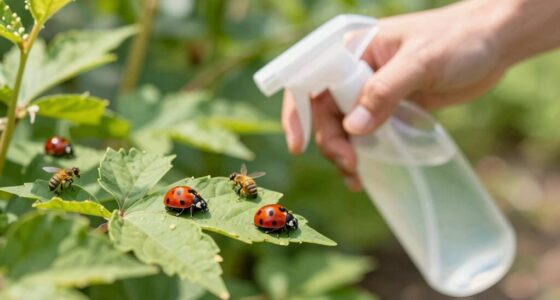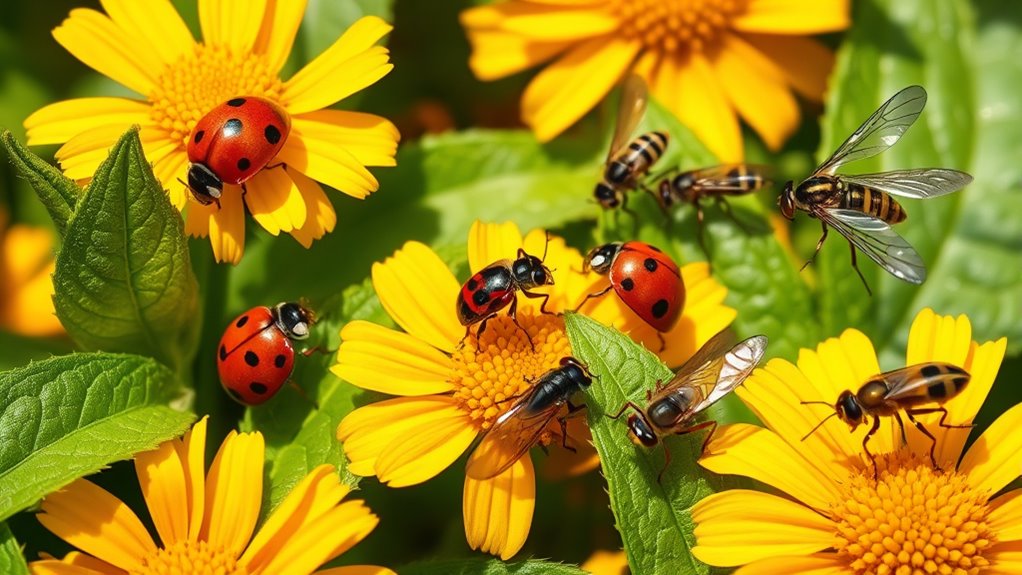

By attracting key beneficial insects like ladybugs, lacewings, hoverflies, and parasitic wasps, you can naturally control pests and boost pollination in your garden. These insects prey on aphids, caterpillars, and mites, reducing your need for chemicals. To invite them, plant nectar-rich flowers such as marigolds, dill, and yarrow, and avoid harmful pesticides. Keep an eye on your garden’s health—there’s more to discover about these helpful allies and how they can transform your space.

Get garden gear delivered free with Prime
- Fast, free delivery on millions of items
- Prime Video, Amazon Music and more included
- Member-only deals all year
Key Takeaways
- Ladybugs are effective predators of aphids, scale insects, and soft-bodied pests, helping naturally control garden pests.
- Lacewings larvae feed on caterpillars, thrips, and other pests, providing biological pest suppression.
- Hoverflies’ larvae consume aphids, while adults pollinate flowers, supporting both pest control and pollination.
- Parasitic wasps lay eggs inside pest insects, which hatch and parasitize pests from within.
- Planting nectar-rich flowers like marigolds, fennel, and yarrow attracts these beneficial insects to your garden.

Beneficial insects play a essential role in maintaining a healthy and productive garden. They serve as natural allies, helping you manage pests and improve pollination without relying on chemical treatments. By understanding which insects are beneficial and how to attract them, you can develop effective pest control strategies that keep your plants thriving. These insects act as biological control agents, preying on or parasitizing common garden pests like aphids, mites, and caterpillars. Their presence reduces the need for harmful pesticides, which can inadvertently harm beneficial insects and pollinators alike. Incorporating beneficial insects into your gardening routine is a sustainable way to maintain balance in your garden ecosystem.
One of the most well-known beneficial insects is the ladybug. These beetles are voracious predators of aphids, scale insects, and other soft-bodied pests. When ladybugs are present in your garden, they naturally keep pest populations in check, saving you time and money on pest control products. You can encourage ladybugs by planting nectar-rich flowers such as marigolds, fennel, or dill, which provide them with food sources beyond pests. Similarly, lacewings are valuable allies; their larvae feed on a wide range of pests, including caterpillars and thrips. You can attract lacewings by planting flowers like yarrow or calendula, and by avoiding broad-spectrum insecticides that can kill them.
Hoverflies are another beneficial insect worth welcoming. Their larvae feed on aphids, while adults pollinate flowers, enhancing pollination enhancement in your garden. Providing a diversity of flowering plants throughout your garden ensures that hoverflies and other pollinators have ample nectar and pollen sources. Parasitic wasps also play a essential role, laying their eggs inside pest insects, which then hatch into larvae that consume the pests from within. These wasps are discreet but highly effective, helping maintain pest populations at manageable levels.
beneficial insect attractant flowers
As an affiliate, we earn on qualifying purchases.
As an affiliate, we earn on qualifying purchases.
Frequently Asked Questions
How Do I Attract Beneficial Insects Naturally?
To attract beneficial insects naturally, you should focus on creating a welcoming environment in your garden. Practice companion planting to provide diverse habitats and food sources. Avoid chemical pesticides and opt for organic sprays that won’t harm helpful bugs. Plant a variety of flowers and herbs to attract pollinators and predators alike, ensuring a balanced ecosystem. With these simple steps, beneficial insects will come naturally, helping your garden thrive.
Are There Any Risks in Introducing Beneficial Insects?
Imagine inviting guests to your garden party; not every guest fits perfectly. Introducing beneficial insects can be helpful, but watch out for risks like pesticide residues that can harm them. Also, consider invasive species concerns—some insects might become unwelcome visitors, disrupting your garden’s balance. Always research and source insects responsibly to guarantee you’re welcoming friends who support your garden’s health without unintended consequences.
How Do Beneficial Insects Affect Native Species?
When you introduce beneficial insects, you impact native insect interactions and the ecological balance effects. These insects can sometimes compete with native species for resources or alter predator-prey relationships. While they often help control pests, it’s important to monitor their effects to prevent disrupting local ecosystems. By understanding these dynamics, you can support a healthy garden that maintains native species and preserves ecological balance.
Can Beneficial Insects Control All Garden Pests?
Beneficial insects can substantially reduce many garden pests, but they can’t control all of them. Pests may develop resistance over time, making some less vulnerable. Additionally, pesticide interactions can harm beneficial insects, undermining their effectiveness. To maximize pest control, you should encourage beneficial insects naturally, avoid pesticides, and monitor pest populations regularly. This integrated approach helps maintain a balanced ecosystem and reduces the chances of pest resistance.
What Is the Lifespan of Common Beneficial Insects?
Imagine the little heroes in your garden, quietly working their magic. Beneficial insect lifespans vary, with some living only a few days while others, like certain ladybugs, can thrive for several months. Insect longevity factors include environment, food sources, and species. Typically, most beneficial insects live from a few weeks to a couple of months, so providing a healthy habitat helps keep these helpful allies around longer to protect your garden naturally.
As an affiliate, we earn on qualifying purchases.
Conclusion
By welcoming these beneficial insects into your garden, you create a harmonious balance that nurtures growth and resilience. When you let nature’s gentle helpers do their work, you foster a healthier, more vibrant environment—one where every creature plays a part. Embrace their presence, and watch how your garden flourishes with ease. Sometimes, the best answers are found in the quiet, unassuming allies that quietly support your nurturing hand.
As an affiliate, we earn on qualifying purchases.
As an affiliate, we earn on qualifying purchases.
Halloween Picks
halloween
As an affiliate, we earn on qualifying purchases.