To effectively control pests organically, attract beneficial insects like ladybugs and lacewings by planting flowers and herbs, and install insect hotels for habitat. Use natural repellents such as garlic, neem oil, or hot peppers to deter pests without harming helpful insects. Combine these methods with early pest detection and targeted treatments to keep your garden balanced. Keep exploring to discover more sustainable strategies that promote a healthy, chemical-free garden environment.
Key Takeaways
- Use beneficial insects like ladybugs and lacewings to naturally control common pests such as aphids and mites.
- Plant diverse flowering plants, herbs, and native species to attract and sustain beneficial insects.
- Install insect hotels and leave some garden areas undisturbed to provide habitats for helpful insects.
- Apply natural repellents like garlic, neem oil, and hot pepper extract to deter pests without harming beneficial insects.
- Integrate biological controls with habitat promotion and natural repellents for a sustainable, chemical-free pest management system.
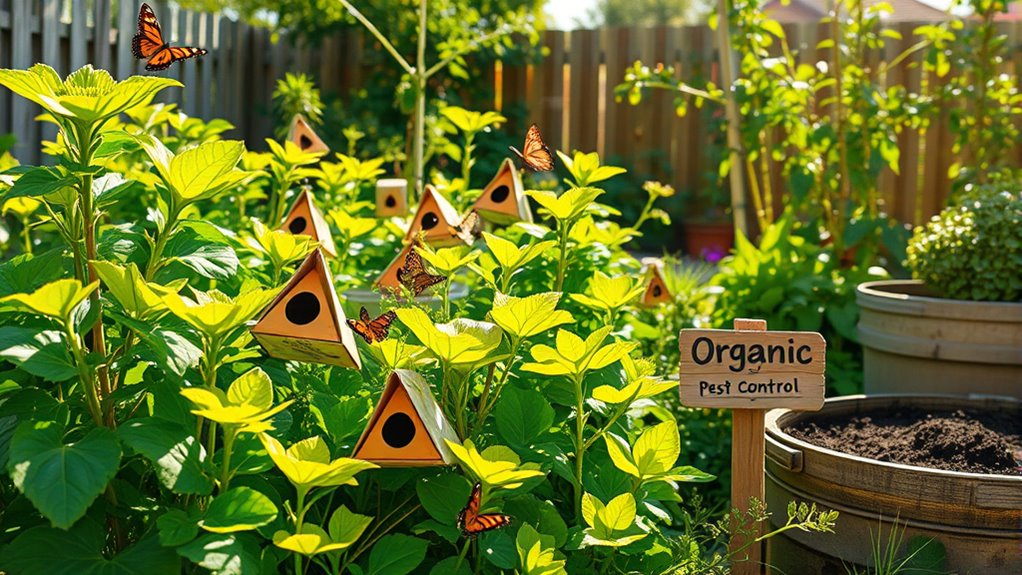
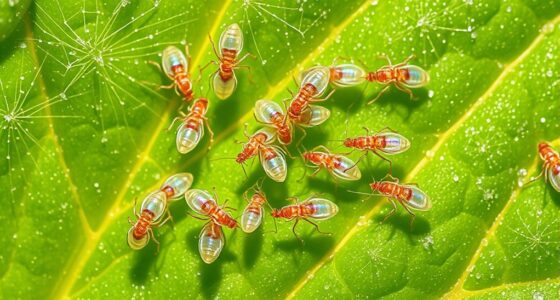
Are you tired of relying on chemical pesticides that harm the environment and your health? If so, switching to organic pest control methods can make a real difference. One of the most effective strategies involves encouraging beneficial insects to do the work for you. These helpful creatures, like ladybugs, lacewings, and parasitic wasps, naturally prey on common pests such as aphids, mites, and caterpillars. By creating a garden that attracts these beneficial insects, you can reduce or even eliminate the need for chemical interventions. Planting a diverse range of flowering plants, herbs, and native species provides essential nectar and pollen sources, drawing beneficial insects into your yard. Avoiding broad-spectrum insecticides is essential because they often kill beneficial insects along with pests, disrupting the natural balance. Instead, consider installing insect hotels or leaving some areas of your garden undisturbed, giving beneficial insects safe habitats to thrive. Incorporating air quality considerations into your gardening practices can also create a healthier environment for both plants and beneficial insects.
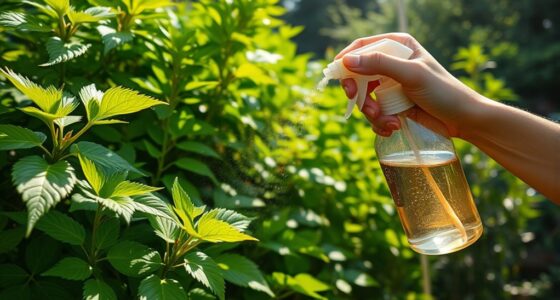
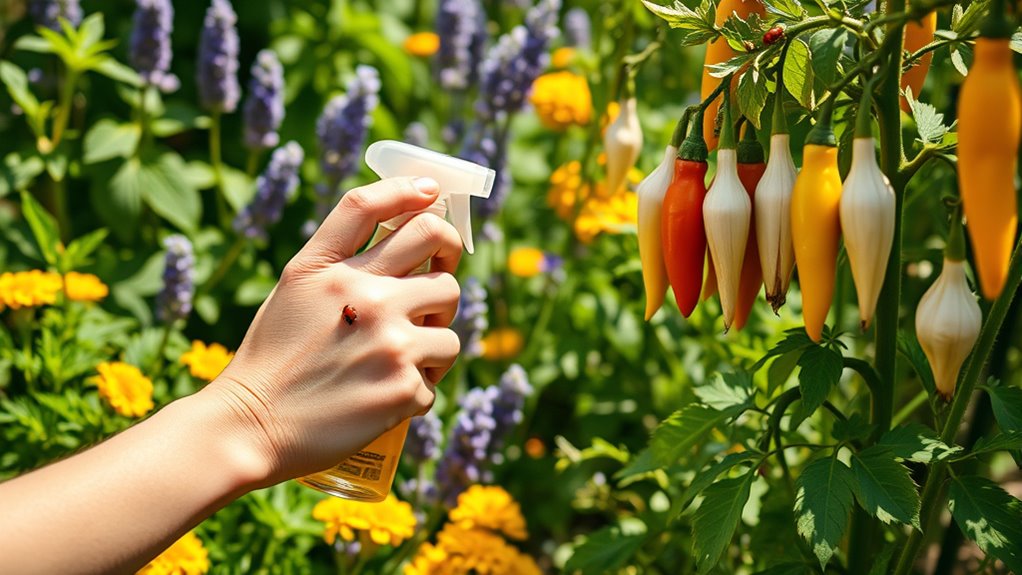
Natural repellents also play an important role in organic pest control. These are substances derived from plants or naturally occurring materials that repel pests without harming beneficial insects or the environment. For example, spraying a solution of garlic, neem oil, or hot pepper extract can deter pests from settling on your plants. These natural repellents work by irritating pests or disrupting their feeding habits, providing a non-toxic way to protect your garden. Applying these repellents regularly, especially during peak pest activity, can substantially reduce infestations. Remember, the goal isn’t to eliminate all insects but to selectively target harmful pests while supporting beneficial ones. For this reason, understanding which insects are beneficial and which are pests is essential. Identifying pests early allows you to apply natural repellents precisely where needed, minimizing collateral damage to your beneficial insect allies.
Combining the use of beneficial insects with natural repellents creates an integrated approach that’s both effective and sustainable. You’ll find that your garden becomes more resilient over time, reducing your dependence on chemical controls. Organic pest control isn’t just about avoiding toxins; it’s about fostering a balanced ecosystem where pests are naturally kept in check. As you implement these methods, you’ll notice fewer pests, healthier plants, and a safer environment for you and your family. Patience and consistency are key, but the rewards are well worth it. You’ll develop a deeper connection to your garden, learning to work with nature rather than against it. Organic pest control methods that leverage beneficial insects and natural repellents truly offer a practical, eco-friendly way to maintain a thriving, pest-free garden.
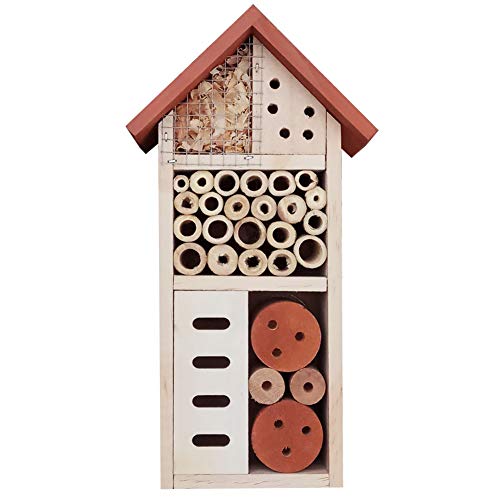
Lulu Home Wooden Insect House, Hanging Insect Hotel for Bee, Butterfly, Ladybirds, Beneficial Insect Habitat, Bug Hotel Garden, 10.4 X 3.4 X 5.4 Inch
Shelter for Insect: Lulu Home wooden insect house attracts insects to your garden, and provides them with a…
As an affiliate, we earn on qualifying purchases.
As an affiliate, we earn on qualifying purchases.
Frequently Asked Questions
Are Organic Pest Controls Safe for Pets and Children?
You’re likely wondering if organic pest controls are safe for your pets and children. Generally, they pose fewer chemical concerns and prioritize pet safety, making them a better choice than synthetic options. However, always read labels carefully, follow application instructions, and keep pets and kids away during and after treatment. Organic methods tend to be less toxic, but responsible usage guarantees your family’s safety while effectively managing pests.
How Long Before I See Results With Organic Methods?
Think of your pests as actors on a stage, each with a life cycle that unfolds over time. With organic treatment timing, you might see initial signs within a few days, but full results depend on pest life cycles. Typically, expect noticeable changes in 1-3 weeks, as organic methods target pests at different stages. Patience and consistent application are key to a successful, natural pest control performance.
Can Organic Pest Control Completely Eliminate Pests?
You wonder if organic pest control can completely eliminate pests. While it can markedly reduce pest populations, complete eradication isn’t always guaranteed, especially with pest resistance developing over time. Organic methods avoid harmful chemical residues, making them safer for your family and environment. However, consistent and integrated approaches are key, as pests may adapt, requiring ongoing management rather than a one-time solution.
Do Organic Methods Work on All Types of Pests?
Think of organic pest control as a versatile toolkit; it’s effective, but not a magic wand. While it offers great benefits comparison, organic methods aren’t a one-size-fits-all solution. Some pests, like aphids or beetles, are more responsive, showcasing pest-specific effectiveness. Others, like stubborn rodents or large insects, may require additional measures. So, you’ll need to tailor your approach, understanding that organic methods work best when matched to the pest you’re targeting.
Are Organic Pest Controls Cost-Effective Long-Term?
You might wonder if organic pest controls are cost-effective long-term. In many cases, they save you money through a favorable cost comparison over chemical options, especially as you avoid repeated treatments and potential health costs. Plus, organic methods often promote long-term savings by maintaining a healthier environment and reducing pest resistance. While initial costs may be slightly higher, the ongoing benefits make organic pest control a smart investment for your home or garden.

Mighty Mint Gallon (128 oz) Insect and Pest Repellent Peppermint Oil – Natural Spray for Spiders, Ants, and More
PET-FRIENDLY & FAMILY-SAFE FORMULA – Mighty Mint is a top pick for pet parents looking for a natural,…
As an affiliate, we earn on qualifying purchases.
As an affiliate, we earn on qualifying purchases.
Conclusion
By using these organic pest control methods, you can protect your garden safely and effectively. Did you know that organic approaches can reduce pest populations by up to 60% without harmful chemicals? Embracing natural solutions not only keeps your plants healthy but also benefits the environment. So, give these methods a try and enjoy a thriving, chemical-free garden. Your plants—and the planet—will thank you!

3000 Live Ladybugs – (2 X 1500 Live Ladybugs) – Guaranteed Live Delivery!
Includes a Ladybug educational sheet with Release Tips, Release Rates, Ladybug Fun Facts and FAQ's
As an affiliate, we earn on qualifying purchases.
As an affiliate, we earn on qualifying purchases.
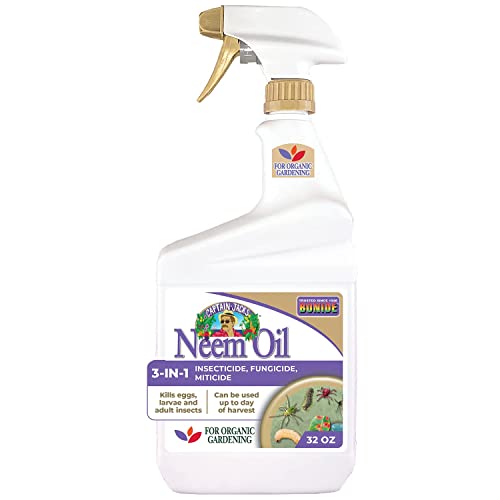
Bonide Captain Jack's Neem Oil, 32 oz Ready-to-Use Spray, Multi-Purpose Fungicide, Insecticide and Miticide for Organic Gardening
MULTI-PURPOSE BUG KILLER – Bonide Neem Oil is a perfect pest control solution for any garden dealing with…
As an affiliate, we earn on qualifying purchases.
As an affiliate, we earn on qualifying purchases.