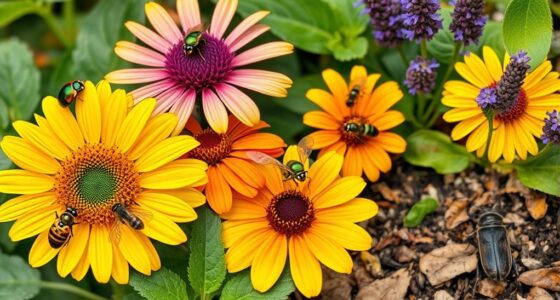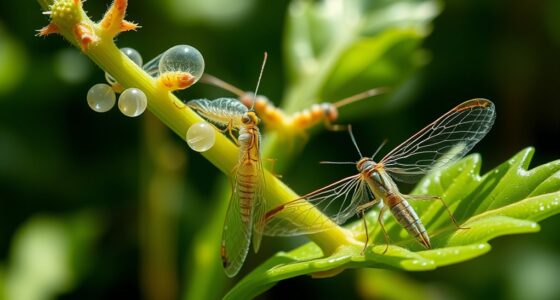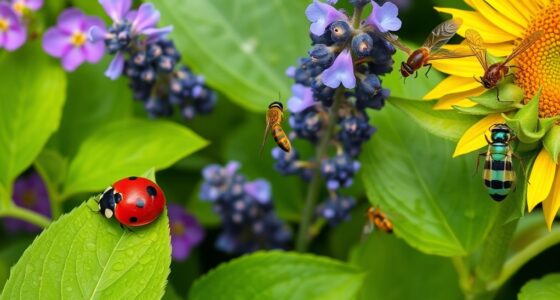
To get the most out of your garden, you should know about beneficial insects like ladybugs, lacewings, hoverflies, and parasitoid wasps. Ladybugs and lacewings eat pests like aphids and caterpillars, while hoverflies help control small pests and pollinate flowers. Parasitoid wasps suppress pest populations by laying eggs inside pests. Attracting these insects with flowering plants and avoiding chemicals supports a healthy, balanced garden. Keep exploring for more ways to encourage these helpful allies.
Key Takeaways
- Ladybugs effectively control aphids, scale insects, and other common garden pests naturally.
- Lacewings target soft-bodied pests like whiteflies, thrips, and caterpillars.
- Hoverflies’ larvae feed on aphids, while adults assist in pollination.
- Parasitoid wasps parasitize pests such as caterpillars and whiteflies, reducing their populations.
- Supporting diverse flowering plants attracts and sustains beneficial insects for pest control and pollination.
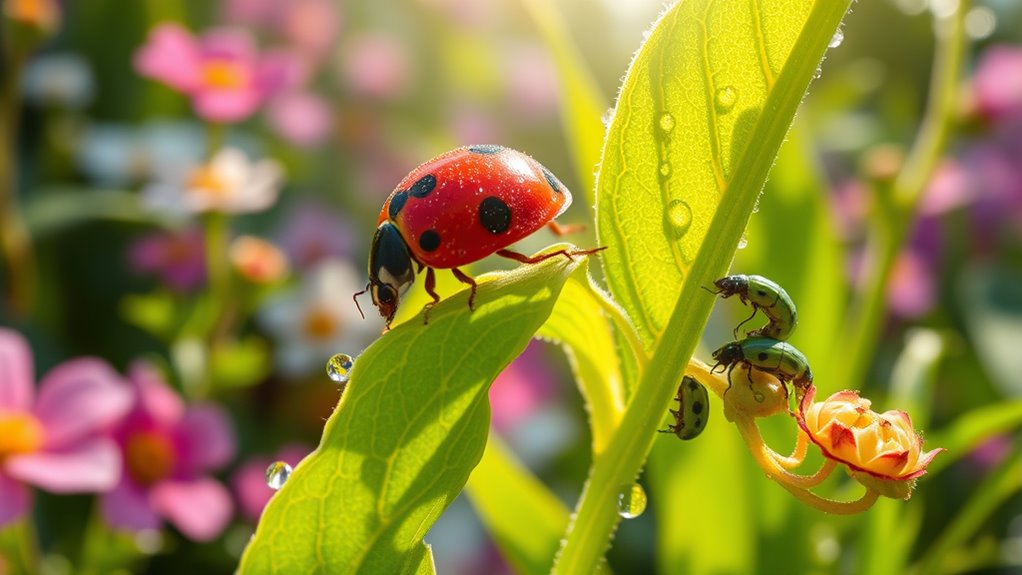
Beneficial insects play a crucial role in maintaining a healthy and productive garden, often reducing the need for chemical pesticides. By understanding how these insects work, you can develop effective pest control strategies that protect your plants naturally. For example, ladybugs are voracious predators of aphids, scale insects, and other pests that can quickly damage your crops. Introducing or encouraging ladybugs in your garden allows you to control pest populations without resorting to harmful chemicals, creating a safer environment for both your plants and beneficial insects. Similarly, lacewings are excellent for controlling soft-bodied pests like whiteflies, thrips, and caterpillars. Their larvae are especially aggressive hunters, making them a powerful tool in your pest management arsenal.
Beyond pest control, beneficial insects also contribute considerably to pollination benefits, which are essential for fruit and vegetable production. Bees, especially honeybees and native pollinators, are critical in transferring pollen from flower to flower, ensuring successful fertilization. This process results in better fruit set, larger yields, and more vibrant blooms. By fostering a garden environment that attracts these pollinators, you not only boost your harvest but also support the broader ecosystem. Providing a variety of flowering plants, avoiding pesticides during bloom times, and creating habitats like bee hotels can encourage these essential insects to visit your garden regularly.
Another beneficial insect worth noting is the hoverfly. While their appearance might resemble a bee or wasp, hoverflies are harmless and highly advantageous. Their larvae feed on aphids and other small pests, making them a natural pest control solution. Adult hoverflies are also excellent pollinators, contributing further to your garden’s productivity. You can attract hoverflies by planting a diverse array of nectar-rich flowers and avoiding broad-spectrum insecticides that could harm them.
Parasitoid wasps are tiny but mighty allies against various pests. They lay their eggs inside pest insects, such as caterpillars and whiteflies, eventually killing their hosts from within. Introducing or supporting populations of these wasps can dramatically reduce pest levels without chemical intervention. To encourage their presence, plant native flowering plants that provide nectar and pollen, and steer clear of pesticides that could disrupt their lifecycle.
Frequently Asked Questions
How Can I Attract Beneficial Insects Naturally?
To attract beneficial insects naturally, you should create a diverse garden with native plants, flowers, and shrubs that provide nectar and pollen. Avoid pesticides, which can harm helpful bugs involved in pest control and crop pollination. Provide habitats like mulch, leaves, and logs for shelter. Water your garden regularly to keep insects hydrated. This approach encourages beneficial insects to thrive, supporting your garden’s health through natural pest control and improved crop pollination.
Are Beneficial Insects Safe Around Children and Pets?
You might wonder if beneficial insects are safe around children and pets. Generally, they are, especially when you follow pesticide safety guidelines and avoid using harmful chemicals. Proper insect identification tips can help you distinguish beneficial insects from pests, ensuring safe interaction. Keep your garden well-maintained and educate your family about beneficial insects, so everyone can enjoy a healthy environment without worry.
What Plants Attract Beneficial Insects the Most?
You can attract beneficial insects by planting a variety of flowering plants like daisies, fennel, and marigolds, which serve as food sources. Incorporate companion planting to enhance attraction and plant insect hotels nearby to provide shelter. These strategies create a friendly environment that draws in pollinators and natural pest controllers, helping your garden thrive naturally. Regularly maintain these plants and structures to keep beneficial insects coming back.
How Do I Differentiate Between Beneficial and Harmful Insects?
To differentiate between beneficial and harmful insects, start with pest identification by observing their size, shape, and color. Pay attention to insect behavior—beneficial insects often move gently and focus on pests, while harmful ones may be aggressive or damage plants. Use guides or apps for accurate identification. By monitoring these signs, you can protect your garden and encourage helpful insects to thrive.
When Is the Best Time to Introduce Beneficial Insects?
You should consider the timing for release of beneficial insects based on seasonal considerations, ideally when pest populations are beginning to rise. Early spring or late summer are often best, as insects have time to establish and control pests effectively. Avoid releasing beneficial insects during extreme weather conditions or when pesticide use is heavy, since these factors can hinder their survival and effectiveness. Proper timing maximizes their benefits for your garden.
Conclusion
Embracing these beneficial insects enriches your garden’s delicate harmony, gently guiding nature’s own symphony. By welcoming their quiet presence, you nurture a thriving, resilient landscape that requires fewer interventions. Remember, fostering this unseen network not only sustains your plants but also transforms your garden into a refined sanctuary of balance. In doing so, you partake in a timeless dance, where patience and respect reveal the subtle, elegant art of natural harmony.