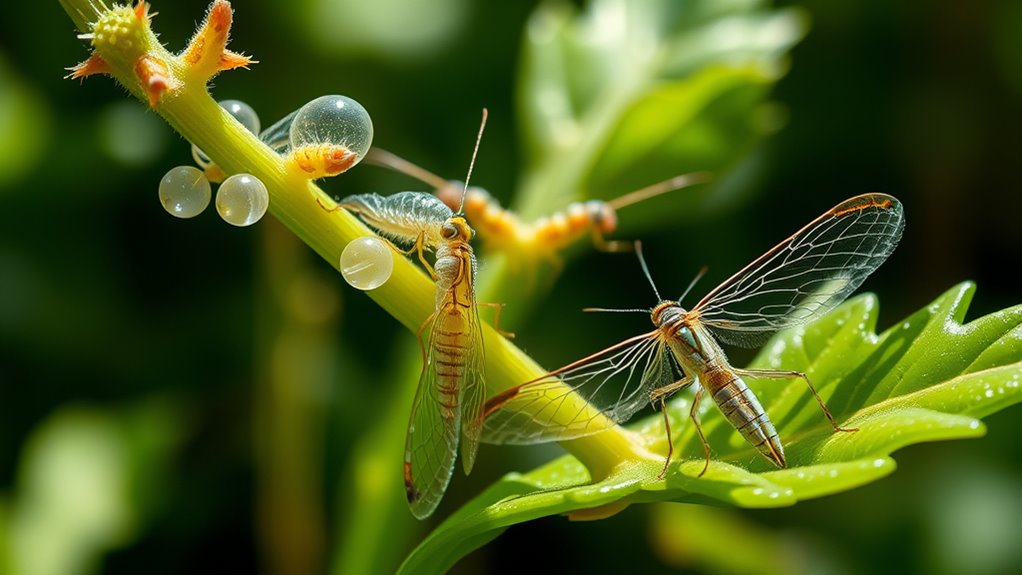
Lacewings are beneficial insects that help control garden pests naturally. You’ll notice eggs—small, oval clusters on the undersides of leaves—hatched within days to produce voracious larvae that resemble tiny alligators, feeding on aphids and other pests. Adults, with delicate green bodies and lace-like wings, feed on nectar and pest eggs, while also pollinating your plants. To attract them, plant nectar-rich flowers and avoid harmful pesticides, ensuring ongoing pest control. Keep exploring to learn more about supporting these helpful insects.

Get garden gear delivered free with Prime
- Fast, free delivery on millions of items
- Prime Video, Amazon Music and more included
- Member-only deals all year
Key Takeaways
- Lacewing eggs are small, oval, and laid on leaf undersides, often in clusters, and hatch within a few days.
- Larvae resemble tiny alligators, are spiny, and are highly effective predators of pests like aphids and whiteflies.
- Adults are delicate green insects with lace-like wings, active mainly at night, feeding on nectar, pollen, and pest eggs.
- Encouraging lacewings involves planting nectar-rich flowers, avoiding harmful pesticides, and providing diverse habitats.
- Recognizing all life stages helps maximize natural pest control and maintain a healthy, balanced garden ecosystem.
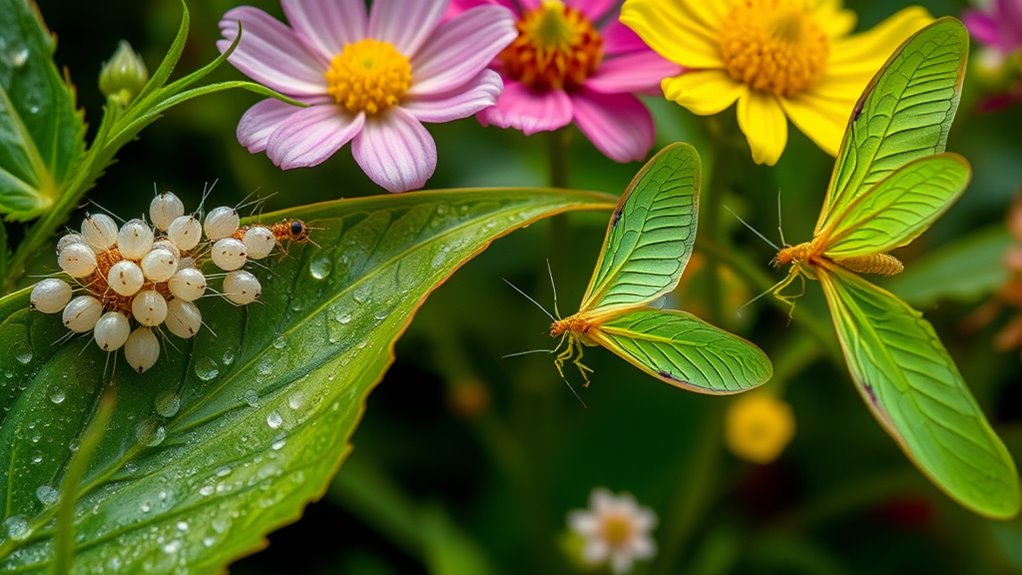
Lacewings are tiny, beneficial insects that play a vital role in maintaining a healthy garden. As a gardener, you’ll quickly notice their importance in natural pest control. These insects are considered beneficial insects because they help reduce populations of common garden pests, such as aphids, caterpillars, and mites. By encouraging lacewings in your garden, you effectively utilize their pest control abilities, minimizing your need for chemical interventions. Their presence indicates a balanced ecosystem, where natural predators keep pest numbers in check.
Lacewings are tiny, beneficial insects vital for natural pest control in healthy gardens.
Understanding the different stages of lacewings—eggs, larvae, and adults—helps you appreciate how these insects contribute to your garden’s health. Lacewing eggs are small, oval, and usually laid on the undersides of leaves. They are often arranged in clusters and are easy to spot if you’re inspecting your plants regularly. These eggs hatch quickly, usually within a few days, releasing tiny larvae that are voracious predators. The larvae resemble tiny alligators, with a rough, spiny appearance, and are the true workhorses of pest control. You’ll notice that these larvae actively hunt aphids, whiteflies, and other soft-bodied pests, consuming large quantities to fuel their growth. Because of their aggressive feeding habits, lacewing larvae are considered one of the most effective natural pest control agents available to gardeners. Additionally, providing a habitat that supports beneficial insects encourages their continued presence and pest control activity.
Once the larvae have sufficiently fed and grown, they pupate, eventually emerging as adult lacewings. Adult lacewings are delicate, green insects with fine, lace-like wings that give them their name. They are most active during the evening and night, flying from plant to plant in search of nectar, pollen, or other small insects. While adults don’t feed on pests as aggressively as larvae, they still contribute to pest control by preying on tiny pest eggs and immature stages. Additionally, adults help pollinate plants, further supporting a healthy garden ecosystem. Their presence signals a thriving environment where beneficial insects flourish, providing ongoing natural pest management.
Encouraging lacewings is simple; you can plant nectar-rich flowers and avoid broad-spectrum pesticides that kill beneficial insects. Providing a diverse garden habitat attracts lacewings and other beneficial insects, creating a self-sustaining system that keeps pest populations under control. Recognizing the different stages of lacewings and understanding their roles allows you to harness their natural pest control power effectively. By doing so, you maintain a healthy, balanced garden without relying heavily on chemical pesticides, protecting both your plants and the environment.
As an affiliate, we earn on qualifying purchases.
Frequently Asked Questions
How Long Do Lacewings Typically Live?
Lacewings typically live for about 4 to 6 weeks, but lifespan variations occur due to environmental influences. You’ll notice that in warmer, food-rich conditions, they often live longer, while harsh weather or scarcity of prey can shorten their lives. As a gardener, understanding these lifespan variations helps you manage lacewing populations better, ensuring they stay active in your garden long enough to control pests effectively.
Are Lacewings Harmful to Garden Plants?
Lacewings are practically superheroes for your garden, not threats! They’re incredibly beneficial, as they help control pest damage and keep plants safe. You don’t need to worry about lacewings harming your garden plants—they actually protect them by eating aphids and other pests. So, instead of causing harm, lacewings boost your garden’s health, making them welcome allies in your gardening efforts.
When Is the Best Time to Attract Lacewings?
You should attract lacewings during their peak activity in spring and early summer, aligning with their seasonal timing. They prefer habitats with abundant flowering plants and plenty of prey like aphids. To lure them effectively, plant nectar-rich flowers and maintain a diverse garden environment. By creating these conditions, you’ll encourage lacewings to settle and thrive, naturally controlling pests and supporting your garden’s health throughout the season.
Do Lacewings Prefer Indoor or Outdoor Environments?
Lacewings prefer the great outdoors, where they can thrive in a natural habitat like a symphony of lush plants and pest-rich gardens. Their indoor presence is limited, as they need open space and natural prey like aphids to survive. Think of your garden as their stage — they flourish outside, prowling through leaves and flowers, rather than inside, where their environment is too confined for their free-spirited nature.
Can Lacewings Control Specific Pests?
Yes, lacewings can control specific pests through their predator behavior, targeting pests like aphids, thrips, and whiteflies. Their larvae are especially effective, showing pest specificity by actively hunting and consuming these pests. You’ll notice lacewings focusing on particular pests, making them a natural and targeted solution for garden health. By encouraging lacewings, you support biological pest control, reducing the need for chemical interventions.
As an affiliate, we earn on qualifying purchases.
Conclusion
By welcoming lacewings into your garden, you harness natural pest control that’s both effective and eco-friendly. Imagine a gardener in California who noticed fewer aphids after planting flowering herbs to attract lacewings; within weeks, pests dwindled, and plants thrived. You can experience similar success by creating a friendly habitat for these beneficial insects. Embrace lacewings, and watch your garden flourish with healthy, thriving plants—no chemicals needed.
nectar-rich flowers for garden insects
As an affiliate, we earn on qualifying purchases.
As an affiliate, we earn on qualifying purchases.
organic pest control products for garden
As an affiliate, we earn on qualifying purchases.
As an affiliate, we earn on qualifying purchases.
Halloween Picks
halloween
As an affiliate, we earn on qualifying purchases.