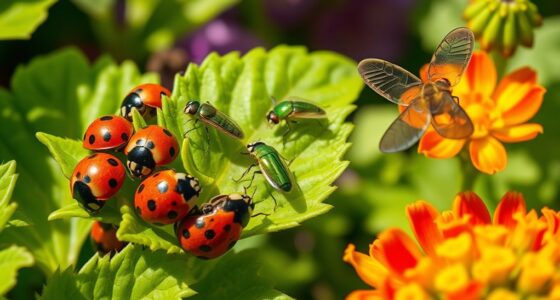
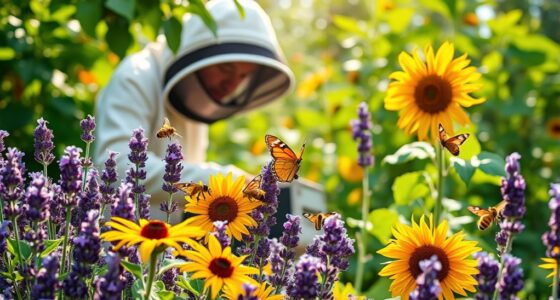
To improve your garden’s health, learn about beneficial insects like ladybugs that eat aphids, lacewings which target mealybugs, parasitic wasps that control caterpillars, hoverflies that feed on aphids, ground beetles that hunt soil pests, praying mantises for various bugs, and pollinators like bees and butterflies. These insects naturally keep pests in check and promote healthy plant growth. Keep exploring to discover how to attract and support these essential helpful insects in your garden.

Get garden gear delivered free with Prime
- Fast, free delivery on millions of items
- Prime Video, Amazon Music and more included
- Member-only deals all year
Key Takeaways
- Ladybugs: Consume aphids and other soft-bodied pests, reducing the need for chemical controls.
- Parasitic Wasps: Target caterpillars and pest eggs, naturally controlling pest populations.
- Lacewings: Eat aphids, mites, and small insects, promoting healthy plant growth.
- Hoverflies: Their larvae feed on aphids and thrips, helping keep pest levels low.
- Ground Beetles: Prey on soil-dwelling pests like slugs, caterpillars, and root maggots.

Beneficial insects play an essential role in maintaining healthy gardens by naturally controlling pests and promoting plant growth. As a gardener, understanding how these insects fit into your pest control strategies can considerably reduce your reliance on chemical pesticides. Instead of spraying chemicals that can harm your plants and the environment, you can encourage beneficial insects to do the heavy lifting. To do this effectively, it’s important to create and sustain native insect habitats within your garden. These habitats provide food, shelter, and breeding sites for beneficial insects, ensuring they thrive and actively control pests. Incorporating native plants, leaving dead wood, or providing undisturbed soil are simple steps to support these habitats. When native insect habitats are well-established, beneficial insects like ladybugs, lacewings, and predatory beetles can establish themselves naturally, creating a balanced ecosystem that keeps pest populations in check.
You should also recognize that different beneficial insects target specific pests, so diversifying your garden’s environment can attract a variety of helpful species. For example, planting nectar-rich flowers like fennel, dill, or yarrow not only beautifies your garden but also provides essential resources for adult beneficial insects. This encourages them to stay and reproduce, maintaining a steady population of natural pest controllers. Additionally, avoiding broad-spectrum insecticides is important because these chemicals often kill beneficial insects along with pests. Instead, focus on targeted pest control methods and natural solutions, such as introducing ladybugs to combat aphids or deploying parasitic wasps to manage caterpillar outbreaks. Understanding the beneficial insect market can help gardeners select the most effective biological controls for their specific pest problems.
Creating a habitat that supports native insects involves more than just planting the right flora. It means maintaining a healthy, diverse environment that mimics natural conditions. Leaving leaf litter or creating small piles of logs can serve as shelter for beneficial ground-dwelling insects. Maintaining a variety of plants with staggered blooming times ensures a continuous food supply throughout the growing season. This diversity not only attracts beneficial insects but also helps your garden resist pest outbreaks naturally, reducing the need for intervention.
beneficial insect starter kit for gardens
As an affiliate, we earn on qualifying purchases.
As an affiliate, we earn on qualifying purchases.
Frequently Asked Questions
How Can I Attract Beneficial Insects to My Garden Naturally?
To attract beneficial insects naturally, you should plant a variety of flowering plants that provide nectar and pollen year-round. Include native species that attract pollinators and predatory insects. Additionally, provide water sources like shallow dishes or birdbaths with stones for insects to land on. Avoid pesticides, and create diverse habitats to encourage beneficial insects to stay and help control pests in your garden.
Are There Any Risks in Introducing Beneficial Insects?
You might wonder if introducing beneficial insects risks pesticide interference or predator-prey imbalance. While beneficial insects help control pests naturally, pesticides can harm them, reducing their effectiveness. Also, introducing too many beneficials too quickly can disrupt the natural predator-prey balance, possibly leading to unforeseen issues. To minimize risks, avoid pesticides and introduce beneficial insects gradually, ensuring they thrive without upsetting your garden’s ecological harmony.
How Do Beneficial Insects Affect Non-Target Garden Pests?
Coincidentally, beneficial insects often target specific pests through pest suppression mechanisms, but they can also impact non-target pests. You might notice increased pollination benefits as these insects help control pest populations, allowing your plants to thrive. While they’re generally selective, some beneficials may affect non-target pests, contributing to a balanced ecosystem. This natural regulation reduces the need for chemical controls and promotes a healthier, more resilient garden environment.
What Is the Best Time of Year to Release Beneficial Insects?
You should release beneficial insects during the ideal seasonal timing, usually in spring or early summer, when pest populations are just beginning to grow. This aligns with the pest lifecycle, ensuring the beneficial insects can effectively control pests before they become problematic. Timing your releases carefully maximizes their impact, helping you maintain a healthy garden naturally. Keep an eye on pest activity and adjust releases accordingly for best results.
Can Beneficial Insects Replace Chemical Pest Control Completely?
Beneficial insects can’t fully replace chemical pest control, but they play a key role in integrated pest management. You can support their effectiveness through insect habitat enhancement, creating a balanced environment that encourages natural pest control. While they reduce your reliance on chemicals, combining biological methods with minimal chemical use offers the best results for a healthy, sustainable garden. Always monitor pest levels to decide when intervention is necessary.
As an affiliate, we earn on qualifying purchases.
Conclusion
By welcoming these helpful insects into your garden, you’re gently guiding nature’s balance in your favor. Their quiet work keeps pests at bay and your plants thriving, creating a more harmonious space. With just a little patience and understanding, you’ll find your garden becoming a haven of natural beauty and health. Embrace these tiny allies, and watch how they subtly transform your gardening experience into a rewarding, eco-friendly journey.
parasitic wasps biological control
As an affiliate, we earn on qualifying purchases.
As an affiliate, we earn on qualifying purchases.
pollinator attracting plants for garden
As an affiliate, we earn on qualifying purchases.
As an affiliate, we earn on qualifying purchases.
Fall yard work Picks
leaf blowers
As an affiliate, we earn on qualifying purchases.