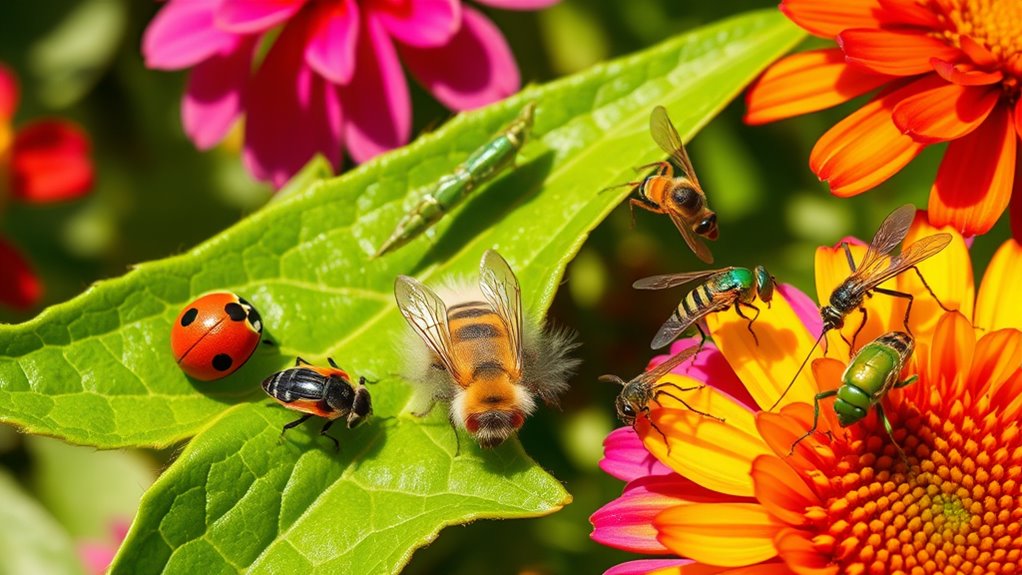

To garden successfully, you should know about seven key beneficial insects: ladybugs, lacewings, parasitic wasps, praying mantises, hoverflies, ground beetles, and native pollinators. These insects naturally control pests like aphids, caterpillars, and beetles while supporting plant health and biodiversity. By attracting and supporting these helpful creatures, you create a resilient and eco-friendly garden. Keep exploring ways to make your garden a haven for native beneficial insects—they’re your best natural partners.

Get garden gear delivered free — and shop member deals
- Fast, free delivery on millions of items
- Access to Prime Big Deal Days deals on October 6–7
- Prime Video, Amazon Music and more included
Key Takeaways
- Ladybugs are effective predators of aphids, scale insects, and soft-bodied pests.
- Lacewings larvae consume large amounts of aphids, thrips, and caterpillars, aiding in pest control.
- Parasitic wasps lay eggs inside pest insects, naturally reducing pest populations.
- Native beneficial insects are better adapted to local pests and environmental conditions.
- Providing native flowering plants and habitats encourages beneficial insects to thrive naturally.
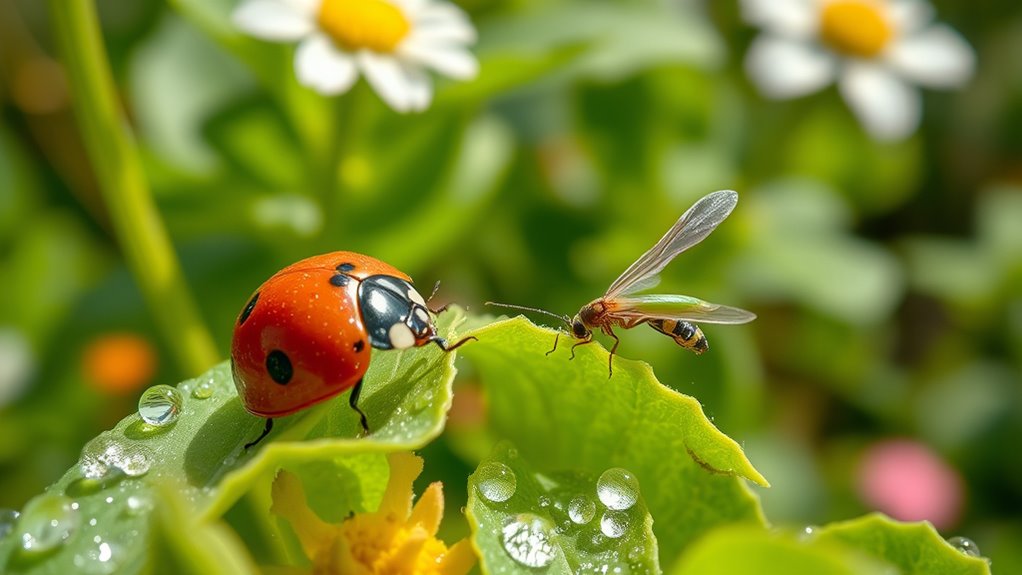
Beneficial insects play a crucial role in maintaining a healthy and thriving garden. They are nature’s own pest control technicians, helping you manage common garden pests without resorting to chemical sprays. By understanding how native insect species operate, you can harness their natural behaviors to implement effective pest control techniques that keep your plants healthy and productive. Native insects are adapted to your local environment, making them more resilient and efficient at controlling pests specific to your region. Recognizing these species and encouraging their presence is a smart, eco-friendly way to maintain balance in your garden ecosystem.
Supporting native beneficial insects promotes a resilient, eco-friendly garden ecosystem.
One of the most well-known beneficial insects is the ladybug. These tiny beetles are voracious predators of aphids, scale insects, and other soft-bodied pests. When you spot ladybugs in your garden, you’re seeing a natural solution at work. You can attract ladybugs by planting a variety of flowering plants, such as dill, fennel, and marigolds, which provide nectar and pollen to sustain them. Encouraging native ladybug populations reduces the need for chemical interventions, aligning with sustainable pest control techniques. Similarly, lacewings are excellent allies, especially in their larval stage, where they consume large quantities of aphids, thrips, and caterpillars. You can create a welcoming environment for lacewings by avoiding broad-spectrum insecticides and planting diverse, pollen-rich plants.
Parasitic wasps are another group of native insect species that are invaluable for pest control. These tiny wasps lay their eggs inside pest insects like caterpillars, whiteflies, and scale insects. The developing wasp larvae then consume their hosts from within, naturally reducing pest populations. To support parasitic wasps, you should avoid applying pesticides that could kill them and instead focus on planting native flowering plants that provide nectar and pollen they need for sustenance. This approach not only keeps pest numbers in check but also promotes biodiversity, fostering a resilient garden environment. Additionally, creating undisturbed habitats and avoiding chemical use helps sustain their populations over time.
Integrating native insect species into your pest control techniques requires a conscious effort to create a habitat inviting to these beneficial insects. You can do this by planting native flowering plants, providing shelter such as brush piles or insect hotels, and avoiding harmful chemicals. The more you learn about the native insect species in your area, the better you can tailor your practices to support their populations. Over time, you’ll notice a significant reduction in pest outbreaks and a healthier overall garden. Embracing these natural pest control methods empowers you to maintain an eco-friendly, balanced garden that relies less on chemicals and more on the incredible work of native beneficial insects. Recognizing and supporting beneficial insect populations is essential for a sustainable gardening approach.
Frequently Asked Questions
How Can I Attract Beneficial Insects Naturally?
To attract beneficial insects naturally, you should focus on creating a welcoming environment. Use companion planting to diversify your garden, which provides food and shelter for helpful bugs. Incorporate organic pest control methods that don’t harm beneficial insects. Avoid pesticides, and plant nectar-rich flowers to attract pollinators. These steps help foster an ecosystem where beneficial insects thrive, naturally controlling pests and supporting your garden’s health.
Are There Any Risks in Introducing Beneficial Insects?
Introducing beneficial insects might seem like inviting a tiny army to protect your garden, but beware—pesticide conflicts can wipe them out instantly, and invasive species risks could turn your peaceful garden into chaos. You could unintentionally disrupt natural balances, causing more harm than good. Always research specific insects, avoid chemicals, and consult experts to minimize these risks, ensuring your garden thrives without unintended consequences.
How Do Beneficial Insects Affect Pest Populations Over Time?
You might wonder how beneficial insects influence pest population dynamics over time. They help control pests naturally, reducing the need for chemical interventions. As they reproduce and hunt pests, they keep pest numbers in check, stabilizing populations naturally. This supports sustainable, natural pest control strategies, ensuring your garden remains healthy and balanced. Over time, these beneficial insects can markedly decrease pest outbreaks, making your garden more resilient and reducing reliance on pesticides.
Can Beneficial Insects Harm My Other Plants or Animals?
You might wonder if beneficial insects harm your plants or animals. Generally, they don’t cause damage; however, pesticide interference can reduce their effectiveness, and accidental predation may occur if they mistake other insects or small creatures for pests. While beneficial insects are usually safe and helpful, it’s best to avoid broad-spectrum pesticides that could disrupt their populations or lead to unintended harm, ensuring they continue protecting your garden naturally.
How Do I Identify Different Beneficial Insect Species?
To identify different beneficial insect species, you need good insect identification skills. Look closely at their size, color, wing shape, and behaviors. Use field guides or apps for beneficial species recognition, which help distinguish helpful insects from pests. Observing their habits and habitats can also assist in correctly identifying beneficial insects. By practicing insect identification, you guarantee you support the right beneficial species, promoting a healthy, balanced garden ecosystem.
Conclusion
By inviting these beneficial insects into your garden, you embrace a natural, eco-friendly way to keep pests at bay. Think of them as your tiny, modern-day knights—minus the armor—fighting off unwanted invaders. With a little patience, you’ll see your garden flourish like the lush landscapes of a bygone era. So, go ahead and welcome these helpful bugs; your garden will thank you, and you’ll feel like a true green thumb of the 21st century.
Fall yard work Picks
leaf blowers
As an affiliate, we earn on qualifying purchases.