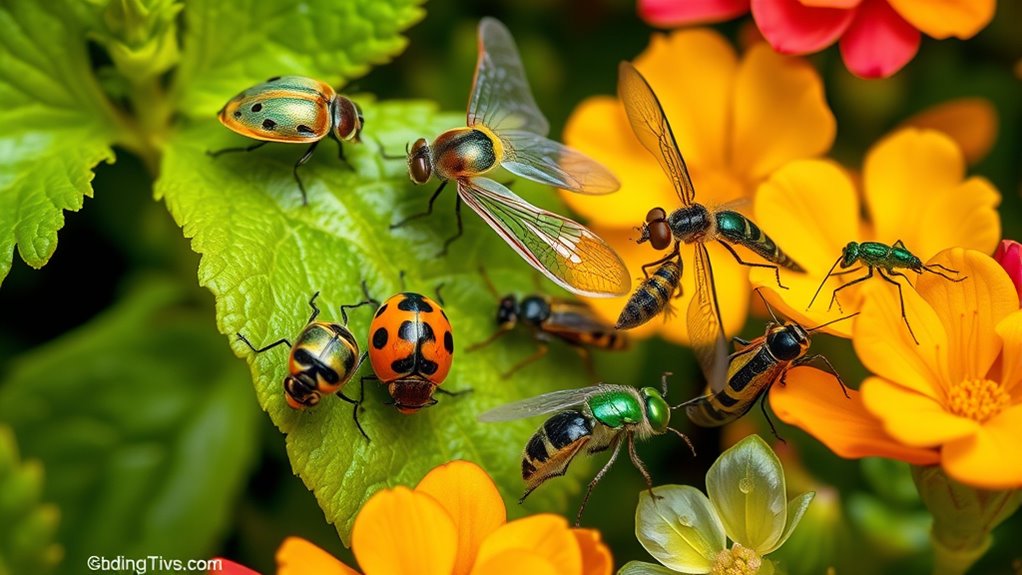

To improve your garden naturally, you should get to know seven key beneficial insects: ladybugs, lacewings, hoverflies, bees, syrphid flies, parasitic wasps, and predatory mites. Ladybugs and lacewings control pests like aphids, while hoverflies help with pest management and pollination. Bees and other pollinators boost flower and fruit production. Creating a diverse, pesticide-free environment helps attract these helpful creatures. Keep exploring to discover how each of these insects can boost your garden’s health and productivity.
Key Takeaways
- Ladybugs naturally control aphids, scale insects, and soft-bodied pests, reducing the need for chemical pesticides.
- Lacewings larvae prey on aphids, whiteflies, and mealybugs, supporting pest management in gardens.
- Hoverflies larvae feed on pests like aphids, while adults pollinate flowers, providing dual benefits.
- Planting nectar-rich flowers such as fennel, dill, and yarrow attracts beneficial insects and sustains their populations.
- Avoiding chemical pesticides helps preserve beneficial insects and promotes a healthy, balanced garden ecosystem.
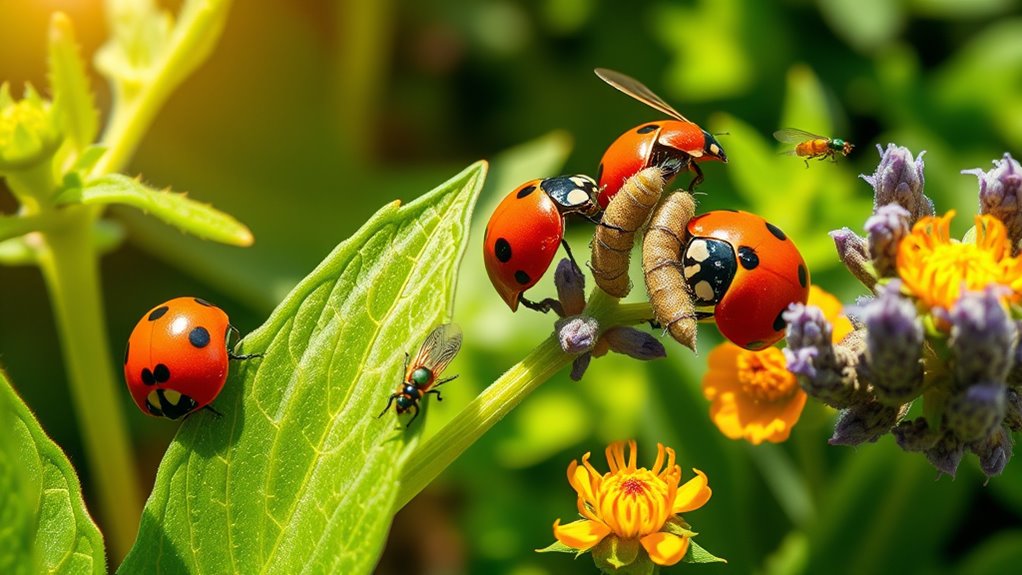
Have you ever wondered how to naturally protect your garden from pests? Implementing effective pest control strategies doesn’t always mean reaching for chemical sprays. Instead, you can harness the power of beneficial insects to keep your garden healthy and thriving. These natural allies not only reduce pest populations but also support pollination benefits, which are essential for fruit and flower production. By understanding which beneficial insects to encourage and how to attract them, you create a balanced ecosystem that minimizes pests without harming your plants or the environment.
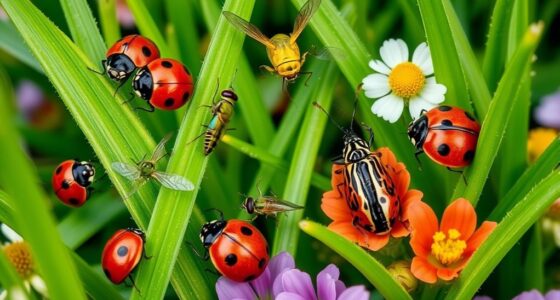
Ladybugs are among the most popular beneficial insects because they feast on aphids, scale insects, and other soft-bodied pests. Introducing or attracting ladybugs to your garden is simple; they naturally seek out areas with plenty of food sources, so planting a diverse range of flowering plants can draw them in. Once established, ladybugs act as a natural pest control strategy, markedly decreasing pest numbers without the need for chemical intervention. Plus, ladybugs are also pollinators, contributing to pollination benefits that help increase your garden’s productivity.
Lacewings are another indispensable beneficial insect to consider. Their larvae are voracious predators of aphids, whiteflies, and mealybugs, making them invaluable for pest control. You can encourage lacewings by planting nectar-rich flowers such as fennel, dill, or yarrow, which provide them with the sustenance they need. As they hunt pests, lacewings also aid in pollination, supporting the reproductive cycle of your garden plants. Their presence helps maintain a natural balance, reducing the need for chemical pesticides, which can harm beneficial insects and pollinators alike.
Hoverflies, often mistaken for tiny bees or wasps, are also excellent allies in pest management. Their larvae feed on aphids and other pests, and adult hoverflies are attracted to flowering plants, making them important pollinators. To attract hoverflies, plant a variety of flowers that bloom throughout the season, providing a continuous nectar source. Their dual role as pest controllers and pollinators makes them a smart addition to your garden’s eco-system, promoting healthy plant growth and better fruit set.

Insect Lore Raise and Release Butterfly Garden Kit – Caterpillar Habitat with redeemable Voucher – STEM-accredited Butterfly Growing Kit for Kids, Classrooms, and Homeschool Learning
The Butterfly Garden: Includes everything you need to raise 5 baby caterpillars into adult butterflies. A 12” tall…
As an affiliate, we earn on qualifying purchases.
As an affiliate, we earn on qualifying purchases.
Frequently Asked Questions
How Can I Attract Beneficial Insects Naturally?
Imagine your garden as a bustling marketplace for beneficial insects. To attract them naturally, you need to offer natural nectar sources like flowering plants that bloom throughout the season. Incorporate companion planting to create a welcoming habitat and provide shelter. These strategies turn your garden into a thriving ecosystem, inviting helpful insects to stay, hunt pests, and keep your plants healthy without chemical interventions.
Are There Harmful Insects That Mimic Beneficial Ones?
Yes, some harmful insects mimic beneficial ones through insect mimicry, making it tricky to identify them. You need to pay close attention to details like color, size, and behavior for accurate beneficial insect identification. For example, certain pest species imitate pollinators or predators to avoid predation. Being aware of these lookalikes helps you protect your garden by encouraging true beneficial insects while controlling harmful mimics.
When Is the Best Time to Introduce Beneficial Insects?
You might think introducing beneficial insects is complicated, but timing considerations make it simple. The best time is during seasonal planning, ideally when pests first appear or before they become overwhelming. Early spring or late summer are often ideal. By releasing beneficial insects at the right moment, you guarantee they establish effectively, helping your garden stay healthy and pest-free without chemical interventions. Just monitor your garden and act promptly for best results.
Do Beneficial Insects Require Special Habitat Modifications?
You might wonder if beneficial insects need special habitat modifications. Generally, they thrive with diverse habitats that support insect diversity, so creating varied planting areas, providing shelter, and avoiding pesticides helps. You don’t need extensive changes, just small habitat modifications like leaving some leaf litter or installing insect hotels. These tweaks promote a balanced ecosystem, encouraging beneficial insects to stay and naturally control pests in your garden.
Can Beneficial Insects Help With Organic Pest Control?
Did you know that beneficial insects can reduce pest populations by up to 90%? They’re a powerful tool in organic pest management, naturally controlling pests without chemicals. By learning insect identification, you can encourage these helpful bugs to thrive in your garden. Using beneficial insects promotes eco-friendly pest control, keeps your plants healthy, and reduces the need for pesticides, making your gardening efforts more sustainable and rewarding.

Kate's Home & Garden Peppermint Oil Spray for Bugs, Ants, Insects, Spiders, Roaches, Stink Bug. Pesticide and Insecticide Indoor Repellent Pest Control with Cedar Oil (16oz, Natural, Non Toxic)
PEPPERMINT SPRAY FOR BUGS: This natural bug repellent for home is made with peppermint and cedarwood oil for…
As an affiliate, we earn on qualifying purchases.
As an affiliate, we earn on qualifying purchases.
Conclusion
By welcoming these beneficial insects into your garden, you’re planting a team of natural allies that work tirelessly to keep pests at bay. Imagine your garden as a bustling city, where each insect plays a crucial role—like tiny firefighters snuffing out fires before they spread. When you embrace these allies, you’re creating a thriving, balanced ecosystem that requires fewer chemicals. Your garden becomes a vibrant, self-sustaining paradise—proof that nature’s own helpers truly make all the difference.

Natures Good Guys – Green Lacewing Eggs on Hanging Card (2,500 Eggs)
Live Green Lacewing Eggs – Glued on hanging cards
As an affiliate, we earn on qualifying purchases.
As an affiliate, we earn on qualifying purchases.

Burpee Wildflower 25,000 Bulk, 1 Bag, 18 Varieties of Non-GMO Flower Seeds Pollinator Garden, Pollinator Mix
Pollinator Seed Mix: Burpee's Wildflower Seeds Mix Will Attract Bees, Butterflies, Hummingbirds, And More Beneficial Pollinators To Your…
As an affiliate, we earn on qualifying purchases.
As an affiliate, we earn on qualifying purchases.