TL;DR

Get garden gear delivered free with Prime
- Fast, free delivery on millions of items
- Prime Video, Amazon Music and more included
- Member-only deals all year
OmVed Gardens has shared instructions for making a “bug snug,” a small structure filled with garden cuttings that can provide shelter for insects over winter. The North London garden says the habitat can also offer cover for frogs and birds, while giving gardeners one place to gather leaves and prunings.
OmVed Gardens, a North London community garden and learning hub, has shared instructions for building a “bug snug” from garden cuttings, offering gardeners a way to collect seasonal debris while creating potential winter shelter for insects and other wildlife. The approach uses a simple three-pole frame filled with leaves, lawn clippings and plant stems.
The structure begins with three sturdy poles arranged in a triangle or teepee shape. OmVed landscape gardener John Gaffney said the garden used hazel, but bamboo canes or other straight, long materials can also work. The frame can be made to different sizes and should stand on its own; pushing the poles into the ground can add stability.
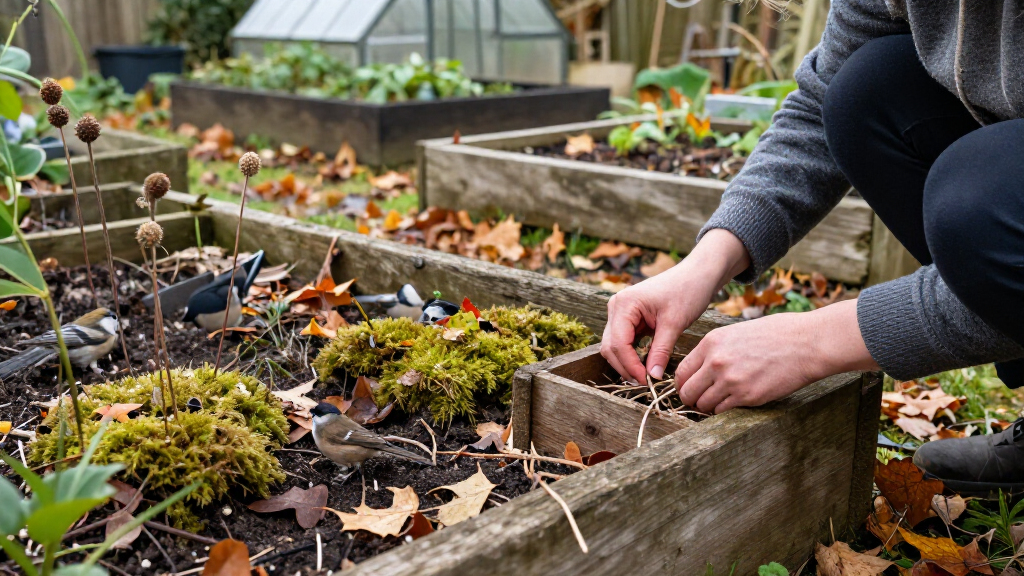
Once the frame is in place, gardeners can layer in cuttings, leaves and lawn clippings until the material reaches the top. Gaffney singled out wildflower stems as useful because their hollow interiors can provide hiding places for insects. The source does not specify a required quantity of material, a particular garden size or a fixed construction time.
OmVed says the snug may shelter insects, frogs and birds through winter. Gaffney also said birds may collect material from it for nesting in spring. These are described as potential benefits of the habitat, not as guaranteed outcomes for every garden or species.
A Place for Cuttings and Wildlife
The idea addresses a common seasonal choice for gardeners: remove fallen leaves and prunings to keep paths and beds tidy, or leave material where it may provide habitat. A designated pile inside a frame offers a middle ground by keeping cuttings together rather than spreading them across the garden.
For wildlife, the potential value is the shelter and hiding spaces created by a mixture of stems and other plant material. The source presents the snug as one practical garden habitat, not a substitute for broader conservation work or a guarantee that wildlife will use it. For residents with limited space, the ability to make the frame small or larger may make the idea adaptable, although the report gives no measured guidance on how much habitat different sizes provide.
beneficial insect hotel for garden
As an affiliate, we earn on qualifying purchases.
As an affiliate, we earn on qualifying purchases.
Why Garden Debris Can Help
OmVed Gardens describes itself as a North London community “greenscape” and learning hub focused on reconnecting people with the land, supporting community well-being and building climate resilience. Its recent Instagram reel presented the bug snug as a way to manage garden clean-up without removing all potential shelter material.
Gaffney said gardeners can be inclined to clear away the season’s “mess and cuttings,” while wildlife can benefit from some of that material being left in place. The snug puts that material in a specific location. The source offers practical instructions and examples, but does not report a formal study, measured wildlife results or an evaluation of how the structure compares with other garden habitats.
““But actually, what wildlife wants is a bit of mess.””
— John Gaffney, OmVed Gardens landscape gardener
As an affiliate, we earn on qualifying purchases.
Wildlife Use Is Not Guaranteed
The source does not say how many insects, frogs or birds have used OmVed’s bug snug, or how the structure’s effects were assessed. Its wildlife benefits are presented as the purpose and likely use of the habitat; no monitoring results or measured outcomes are included.
Other practical details are also unspecified, including the best site, how often the material should be replenished, and whether particular cuttings should be excluded. Gardeners should not treat the guide as species-specific advice. The report gives no evidence that every garden or climate will produce the same results.
As an affiliate, we earn on qualifying purchases.
Build and Observe the Shelter
The next step for interested gardeners is to assemble a stable frame and fill it with available garden material, following OmVed’s basic method. The source offers no announced follow-up study, event or schedule; readers can watch OmVed’s reel for the demonstration and adapt the structure to their own space.
Any assessment of whether a particular snug attracts wildlife would require observation over time. The source does not state that OmVed plans to publish such results, so further information about use or effectiveness remains unconfirmed.
As an affiliate, we earn on qualifying purchases.
Key Questions
What is a bug snug?
A bug snug is a frame filled with garden cuttings, leaves and other plant material. OmVed Gardens describes it as a place that can provide shelter for insects and other wildlife.
What materials do I need to make one?
The guide uses three sturdy poles and garden material such as cuttings, lawn clippings and leaves. OmVed used hazel poles; Gaffney said bamboo canes or other straight, long materials can also be used.
How do I build the frame?
Arrange the three poles in a triangle or teepee shape so the frame stands. Push the poles into the ground for extra stability if needed, then stack garden cuttings inside until the structure is filled.
Which wildlife might use a bug snug?
OmVed says the structure may shelter insects, frogs and birds over winter. Gaffney also said birds may take material from it for nesting in spring; the source does not report measured use or guarantee that wildlife will visit.
Do I need a particular garden size?
No set size is given. Gaffney said the frame can be made small or much larger, but the report provides no measurements or guidance on the amount of material needed for different spaces.
Source: rss
Fall Picks
fall essentials
As an affiliate, we earn on qualifying purchases.