
To attract beneficial insects to your insectary strips, choose a mix of native plants like yarrow, dill, fennel, and cosmos, which provide nectar, pollen, and shelter throughout the seasons. Clustered blooms and diverse species help draw ladybugs, hoverflies, and lacewings, supporting natural pest control. Proper placement and maintenance enhance their effectiveness, creating a healthier garden ecosystem. Keep exploring to discover more plant options and tips for designing successful insectary strips that boost your garden’s health.
Key Takeaways
- Native plants like yarrow, fennel, dill, and cosmos attract a diverse range of beneficial insects.
- Plants with clustered blooms, such as fennel and coriander, are especially effective at attracting ladybugs.
- Including a variety of flowering plants ensures continuous nectar and pollen sources throughout seasons.
- Combining species that provide shelter and food enhances beneficial insect habitat and longevity.
- Selecting plants suited to local climate conditions maximizes growth, flowering, and insect attraction.
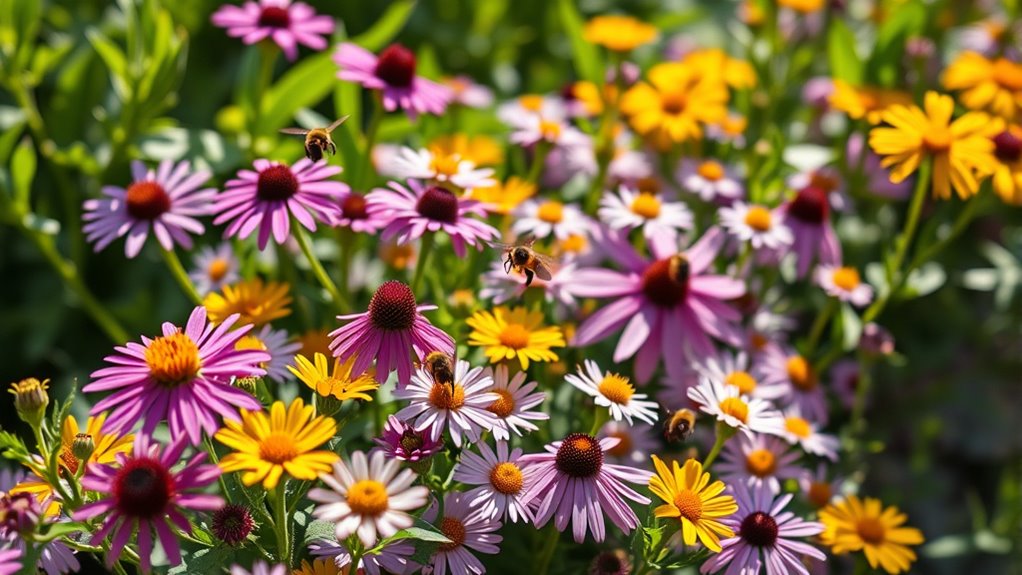
Insectary strips are a simple yet effective tool for natural pest management in your garden or farm. They serve as a habitat that attracts beneficial insects, which play a vital role in pest control. By planting the right species, you encourage these helpful insects—like ladybugs, lacewings, and hoverflies—to settle and thrive. These beneficial insects naturally hunt and feed on common pests, reducing your reliance on chemical pesticides and promoting a healthier ecosystem. The key is selecting plant species that provide essential resources such as nectar, pollen, and shelter, making your insectary strips an inviting environment for these natural pest controllers.
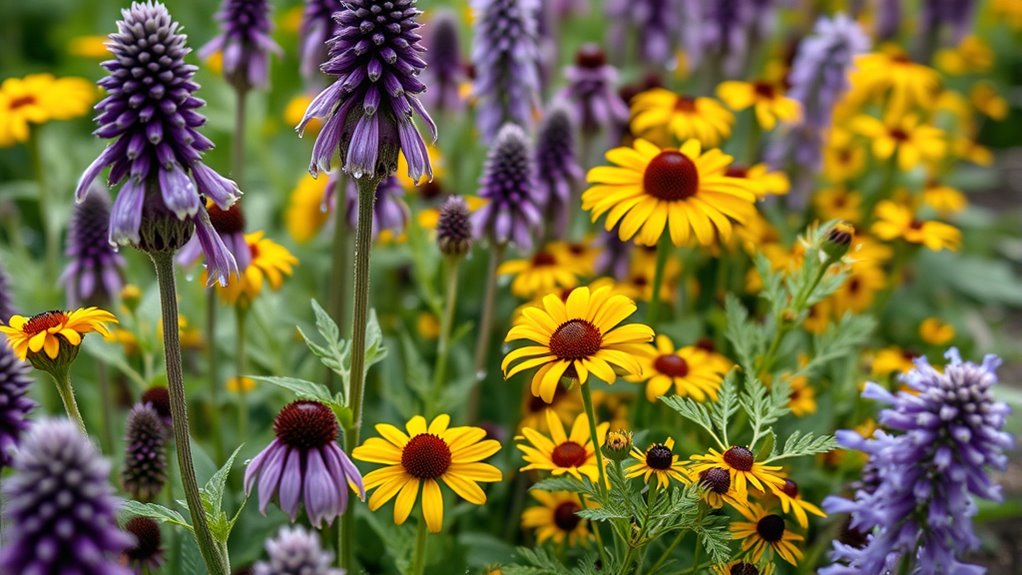
When choosing plants for your insectary strips, focus on species that bloom throughout different seasons to guarantee continuous food sources for beneficial insects. For instance, flowers like yarrow, dill, fennel, and cosmos are popular choices because they produce abundant nectar and pollen. These plants not only attract beneficial insects but also support their life cycles, ensuring a steady population that helps manage pest populations effectively. Additionally, including native plants is advantageous because they are already adapted to your local climate and attract local beneficial insects, making pest control more sustainable.
Planting a variety of species is essential because different beneficial insects are attracted to different plants. For example, ladybugs tend to prefer plants with clustered blooms like fennel or coriander, while hoverflies are drawn to daisies or cosmos. Incorporate a mix of these species along your insectary strips to maximize the diversity of beneficial insects present. This diversity creates a more resilient pest control system, as it reduces the likelihood of pest outbreaks and helps keep your garden balanced. Moreover, having a variety of plant species can enhance the overall health and resilience of your insectary strip ecosystem. Make sure the plants are positioned in a way that offers shelter from harsh weather and provides easy access for insects to move between your crop areas and the insectary strips.
Maintaining your insectary strips is straightforward but important. Keep the area free of herbicides and pesticides that could harm beneficial insects. Regularly prune and harvest the plants to promote continuous flowering and prevent disease. As beneficial insects establish themselves, you’ll notice a decrease in pest problems, leading to healthier plants and better yields. By planting the best species for insectary strips, you’re creating a natural, sustainable method of pest control that benefits both your crops and the environment. This approach fosters a balanced ecosystem where beneficial insects naturally keep pests in check, making your garden or farm more productive and eco-friendly.
Frequently Asked Questions
How Do Insectary Strips Affect Overall Crop Yields?
Insectary strips boost your crop yields by enhancing pest control and pollination. They attract beneficial insects that prey on pests, reducing the need for chemical pesticides. Additionally, these strips support pollinators like bees, improving fertilization and fruit production. As a result, your crops become healthier, more resilient, and more productive. Implementing insectary strips creates a balanced ecosystem that naturally promotes higher yields and sustainable farming practices.
Can Insectary Strips Be Used in Organic Farming Systems?
Yes, you can definitely use insectary strips in organic farming systems. Plant native species to attract beneficial insects and enhance pest management naturally. By incorporating native plants into your insectary strips, you support local ecosystems and reduce the need for chemical controls. This sustainable approach not only improves pest control but also promotes biodiversity, making your organic farm more resilient and productive.
What Is the Ideal Planting Density for Insectary Strips?
Finding the right balance for your insect habitat begins with understanding planting density. You should aim for about 4 to 6 rows per meter, spacing plants roughly 20 to 30 centimeters apart. This density encourages beneficial insect activity without overcrowding, creating a healthy environment where insects can thrive and support your crops. Adjust based on your space and plant variety, ensuring your insectary strips remain effective and vibrant.
How Long Does It Take for Insectary Strips to Attract Beneficial Insects?
You’ll start attracting beneficial insects within a few weeks after planting flowering plants that serve as nectar sources. As these plants bloom, they provide essential nectar sources, drawing pollinators and natural pest controllers. Keep in mind that the timing depends on plant species and local conditions, but generally, you should see increased beneficial insect activity within 2 to 4 weeks, especially if flowering plants are well-established and continuously provide nectar sources.
Are There Any Pests That Are Attracted to Insectary Strips?
Imagine a buzzing nightclub, with pests sneaking in for the party. Yes, some pests are attracted to insectary strips, drawn by the insect preferences of certain plants. Pests like aphids or whiteflies might find their way, mistaking the strips for a free buffet. While beneficial insects arrive later, it’s wise to monitor pest attraction to keep your garden balanced and avoid turning your insectary into a pest paradise.
Conclusion
By choosing the right plant species for your insectary strips, you attract beneficial insects, support healthy ecosystems, and promote sustainable farming. You create a refuge for pollinators, a sanctuary for predators, and a haven for biodiversity. You nurture resilience, foster balance, and encourage growth. Your efforts matter—your plants matter. Together, you and your insectary strips can make a difference, protecting your crops and preserving nature. Embrace this opportunity, and watch your garden thrive.