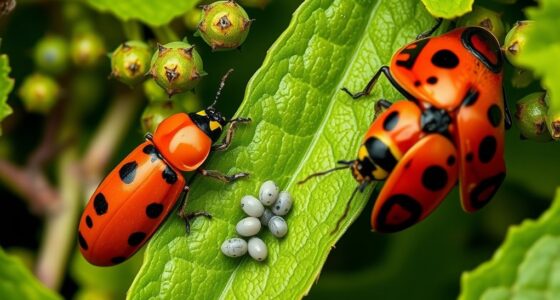
When noticing dried, shell-like structures on plant stems or leaves, you’re likely seeing parasitic wasp mummies, which are the remains of pests they’ve parasitized. These mummies are usually small, hardened, and resemble tiny shells, signaling that parasitic wasps have been actively controlling pest populations. Recognizing these structures helps you understand natural pest management in action. If you want to learn more about how these wasps support a healthy garden, keep exploring further.
Key Takeaways
- Mummies are dried remains of pest insects infected and parasitized by wasps, often attached to plants.
- They appear as shells or husks, indicating parasitic activity and successful pest control.
- Mummies vary in size, shape, and color depending on the host and wasp species.
- Recognizing mummies helps identify natural pest suppression in your garden or crops.
- Their presence signals active parasitic wasps, supporting eco-friendly, chemical-free pest management.

Have you ever wondered how nature keeps pest populations in check? One fascinating way is through the actions of parasitic wasps. These tiny insects play a vital role in controlling pests like caterpillars, aphids, and beetles. Understanding their wasp lifecycle and parasitic behavior reveals how effective and precise they are at maintaining balance in ecosystems. When you see what appear to be strange, mummified remnants on plants, you’re actually witnessing the results of this natural pest control system.
The wasp lifecycle begins when a female parasitic wasp locates a suitable host—often a pest insect. She then injects her eggs into or onto the host using her ovipositor. This act marks the start of her parasitic behavior, where she relies on her host for nourishment and development. Over the next few days or weeks, her eggs hatch into larvae that consume the host from within. Unlike predation, where the prey is killed immediately, parasitism allows the host to live temporarily while the larvae feed internally. Eventually, the larvae exit the dead or dying host and pupate, often within a cocoon that resembles a mummy.
These mummies are distinctive. As the parasitic wasp larvae mature, they transform into pupae, encasing themselves inside a hardened shell. The mummified remains of the host insect become a visual cue for you to identify parasitic activity. They often appear as dried, hardened shells attached to plant stems or leaves. The size, shape, and color of these mummies vary depending on the wasp species and the host insect. Recognizing these signs helps you understand that parasitic wasps are actively controlling pest populations without the need for chemical interventions.
The parasitic behavior of these wasps is incredibly specific. Many species target only one type of pest, ensuring that their activity is both effective and ecologically balanced. This specialization means they don’t harm beneficial insects or non-target species, making them invaluable allies for natural pest management. When you spot mummified insects on your plants, it’s a sign that parasitic wasps are doing their job—keeping pest numbers in check and helping you maintain healthy, thriving gardens or crops.
In essence, parasitic wasps are silent, efficient partners in nature’s pest control system. Their wasp lifecycle, marked by parasitic behavior and the formation of mummies, showcases their role in balancing ecosystems. By recognizing these signs, you gain insight into how these tiny creatures contribute to sustainable pest management—an elegant, natural solution that benefits everyone involved.

Wondercide – Outdoor Pest Control Spray with Natural Essential Oils – Mosquito, Ant, Flea, Tick, Insect Repellent, Treatment, Killer – Safe Around Pets Kids 32 oz
LAB PROVEN TO KILL & REPEL BUGS. Plant powered pest protection with natural essential oils that works. This…
As an affiliate, we earn on qualifying purchases.
As an affiliate, we earn on qualifying purchases.
Frequently Asked Questions
How Do Parasitic Wasps Locate Their Hosts?
You can imagine parasitic wasps using host detection by sensing chemical cues in their environment. They actively seek out their hosts by detecting specific odors or chemicals released by plants or the hosts themselves. These chemical cues guide them directly to the hidden or concealed hosts, allowing the wasps to efficiently locate and parasitize them. It’s a highly evolved method that makes their search for hosts precise and effective.
Are Parasitic Wasps Harmful to Humans?
Parasitic wasps generally aren’t harmful to humans and don’t pose significant health risks. They don’t sting or bite unless provoked, so you’re unlikely to experience harm. However, some people with allergies might have allergy risks if they come into contact with wasps or their remains. Overall, these wasps help control pests and are safe around humans, but it’s wise to avoid disturbing them to prevent any allergic reactions.
Can Parasitic Wasps Control Specific Pest Populations?
Yes, parasitic wasps can effectively control specific pest populations through biological control. Imagine tiny warriors, silently infiltrating pest habitats, laying eggs inside targeted pests. As these wasps develop, they turn pests into mummies, helping keep pest numbers in check. This natural pest management method reduces reliance on chemicals and promotes a healthier environment, making parasitic wasps a crucial tool for sustainable farming and garden care.
What Is the Lifecycle Duration of Parasitic Wasps?
You’ll find that the lifecycle duration of parasitic wasps varies depending on their species and host specificity, typically spanning a few weeks to a couple of months. During this time, they go through distinct lifecycle stages, including egg, larva, pupa, and adult. Understanding these stages helps in managing their populations effectively, especially since their lifecycle is closely tied to their host’s development, ensuring effective pest control.
Do All Parasitic Wasps Create Mummies?
Think of a silent tomb; not all parasitic wasp species create mummies. Mummy formation occurs when certain species, like the Encarsia or Eretmocerus, leave behind a hardened, cocoon-like shell around their hosts. This visual cue signals their parasitic activity, but other species complete their lifecycle without such mummification. So, while mummies are common among some parasitic wasps, they’re not universal to all.
Attracting Beneficial Bugs to Your Garden, Revised and Updated Second Edition: A Natural Approach to Pest Control
As an affiliate, we earn on qualifying purchases.
As an affiliate, we earn on qualifying purchases.
Conclusion
Now that you know how to recognize mummies left by parasitic wasps, you can spot their silent work in nature’s intricate balance. These tiny wasps play a crucial role, often going unnoticed but making a big impact. Understanding their signs helps you appreciate the delicate dance of life and death behind the scenes. Remember, sometimes the quietest players have the loudest influence—don’t overlook what’s hidden in plain sight.

Spectracide Wasp, Hornet & Yellowjacket Trap, Hanging Wasp & Hornet Trap with a Quick-Drown Formula That Submerges & Kills Insects, 1 Count
QUICK-DROWN FORMULA: Designed to keep insects submerged for quick drowning.
As an affiliate, we earn on qualifying purchases.
As an affiliate, we earn on qualifying purchases.
parasitic wasp identification kit
As an affiliate, we earn on qualifying purchases.
As an affiliate, we earn on qualifying purchases.