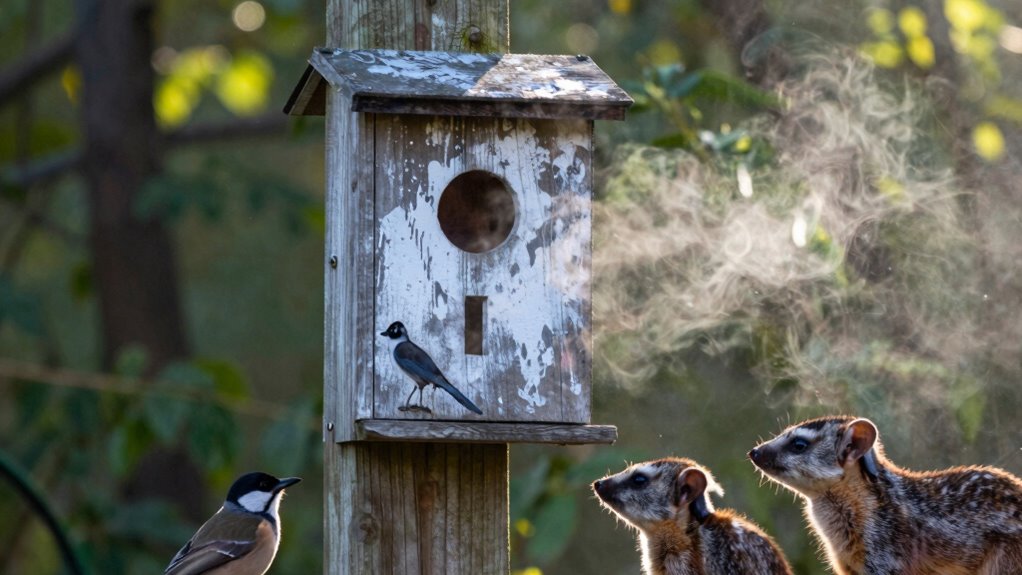

The biggest mistake you can make is relying on static or predictable wildlife deterrents, like constant loud noises or fixed lights. Animals quickly recognize these patterns as harmless, leading to rapid habituation and less effectiveness over time. To keep animals from ignoring your efforts, it is crucial to introduce unpredictability and variety in your methods. Stay tuned to discover proven strategies that can help you develop long-term solutions by understanding animal behavior better.

Get garden gear delivered free — and shop member deals
- Fast, free delivery on millions of items
- Access to Prime Big Deal Days deals on October 6–7
- Prime Video, Amazon Music and more included
Key Takeaways
- Relying on static deterrents causes animals to quickly recognize and ignore the stimuli.
- Repeating the same deterrent pattern allows animals to habituate and perceive no real threat.
- Predictability in deterrent methods reduces their long-term effectiveness.
- Using only one type of deterrent fosters faster habituation in wildlife.
- Lack of variability and unpredictability encourages animals to become accustomed to deterrents.
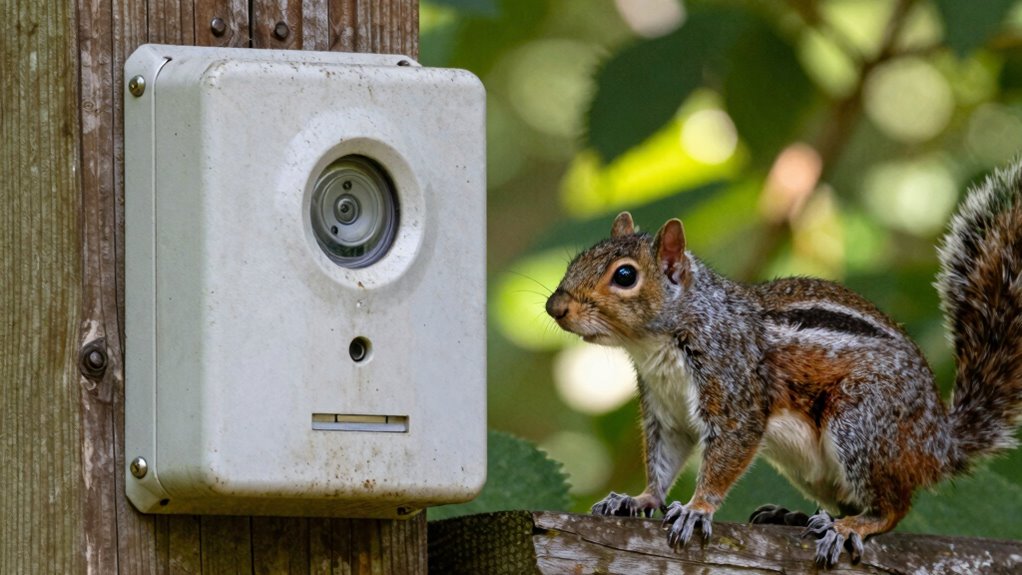
Many homeowners inadvertently make a common mistake when trying to keep wildlife away: relying on ineffective deterrents. You might think that setting up loud noises, bright lights, or fake predators will scare animals off permanently. However, what you often overlook is how animal behavior adapts quickly when these deterrents don’t threaten their survival. Animals are remarkably adaptable creatures, and their behavior can change rapidly in response to repeated stimuli that seem harmless over time. This is where deterrent effectiveness falters, leading to fast habituation — a process where animals ignore or become accustomed to the very tools meant to repel them.
Relying on static deterrents leads to quick animal habituation, making your efforts ineffective over time.
When you use a deterrent repeatedly without variation, animals recognize it as a false alarm. For example, if you continuously play a loud siren whenever wildlife approaches your yard, they may initially retreat. But if the sound doesn’t cause any real danger or harm, they’ll soon learn it’s nothing to fear. As a result, your efforts become futile, and the animals resume their normal activity. This pattern illustrates a fundamental aspect of animal behavior: animals tend to respond strongly to novel stimuli, but their responses diminish quickly when they realize there’s no genuine threat. The more predictable your deterrent, the faster animals habituate, which diminishes its long-term effectiveness.
You need to understand that the key to maintaining deterrent effectiveness lies in unpredictability. If you want animals to stay away, you must alter your approach frequently, using a combination of deterrents that challenge their perceptions. For example, switching between motion-activated sprinklers, noise devices, and visual scare tactics prevents animals from recognizing a consistent pattern. When animal behavior perceives a dynamic and unpredictable environment, they’re less likely to habituate quickly. This approach helps maintain the deterrent’s power, pushing animals to seek easier, less risky areas elsewhere. Incorporating animal behavior knowledge into your strategies can significantly improve your success rate in deterring wildlife. Additionally, understanding animal behavior is crucial because different species respond uniquely to various stimuli, making tailored strategies more effective. It’s also important to recognize that species-specific responses often determine the success of deterrents and should guide your choices. Recognizing the importance of behavioral adaptability can help you develop more effective, long-lasting solutions. Moreover, employing diverse deterrent methods ensures that animals remain uncertain about what to expect, further reducing habituation. It’s also essential to recognize that not all deterrents work equally well for every species. What scares raccoons might not faze deer or squirrels. Understanding the specific behaviors of the wildlife in your area helps you choose the most effective methods. A combination of varied, unpredictable deterrents tailored to animal behavior will always outperform static, repetitive tactics. In the end, the secret to preventing fast habituation is to keep animals guessing. When they sense constant change and a genuine risk, they’re less likely to ignore your efforts, making your wildlife deterrent strategy far more successful in the long run.
wildlife deterrent motion-activated sprinkler
As an affiliate, we earn on qualifying purchases.
As an affiliate, we earn on qualifying purchases.
Frequently Asked Questions
How Long Does It Take Animals to Habituate to Deterrents?
Animals typically habituate to deterrents within a few days to a few weeks, depending on the deterrent duration and effectiveness. If you use the same method constantly, their habituation timeline shortens, making the deterrent less effective. To prevent quick habituation, you should regularly change or rotate deterrents, and guarantee they are unpredictable. This keeps animals alert and prevents them from realizing the deterrent poses no real threat.
Are There Specific Species More Prone to Habituation?
Yes, certain species are more prone to habituation due to species variation and behavioral adaptation. For example, smarter animals like raccoons or urban-adapted birds quickly learn to ignore deterrents, while more cautious species may take longer to habituate. Your approach should consider these differences, rotating deterrents and avoiding repetitive use, so animals don’t adapt too fast and you maintain effective wildlife management.
Can Deterrents Be Effective Without Causing Animal Stress?
Deterrents can be effective without causing animal stress when you use wildlife psychology principles and advanced deterrent technology. By understanding animal behavior, you can choose humane methods that deter without distress, reinforcing positive interactions. Avoid loud noises or sudden movements, which cause fear. Instead, employ gentle, consistent signals that animals learn to associate with boundaries. This approach promotes respectful coexistence, ensuring your deterrents work effectively while prioritizing wildlife well-being.
What Signs Indicate Animals Are Becoming Habituated?
You’ll notice animals becoming habituated when their behavior changes less in response to deterrents over time. They might start ignoring or approaching your deterrent devices, showing less fear or avoidance. This decrease in reactive behavior indicates the deterrent’s effectiveness is waning, and animals are getting used to it. Recognizing these signs helps you adjust your approach, preventing habituation and maintaining ongoing wildlife deterrent success.
Are There Safe Alternatives to Prevent Habituation?
Think of wildlife deterrents like a game of hide and seek—if you use the same trick, they’ll catch on. You can keep animals guessing by switching to natural repellents like scents or noise-makers, and explore technological innovations like motion-activated devices. These safe alternatives prevent habituation because they remain unpredictable, ensuring animals stay wary without becoming accustomed to a single method. Keep your approach fresh to maintain effective wildlife deterrence.
As an affiliate, we earn on qualifying purchases.
Conclusion
If you keep relying on the same wildlife deterrent, you’re like a song that loses its tune—familiar and ineffective. Habituation will soon dull their response, making your efforts feel like shouting into the wind. Instead, switch up your tactics, keeping wildlife guessing and maintaining your control. Remember, a clever hunter never relies on just one arrow; diversify your approach, and you’ll outwit nature’s persistence before it outsmarts you.
As an affiliate, we earn on qualifying purchases.
As an affiliate, we earn on qualifying purchases.
Fall yard work Picks
leaf blowers
As an affiliate, we earn on qualifying purchases.