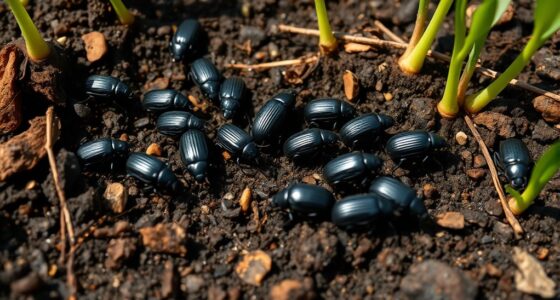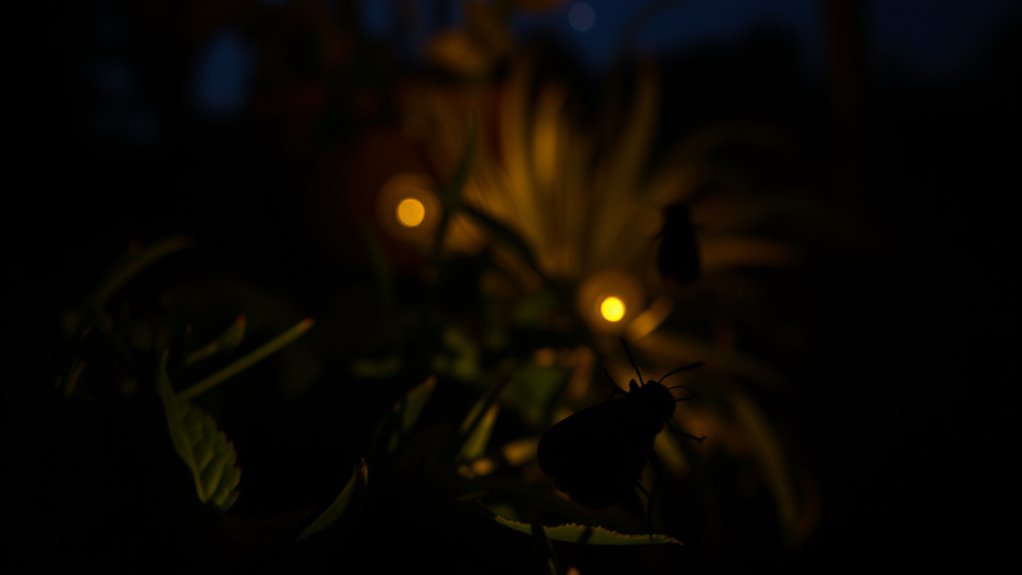

To minimize light at night for insects, turn off outdoor lights when they’re not needed, especially near natural habitats. Use low-intensity, warm-colored LED bulbs and install fixtures that direct light downward to reduce scattering. Add motion sensors or timers to limit exposure, and consider shielding lights to prevent ecological disruption. Small changes like these can make a big difference; keep exploring to discover more effective strategies to protect nocturnal insects.
Key Takeaways
- Turn off outdoor lights when not in use to prevent unnecessary insect attraction.
- Use insect-friendly, warm-colored LED bulbs to reduce ecological disturbance.
- Install shields or downward-directed fixtures to minimize light spill into natural habitats.
- Incorporate motion sensors or timers to limit nighttime illumination duration.
- Support dark sky initiatives and advocate for responsible outdoor lighting policies.
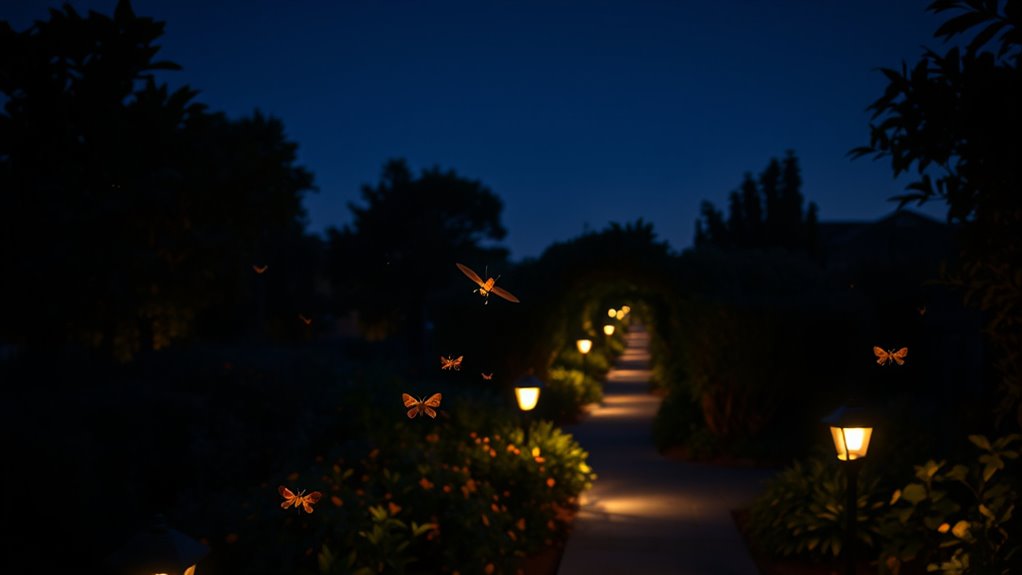
Many insects rely on natural light cues for navigation and survival, so artificial light at night can disrupt their behaviors and threaten their populations. When you leave outdoor lights on unnecessarily or choose bright, unshielded fixtures, you contribute to light pollution that confuses insects. This disturbance can lead to disorientation, reduced mating success, and increased predation. To help protect these essential creatures, supporting dark sky initiatives is essential. These programs aim to reduce light pollution by promoting responsible outdoor lighting practices and raising awareness about the impacts of excessive illumination. By advocating for and adopting these principles, you can play a part in restoring natural darkness and creating safer environments for insects.
Supporting dark sky initiatives helps protect insects from disruptive artificial light at night.
One effective way to minimize harm is by switching to insect-friendly lighting. These lights are specifically designed to emit wavelengths less attractive or disruptive to insects, such as amber or warm-colored LED bulbs. Unlike traditional white or bluish lights, insect-friendly lighting reduces the likelihood of attracting insects, thereby decreasing unnecessary mortality and disturbance. Additionally, installing fixtures that direct light downward and using shields or covers prevents light from scattering into the night sky and neighboring habitats. This not only benefits insects but also conserves energy and enhances the quality of the night environment for everyone. Incorporating lighting design principles that prioritize insect safety can further enhance these efforts.
You can also implement simple behavioral changes around your home or community. Turning off outdoor lights when they’re not needed, especially late at night, greatly reduces the chances of drawing insects from their habitats. If lighting is necessary, opt for motion sensors or timers that limit illumination duration. Choosing dark sky-compliant fixtures, which meet specific standards for shielding and light emission, further minimizes ecological impacts. These fixtures help keep light levels low and focused, reducing the overall light spill that confuses insects and other wildlife.
Supporting local and national dark sky initiatives can amplify your impact. These programs work to promote policies and practices that preserve natural darkness in urban and rural areas. By participating in community efforts to install insect-friendly lighting and advocating for responsible lighting standards, you contribute to a broader movement that benefits insects, humans, and the environment alike. Every small change—whether switching bulbs, installing shields, or advocating for darker skies—adds up to a significant difference. Together, through conscious choices and support for dark sky initiatives, you help reduce light pollution and protect the intricate web of life that depends on natural darkness at night.
Frequently Asked Questions
How Do Different Insect Species Respond to Light Reduction?
Different insect species respond to light reduction with various adaptations and behavioral changes. You’ll notice some species become more active at night, while others may decrease activity or shift their behaviors to avoid light pollution. These adaptations help insects conserve energy and stay safe from predators. By reducing light, you allow species to better adapt to natural cycles, promoting healthier populations and supporting their ecological roles.
What Are the Best Types of Lights to Minimize Insect Attraction?
You should opt for LED options with a high color temperature, like 5000K or above, which emit a bluish-white light that attracts fewer insects. These LEDs produce less ultraviolet and blue light, reducing insect attraction naturally. By choosing the right color temperature and avoiding lights with warm hues like yellow or red, you can effectively minimize insect activity around your space while still providing necessary illumination.
Can Reducing Outdoor Lighting Impact Local Ecosystems Positively?
Yes, reducing outdoor lighting can positively impact local ecosystems by supporting ecological balance and nocturnal behavior. When you cut back on unnecessary lights, you help protect nocturnal animals that rely on darkness to hunt, breed, and navigate. Less light pollution allows these creatures to thrive, maintaining natural rhythms. Your efforts create a healthier environment where wildlife can perform their crucial roles, ensuring a more balanced and resilient ecosystem.
Are There Specific Times When Light Minimization Is Most Effective?
You should focus on specific times when light minimization makes the biggest impact, especially during peak insect activity. Timing strategies matter most during seasonal variations, like warm summer nights or spring evenings, when insects are most active. By reducing outdoor lighting during these critical periods, you prevent overwhelming insect populations, helping local ecosystems thrive. Act now, and your efforts will resonate deeply, making a real difference for nocturnal creatures.
How Does Light Pollution From Urban Areas Influence Insect Populations?
Light pollution from urban areas disrupts insect behavior by attracting them away from natural habitats and interfering with their mating and navigation. You might notice fewer insects in areas with high light pollution, which can lead to declines in local populations. By reducing unnecessary artificial lighting, you help restore natural insect activity, supporting healthier ecosystems. Your actions directly impact insect populations and contribute to preserving biodiversity in urban environments.
Conclusion
By reducing unnecessary light at night, you help protect insects and support healthy ecosystems. Did you know that artificial lights can disorient up to 30% of nocturnal insects, leading to decreased populations? When you turn off outdoor lights or use insect-friendly fixtures, you make a real difference. Every small action counts, so next time you’re outdoors after dark, consider dimming the lights to keep insects safe and thriving.