
To practice pollinator-friendly pesticide use, choose selective, targeted options and avoid broad-spectrum chemicals that harm bees and butterflies. Incorporate integrated pest management strategies by monitoring pests and promoting natural controls like beneficial insects. Additionally, restoring habitats with native flowering plants provides essential food and shelter for pollinators. By combining these approaches, you’ll reduce pesticide risks and support healthy ecosystems—more effective methods that can make a real difference become clear as you explore further.
Key Takeaways
- Choose selective, bee-safe pesticides and apply them during times when pollinators are least active.
- Implement Integrated Pest Management (IPM) to monitor pests and minimize chemical use.
- Avoid broad-spectrum pesticides that can harm beneficial pollinators directly or indirectly.
- Apply pesticides early in the morning or late in the evening to reduce pollinator exposure.
- Enhance habitat diversity with native flowering plants to support pollinator health and resilience.
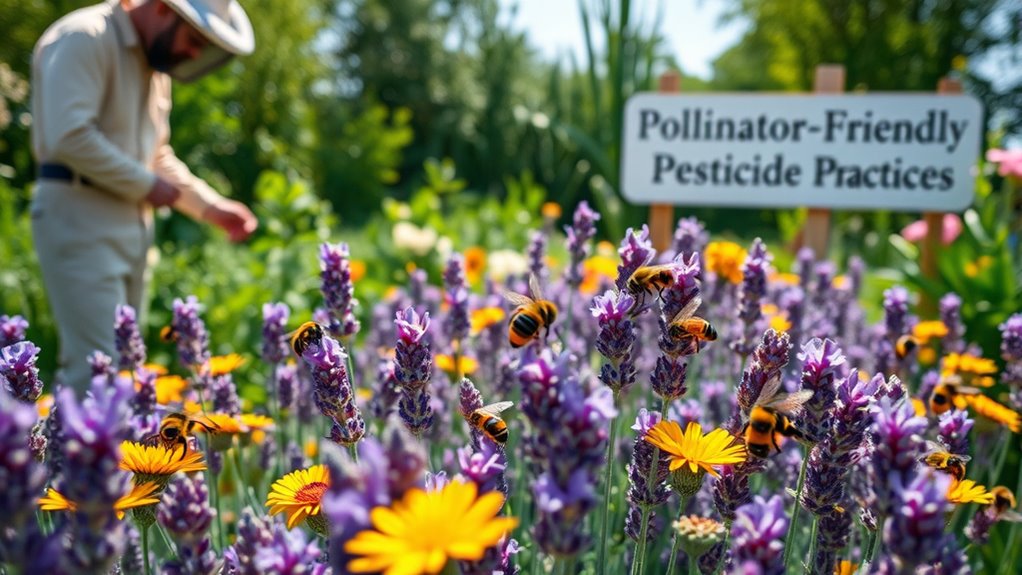
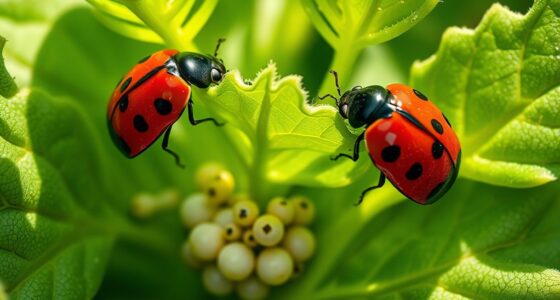
Have you ever wondered how your pesticide choices impact pollinators like bees and butterflies? The truth is, the way you manage pests can substantially affect these essential creatures. Instead of relying solely on traditional chemical controls, adopting integrated pest management (IPM) offers a more sustainable approach. IPM emphasizes monitoring pest populations and using targeted interventions only when necessary, reducing unnecessary chemical exposure. By implementing IPM strategies, you can minimize the use of broad-spectrum pesticides that often harm pollinators while still protecting your plants from pests. This approach encourages the use of biological controls, such as beneficial insects, and cultural practices that make your garden less inviting to pests. When you incorporate IPM into your pest management routine, you’re actively promoting a healthier environment for pollinators and ensuring they continue to thrive alongside your plants.
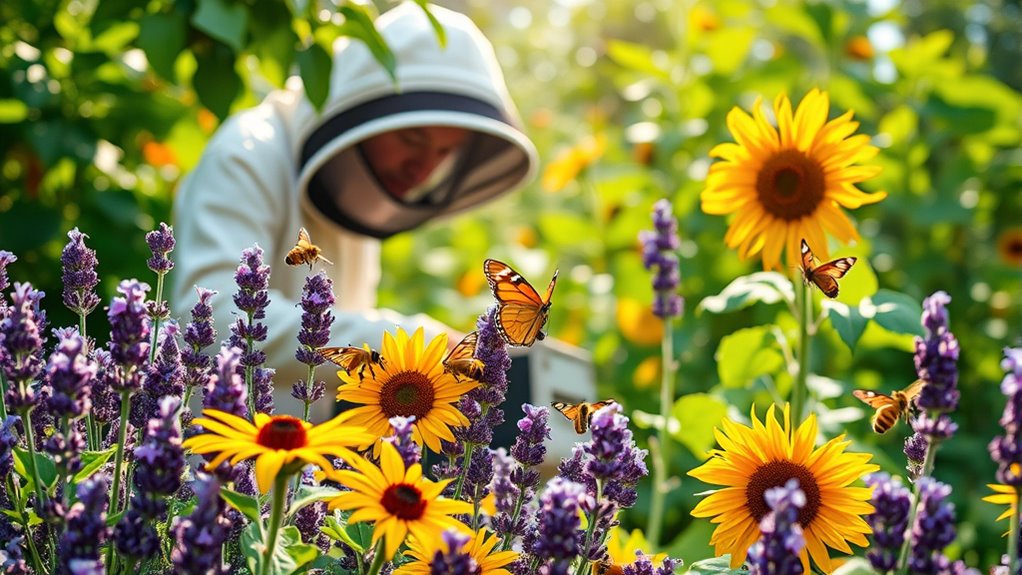
Beyond pest control, habitat restoration plays an essential role in safeguarding pollinator populations. You can create or enhance natural habitats by planting native flowering plants that bloom throughout the seasons, providing a consistent food source for bees and butterflies. Restoring habitats around your garden or farm encourages pollinators to establish nesting sites and shelter, which are often scarce in urban and agricultural landscapes. Choosing the right plants can further support pollinator health by ensuring continuous nectar availability and diversity. By dedicating space for habitat restoration, you’re not only supporting pollinator health but also promoting biodiversity and ecosystem resilience. These efforts make your landscape more attractive to pollinators, creating a balanced environment where pests are naturally kept in check and pollinators can flourish.
Combining integrated pest management with habitat restoration demonstrates your commitment to pollinator-friendly practices. It’s about making smarter, more informed decisions that benefit both your garden and the broader environment. When you reduce reliance on harmful pesticides through IPM, you lessen the risk of accidental poisoning and decline in pollinator populations. Simultaneously, restoring natural habitats offers pollinators the resources they need to survive, reproduce, and carry out their essential roles in pollination. This integrated approach helps create a sustainable cycle where pests are managed effectively without compromising the health of pollinators. As a result, your garden or farm becomes more resilient, productive, and environmentally friendly. The impact of your pesticide choices extends far beyond your property, influencing the health of local ecosystems and ensuring that pollinators continue to support food production, plant diversity, and ecological balance for generations to come.
Frequently Asked Questions
How Can I Identify if a Pesticide Is Pollinator-Friendly?
You can identify if a pesticide is pollinator-friendly by checking the pesticide labels for specific symbols or statements indicating pollinator safety. Look for labels that mention “pollinator-friendly” or “safe for bees,” and review the product’s instructions for application timing, avoiding bloom periods. Always choose products with clear pollinator safety information, and follow the label instructions carefully to protect beneficial insects and maintain a healthy ecosystem.
What Are Natural Alternatives to Chemical Pesticides for Pollinator Protection?
You can use natural alternatives like companion planting, which attracts beneficial insects that prey on pests, reducing your need for chemicals. Biological control methods involve introducing natural predators or pathogens to manage pests effectively. These practices help protect pollinators by minimizing chemical exposure. By combining companion planting with biological control, you create a healthier garden environment, supporting pollinator populations while naturally controlling pests without harmful pesticides.
How Do Pesticide Application Times Affect Pollinator Safety?
You can protect pollinators by choosing pesticide timing that aligns with their activity patterns. Applying pesticides early in the morning or late in the evening minimizes contact during peak pollinator activity. This timing reduces exposure and safeguards bees and butterflies. By scheduling applications thoughtfully, you create a safer environment, allowing pollinators to forage freely while you manage pests effectively. Proper pesticide timing helps keep your garden vibrant and pollinator-friendly.
Are There Specific Regulations for Pesticide Use Near Pollinator Habitats?
Yes, there are specific regulations for pesticide use near pollinator habitats. You must follow federal and state laws that promote regulatory compliance and habitat preservation, such as applying pesticides during times when pollinators are less active, avoiding blooming periods, and maintaining buffer zones. These rules help protect pollinators while allowing effective pest control, ensuring you support pollinator health and stay within legal requirements.
How Can Gardeners Report Pesticide-Related Pollinator Harm?
You can report pesticide-related pollinator harm through community reporting platforms or local environmental agencies. Start by documenting the incident with photos and notes, then submit your findings to organizations involved in pesticide testing and pollinator protection. Your reports help identify harmful pesticide practices and support stronger regulations. Stay informed about local regulations and encourage others to participate in community reporting efforts to protect pollinators effectively.
Conclusion
While it might seem ironic, using pesticides responsibly can actually protect pollinators you rely on for your food. By choosing pollinator-friendly practices, you prevent the very decline that threatens our ecosystems—and our plates. So, next time you reach for a pesticide, remember: sometimes, the best way to help pollinators is to do less, not more. Ironically, safeguarding nature’s tiny workers might just be the smartest move you make today.