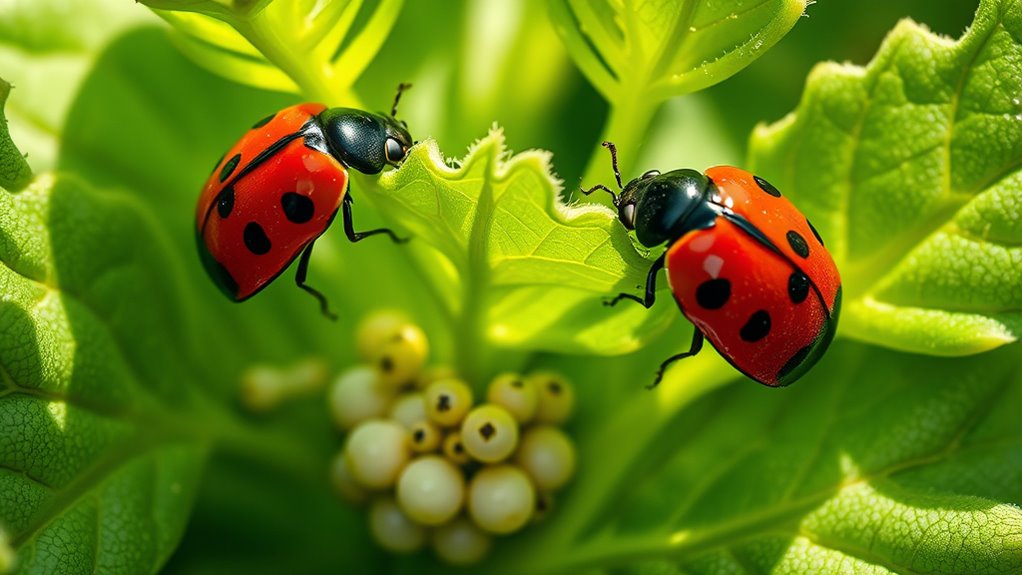
Lady beetles eat pests like aphids, scale insects, and mites, making them excellent natural pest fighters in your garden. To attract them, plant native flowers such as dill, fennel, and marigolds, which provide food and habitat. Avoid broad-spectrum insecticides that can harm these beneficial bugs, and consider adding lady beetle houses for shelter. Keep your garden diverse and chemical-free to encourage their presence—if you want to learn more, there’s plenty to discover about supporting these helpful insects.

Get garden gear delivered free with Prime
- Fast, free delivery on millions of items
- Prime Video, Amazon Music and more included
- Member-only deals all year
Key Takeaways
- Lady beetles primarily feed on aphids, scale insects, mites, and other soft-bodied pests.
- To attract them, plant native flowers like dill, fennel, yarrow, and marigolds to provide food and habitat.
- Avoid using broad-spectrum insecticides; opt for organic methods to protect lady beetles and their food sources.
- Provide shelter with lady beetle houses and leave areas undisturbed to support overwintering and natural colonization.
- Introducing lady beetles from suppliers can boost pest control during peak pest activity in your garden.
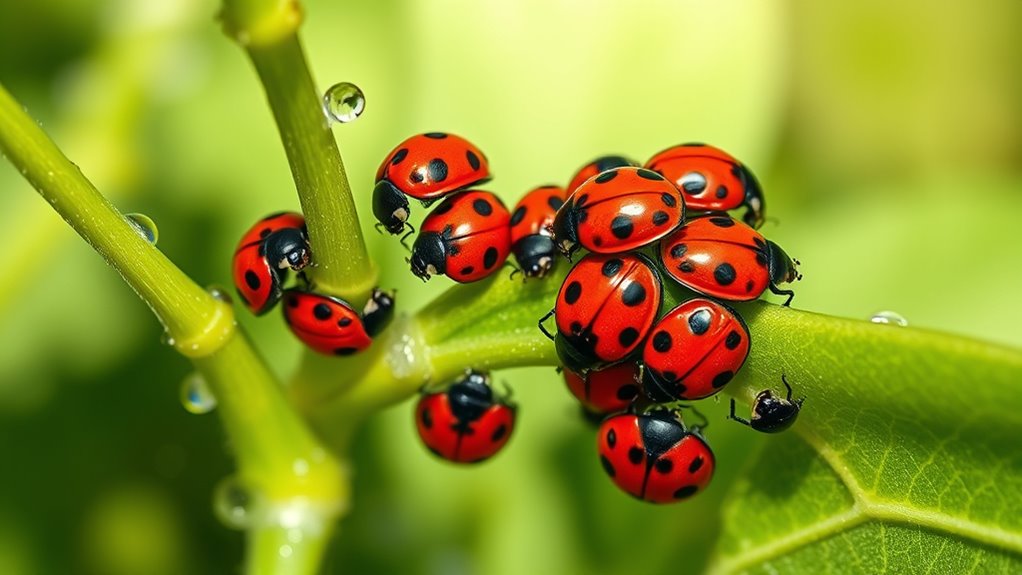
Lady beetles, also known as ladybugs, are small, colorful insects that play an essential role in keeping gardens and farms healthy. As beneficial insects, they’re valued for their natural pest control abilities. Instead of reaching for chemical pesticides, attracting lady beetles provides an eco-friendly way to manage common garden pests like aphids, scale insects, and mites. These pests can quickly damage your plants, but lady beetles help keep their populations in check, reducing the need for chemical interventions that might harm other beneficial insects or soil health. Their voracious appetite for pests makes them a gardener’s ally, especially during the growing season when pest problems tend to escalate.
To effectively promote pest control with lady beetles, you need to create an environment that attracts and sustains them. They’re drawn to gardens with a variety of flowering plants, especially those that produce nectar and pollen. You should consider planting a diverse array of native flowers, such as dill, fennel, yarrow, and marigolds, which serve as both food sources and habitat. Providing these plants not only attracts lady beetles but also encourages them to stay longer, increasing their impact on pest populations. Additionally, avoid using broad-spectrum insecticides that can wipe out these beneficial insects along with pests. Instead, opt for organic methods and targeted treatments to protect lady beetles and other beneficial insects.
Another way to attract lady beetles is to establish a habitat that offers shelter and overwintering sites. Leaving some areas of your garden undisturbed or placing lady beetle houses can provide safe spots for them to hide during harsh weather. Avoid tilling or disturbing the soil excessively, as this can destroy their overwintering sites. If you’re planting new beds, incorporate native, pest-resistant plants that naturally draw beneficial insects. You can also purchase lady beetles from garden suppliers and release them in your garden, especially when pest populations are high. This gives you an immediate boost in beneficial insect presence and can help curb pests quickly, especially during critical growth stages.
As an affiliate, we earn on qualifying purchases.
Frequently Asked Questions
Do Lady Beetles Bite Humans?
Lady beetles rarely bite humans, and if they do, you’ll notice minor bite symptoms like mild irritation or a small red mark. These bites are generally not harmful, so your human safety isn’t at serious risk. If you experience discomfort, clean the area and apply an antiseptic. Bites are uncommon, but it’s good to handle lady beetles gently to avoid provoking them. Overall, they’re safe to have around.
Are Lady Beetles Harmful to Plants?
Think lady beetles are secretly plotting plant destruction? Not at all! These beneficial insects actually help your garden by controlling pests, making them excellent allies. They don’t harm plants; instead, they feast on aphids and other pests that threaten your greenery. So, instead of worrying about harm, welcome lady beetles as natural pest control agents—your garden’s tiny, colorful defenders that keep plants healthy and thriving.
How Long Do Lady Beetles Live?
Lady beetles live for about one to two years, but lifespan variations depend on environmental factors like temperature, food availability, and humidity. You might see them more often in warmer months or if they have plenty of aphids to feed on. In harsher conditions or colder seasons, their lifespan can be shorter. Providing a suitable environment can help extend their lifespan and encourage them to stay in your garden longer.
Can Lady Beetles Fly Long Distances?
Like tiny explorers on a breeze, lady beetles can indeed fly long distances. Their migration patterns showcase impressive flight endurance, allowing them to journey across fields and forests with purpose. You might notice them drifting on warm air currents, crossing vast landscapes in search of food or mates. Their wings are like wings of adventure, enabling these small but resilient insects to traverse great distances with remarkable ease.
Do Lady Beetles Hibernate Indoors?
Yes, lady beetles do sometimes hibernate indoors. During their overwintering behavior, they seek shelter in warm places, including your home, to survive the cold months. If you notice clusters of lady beetles inside your house, they’re likely hibernating indoors. To prevent this, seal entry points and reduce indoor hiding spots. Keep in mind, they’re just trying to survive winter, so handle them gently if you find them inside.
organic pest control lady beetles
As an affiliate, we earn on qualifying purchases.
As an affiliate, we earn on qualifying purchases.
Conclusion
Just like a gardener planting flowers to attract butterflies, you can invite lady beetles into your yard by providing their favorite foods and habitats. I once watched a small backyard burst with lady beetles after I left some aphid-infested plants undisturbed—almost like a tiny, natural pest control army. By understanding what they eat and how to attract them, you’re inviting helpful allies that keep your garden healthy and vibrant, making your outdoor space a thriving ecosystem.
native flower seeds for attracting ladybugs
As an affiliate, we earn on qualifying purchases.
As an affiliate, we earn on qualifying purchases.
beneficial insects ladybug release kit
As an affiliate, we earn on qualifying purchases.
As an affiliate, we earn on qualifying purchases.
Fall yard work Picks
leaf blowers
As an affiliate, we earn on qualifying purchases.