Spiders are beneficial allies in your vegetable garden because they naturally control pests like aphids, whiteflies, and beetles, reducing your need for chemical treatments. They thrive in habitats like leaf litter, mulch, tall grass, and leaf undersides, where they spin webs and hunt insects. By encouraging spider populations, you support a healthier, eco-friendly garden. If you’re interested, there’s more to discover about how these helpful predators can boost your garden’s health.
Key Takeaways
- Spiders naturally prey on common vegetable garden pests like aphids and caterpillars, reducing the need for chemical pesticides.
- Creating habitats such as leaf litter and shrubbery encourages spider populations to thrive in vegetable gardens.
- Spiders help maintain a balanced ecosystem, supporting healthy vegetable growth by controlling pest populations.
- Leaving spider webs undisturbed signals active pest control and promotes ongoing natural pest management.
- Reducing pesticide use preserves beneficial spiders, enhancing their role as natural pest predators in vegetable cultivation.
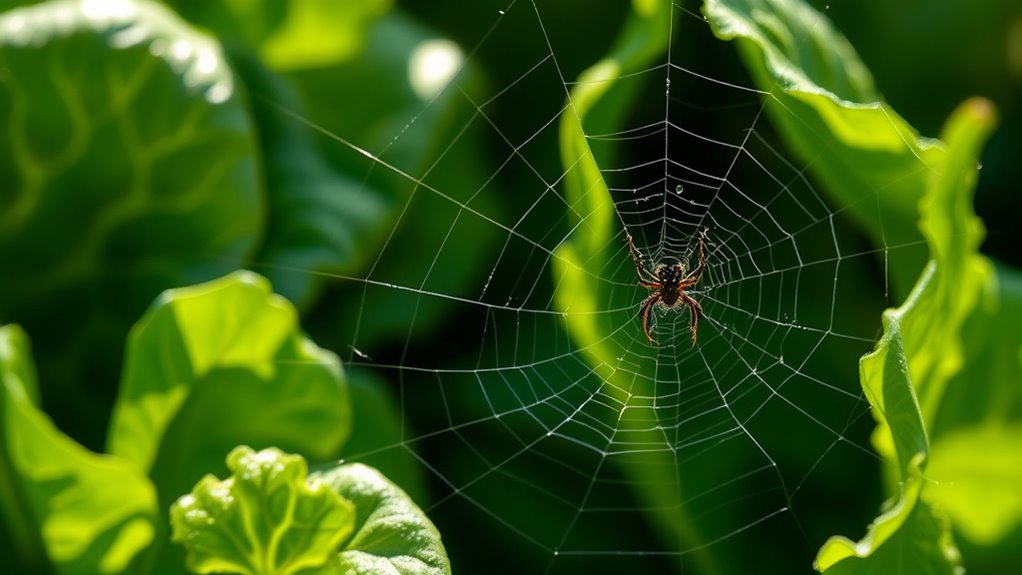
Many gardeners are surprised to learn that spiders play a valuable role in vegetable gardens. Instead of viewing these arachnids as pests, you should see them as natural allies that help keep pest populations in check. Spiders thrive in various spider habitats within your garden, such as leaf litter, tall grass, shrubbery, and even the undersides of leaves. These habitats provide the perfect environment for them to spin their webs and hunt for insects. By understanding where spiders prefer to live, you can foster a garden environment that encourages their presence, reducing the need for chemical pest control methods.
Spiders are incredibly efficient predators, and their presence in your vegetable garden is a natural pest control method that can save you time and money. They typically feed on common pests like aphids, whiteflies, beetles, and caterpillars—many of which can cause significant damage to your crops. When you leave spiders undisturbed, they help maintain a balance in your garden’s ecosystem. Instead of reaching for pesticides, which can harm beneficial insects and pollinators, you can rely on these natural predators to do the work for you. This eco-friendly pest control method not only protects your plants but also promotes a healthier garden environment overall.
To encourage spiders as part of your pest control methods, you should create a welcoming habitat. Keep some leaf litter or mulch around your plants, provide some undisturbed corners, and avoid unnecessary chemical applications that can kill beneficial spiders and their prey. If you notice spider webs in your garden, consider leaving them undisturbed; they are signs that spiders are active and controlling pest populations. You might also consider planting a variety of native plants and maintaining some natural, undisturbed areas to give these helpful arachnids space to thrive.
Frequently Asked Questions
Do All Spider Species Benefit Vegetable Gardens?
Not all spider species benefit your vegetable garden. Spider diversity plays a vital role in maintaining ecological balance by controlling pests naturally. Some spiders are more effective at reducing pest populations, while others might not considerably impact your garden. By encouraging a diverse spider population, you support a balanced ecosystem that minimizes pests and reduces the need for chemical controls. So, fostering spider diversity can be highly beneficial for your vegetable garden’s health.
How Do Spiders Affect Pollination?
Spiders don’t directly assist pollination, but their interactions help protect flowering plants by controlling pest populations that could damage blooms. By reducing pests, spiders indirectly support pollination assistance, ensuring plants remain healthy and attractive to pollinators like bees. Your spider interactions, consequently, create a healthier environment for pollination, allowing flowers to thrive and improve fruit and vegetable production in your garden.
Are There Any Risks to Humans From Garden Spiders?
Think of garden spiders as nature’s silent guardians—generally, they don’t pose a threat to you. While their venom safety is usually harmless to humans, some people with allergies might experience allergic reactions, like swelling or itching. The risk is minimal, but it’s wise to be cautious around any spider bites. If bitten, clean the area and seek medical advice if allergic symptoms develop. Overall, garden spiders are safe and beneficial.
Can Spiders Control All Types of Pests?
Spiders can’t control all types of pests because of pest diversity; some pests are too quick or resistant for spider predation. While they are effective against common insects like flies and aphids, other pests such as beetles or caterpillars may require different control methods. You should view spiders as a helpful part of integrated pest management, but not a complete solution for all pest issues in your garden.
How Can I Attract Beneficial Spiders Naturally?
You can attract beneficial spiders naturally by creating their ideal natural habitat right in your garden. Plant diverse, native plants to provide shelter and food, mimicking their wild environment. Ironically, the more you let your garden resemble a jungle, the more spiders you’ll invite—no chemical pest control needed. Embrace plant diversity, leave some leaf litter, and watch these tiny predators thrive, silently working to keep pests at bay.
Conclusion
Think of spiders as vigilant guardians in your vegetable garden, quietly weaving their webs like watchful sentinels guarding a treasure. Their presence keeps pests at bay, ensuring your crops flourish without harm. Just as a wise old owl watches over the night, spiders silently protect your harvest, reminding you that sometimes, the smallest allies can hold the greatest power. Embrace these tiny guardians, and your garden becomes a thriving, balanced kingdom where nature’s harmony reigns.