
You can successfully coexist with wildlife ponds and mosquito control by planting native species like water forget-me-nots, sedges, and rushes to encourage natural predators and create good habitat. Regularly test and maintain water quality, remove debris, and install circulation devices like fountains or aerators to prevent stagnant water. These steps keep the pond healthy and reduce mosquito breeding sites. Keep an eye on these practices, and you’ll discover even more ways to maintain a balanced, wildlife-friendly pond.

Get garden gear delivered free — and shop member deals
- Fast, free delivery on millions of items
- Access to Prime Big Deal Days deals on October 6–7
- Prime Video, Amazon Music and more included
Key Takeaways
- Incorporate native plants to attract mosquito predators like dragonflies and damselflies, naturally reducing mosquito populations.
- Regularly test and maintain water quality to prevent stagnation and excess nutrients that promote mosquito breeding.
- Install water circulation devices such as fountains or aerators to prevent stagnant breeding sites.
- Remove debris and organic matter to minimize mosquito larval habitats and promote a healthy pond environment.
- Create a balanced ecosystem that supports beneficial insects and aquatic life, naturally controlling mosquitoes.
Have you ever wondered how to enjoy the benefits of a wildlife pond while keeping pesky mosquitoes at bay? Creating a pond that attracts beneficial insects, birds, and amphibians doesn’t mean you have to contend with endless mosquito swarms. In fact, with some simple strategies, your pond can become a thriving habitat and a mosquito-free zone. The key lies in understanding how to balance aquatic life with mosquito control, starting with planting native plants and regularly testing your water.
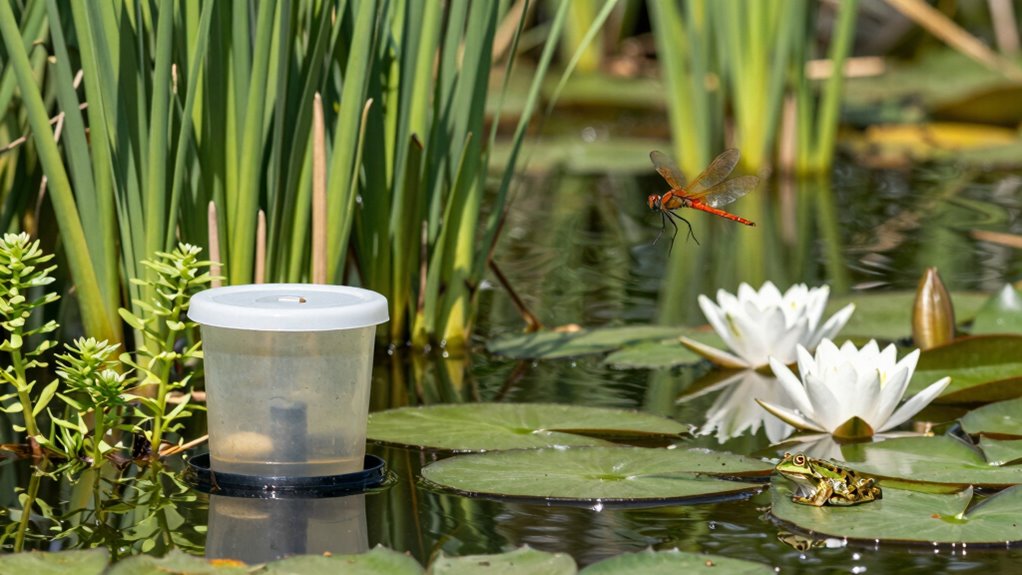
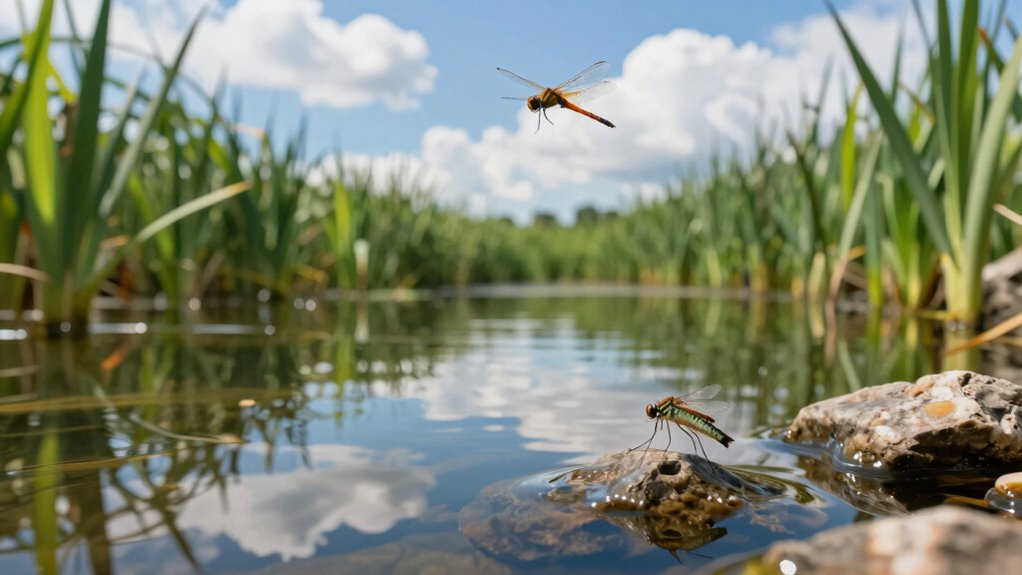
Native plants are your allies in this effort. They help establish a balanced ecosystem by providing food and shelter for beneficial insects and predatory pond creatures. Plants like water forget-me-nots, sedges, and rushes not only enhance the natural beauty of your pond but also create habitats that support mosquito predators such as dragonflies and damselflies. These insects lay their eggs in the water, and their larvae prey on mosquito larvae, naturally reducing mosquito populations. By planting native species, you promote a healthy, diverse environment that discourages mosquitoes from settling in.
Native plants like water forget-me-nots, sedges, and rushes promote healthy ecosystems and attract mosquito predators.
Water testing is another critical step in maintaining a mosquito-free pond. Stagnant water is the perfect breeding ground for mosquitoes, so ensuring your pond remains healthy and dynamic is essential. Regular water testing helps you monitor parameters like pH, nutrient levels, and oxygen content. If you notice excess nutrients or signs of algae growth, it’s time to take action. Removing excess organic matter, aerating the water, or introducing beneficial bacteria can help keep the water moving and prevent mosquito larvae from thriving. Additionally, proper water circulation can significantly reduce stagnant areas where mosquitoes might breed. Maintaining a balanced ecosystem not only supports aquatic life but also encourages the presence of natural mosquito predators, creating a self-sustaining environment. When the water is well-maintained and balanced, it discourages mosquito breeding while supporting the aquatic life that keeps your pond vibrant.
Creating a gentle flow or circulation in your pond prevents stagnant areas where mosquitoes could lay eggs. Installing a fountain, waterfall, or aerator encourages water movement, making it less inviting for mosquito larvae to develop. Incorporating regular maintenance routines such as removing debris and monitoring water quality can further support these efforts. Proper circulation also promotes oxygen levels, which are vital for the health of aquatic plants and animals. Combining this with native plants and water testing creates a holistic approach that naturally controls mosquito populations. It’s about fostering a balanced ecosystem where predators keep pests in check, and the pond remains a lively, healthy habitat.
As an affiliate, we earn on qualifying purchases.
Frequently Asked Questions
How Do Wildlife Ponds Naturally Deter Mosquito Breeding?
Wildlife ponds naturally deter mosquito breeding by maintaining a biological balance that limits mosquito larvae. You can enhance this by promoting water aeration, which keeps the water moving and oxygen-rich, discouraging stagnant conditions mosquitoes favor. Beneficial insects like dragonflies thrive in these balanced ecosystems and feed on mosquito larvae. Overall, combining water aeration with a thriving ecosystem creates an environment where mosquitoes struggle to breed, keeping your pond healthier for wildlife.
Can Introducing Certain Fish Reduce Mosquito Populations Effectively?
Yes, introducing aquatic predators like certain fish can effectively reduce mosquito populations. These fish feed on mosquito larvae, naturally controlling their numbers. They act as biological control agents, providing a natural alternative to chemical barriers. By adding species such as gambusia or goldfish, you create a balanced ecosystem that keeps mosquito breeding in check while supporting local wildlife. This method is eco-friendly and sustainable for maintaining a healthy pond environment.
Are There Specific Native Plants That Help Control Mosquitoes Around Ponds?
Think of native plants as nature’s silent guardians, quietly working to keep your pond balanced. Planting species like pickerelweed, blue flag iris, and rushes offers native plant benefits by reducing mosquito habitat. These plants shade water surfaces, hindering mosquito larvae development and creating a haven for beneficial insects. Their presence helps control mosquitoes naturally, turning your pond into a thriving ecosystem where native plants and mosquito control coexist harmoniously.
What Maintenance Practices Best Balance Pond Health and Mosquito Prevention?
You should regularly maintain your pond by ensuring proper pond aeration, which helps keep water circulating and prevents mosquito larvae from settling. Use organic treatments like beneficial bacteria to reduce organic debris that attracts mosquitoes. Remove excess plant growth and stagnant water areas, and keep an eye on water levels. These practices promote healthy pond ecosystems while effectively reducing mosquito breeding, creating a balanced environment for both wildlife and your peace of mind.
How Long Does It Take for Natural Methods to Significantly Reduce Mosquitoes?
Natural methods typically take several weeks to markedly reduce mosquito populations, especially if you incorporate chemical repellents and adjust urban landscaping. You might notice a decline within 4 to 6 weeks if you regularly remove standing water, plant native species, and encourage natural predators like birds and dragonflies. Consistency is key, so keep up these practices, and you’ll see a gradual but effective decrease in mosquitoes over time.
As an affiliate, we earn on qualifying purchases.
Conclusion
By creating wildlife ponds thoughtfully, you can support local ecosystems while keeping mosquito populations in check. Did you know that ponds with diverse aquatic plants can reduce mosquito breeding by up to 80%? So, you don’t have to choose between nature and comfort—you’re actually helping both thrive. With mindful planning, your pond can become a haven for wildlife and a natural barrier against mosquitoes, making your outdoor space safer and more vibrant for everyone.
As an affiliate, we earn on qualifying purchases.
As an affiliate, we earn on qualifying purchases.
Fall Picks
fall essentials
As an affiliate, we earn on qualifying purchases.