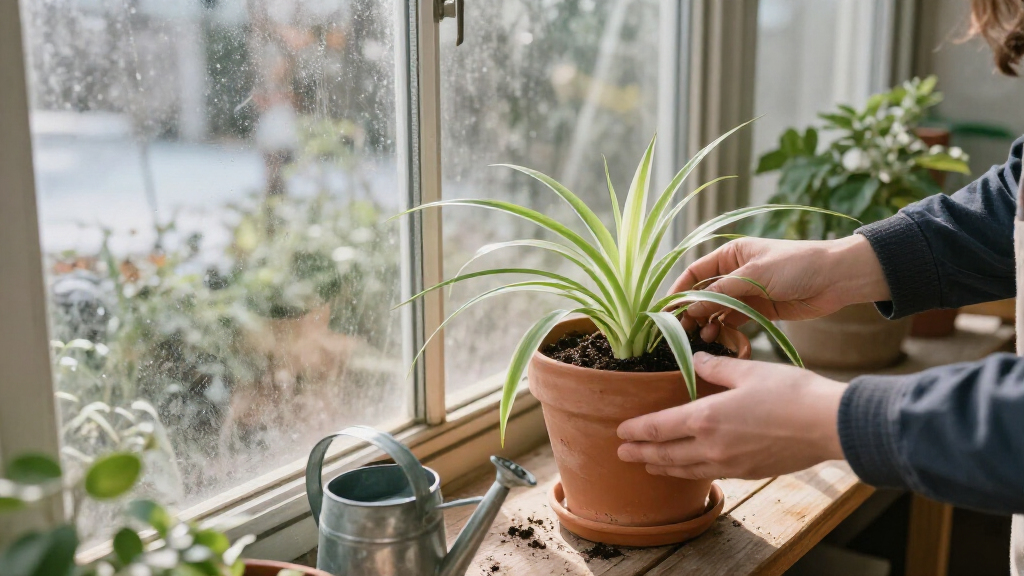
TL;DR
A seasonal spider-plant care guide recommends six winter adjustments: water less often, consider distilled or rainwater, provide brighter indirect light, raise nearby humidity, avoid temperature swings and pause fertilizer. The guide says brown leaf tips are common and usually do not indicate a serious problem, though their cause can vary.
A seasonal spider-plant care guide advises owners to adjust six parts of their routine in winter, when shorter days, slower growth and indoor heating can stress plants and contribute to brown leaf tips. The guide recommends watering less often, improving indirect light and pausing fertilizer. It describes brown tips as common and rarely a sign of a serious underlying problem.

Get garden gear delivered free with Prime
- Fast, free delivery on millions of items
- Prime Video, Amazon Music and more included
- Member-only deals all year
The guide’s first recommendations concern water and soil. Because spider-plant growth slows in winter, it advises checking the soil rather than following a fixed watering calendar: water when the top inch or two is dry, let excess water drain and empty the saucer. The guide warns that persistently soggy soil can cause problems and says the pot should not sit in standing water.
The guide also suggests trying distilled water or rainwater if mineral accumulation may be contributing to browning. It says spider plants can be sensitive to minerals such as fluoride in tap water, but does not establish that tap water is the cause in any particular case. As another option, it recommends monthly flushing with distilled water or rainwater to wash some minerals through the pot, provided the water can drain freely.
For light, the guide recommends placing the plant where it receives brighter, indirect exposure as winter days shorten and rotating it for more even light. It says a full-spectrum grow light may supplement limited natural light. Its other suggestions are to increase nearby humidity with a pebble tray or grouped plants, keep the plant away from heating vents, radiators and cold drafts, and stop fertilizing until spring. The guide notes that misting provides only temporary humidity.
Keep Your Spider Plant Healthy Through Winter
Shorter days, slower growth and indoor heating can stress spider plants. Adjust care to winter conditions and check for several possible causes of brown tips.
Six winter care adjustments
Check the soil
Water when the top inch or two is dry. Let excess water drain and empty the saucer.
Consider rainwater
Try rainwater or distilled water if mineral build-up may be contributing to brown tips.
Brighten indirect light
Move the plant to brighter indirect light, rotate it, or supplement with a full-spectrum grow light.
Raise nearby humidity
Use a pebble tray or group plants. Misting offers only temporary humidity.
Avoid temperature swings
Keep the plant away from heating vents, radiators and cold drafts.
Pause fertilizer
Wait until spring, when growth picks up, before feeding again.
Check conditions before changing care
Brown tips have several possible contributors; the guide does not identify one cause for every plant.
Check moisture before watering and make sure the pot drains freely.
Assess indirect light, nearby heat, drafts and dry air.
After adjusting conditions, observe whether new growth has less tip damage.
Winter Changes Can Mark Leaf Tips
The care guide says winter can change a houseplant’s conditions even when its location appears unchanged. It points to less daylight and slower growth as reasons summer watering and feeding routines may become excessive, and to indoor heating as a possible cause of lower humidity and temperature swings. These are presented as potential stressors, not a diagnosis for every plant with damaged foliage.
Brown tips can be concerning, but the guide says they rarely indicate a major issue that could kill the plant. It recommends considering soil moisture, light, water quality and placement together, rather than responding with unnecessary watering or fertilizer. Its practical advice is to make modest seasonal adjustments instead of adding more care tasks.
Products Worth Considering

Garvee 8 × 10 ft Walk-In Polycarbonate Greenhouse

EAGLE PEAK 8 x 6 ft Pop-Up Walk-In Greenhouse, Clear/Green

Husqvarna Automower 550 Commercial Robotic Lawn Mower
As an affiliate, we earn on qualifying purchases.
Why Summer Routines May Not Fit
The care guide describes spider plants as commonly considered easy houseplants, while noting that they can still experience environmental stress. It says their needs may shift as daylight falls and indoor temperatures change. A plant in a bright summer window, for example, may receive less light there in winter because the days are shorter.
As possible contributors to browning tips, the guide lists dry air, mineral or fertilizer salts in the soil, low light, inconsistent temperatures and watering that does not account for slower winter growth. It presents these as general possibilities, not test results or a confirmed cause for any individual plant.
Brown Tips Have Several Possible Causes
The care guide does not report new research, named expert interviews or a specific plant diagnosis. It does not say how often brown tips result from each factor or establish that any one cause is responsible in a given home. Its recommendations are general seasonal guidance, and outcomes may depend on the plant’s conditions.
The guide also does not say that every spider plant needs distilled water, a grow light or a humidity tray. It presents these as options, particularly when mineral build-up or low light is suspected, rather than universal requirements. It advises owners to check the plant’s soil and setting before changing several things at once.
Check Conditions Before Spring Growth
The guide recommends reviewing the plant’s winter environment: feel the soil before watering, confirm excess water can drain, assess available indirect light, and move the pot away from heat sources and drafts. If the air is dry, it suggests a pebble tray or grouping plants to create a more humid area. The guide advises resuming fertilizer in spring as growth picks up.
Owners can watch whether new leaves emerge without the same tip damage after conditions are adjusted. The guide gives no timetable for improvement and does not promise that any single change will reverse existing damage.
Key Questions
How often should I water a spider plant in winter?
The care guide advises against relying on a fixed schedule. It recommends watering when the top inch or two of soil is dry, then letting the pot drain completely and emptying its saucer.
Should I use distilled water for my spider plant?
The guide says distilled water or rainwater may be worth trying if mineral accumulation is suspected. It notes that tap-water minerals, including fluoride, can contribute to browning, but does not say every plant requires distilled water.
Should I fertilize a spider plant in winter?
The seasonal guide recommends pausing fertilizer until spring, when growth resumes. It says continued feeding during slower winter growth can allow salts to build up in the soil.
Do brown tips mean my spider plant is dying?
Not necessarily. The guide describes brown tips as common and says they rarely indicate a serious problem that could kill the plant. It lists several possible contributing conditions, so it recommends checking the plant’s care and surroundings rather than assuming one cause.
Source: gardeningknowhow.com